Widjaja v. Widjaja: the US$45.8bn estate that legally did not exist
A year after Sinar Mas founder Eka Tjipta Widjaja died, a son born outside the recognized marriage sued five half-brothers over assets he valued at Rp659 trillion. The group's answer was total: the founder personally owned no shares. There was, in law, nothing to inherit — and no other room in which that son could be heard.
Read this in: EN · 简体 · 繁體 · ไทย · ID
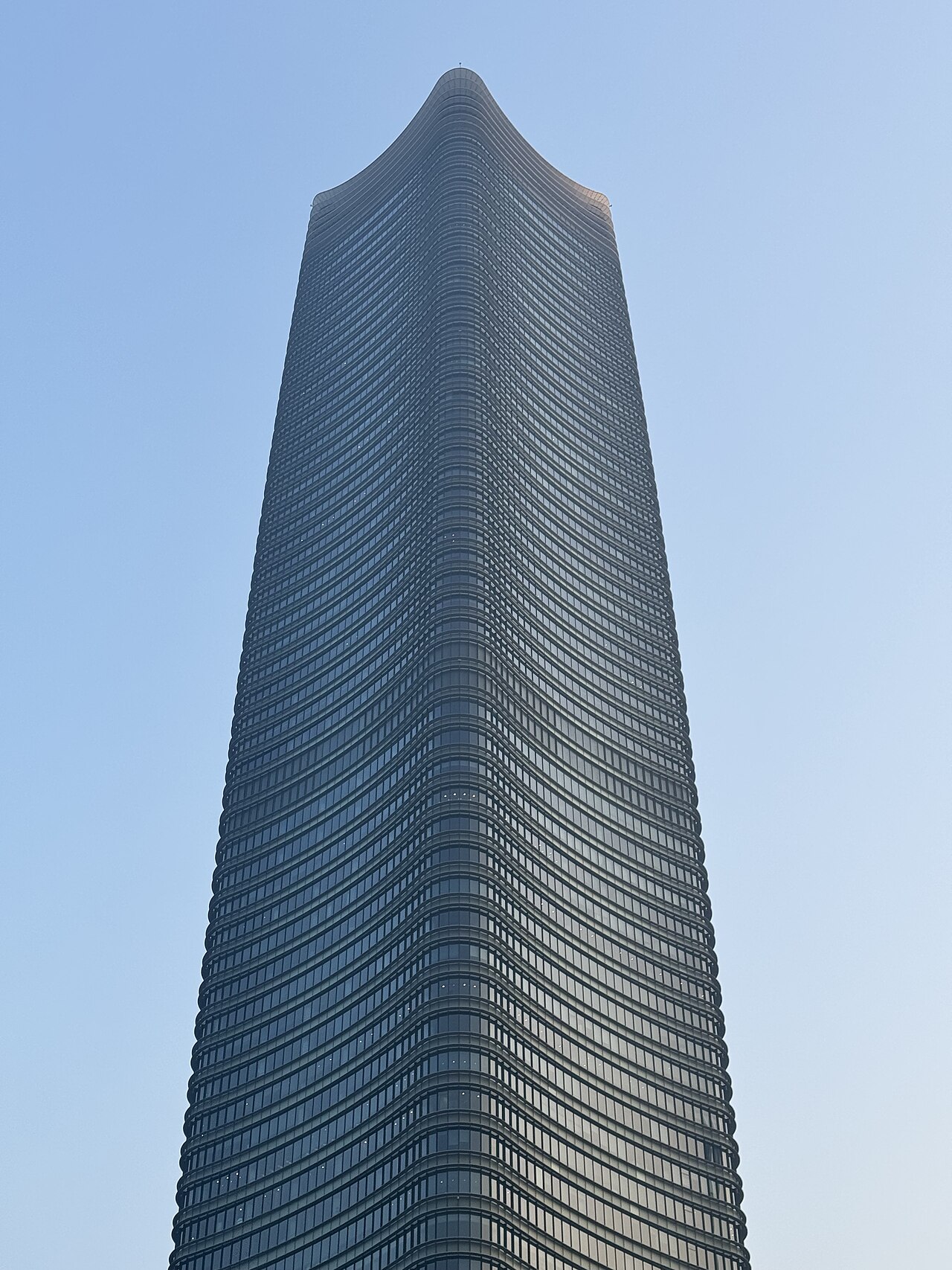
Eka Tjipta Widjaja sells biscuits from a bicycle and builds Sinar Mas, and leaves a family tree no document reconciles
Eka Tjipta Widjaja arrived in Makassar from Fujian as a boy, sold biscuits from a bicycle, and died in January 2019 as the founder of Sinar Mas — pulp and paper, palm oil, banking, property; one of the largest business groups in Indonesia. He was famously prolific in everything: companies, plantations, and family. The family tree was large, and parts of it lay outside the marriage the law recognized. Everyone close to the group knew both facts. No public document reconciled them.

A recognised son sues 5 half-brothers for Rp659 trillion, and the recognition his claim rests on is later revoked
In February 2020, a Jakarta court recognized Freddy Widjaja — a son born to a woman the founder had a decades-long relationship with — as the founder's child. That June, Freddy filed suit in the Central Jakarta district court against five half-brothers who run the group: he asked to be declared an heir, and he put a number on the inheritance — some Rp659 trillion, about US$45.8 billion, across a dozen companies. Under Indonesia's Civil Code, an acknowledged child born outside marriage has inheritance rights; an unacknowledged one has none. His recognition was the claim; the claim was his recognition.



Sinar Mas answers that the founder owned no shares, so there is no estate for any court to divide
The group's defense was structural, and it was total. Sinar Mas called the suit baseless — and stated that the founder personally did not own a single share in the companies Freddy had named. The wealth had been positioned into holding structures long before the founder died. If he owned nothing, there was no estate; if there was no estate, there was nothing for any court to divide, whoever the heirs might be. In August 2020 the half-brothers took Freddy's recognition itself to the Supreme Court, which revoked it — and in January 2022 the Central Jakarta court dismissed the suit. Related disputes have continued in other forums since.

The structure survives every court, and still leaves one son with no room to be heard but a courtroom
Read coldly, the structures worked exactly as designed: the group was never carved up, the companies never froze, the defense held. Read warmly, the same design left one member of the family with no seat at any table — no provision he could point to, no document that named him, and therefore only one room in which to raise his hand: a courtroom, against his brothers, in public, with the family's name in every headline. A structure can make an estate disappear. It cannot make a son disappear. The plan that answers only the first question has answered half of it.
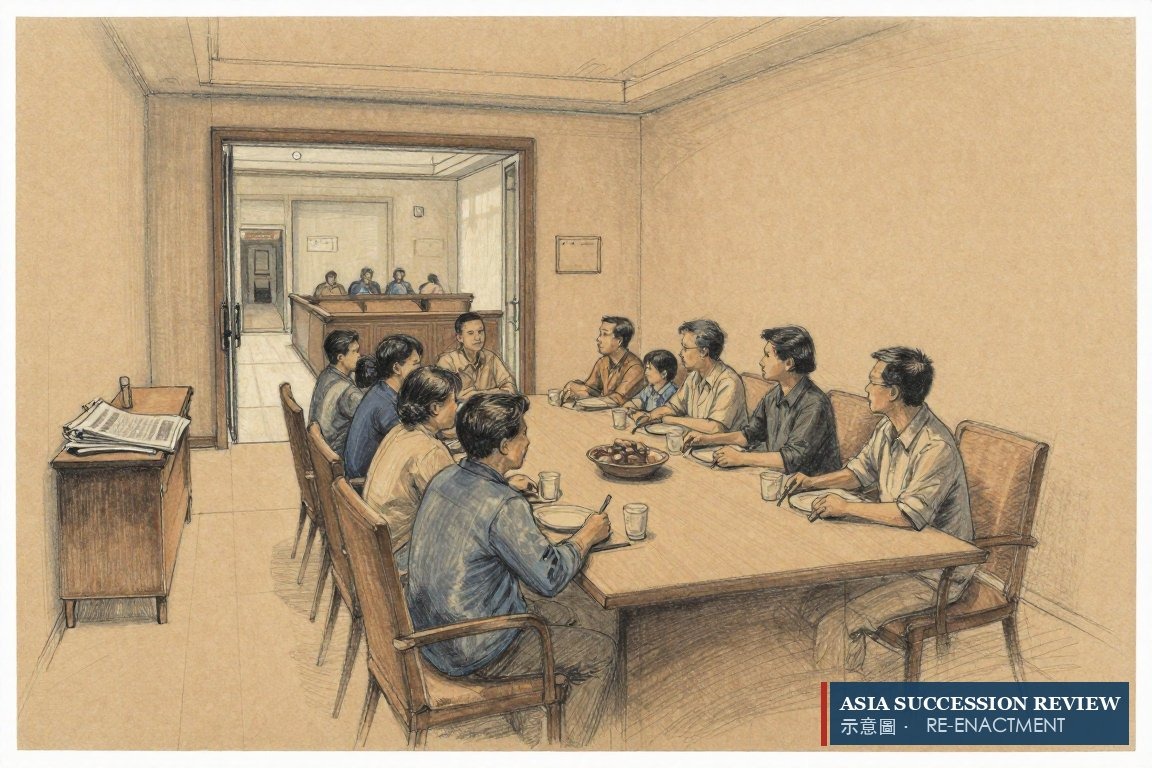
Pre-positioning the wealth into holding structures won the case: no personal shares, no estate, no claim. But the same completeness meant a son with no named provision had exactly one way to be acknowledged — litigation. The structure answered 'who gets the assets' and left 'who belongs to this family' to be decided by judges, in public, for years. A defense that airtight is also a door that closed.
Name every child in the plan while the founder is alive — defined provision in the trust for each, insurance as clean separate capital — so that nobody's only route to recognition is a lawsuit.
The founder names every branch and every child in the deed himself, so recognition never becomes a courtroom contest
The honest version of this plan keeps the structure and adds the missing page. The founder settles the family holdings into a trust during his lifetime — as Sinar Mas in effect did through its holding companies — but the trust deed names every branch and every child, including the children outside the marriage, with a defined provision for each: this much, on these terms, from this date. Recognition happens in a document the founder signs while he is alive and unmistakably of sound mind, not in a courtroom contest over his memory.
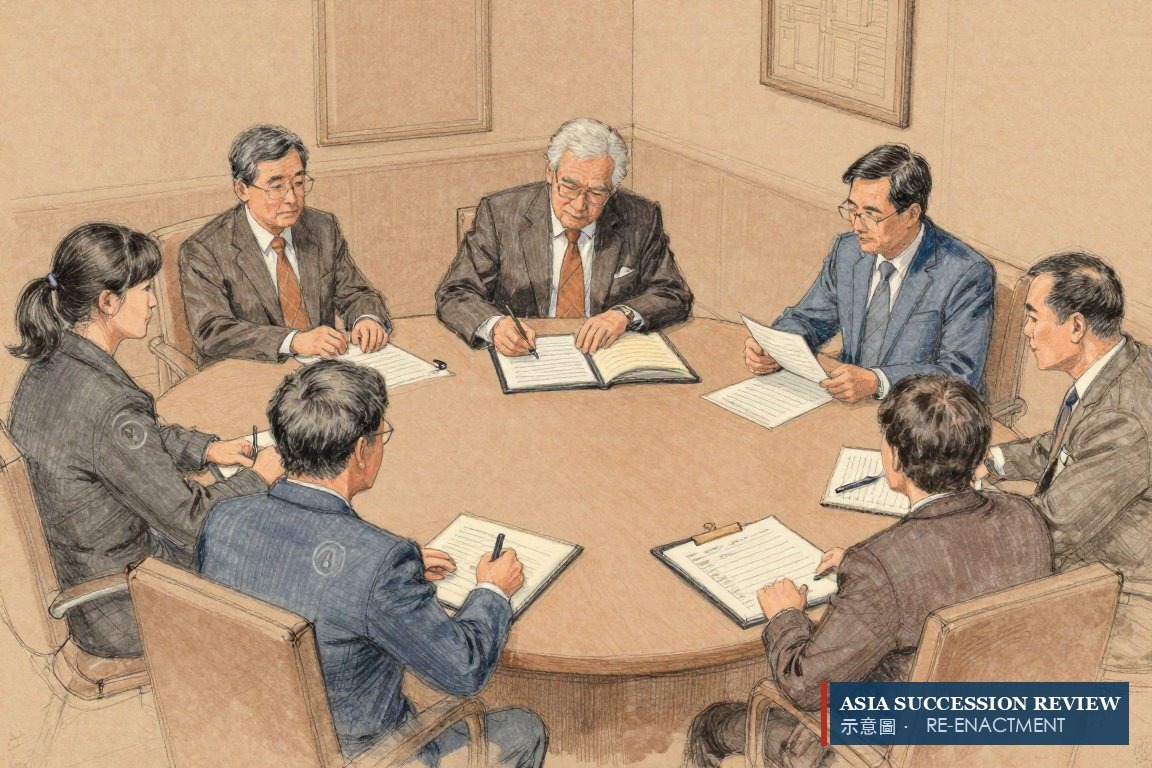
A child who will never run the group receives capital by name, so nobody has to ask a judge
The operating businesses stay with the branch that runs them; a child who was never going to run the group receives capital, not a boardroom — and receives it by name, so the question 'am I in the plan?' has an answer that is not a writ.

A policy nominated to that child pays cash directly, so the money never touches probate or the company registers
For the provision itself, life insurance is the cleanest instrument the founder has: a policy nominated to that child creates separate, defined capital that pays directly, outside probate and outside the company registers — Singapore's Insurance Act expressly includes a child born outside marriage in who may be named. A deed of gift executed during the founder's lifetime does the same for assets handed over early, and its whole purpose is to make the gift hard for other beneficiaries to challenge later.

The same structure that shut one son out could have named him, so no judge is ever asked who counts as family
Note the double edge this case turns on: the pre-positioned holdings defeated the claim — and they are also what left one son with courts as his only voice. The same structural discipline, pointed the other way, is what closes the courthouse door from the inside: everyone named, everyone provided for, nothing left that only a judge can say.

The five brothers — the group intact and undisputed — and no years of headlines putting the family's private history on the record
The son outside the marriage — defined provision without a decade in court — capital and acknowledgment in the founder's own signature
The founder — his actual intentions executed, for every child, decided by him while alive — not litigated by others after
A counterfactual, not advice: real structures need licensed hands and your family's facts.
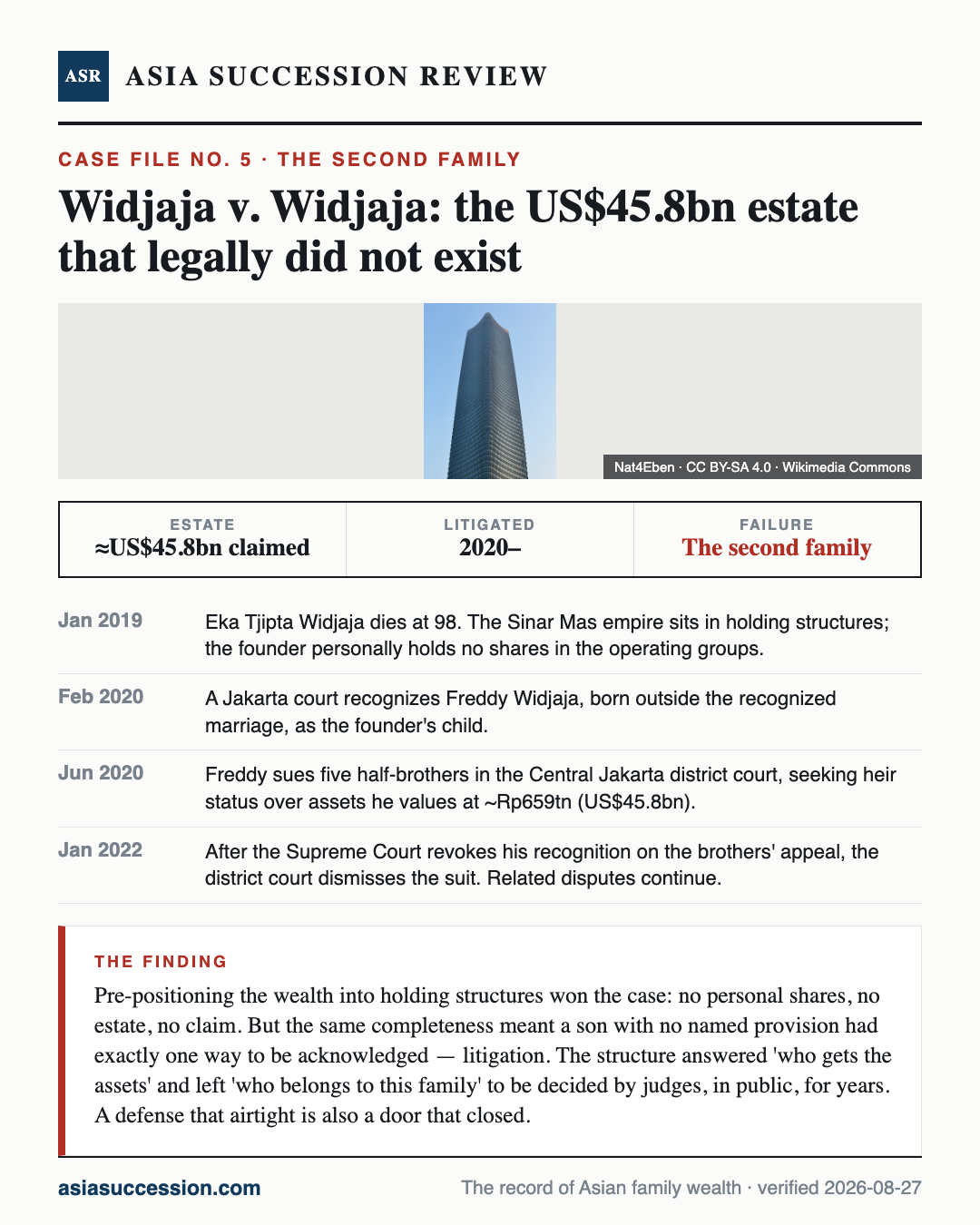
The case in one card — press and hold to save, or forward it as it is.
If your family has children the paperwork doesn't mention
Most families in this region have history that the corporate documents do not record, and the record shows what happens when the two meet for the first time at a funeral: the question of who belongs gets decided by judges instead of by the founder. Whichever side of that line you stand on, the questions are the same — is there a document that names everyone, does each branch have defined provision, and is any of it signed while the founder can still sign? Clarity here is not scandal; it is the one thing that keeps the family's private history out of the public record:
My father has children with another woman — can they claim the inheritance?
It depends on recognition, not on biology alone. In Indonesia, an acknowledged child born outside marriage has inheritance rights under the Civil Code (at a reduced share); an unacknowledged one has none — which is why the Sinar Mas litigation was fought over Freddy Widjaja's recognition itself, not over the assets. The practical point cuts both ways: an unnamed child is not automatically excluded, and a named provision settled during the founder's lifetime is the only version of the answer that does not get decided in court.
Can an illegitimate child inherit in Indonesia?
Under Indonesia's Civil Code (KUHPerdata), a child born outside marriage inherits only if legally acknowledged, and then at a smaller share than legitimate children; Indonesia's Constitutional Court has separately held (Decision 46/2010) that a child born outside marriage has a civil relationship with a biological father who can be proven by evidence. In practice, recognition is the battleground: Freddy Widjaja's US$45.8bn claim rose and fell entirely on whether his court-granted recognition survived appeal. It did not, and the suit was dismissed in January 2022.
If the family's assets are all in holding companies, is there anything to inherit?
Possibly very little — which is precisely how Sinar Mas answered a Rp659tn claim: the founder personally owned no shares, so there was no estate to divide. Assets positioned into holding structures or trusts during the owner's lifetime generally sit outside the personal estate. That defeats claims, but it also means the plan's fairness is decided entirely by how the structures were set up — anyone not written into them has no statutory fallback, because statute only reaches what the founder still owned.
How do wealthy families provide for children outside the marriage without a public fight?
The instruments that work are the ones that operate in private and during the founder's lifetime: a defined provision written into a trust deed; a life insurance policy nominated to the child, which pays directly outside probate (Singapore's Insurance Act includes a child born outside marriage in who may be named); or a lifetime gift documented by deed, executed specifically so other beneficiaries cannot challenge it later. What all three share is timing — signed while the founder is alive — because after the funeral, the only remaining forum is the one the Widjaja family spent years in.
A question of your own that these don't answer — put it to the desk.
- 1Bloomberg — Feud erupts over inheritance of $46 billion Indonesia empire (Jul 2020)
- 2CNN Indonesia — Freddy Widjaja's inheritance suit dismissed (Feb 2022)
- 3Eka Tjipta Widjaja — background