A family deal you signed still binds after the shares soar. Ask TVS
On 25 November 2026 Lakshmi Venu sued her father, TVS chairman emeritus Venu Srinivasan, in the Madras High Court for partition of their branch's family assets. His counsel's answer is a paper: a family settlement all four of them signed in 2017. Her side says it never settled who owns what. What if it had been Singapore?
Read this in: EN · 简体 · 繁體 · ไทย · ID

On Wednesday 25 November 2026 Lakshmi Venu, managing director of Sundaram-Clayton, filed a suit in the Madras High Court against her father, Venu Srinivasan, chairman emeritus of TVS Motor Company. The Hindu BusinessLine, citing court records, and Forbes India give the date. She asks for partition of the joint family assets of the Venu Srinivasan branch of the TVS family and the allotment of her share, and for help obtaining documents she says have been withheld. Her statement says the suit concerns ownership only, not the running of any company.
The suit follows her notice of 16 November, which we covered then. Her father's reply did not change his position, her side says. His counsel, Abhishek Manu Singhvi, told Business Today TV (reported by India Today on 25 November) that all four members of the immediate family signed a written family settlement in 2017 that divided the ancestral assets and dissolved the Hindu undivided family. In his account the settlement is final and cannot be reopened because some businesses grew in value or one member is unhappy. He also said not all the assets are ancestral, and that the VS Trust names Lakshmi's son as a beneficiary.
Her counsel, Aryama Sundaram, told CNBC-TV18 he does not accept that the joint family was dissolved in 2017. He said she learned last year that beneficial ownership was being concentrated in her brother Sudarshan Venu's favour, at about 95 to 5, after 18 months of trying to talk. He said she will ask the court for interim orders to stop any new beneficial interests being created while the case runs. CNBC-TV18 also reports that all four family members filed caveats in two Chennai courts on 12 and 13 October.
Her mother, Mallika Srinivasan, backs her: 'As a mother, to me, a son and daughter are equal in every respect.' On the company's own record, TVS Holdings' shareholding pattern for the quarter ended 30 September 2026 shows the VS Trust, with Venu Srinivasan as trustee, holding 13,464,665 shares, 66.55%, of which 2,360,500 are recorded as pledged. Lakshmi Venu holds 165,043 shares, 0.82%. Venu Srinivasan and Sudarshan Venu are the recorded significant beneficial owners through the trust, his son since 16 April 2025, with Sudarshan's nationality given as Singapore.
- 1The Hindu BusinessLine (Sindhu Hariharan), 25 Nov 2026: Lakshmi Venu moves Madras High Court for partition of Venu Srinivasan family assets (suit filed Wednesday per court records; her statement; Mallika Srinivasan's statement)
- 2CNBC-TV18 (Ashmit Kumar, Rachna Dhanrajani), 25 Nov 2026: TVS family dispute: Lakshmi Venu files partition suit (Aryama Sundaram on the 2017 dissolution, the 95:5 split and interim relief; caveats of 12 and 13 Oct; the 2017-2024 steps in Venu Srinivasan's account)
- 3India Today, 25 Nov 2026: TVS succession row (Abhishek Manu Singhvi on the written 2017 family settlement signed by all four; Kapil Sibal on the 1989 Tamil Nadu and 2005 amendments)
- 4Forbes India (Samar Srivastava), 25 Nov 2026: Lakshmi Venu takes family inheritance battle to court (filed 25 November through Trilegal; the March 2024 MoU in each side's reading)
- 5TVS Holdings, shareholding pattern for the quarter ended 30 Sep 2026 (VS Trust 13,464,665 shares, 66.55%, 2,360,500 pledged; Lakshmi Venu 0.82%; significant beneficial owners and their recorded nationality)
- 6Court of Appeal of Singapore, BOM v BOK [2018] SGCA 83 (Civil Appeals 3 and 5 of 2018, judgment of 29 Nov 2018; a family deed of trust set aside for misrepresentation, mistake and the narrow doctrine of unconscionability; the broad doctrine rejected), read in full on eLitigation 26 Nov 2026
- 7Limitation Act 1959 s6(1)(a) and (7) (six years for contract, applied to equitable relief) and s29 (time runs from discovery in fraud and mistake; purchasers in good faith protected), read on Singapore Statutes Online as at 26 Nov 2026
The suit turns on one piece of paper nobody outside the family has seen. If the 2017 settlement divided the joint family's property and ended the joint family, there may be little left to partition, and what Venu Srinivasan holds now he holds as his own. If it only arranged roles, or covered some assets and not others, her claim as a daughter with a share from birth is live.
So the fight is about what a signed family document covers, and whether it can be reopened. His side says the signatures and seven years of silence close the matter. Her side says she did not know until last year how far ownership had moved toward her brother.
In Singapore a family settlement signed by adults binds like any deed, however much the shares grow: it can be undone only for what went wrong when it was signed, such as a misstatement, a shared mistake or an exploited weakness, and only within time limits that run from when the problem could have been found.
Start with what Singapore could not change. Whether the TVS holdings were joint family property, and whether a 2017 paper ended the joint family, are questions of Hindu law for the Madras High Court. That Sudarshan Venu's nationality is recorded as Singapore does not move the case here. Read what follows as the same family, with the same paper, living under Singapore law.
Rule one: there is no share by birth to fight over. As we set out on 17 November, Singapore gives children no claim to a living parent's property. So a Singapore dispute would never be about whether a daughter co-owned the family wealth from birth. It would be about the document alone: what the parents and children agreed to, and whether that agreement can stand.
Rule two: a signed family deal is a deed, and a later rise in value is not a reason to undo it. Singapore's Court of Appeal set out the reasons that are in BOM v BOK [2018] SGCA 83, decided by five judges on 29 November 2018. A 29-year-old man signed a declaration of trust a week after his mother died, putting his assets on trust for his infant son. The court set it aside because of what happened at signing: his wife's misrepresentation, his mistake about what the deed did, her undue influence, and the exploitation of his grief.
The same court drew a firm line. It rejected a broad doctrine of unconscionability, saying it 'does not represent the law in the Singapore context', because it would give judges an unbridled discretion over bargains. It kept a narrow one: the person who signed must show a weakness serious enough to affect his ability to protect his own interest, which the other side exploited. Only then must the other side prove the deal was fair, just and reasonable.
Applied to a family like this one, the question would not be whether TVS Motor became more valuable after 2017. It would be what Lakshmi Venu was told, what she understood the paper to do, whether she had her own lawyer, and whether anyone took advantage of her. On our reading of BOM v BOK, a growing business, on its own, gives no ground to reopen a deal. A misunderstanding about what the deal covered can.
Rule three: the clock. Section 6(1)(a) of the Limitation Act 1959 gives six years for claims founded on a contract, and section 6(7) applies that period to equitable relief such as setting a deed aside. On a plain count a 2017 deed would be out of time by 2023. Section 29 changes the start: where the claim rests on fraud, or is for relief from a mistake, time runs only from when the claimant discovered it or could reasonably have done so.
That is the shape her argument would take here: she says she learned only last year how the ownership had moved. Section 29(2) sets the limit. It does not let a claimant undo a transaction against someone who later bought the property for value in good faith. Whether a pledge of shares counts is a question for a court; we flag the pledge in the trust's own filing only because it shows that third parties can acquire interests in the meantime.
Rule four: write the deal so that it can survive the people who signed it. Each family member signs with his or her own lawyer. A schedule lists every holding it covers and every holding it does not. It says in one line whether it ends any joint ownership, gives a valuation date, and records who gets what in figures. BOM v BOK names independent advice and undervalue as things a court will weigh; a deed that answers them leaves little to argue about.
Now the limits. We have not seen the plaint, the 2017 settlement, the 2020 family arrangement or the March 2024 memorandum. What each side says the documents mean comes from counsel speaking to the press. The 95 to 5 figure is her counsel's estimate. Nothing here decides whether the 2017 paper dissolved the joint family; that is for the Madras High Court, which has not yet made any order we could find.
For the reader who signed something when the family business was divided, three questions. Do you have a copy, and does it list what it covers? Did you have your own lawyer, or the family's? And if you now believe it did something you did not understand, when did you first learn that, and can you show it? In Singapore those three answers, not the share price, decide whether the deal can be reopened.
Lakshmi Venu — plaintiff in a partition suit filed in the Madras High Court on 25 November 2026; 165,043 TVS Holdings shares (0.82%) in her own name; says the 2017 paper did not end the joint family and that she learned of the 95 to 5 split last year
Venu Srinivasan — defendant; trustee of the VS Trust, which holds 66.55% of TVS Holdings; through counsel, relies on a written family settlement signed by all four in 2017 and says it cannot be reopened
Sudarshan Venu — chairman and managing director of TVS Motor; recorded significant beneficial owner of TVS Holdings through the VS Trust since 16 April 2025, nationality given as Singapore
Mallika Srinivasan — publicly backs her daughter: 'a son and daughter are equal in every respect'; her TAFE shares are outside the suit, according to her daughter's counsel
Lakshmi Venu's son — named as a beneficiary of the VS Trust, according to his grandfather's counsel
The same family in Singapore — no birthright claim at all; a signed family deed that stands however the shares perform, unless she proves misrepresentation, mistake, undue influence or an exploited weakness at signing, within six years or from when she found it
The reader who signed when the business was divided — three questions: what the paper covers, whose lawyer you had, and when you first learned what it did
A counterfactual, not advice. The verified machinery is on the Singapore page; where your family stands is the briefing.
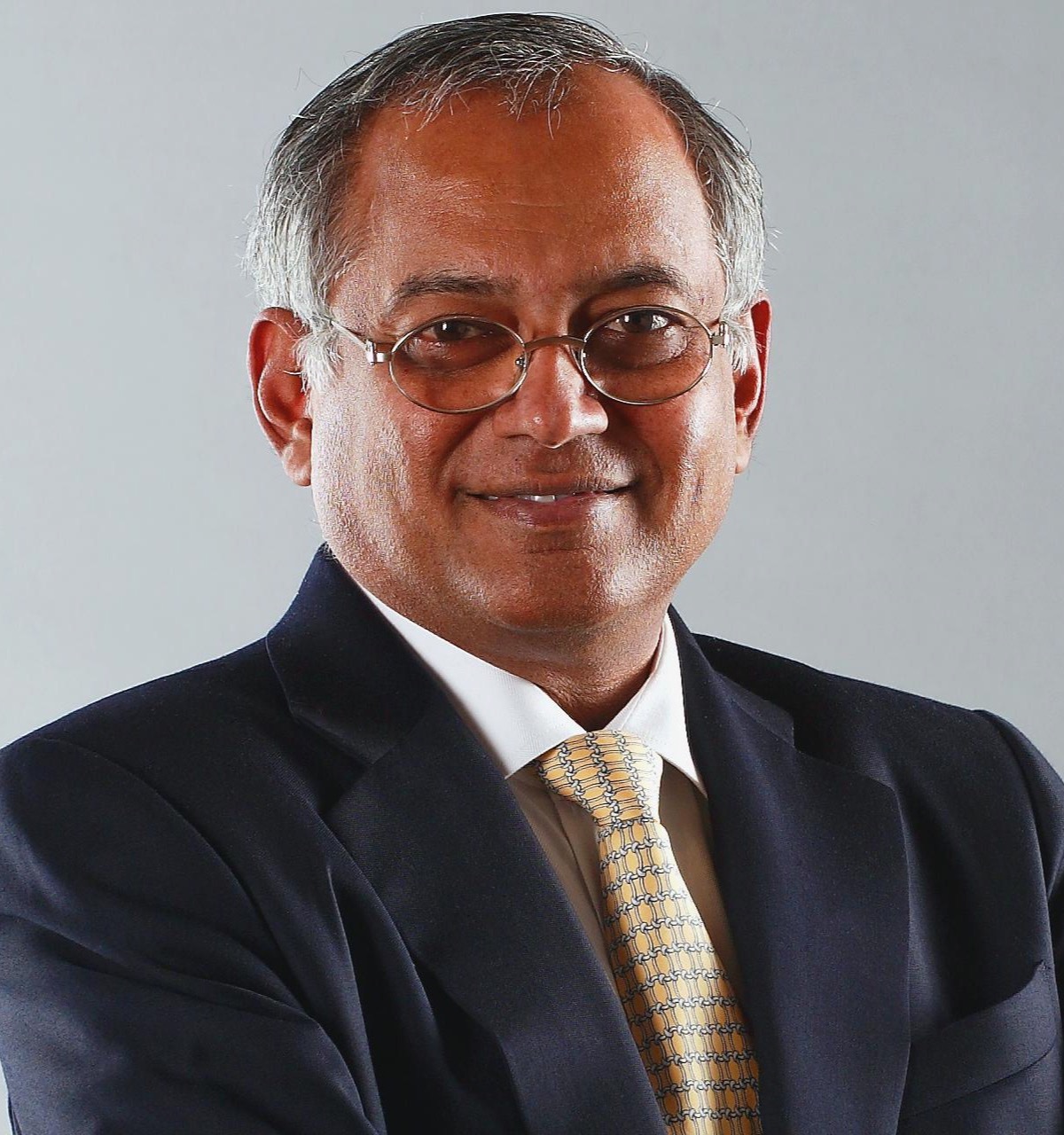
From the case files: Before the suit: TVS's daughter served her notice on 16 November