How long are the accounts frozen when someone dies?
Until the grant of probate or letters of administration, which DBS says takes two to six months. Once a Singapore bank is told of a death, every account in the deceased's sole name is frozen: DBS (read 2 October 2026) says no withdrawal, not even a GIRO deduction, is permitted, and the money stays until a Grant of Probate or Letters of Administration is produced, which DBS says takes two to six months. Balances under S$5,000 can be claimed from the bank directly (Public Trustee's Office, page updated 23 September 2026). A joint account is not a clean exit either: on 30 April 2025 the Court of Appeal held that a widow and daughter who survived a father on about S$4 million in joint accounts held it for his estate (Khoo Phaik Ean Patricia v Khoo Phaik Eng Katherine [2025] SGCA 20). CPF and insurance nominations pay outside the freeze. The heir's question is what the family lives on in the gap.
Read this in: EN · 简体 · 繁體 · ไทย · ID
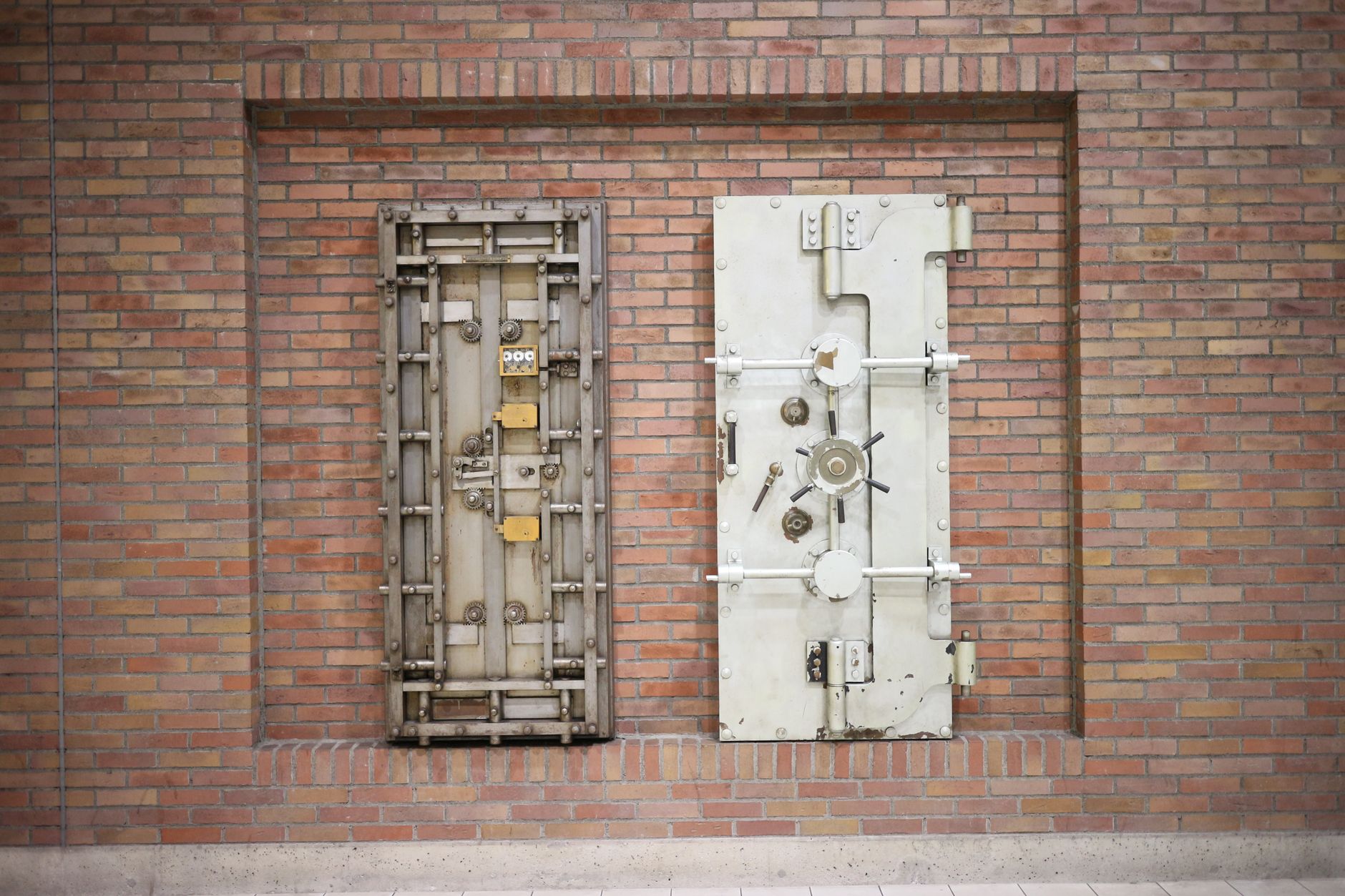
What freezes and what does not
Freezes: sole-name bank and brokerage accounts, and anything only the deceased could sign for. Banks act on notice of death; access then waits for the grant.
Usually passes outside probate: joint accounts with survivorship (though, as a 2025 Court of Appeal case below shows, the estate can still claim the money), life insurance with a valid nomination, CPF with a valid nomination, and assets already inside a trust. This is the machinery a good plan builds precisely so the family is never illiquid during the freeze.
The bank's own words: no withdrawal, not even a GIRO, until the grant (DBS, read 2 October 2026)
DBS states the rule plainly on its page for a deceased customer's accounts, read on 2 October 2026: once the bank is notified of the account holder's death, the accounts are frozen until they are closed, and an account tagged 'Account Frozen' allows no withdrawal, including GIRO and other payment arrangements. Joint accounts are caught too: they are restricted from deposits, withdrawals and GIRO until the surviving holder gives the bank instructions. Closing a sole-name account and releasing its balance needs a Grant of Probate or Letters of Administration, which DBS says can take two to six months, depending on the lawyer and the complexity of the case.
Below that line, the Public Trustee's Office page (last updated 23 September 2026, re-read 2 October 2026) supplies the official exits. A bank balance under S$5,000 may be claimed from the bank by the next-of-kin directly. Where the Public Trustee administers an estate of S$50,000 or less, funeral expenses can be reimbursed from the estate money on proof, and 'generally, claims of up to $6,000 are allowable'; the same S$6,000 applies to un-nominated CPF money. It distributes within four weeks of receiving the full documents or the deceased's money, whichever is later.
We found no Singapore bank or Association of Banks in Singapore procedure, searched on 2 October 2026, that releases money from a frozen sole-name account for funeral costs before a grant. Our reading, which is inference: for an estate above S$50,000, the funeral and the first months are paid from the survivors' own accounts, a joint account or nominated insurance. The plan's job is to make sure one of those exists, and that everyone knows which.
The timelines, honestly
Singapore, uncontested with a valid will: roughly two to four months from filing to grant, plus bank processing. MoneySense (updated 2 July 2026) says the whole process may take three to six months and that the grant may issue within about a month of the last court document being filed. The Family Justice Courts publish no expected duration.
Intestate (no will): longer, because an administrator must be appointed. Section 29(2) of the Probate and Administration Act 1934 makes the ordinary security a bond by the grantee and two sureties in the sworn value of the estate, though section 29(8) provides that a grantee from a Family Court is not required to give security unless a beneficiary is a minor or the court thinks fit. Contested, anywhere in the region: unbounded; the case files on this site include estates frozen for half a decade.
Malaysia deserves its own warning: unadministered estates — particularly Muslim estates subject to faraid — are notorious for staying locked for years.
The exits that need no grant at all (Public Trustee, re-read 2 October 2026)
Three doors sit outside the court queue. First, CPF: the Public Trustee's Office states that CPF savings are paid by the CPF Board directly to a valid nominee aged 18 or over, and that where there is no valid nomination the Board sends the money to the Public Trustee, who distributes it under the intestacy rules. No grant is involved either way.
Second, small estates: where the estate is worth S$50,000 or less (excluding Dependants' Protection Scheme money) the Public Trustee can administer it without a grant. It will not if a court application has been filed, the beneficiaries are in dispute, there are debts, unlisted shares, a business interest, or an insurance policy with a nominee under section 132 or 133 of the Insurance Act 1966 (numbered 49L and 49M before the 2020 Revised Edition, which is how the Public Trustee's page still cites them).
Third, the smallest balances: the same page says that for a bank account under S$5,000 the next-of-kin may approach the bank directly, and for shares held with CDP valued at S$5,000 or below, CDP itself. None of these doors helps a family whose founder held the operating company, the property and the main accounts in his sole name. That family waits for the grant, and the plan's job is to make sure the waiting is paid for.
A joint account pays the survivor, but the estate can take it back (Court of Appeal, 30 April 2025)
The case is Khoo Phaik Ean Patricia v Khoo Phaik Eng Katherine [2025] SGCA 20 (grounds of 30 April 2025, read in full on eLitigation on 2 October 2026). A doctor's will of 10 August 2012 left his residuary estate, including a UOB account and a POSB account, to his four children equally. Diagnosed with liver cancer in October 2019, he converted both accounts into joint accounts with his eldest daughter and his wife on 7 November 2019, after, on the survivors' undisputed account, bank officers explained survivorship. Eleven days later he signed a codicil that gave his wife S$80,000 from the UOB fixed deposits and reaffirmed the will.
He died on 21 January 2021 with about S$4 million in the two accounts (High Court, [2023] SGHC 314). The banks' terms favoured the survivors: UOB's said a surviving holder 'obtains on the face of it, title to the Account and may give instructions on the Account', and POSB's let it hold the balance to the survivors' order. The other three children sued. Both courts held that such clauses only tell the bank whose instructions to follow, not who owns the money. The Court of Appeal read the 'beneficial owner' line on the conversion forms as an anti-money-laundering term, by reference to MAS Notice 626, not a declaration of gift.
The Court of Appeal found he had added them for administrative purposes, as a back-up for his medical expenses; the only withdrawal from the UOB account, S$180,332.88, was his own. The survivors held the accounts on resulting trust for the estate, to be shared four ways, and paid costs of S$54,000 and S$30,000. Our reading, which is inference and not the court's: a parent who adds a child to an account for convenience, and one who means it as a gift, should each say which in writing, because the bank's form will not.
The question this page exists to prompt
If your family's income stops the day the founder's signature does, that is a liquidity plan failure, not fate. Asking 'who signs, and what do we live on, during the gap' is an operating question — one a founder who refuses to discuss wills will often still answer.
- 1DBS — Account closure for a deceased's account (read 2 Oct 2026): accounts frozen on notice of death, no withdrawal including GIRO; joint accounts restricted until the surviving holder instructs; grant takes 2 to 6 months
- 2Public Trustee's Office — Estate (other assets), last updated 23 Sep 2026, re-read 2 Oct 2026: the S$50,000 ceiling and exclusions (insurance nominations still cited as 49L/49M); bank balances under S$5,000 and CDP holdings of S$5,000 or below claimed directly; funeral expenses generally up to S$6,000
- 3Khoo Phaik Ean Patricia v Khoo Phaik Eng Katherine [2025] SGCA 20 (Court of Appeal, 30 Apr 2025): joint-account survivors held about S$4m on resulting trust for the estate; bank survivorship clauses address legal title only — eLitigation
- 4Khoo Phaik Eng Katherine v Khoo Phaik Ean Patricia [2023] SGHC 314 (High Court, 31 Oct 2023): date of death 21 Jan 2021; two joint accounts of about S$4m — eLitigation
- 5Family Justice Courts — probate and administration (process and deadlines; no expected duration published)
- 6MoneySense — What is probate? (updated 2 July 2026: 'the whole process may take three to six months'; grant within about a month of the last court document; administration bond with two sureties; Public Trustee for estates under S$50,000)
- 7Public Trustee's Office — CPF money: paid by the CPF Board to a valid nominee over 18; sent to the Public Trustee where there is no valid nomination; funeral expenses from un-nominated CPF generally up to S$6,000
- 8Insurance Act 1966 ss132–133 (trust nomination; revocable nomination; formerly ss49L and 49M) — Singapore Statutes Online, current version as at 2 Oct 2026
- 9Probate and Administration Act 1934 s29 (administration bond: two sureties in the sworn amount; Family Court grants exempt unless a beneficiary is an infant or the court thinks fit) — Singapore Statutes Online