Kwek v. Kwek: the boardroom coup that put father and son in the High Court
Singapore's richest property family spent early 2025 suing itself. The 84-year-old chairman accused his own son, the CEO, of a boardroom coup. A settlement came in weeks — the split did not heal with it.
Read this in: EN · 简体 · 繁體 · ไทย · ID

Sherman Kwek runs City Developments for 7 years, so Singapore assumes the succession is already finished
By any outside reading, the Kwek succession had already happened. Sherman Kwek had been chief executive of City Developments since 2018 — seven years running one of Singapore's great property companies, groomed inside the family group his grandfather founded. His father, Kwek Leng Beng, stayed on as executive chairman. Singapore's richest property family looked like the textbook: founder's son installed, founder easing back.

An 84-year-old chairman sues the son he made CEO, and the family fight lands on the front pages
In February 2025 the textbook burned. The 84-year-old chairman sued his own son in the Singapore High Court, alleging what the filings and the front pages called an attempted boardroom coup — board appointments made, he said, without proper process, with a long-time adviser's role at the centre of the dispute. Father and son issued statements against each other through lawyers while the company's shares traded on.
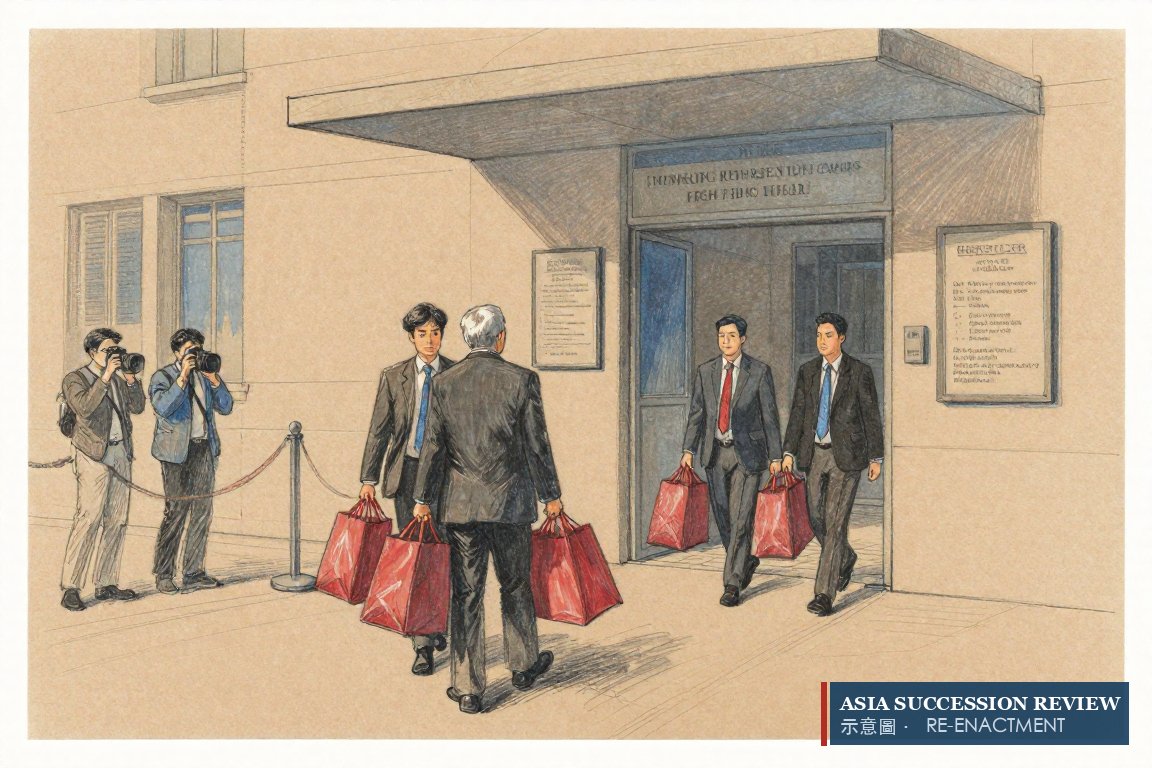


The suit is dropped within weeks, and shareholders still ask in April what the settlement could not answer
It lasted weeks. By March the suit was withdrawn, the adviser had resigned, and both men kept their titles. But at the annual general meeting in April, shareholders were still asking the question the settlement had not answered — because the settlement could not answer it. The question was never who holds which title. It was when, and on what terms, the founder's authority actually passes.
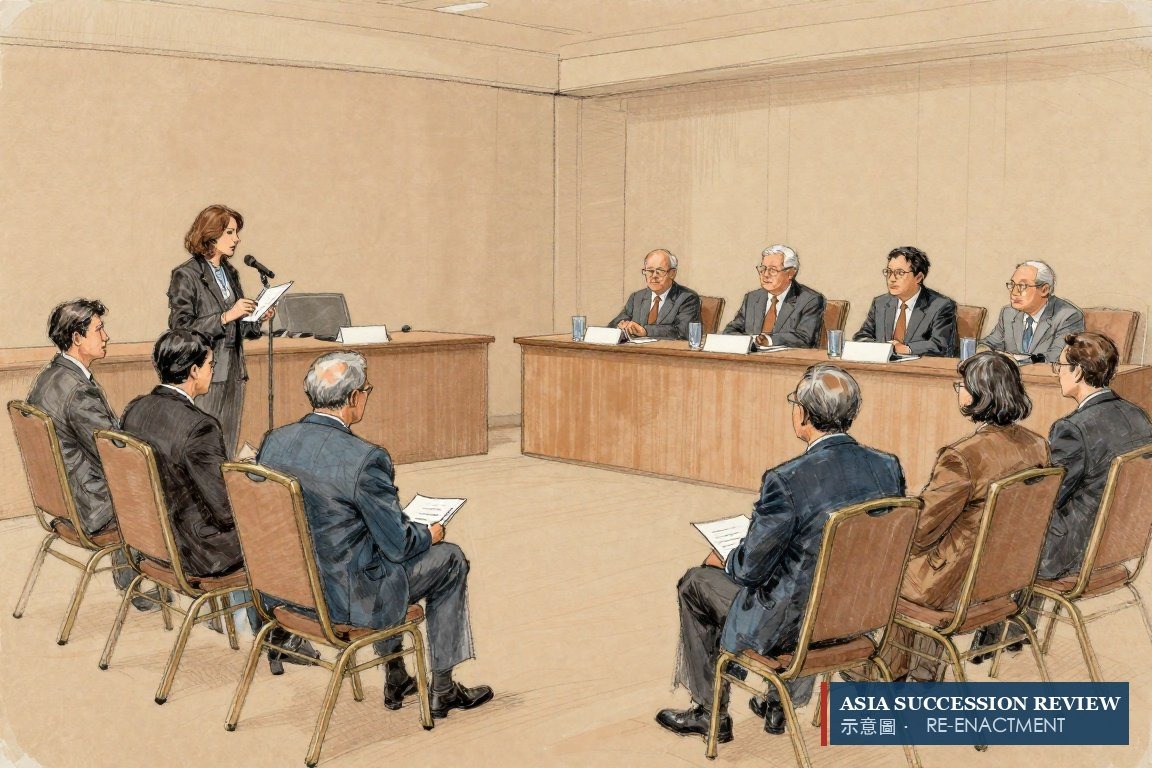
A CEO title held for 7 years settles nothing, because no document says when control actually passes
That is the quiet lesson of the file: a CEO title held for seven years settled nothing, because the transfer of control was never written down anywhere the family could point to. What is not documented is contested — if not in this generation, then at the reading of the will.

Authority was never formally transferred, so it was contested informally — in court, in public, mid-tenure. A son can hold the CEO title for years and still not hold the succession; a title is not a timetable.
Put the handover in the calendar — dates, percentages, signatures — and agree today that any quarrel gets settled in private.
A signed timetable hands the son 30% in January and 51% two years later, so nothing is re-argued
The fix is almost embarrassingly simple: a signed timetable. Concretely — from next January, the son votes 30% of the family shares. Two years later, 51%. The father keeps a veto over exactly three named decisions — selling the company, taking on major debt, cutting the dividend — and even that veto carries an end date. It is one document; both men signed it; anyone in the family can read which signature moves what, and when. What is written down cannot be re-argued at 84.

Any future fight goes to a private referee in Singapore, so the share price never hears about it
One more clause finishes it: if father and son ever disagree, the fight goes to a private referee in Singapore — arbitration, behind closed doors, with an answer both sides agreed in advance to accept. The same dispute still happens; it just never reaches the High Court, the newspapers, or the AGM microphone. The share price never hears about it.

The founder — a dignified glidepath — authority released on his schedule, never wrestled away
The successor — dated certainty instead of seven years of maybe
The company — a governance dispute that never becomes a headline
A counterfactual, not advice: real structures need licensed hands and your family's facts.
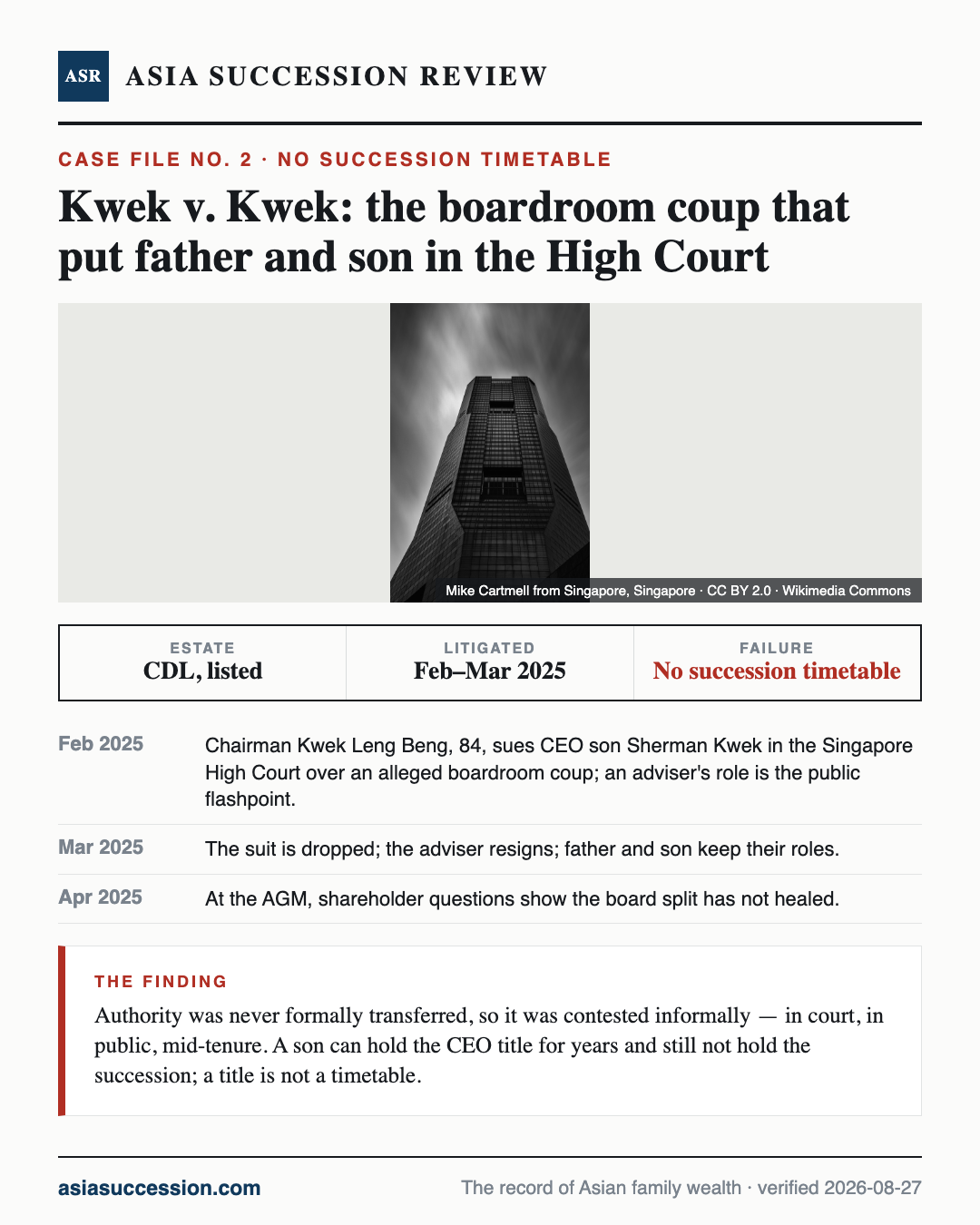
The case in one card — press and hold to save, or forward it as it is.
If you hold a title but not a timetable
Being named CEO, director, or successor-in-conversation is not the same as a documented transfer of control — voting shares, board composition, and the founder's own exit terms decide it. The questions that establish where you actually stand, and the structures that make an answer bind:
I'm CEO of my family's company but my parent controls the shares — do I actually have any power?
Run the control test: who holds the voting shares, who can change the board, and are the founder's exit terms written anywhere? A CEO title answers none of those. Sherman Kwek had run CDL for seven years when the writ arrived — tenure is not transfer.
How do I ask my father for a succession timetable without offending him?
Anchor it to something external: banks ask about key-man risk, auditors ask about governance, regulators ask about board succession. 'The lenders will ask us this' is a sentence that opens the topic without anyone losing face. Start with continuity of the business, never with the founder's exit.
Do family feuds still happen in publicly listed companies?
No — it changes the audience, not the odds. A listing adds independent directors and disclosure duties, which is why this dispute played out on front pages instead of at the dinner table. Corporate governance and family succession are different documents; a listed family needs both.
What should a family business succession agreement actually include?
Dates and instruments, not intentions: tranches of voting shares moving on a schedule, board composition changes, defined reserved matters, and an end date for any founder veto — written into a shareholders' agreement or constitution the family can point to. What is not documented is contested.
A question of your own that these don't answer — put it to the desk.
- 1Forbes — settlement report (Mar 2025)