A family deal needs a referee in writing. Ask Bharat Forge's Kalyanis
By his sister's account, the Kalyani family agreed in 1994 how its holdings would be split. Nobody wrote down who would settle a quarrel about it. On 23 November 2026, after a former judge's mediation failed, India's Supreme Court urged the Bharat Forge chairman and his sister to agree to one arbitrator for every dispute. It could urge them; it did not order it.
Read this in: EN · 简体 · 繁體 · ไทย · ID
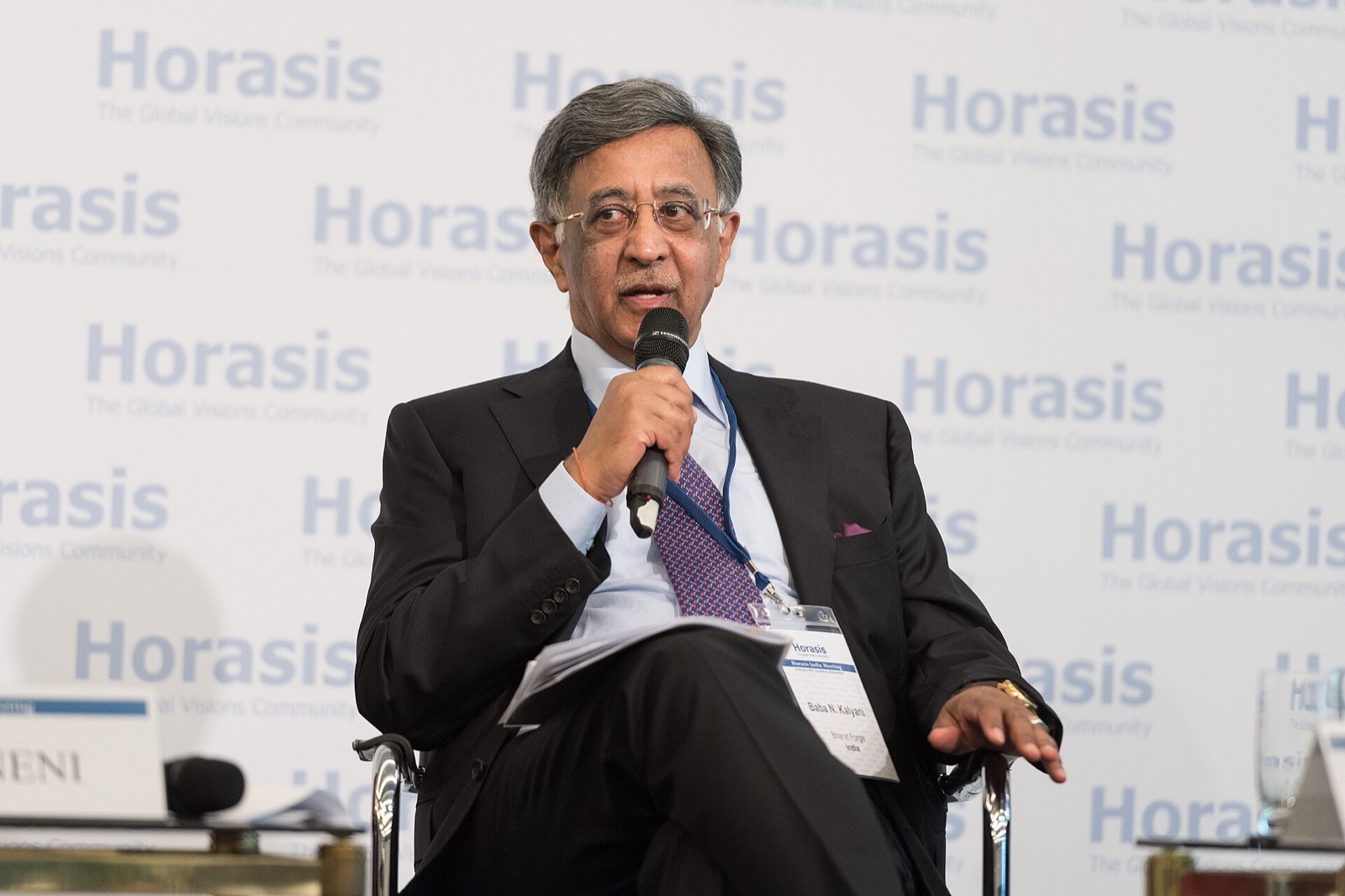
Bharat Forge is the Pune forging and engineering company at the head of the Kalyani Group. Its chairman is Baba Kalyani, in court papers Babasaheb Neelkanth Kalyani. His sister, Sugandha Hiremath, has sat on the board of Hikal Ltd, a listed pharmaceutical and specialty chemicals company, since 5 February 1992, according to Livemint. Press reports put the family wealth now caught up in their dispute at more than ₹1 lakh crore (₹1 trillion). That is a press estimate of the whole, not a figure from any court.
She relies on a family arrangement she says was made in 1994. On her account it set out how the family's assets were to be divided, including the shares in Hikal. In 2023 she sued in the Bombay High Court for specific performance, asking for shares held by companies her brother controls to be transferred to her family. He disputes the arrangement's validity and enforceability, Bar and Bench reported. The litigation has since widened to the family's Hindu undivided family (HUF) assets, properties and holdings in group companies, Bharat Forge among them. Their brother Gaurishankar Kalyani and other relatives are also parties.
Hikal's own filing shows what is at stake in that company. At 30 September 2026, Kalyani Investment Company held 31.36% and BF Investment 2.65%: 34.01% between them. On our arithmetic from the same filing, the Hiremath family and its vehicles held 34.84%: Castilia Life Sciences LLP (Jai and Sugandha Hiremath) 24.52%, Mrs Hiremath 7.84% in her own name, the rest with relatives and family trusts. If her claim succeeded, her side would hold 68.85%, the figure her side gave the court, according to Bar and Bench.
No forum has yet heard the merits. Mediation at the Pune district court failed. On 4 May 2026 the Bombay High Court declined to compel mediation, saying it is voluntary under the Mediation Act 2023. She appealed to the Supreme Court, which on 13 July appointed a former Supreme Court judge, L Nageswara Rao, as mediator. His report says the mediation was unsuccessful.
On 23 November the Chief Justice's bench recorded that it had "impressed upon the parties to agree to arbitration by a sole arbitrator". Her counsel and counsel for respondents 5 and 6 agreed, on condition that all the disputes go to that arbitrator. Counsel for the other contesting respondents was given time to take instructions. Baba Kalyani is the first respondent; he is not among those recorded as agreeing. The case returns on 14 December 2026.
- 1Supreme Court of India, Record of Proceedings, SLP (C) No. 18036/2026, Sugandha Jai Hiremath & Anr v Babasaheb Neelkanth Kalyani & Ors, 23 Nov 2026 (CJI, Bagchi and Mohana JJ): mediation unsuccessful; parties urged to agree to a sole arbitrator; petitioners and respondents 5 and 6 agreeable if all disputes are referred; listed 14 Dec 2026 (copy hosted by LiveLaw)
- 2Hikal Ltd, shareholding pattern for the quarter ended 30 Sep 2026 (BSE scrip 524735): Kalyani Investment Company 31.36%, BF Investment 2.65%, Castilia Life Sciences LLP 24.52%, Sugandha J Hiremath 7.84%, family trusts and relatives
- 3Bar and Bench, 23 Nov 2026: the alleged 1994 arrangement, the 2023 Bombay High Court suit, the Hikal holdings and the 68.85% figure, the failed Pune mediation, the widening to HUF assets and Bharat Forge
- 4LiveLaw, 23 Nov 2026: the bench's remarks on bringing all pending disputes before one arbitrator
- 5Livemint, 23 Nov 2026: Mrs Hiremath on Hikal's board since 5 Feb 1992; the Bombay High Court's May 2026 refusal to compel mediation under the Mediation Act 2023; the 13 July appointment
- 6The Economic Times, 23 Nov 2026: the family wealth estimated at over ₹1 lakh crore
- 7Arbitration Act 2001 ss4, 6; Limitation Act 1959 s6(1)(a), (7); Intestate Succession Act 1967 s7, read on Singapore Statutes Online as at 24 Nov 2026
The family made a deal, by her account, and built nothing to settle a quarrel about it. There was no agreed referee and no chosen forum. Thirty-two years later the first question is still where to argue, not who is right.
Every way out of court needs everyone's consent. The Bombay High Court said mediation is voluntary. Arbitration rests on an agreement to arbitrate. So India's highest court, with the Chief Justice presiding, can only urge, and one holdout keeps the quarrel in the courts, claim by claim and forum by forum.
Underneath sits a second question: which assets were ever the family's to divide. Indian law lets a Hindu undivided family hold property as a unit, so the fight now covers that wealth as well as the 1994 paper. Hikal's register, meanwhile, still shows both branches at about a third each.
In Singapore the quarrel would also need consent to reach an arbitrator, so the fix is the one this family did not make in 1994: write the arbitration clause into the family deal at signing, and a court can then send any later lawsuit to it.
Singapore would not have solved the first problem by itself. We read the Arbitration Act 2001 on Singapore Statutes Online as at 24 November 2026. An arbitration agreement is an agreement to send disputes to arbitration, and section 4(3) says it must be in writing. A Singapore judge, like India's, can urge a family to arbitrate. On our reading, without that written agreement no one can be made to.
What changes the picture is a clause written at the start. Under section 4(4), an arbitration agreement counts as written if its content is recorded in any form, even if the deal itself was oral. Under section 6, if one party later sues in court over a matter the agreement covers, the other can ask the court to stay the case. The court may grant the stay if there is no good reason to keep the matter in court. Meanwhile, section 6(3) lets it make orders to preserve the property in dispute, such as the shares.
On our reading, one sentence in a 1994 family deal naming an arbitrator or an institution would have sent the 2023 suit to a single tribunal, covering every dispute. That is what the Supreme Court is now trying to assemble by persuasion.
Then time. Under the Limitation Act 1959, section 6(1)(a), an action founded on a contract must be brought within six years of the date the cause of action accrued. Section 6(7) applies the same rule to claims for specific performance, subject to the exceptions the Act sets out. In Singapore, a 2023 claim to enforce a 1994 promise would first face one question: when was the promise due, and when was it broken? We do not know when her side says the shares were due, and no Indian court has ruled on time. This is a Singapore comparison, not a view on the Indian case.
Then what counts as family property. Singapore succession law has no category of wealth owned by the family as a unit. An asset belongs to the person or trustee whose name it is in. When that person dies, it passes under the will, or without one, under the rules in section 7 of the Intestate Succession Act 1967. A family that wants assets held for everyone uses a trust or a holding company. The documents then say who owns what and who decides. On our reading, that turns the question of which assets were ever the family's into one the documents can answer.
The register is the cheapest test. Whatever was agreed in 1994, Hikal's filing for 30 September 2026 still shows the Kalyani companies at 34.01% and the Hiremath side at 34.84%. A deal that divides companies between branches becomes real when the names on the register change. Until then it is a promise, and a promise needs a forum.
Now the limits. No court has decided whether the 1994 arrangement exists, what it says or whether it binds. Baba Kalyani disputes it, and we have not seen it. The ₹1 lakh crore is a press estimate of the family's wealth, not the value of any claim. The Supreme Court has not ordered arbitration. It recorded who agreed and gave the rest time to answer, until 14 December 2026.
For the reader whose family once divided its businesses by agreement, four questions. Is the agreement written and signed by everyone it binds? Does it say who settles a disagreement, and where? Did the shares and titles actually move? And if they did not, who holds what for whom today?
Sugandha Hiremath, Baba Kalyani's sister — a suit filed in 2023 for the Kalyani companies' 34.01% of Hikal, still undecided; she has agreed to a sole arbitrator if every dispute goes to that arbitrator
Baba Kalyani, chairman of Bharat Forge — time for his side's counsel to take instructions on arbitration; he disputes the 1994 arrangement's validity and enforceability
Respondents 5 and 6 — recorded as agreeing to a sole arbitrator on the same condition
Hikal's other shareholders, about 31% on our arithmetic — a listed company whose two founding branches hold about a third each and are litigating over whether one should hold both blocks
The reader whose family divided its businesses by agreement — four questions: is it signed, who referees, did the names change, and who holds what for whom
A counterfactual, not advice. The verified machinery is on the Singapore page; where your family stands is the briefing.
From the case files: Two branches, one company, no referee: Yung Kee, wound up by court order