Making your heir chairman doesn't give him the company. Ask JCB
Lord Bamford, 80, has chaired JCB since 1975. From October he shares the chair with his youngest son, George, four months after saying the job would go to George rather than his elder son, Jo. Companies House shows that the company behind the yellow diggers is owned through a trust, and that the power over its trustees sits with someone outside the family who lives in Monaco. What if it had been Singapore?
Read this in: EN · 简体 · 繁體 · ไทย · ID
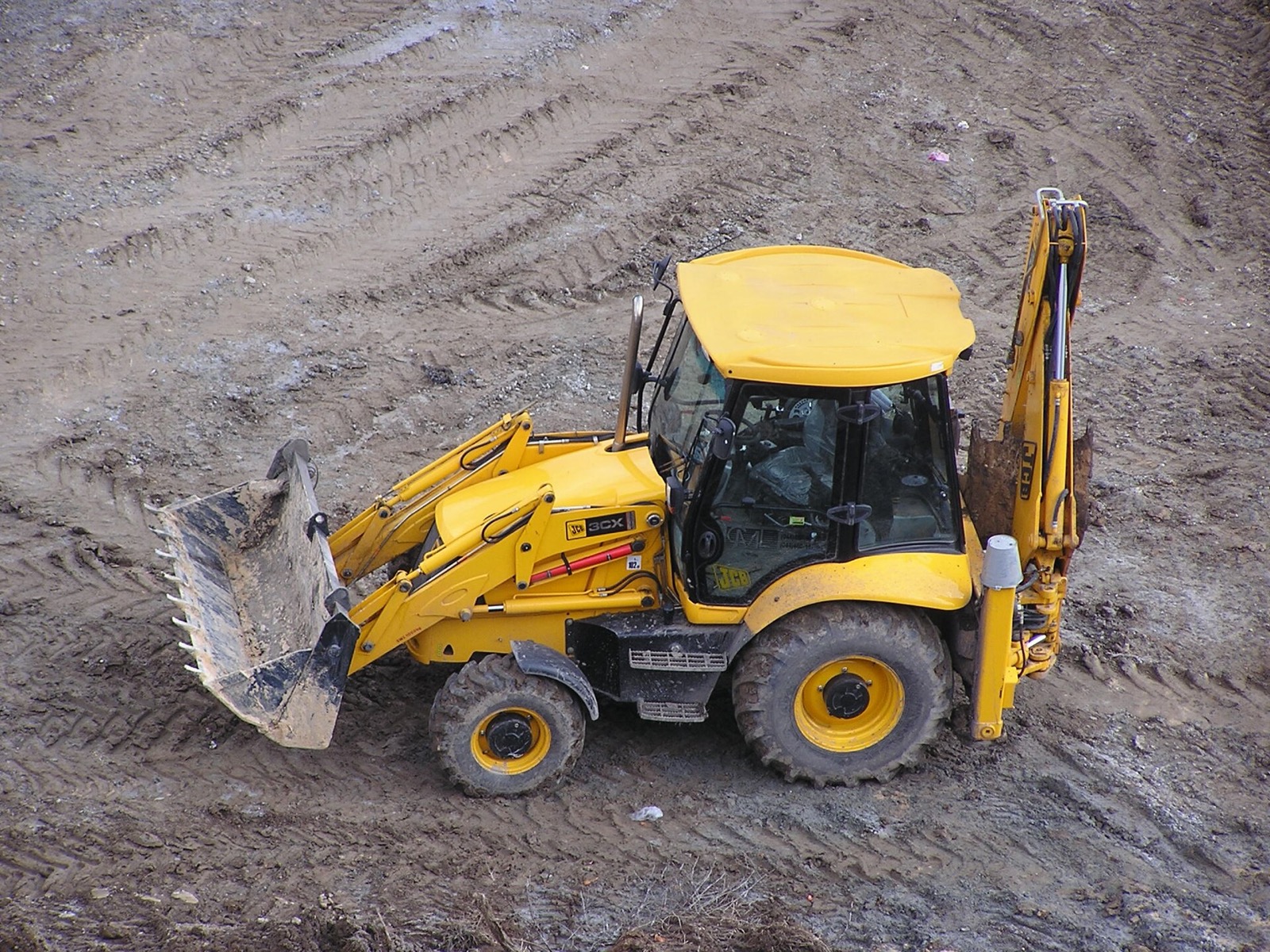
An 80-year-old chairman of 51 years hands half his chair to his youngest son, the first change since 1975
On 28 September 2026 JCB, the Staffordshire company whose initials are painted on the yellow backhoe diggers it makes, said George Bamford would become joint chairman from the start of October. He will share the role with his father, Lord Bamford, who has chaired the company since 1975. Joseph Cyril Bamford, George's grandfather, founded it in 1945. The Press Association called it the first change at the top in more than fifty years. George, 45, is deputy chairman and founded the watch business Bamford Watch Department.
The digger maker sells 113,498 machines in 2025, 5.2% fewer, and its profit slips to £642 million
The same statement gave the 2025 results. Turnover fell to £5.7 billion from £5.8 billion, JCB sold 113,498 machines, 5.2% fewer, and pre-tax profit fell to £642 million from £687.3 million. A new factory in San Antonio, Texas, opens next month, and £100 million is going into the Staffordshire headquarters. 'I'm delighted that my son George will become joint chairman of JCB,' Lord Bamford said.
The chairman names his youngest heir in May, passing over an elder son with two decades on the board
The choice was made public in May. On 16 May 2026 City AM, reporting Lord Bamford's interview with the Telegraph, quoted him: 'it will be George', and 'I'm 80, for heaven's sake.' That passed over his elder son, Jo, who had joined the board in 2006, held senior roles including head of major contracts, and was widely seen as the heir. City AM reported that Jo had earlier tried to persuade his father to step aside, and that the plan had not yet been formalised by the board. Jo founded the hydrogen company Ryze and had warned that changes to inheritance tax could push the family business abroad.
A public register shows a trust controls the family's company, and the man over its trustees lives in Monaco
The ownership sits one level up, and it is on the public record. Companies House, read on 28 September 2026, shows that J.C. Bamford Excavators Limited, the operating company, is controlled by J.C.B. Service, an unlimited company that holds more than 75% of its shares and votes and the right to appoint its directors. J.C.B. Service records one person with significant control: Peter Svennilson, a Swedish national living in Monaco, from 1 January 2025. His control is recorded as control 'over the trustees of a trust' that holds more than 75%.

Three family members quit the parent's board in 2017 and return two years later; the youngest son never leaves
Before him, from 6 April 2016, the entry named Patrick Fischer, a Swiss national. The register does not name the trust or its beneficiaries. The board of J.C.B. Service shows the family's history. George has been a director since 6 April 2009. Alice, born in 1976, and Jo, born in 1977, were first appointed in 2009 and 2006, resigned on 14 June 2017, and returned on 12 July 2019. Their parents, the chief executive Graeme Macdonald and two other directors complete the board. Neither JCB's statement nor any report we read says whether anything in the trust changes with the chairmanship.
- 1Press Association (Henry Saker-Clark), 'George Bamford to become joint chairman of JCB', 28 Sep 2026, as published by The Irish News: the appointment from October, Lord Bamford's statement, the 2025 turnover, units and pre-tax profit, the Texas factory and the £100m headquarters investment
- 2Bloomberg, 27 Sep 2026: 'JCB Succession Underway After Making Founder's Grandson Co-Chair' (headline)
- 3City AM, 16 May 2026: Lord Bamford's Telegraph interview ('it will be George'), Jo Bamford's board history, the attempt to persuade his father to step aside, the plan not yet formalised
- 4Companies House, J.C. Bamford Excavators Limited (00561597), persons with significant control: J.C.B. Service, unlimited company, more than 75% of shares and votes and the right to appoint directors (read 28 Sep 2026)
- 5Companies House, J.C.B. Service (00564955), persons with significant control: Peter Svennilson from 1 Jan 2025 and Patrick Fischer from 6 Apr 2016 to 1 Jan 2025, each with control over the trustees of a trust holding more than 75% (read 28 Sep 2026)
- 6Companies House, J.C.B. Service (00564955), officers: appointment and resignation dates of Alice, Jo and George Bamford (read 28 Sep 2026)
- 7GOV.UK, 23 Dec 2025: inheritance tax relief threshold for business and agricultural property raised from £1m to £2.5m from 6 April 2026, with 50% relief above it
- 8GOV.UK, Summary of reforms to agricultural property relief and business property relief (30 Oct 2024): from 6 April 2026 an allowance for trustees on each ten-year anniversary charge and exit charge
- 9Trustees Act 1967 s90(5) (a trust is not invalid only because the settlor reserves powers of investment or asset management functions), Singapore Statutes Online, read 28 Sep 2026
- 10Companies Act 1967 s386AF(11)–(12) (register of registrable controllers not to be disclosed to any member of the public; fine up to $25,000), Singapore Statutes Online, read 28 Sep 2026
The son gets the chairman's seat, but the shares stay in a trust run by outsiders, the handover still unannounced
A chairmanship is an office, and an office is not an inheritance. The board gives it and the board can take it back. George Bamford's title decides who runs the meeting from October. It does not decide who owns JCB, because on the public register no Bamford holds the controlling shares. A trust does, and the power over its trustees has sat with individuals outside the family: a Swiss national, and now a Swede living in Monaco. The succession that matters most is the one nobody has announced: who will control those trustees when Lord Bamford no longer can.
Father and son, 80 and 45, share one chair, and nobody has said who decides when they disagree
The second knot is the word 'joint'. Two chairmen, father and son, is kind and practical at 80. It gives the heir the title while the father keeps the seat. It also leaves the hard questions open. Who decides when the two chairmen disagree? What happens to a shared office if one of them loses capacity? Is any of it written anywhere except a press release?
The elder son passed over for chair still sits on the parent's board: one heir to office, three to value
The third is the brother. Jo Bamford sat on the parent's board for most of two decades and, on May's reports, expected the job. He is still a director of J.C.B. Service. If the trust treats the three children alike, the family has one heir to the office and three heirs to the value, and the son who was passed over sits in both rooms.
Britain's tax relief on a family business stops at £2.5 million, and a trust hits that limit every decade
The fourth is the tax clock. Since 6 April 2026 British inheritance tax gives full relief on business property only up to £2.5 million, and half relief above it. British rules apply the same allowance to a trust at its ten-year charges, so a trust holding a company of JCB's size meets the limit every decade, whoever chairs the board. That is the pressure Jo warned about in public, and a change of chairman does nothing to it.
In Singapore the chair would still be the board's to give, but a family trust deed could say in writing who controls the trustees after the founder and how the shares vote on the board, and no member of the public would be entitled to see the register of who controls the company.
In Singapore too the board picks the chairman, so naming an heir gives him the meeting, not the company
Start with what would not change. In a Singapore company, as in an English one, the chairman is chosen under the company's constitution, usually by the directors, and the directors are chosen by the shareholders. Naming an heir chairman in Singapore would give him what it gives George Bamford: the chair of the meeting, held for as long as the board wants him there.

A Singapore founder puts his shares in a trust and keeps the investment powers, and the trust still stands
The ownership layer is where a Singapore structure can say more. A family can hold its operating company through a Singapore trust, as the Bamfords hold JCB through theirs. Section 90(5) of the Trustees Act 1967, read on Singapore Statutes Online on 28 September 2026, says a trust is not invalid 'by reason only of' the settlor 'reserving to the person all or any powers of investment or asset management functions'. A founder can therefore settle the shares and keep real powers over them while he is able.
The deed names who takes the founder's powers and when, so the vote that picks the chairman is written down
The deed then does the work the press release cannot. It can say who takes over the reserved powers and on what event, whether death, loss of capacity or a set age. It can say whether that is one named child, the three children acting by majority, or a protector with power to remove and appoint trustees. Whether those powers include directing how the shares vote on the board is a drafting question. The deed should answer it in words, because that vote decides who chairs.
Singapore keeps the list of company controllers private, and a company that publishes it faces a S$25,000 fine
Privacy works differently. Britain's register told anyone with a browser that a Monaco-resident Swede controls the trustees of JCB's owner. Singapore keeps the equivalent list inside the company. Section 386AF of the Companies Act 1967 requires every company to keep a register of its registrable controllers. Subsection (11) forbids it to disclose that register 'to any member of the public', and subsection (12) makes breach an offence with a fine of up to S$25,000. There is no public trust register. The authorities can see who controls the company; the public cannot.
Singapore has taxed no estate since 15 February 2008, so no death-tax bill forces a family to sell shares
Tax is the part a Singapore trust cannot fix for a British company. Singapore has no estate duty for deaths on or after 15 February 2008, and no inheritance or gift tax. But Britain's inheritance tax follows British assets and British-connected people. Moving the trust to Singapore would not take the shares of a Staffordshire company out of it. For an Asian family whose company is in Singapore, the rule is simpler: a death does not bring a tax bill that forces the family to sell shares.
A family agreement signed while everyone is alive gives the child not chosen dividends, a seat or an exit price
The fairness question needs its own document. A succession plan for a family company has two jobs: moving the business to the person who will run it, and treating the others fairly. A family constitution or shareholders' agreement can separate office from value. It can say who may chair, how two joint chairmen settle a disagreement, and what a child who is not chosen receives, whether dividends, a board seat or a price and a timetable for selling out. Written while everyone is alive, it turns a passed-over sibling into a party to the plan.
Nobody outside has read the trust deed, so who benefits and what changes with the chair stay unknown
Now the honest limits. English law governs JCB and its trust. We have not seen the trust deed. We do not know its beneficiaries, whether it is discretionary, or what role Mr Svennilson plays beyond what the register records. The May account is City AM's report of a Telegraph interview, and JCB's statement is quoted from the Press Association. Nothing public says the Bamfords are in dispute today.
The heir outside the room asks four questions at dinner: who owns, who controls the trustees, who breaks ties
For the reader outside the room, the questions fit on one page and can be asked at dinner. Who owns the shares, as distinct from who chairs the board? If a trust owns them, who controls the trustees after the founder, and is that written down? If there are two chairmen, who settles a disagreement? And what does the child who is not chosen receive, and where is it written?
George Bamford, 45, the youngest child — joint chairman from October 2026 and a director of J.C.B. Service since 2009: the office, not the shares; under a Singapore deed, the office plus whatever powers the deed gives him in writing
Lord Bamford, 80, chairman since 1975 — keeps the chair, now shared; the only person who can still settle the family's terms while he is able
Jo Bamford, 48, the elder son — passed over for the chair, on the May reports; still a director of J.C.B. Service, re-appointed in 2019; his share of the value depends on a trust deed nobody outside has seen
Alice Bamford, the eldest child — a director of J.C.B. Service since 2019; not named in any account of the succession we read
The trust, and the person who controls its trustees — more than 75% of J.C.B. Service; since 1 January 2025 the controlling person on the register is Peter Svennilson, a Swedish national living in Monaco
The reader with a family company — four questions: who owns the shares, who controls the trustees next, who settles a split between two chairmen, and what the child not chosen receives
A counterfactual, not advice. The verified machinery is on the Singapore page; where your family stands is the briefing.
From the case files: What a sibling who is not chosen is entitled to when a brother runs the family business