Armani's will sets a sale date, but the buyer sets the price
Giorgio Armani died on 4 September 2025, aged 91. His will tells the heirs to sell about 15% of the group between 12 and 18 months later, to LVMH, L'Oréal or EssilorLuxottica or a buyer of equal standing. The window opened on 4 September 2026. On 27 September the chief executive said the stake could be split among several investors, that nothing is decided, and that any deal depends on price. Two people close to the matter had already told Reuters the will's deadlines are not strictly binding. What if it had been Singapore?
Read this in: EN · 简体 · 繁體 · ไทย · ID
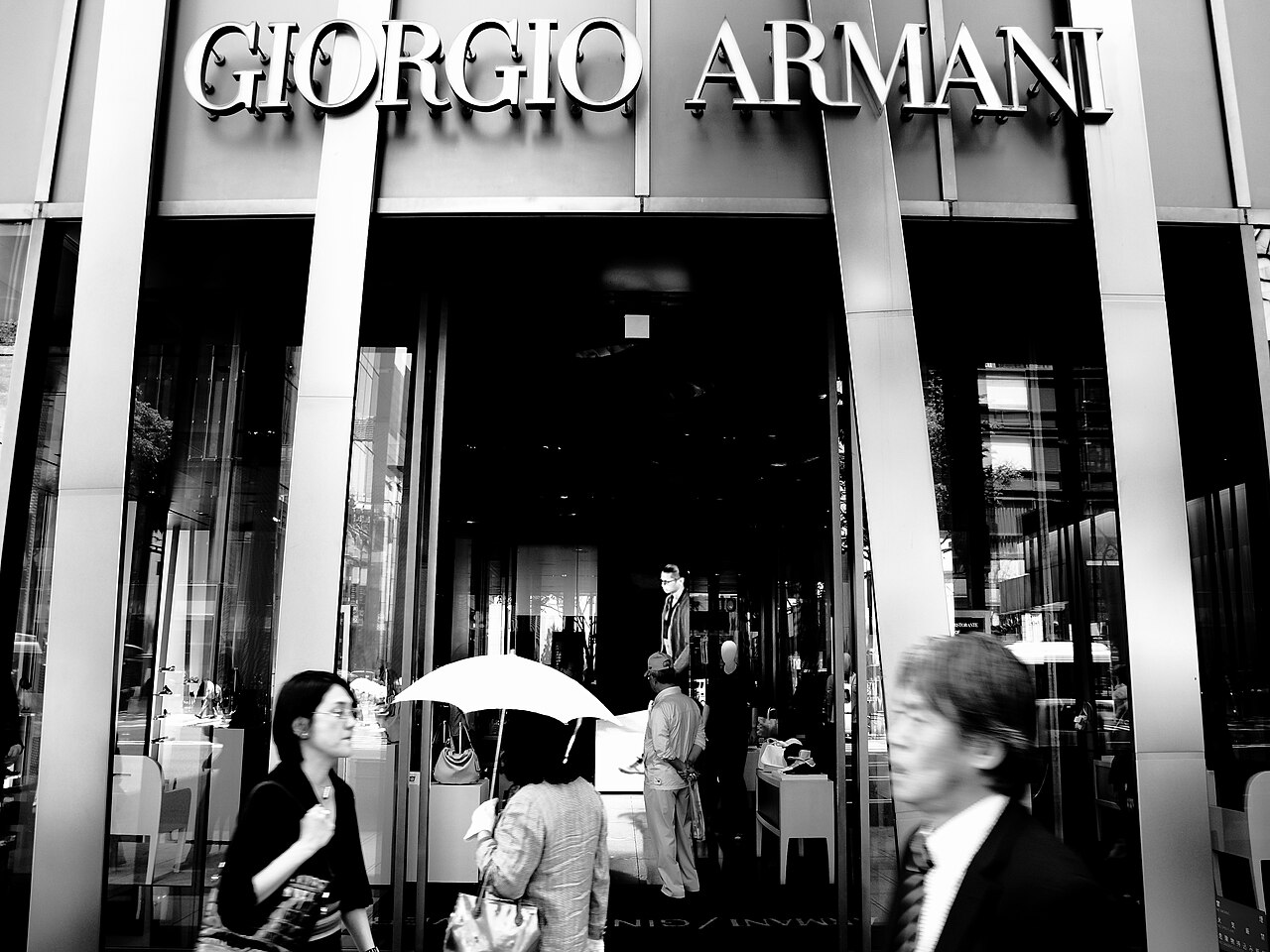
A founder dies at 91 with no successor, and his will orders the heirs to sell 15% within 18 months
Giorgio Armani, founder of the Italian fashion house, died on 4 September 2025, aged 91. He was the sole major shareholder of the company he had started in the 1970s with his partner Sergio Galeotti, and he left nobody in line to run it. His will, reviewed by Reuters in September 2025, tells his heirs to sell an initial stake of about 15% between 12 and 18 months after his death. A larger stake, or a stock-market listing, is to follow.
The will names three preferred buyers and opens a 12-to-18-month window, and Reuters' sources call the deadline not strictly binding
The will names LVMH, the beauty group L'Oréal and the eyewear group EssilorLuxottica as preferred buyers, and leaves the door open to other investors of 'equal standing'. On our count the window opened on 4 September 2026 and closes about 4 March 2027. Reuters reported on 4 September 2026 that two people close to the matter said there is no pressure to clinch a sale and the will's deadlines are not strictly binding. A deal could be postponed if markets do not support an adequate valuation.

Bankers value the house at €5–7 billion while sales slip 2.8%, so the heirs must sell into a soft market
Bankers and advisers consulted by Reuters put the group at around €5 billion to €7 billion. Over the past year its sales fell 2.8% at constant currencies, to €2.2 billion.

The chief executive says three buyers may share the stake, nothing is decided, and price will rule
On Sunday 27 September 2026 the Financial Times reported that Armani would meet the three named groups in the coming weeks, with one option discussed informally: all three sharing the 15%. The same day chief executive Giuseppe Marsocci told reporters, 'It is not written in stone that it has to be one investor.' He said no decision had been made, and that the house intends to respect its founder's timetable, but that any transaction depends on agreement on 'price and details'. He declined to say whether investors beyond the three had approached.

The will itself is unpublished, so its exact wording on buyers and deadlines rests on one agency's reading
We have not seen the will. Everything above about its terms is Reuters' account of it.

- 1Reuters via Business Standard, 27 Sep 2026: CEO Marsocci, 'not written in stone that it has to be one investor'; no decision; will's 12-to-18-month window for an initial 15%; LVMH, L'Oréal, EssilorLuxottica preferred and other investors of 'equal standing'; FT report of meetings; 'price and details'
- 2Reuters via Business Standard, 4 Sep 2026: death on 4 September 2025 aged 91; two people close to the matter say the will's deadlines are not strictly binding and a deal could be postponed; €5–7 billion valuation range; sales down 2.8% at constant currencies to €2.2 billion
- 3Reuters via Business Standard, 12 Sep 2025: the will reviewed by Reuters; 15% within 18 months, then a further 30–54.9% to the same buyer within 3–5 years or a listing; Armani the sole major shareholder
- 4Trustees Act 1967 s3 (trustee includes a personal representative where the context admits), s13(1) (trustee may sell or concur in selling, by auction or private contract, on conditions he thinks fit), read on Singapore Statutes Online 30 Sep 2026
- 5Trustees Act 1967 s3A and First Schedule para 3 (statutory duty of care when appointing agents), s56 (court may confer a power to sell that the trustees lack; application by trustees or any person beneficially interested), read on SSO 30 Sep 2026
A will sets the seller's deadline but cannot make anyone buy, so the heirs carry the clock alone
A sale instruction in a will does two things and cannot do a third. It sets the seller's timetable and it names the preferred buyers. It cannot make anyone buy, or fix what they pay. The heirs carry the deadline; LVMH, L'Oréal and EssilorLuxottica carry nothing. So the date is a promise made by one side of a negotiation, and every company across the table can read it.

Whether the will says one buyer or several decides how far advisers can bend it, and who must explain why
Two small words do most of the work: 'a' buyer and 'equal standing'. If the will speaks of one buyer, three groups sharing 15% needs someone to say the will is 'not written in stone', which is what the chief executive said. That is a sensible reading, and it is the reading of the people the will binds. But it also means the timetable is whatever the advisers decide it is, with no named person who must write the reason down.

A family seen racing a date sells at the low end: on the bankers' range the same 15% swings by €300 million
The price of a soft deadline is easy to state. On the bankers' range of €5 billion to €7 billion, 15% is worth €750 million to €1.05 billion (our arithmetic). The gap between the two ends of the range is €300 million on this stake alone, and a family that is seen to be racing a date sells at the low end.
In Singapore the executor could sell to three buyers on one private contract, and a court could widen a will that named only one, but no statute makes a buyer pay the price the family wants.
Singapore cannot change the price or Italian law, only who may sell, how, and what a too-tight will costs
Start with what Singapore would not change. Armani's will and the company around it are matters for Italian law, and we have not seen the will, only Reuters' account. A Singapore will could equally name preferred buyers and a timetable, and it would meet the same market: nothing in any statute makes LVMH, L'Oréal or EssilorLuxottica pay a family's price. What Singapore law settles is narrower: who may sell, in what manner, and what happens if the will is too tight.

An executor can sell to three buyers on one private contract, because the Trustees Act does not demand a single buyer
Who may sell. Section 13(1) of the Trustees Act 1967 says that where a trust for sale or a power of sale of property is vested in a trustee, the trustee may sell, or concur with any other person in selling, all or any part of it, by public auction or private contract, on any conditions he thinks fit. Section 3 extends 'trustee', where the context admits, to a personal representative, so an executor is inside it. Read on Singapore Statutes Online on 30 September 2026. Nothing in the section requires one buyer; three groups could take one 15% on a single contract.

If the will allows one buyer only, the trustees can ask a judge to let them sell to several
A will can narrow that default, and this is where the chief executive's remark bites. If the wording allowed a sale only to one named buyer, three groups sharing a stake would not fit it. Section 56 covers that gap: where a sale is in the court's opinion expedient but cannot be made because the trustees have no power for it under the instrument or by law, the court may confer the power on any terms, on the application of the trustees or of any person beneficially interested. Whether a restriction counts as an absence of power is for a judge; we flag it as inference.

A trustee who hires a banker must show reasonable care in choosing him, on a stake worth up to €1.05 billion
Advisers are the third piece. A trustee who appoints an agent to run a sale process, a banker or a valuer, is bound by the statutory duty of care in section 3A and the First Schedule, paragraph 3: reasonable care and skill in choosing the person and setting the terms. Section 3A(2) lets the trust instrument switch the duty off, so a family that wants it kept should say so. For a stake worth €750 million to €1.05 billion on the bankers' range, choosing and instructing the banker is the decision that matters.

A better will sets the deadline as a target with a named decider, an independent valuation and written reasons for delay
What a Singapore will could add, where on Reuters' account Armani's leaves matters to goodwill. Say whether the buyer may be more than one, and define 'equal standing' by a test a stranger could apply. Set the deadline as a target with a fallback: a named person, an independent valuation and written reasons for any delay, rather than a date everyone privately calls soft. Say what happens if the best price is below the valuation: sell, wait, or list. And say who decides, because a trustee left to decide alone in a falling market may do nothing rather than sell low. That last point is inference.

A soft deadline can be wise, but one everyone calls soft is no deadline, and buyers can read the same will
Now the honest limits. A Singapore will does not bind a buyer, does not move an Italian company, and cannot stop heirs and advisers from doing what Reuters' sources describe, which is reading the deadline as soft. Some of that softness is wise: a forced sale at €5 billion when the family hopes for €7 billion costs real money. The point is not that a soft deadline is wrong. It is that a deadline everyone calls soft is not a deadline, and the will is public enough that anyone across the table can read it. Nothing public says any buyer has bid.

Four questions tell a family whether its sale instruction is a plan or a wish: to whom, what price, whose leave
For the reader whose family holds a company, the questions fit on one page. Does the will say sell, and by when? To whom, and may it be more than one? What counts as an acceptable price, and who says so? Who may extend the date, in writing, and for how long? If the answers are 'yes', 'named groups', 'nobody' and 'the heirs' advisers', the family has Armani's plan without Armani's brand.

Armani's heirs and the group's board — the instruction to sell about 15% between 12 and 18 months after 4 September 2025 (to about 4 March 2027 on our count), with two sources calling the deadlines not strictly binding; in Singapore the executor would hold the power of sale under section 13 and a court route under section 56 if the will were too narrow
LVMH, L'Oréal and EssilorLuxottica — named as preferred buyers, with meetings expected in the coming weeks (FT, 27 September 2026); no obligation to buy, or to pay a family's price, in Italy or in Singapore
Other investors of 'equal standing' — the door the will leaves open; the chief executive declined to say whether any have approached
Chief executive Giuseppe Marsocci and management — a stated intention to respect the founder's timetable, subject to agreement on 'price and details'
The reader whose family holds a company — four questions: what the will orders, to whom, at what price, and who may move the date
A counterfactual, not advice. The verified machinery is on the Singapore page; where your family stands is the briefing.
From the case files: Arnault's five children, equal shares and one managing partner