A will that misses one asset leaves a lawsuit. Ask MGR's heirs
M.G. Ramachandran, the Tamil film star who ran Tamil Nadu until he died in 1987, left a will that the court probated in 1992. On 24 September 2026 a judge in Chennai threw out his stepson's claim to a plot the stepson says the will forgot, and eleven of his brother's descendants lost their bid to join the case. The judge decided nothing about who owns the land. What if the estate had been in Singapore?
Read this in: EN · 简体 · 繁體 · ไทย · ID
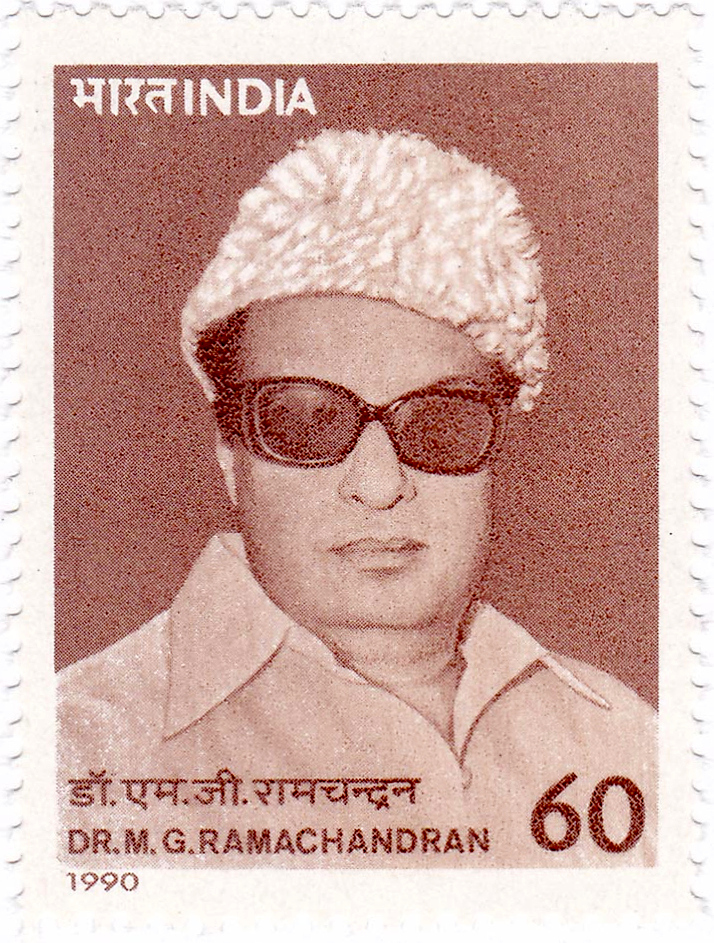
A Chennai judge dismisses a stepson's claim to a film star's forgotten plot, 39 years after the star died
On 24 September 2026 Justice A.D. Maria Clete of the Madras High Court dismissed a petition over one plot of land in Tiruchirappalli that had belonged to M.G. Ramachandran. MGR, as he is known, was the Tamil film star who served as Chief Minister of Tamil Nadu from 1977 until his death on 24 December 1987. He was born in Kandy, in what was then British Ceylon, and had no children.
A childless film star signs his will in January 1987 and leaves his home to a school for hearing-impaired children
MGR signed a will on 18 January 1987, eleven months before he died, and the High Court probated it on 14 July 1992. As the will directed, his home at Ramapuram became a school for children with speech and hearing impairments. His widow, V.N. Janaki Ramachandran, died on 19 May 1996, leaving two wills of her own, dated 22 February and 16 March 1995.
A stepson finds a 1984 land purchase in the star's memoir and claims the ₹7.75 crore plot through his mother
The petitioner, J. Surendran, is Janaki's son by her first husband, Ganapathi Bhat. His case was that MGR bought the Tiruchirappalli property by a sale deed of 16 March 1984, and that neither MGR's will nor his mother's mentioned it. It therefore passed to her on intestacy, and from her to him. His counsel said the family learnt of the land only by reading MGR's autobiography, Naan Yen Piranthen, after a lawsuit over its copyright. He filed in December 2019, with an affidavit putting the net value at ₹7,74,80,000, about ₹7.75 crore.
Eleven of the brother's descendants ask on 17 September to join the case, saying the plot may be theirs
On 17 September 2026, eleven descendants of MGR's elder brother, M.G. Chakrapani, asked to join the case: two sons, two daughters-in-law and seven grandchildren. They said the land might be theirs. Chakrapani had ten children, three of them still alive, and not all of the branch joined the application.
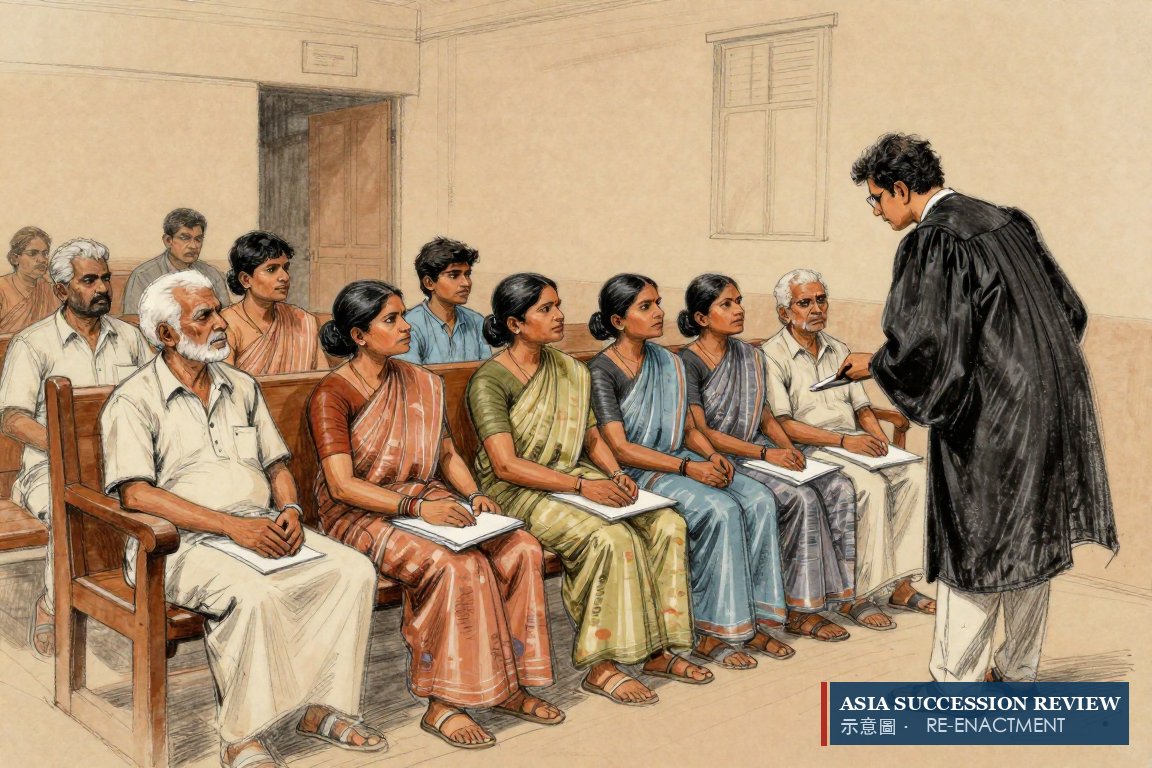
The judge asks why the petition dates the wedding ten years before the first husband died, and gets no answer
The judge refused the grant. Surendran had produced a legal-heirship certificate for his mother but not for MGR. His own petition dated her marriage to MGR 14 June 1962, nearly ten years before her first husband died on 28 February 1972. He did not say whether that first marriage had ended.
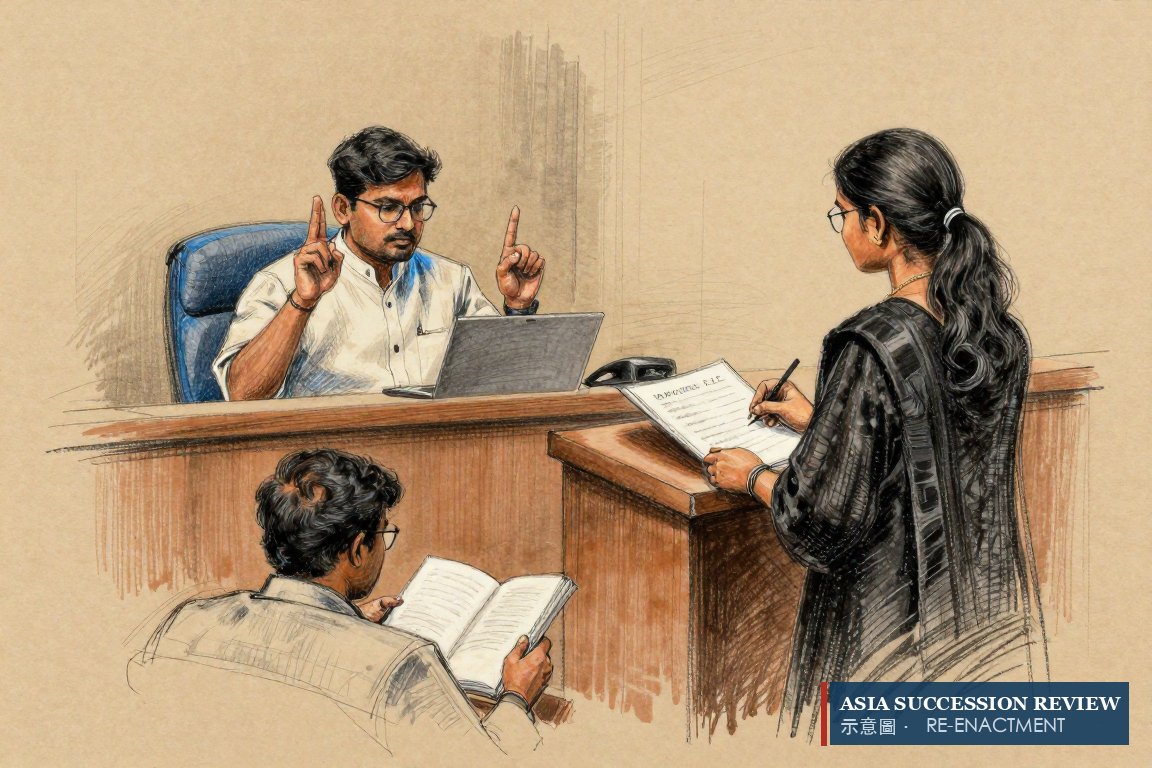
The court finds it has no jurisdiction over the Trichy plot, and nobody can show who holds it today
The judge added that the court lacked territorial jurisdiction over the land and that the valuation notice had gone to the wrong district collector. Nobody representing MGR's probated estate had been brought in, and Surendran had not shown who holds the land today. The applications to join fell with the petition. Every question of marriage, succession and title was left open for a proper suit, with no order on costs.
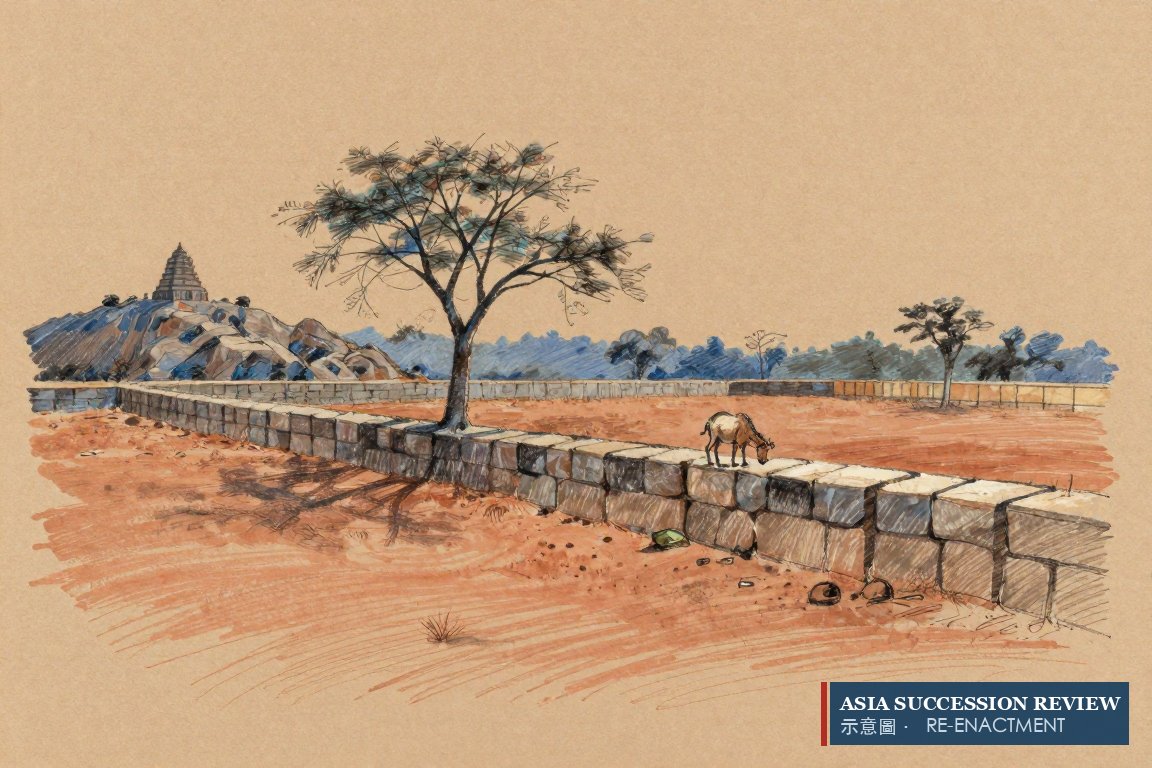
The brother's heirs lose their 2012 claim to Chennai land the court finds the will gave the school trust
The same judge also dismissed a second petition, Bar and Bench reported on 26 September. Chakrapani's heirs had filed it in 2012 over land at Virugambakkam in Chennai, saying the will had missed it. The administrator of MGR's estate said the land was part of Sathya Garden and had vested in the trust that runs the school. The court found it had been covered by the probated will. That case had gone unlisted for nearly nine years.
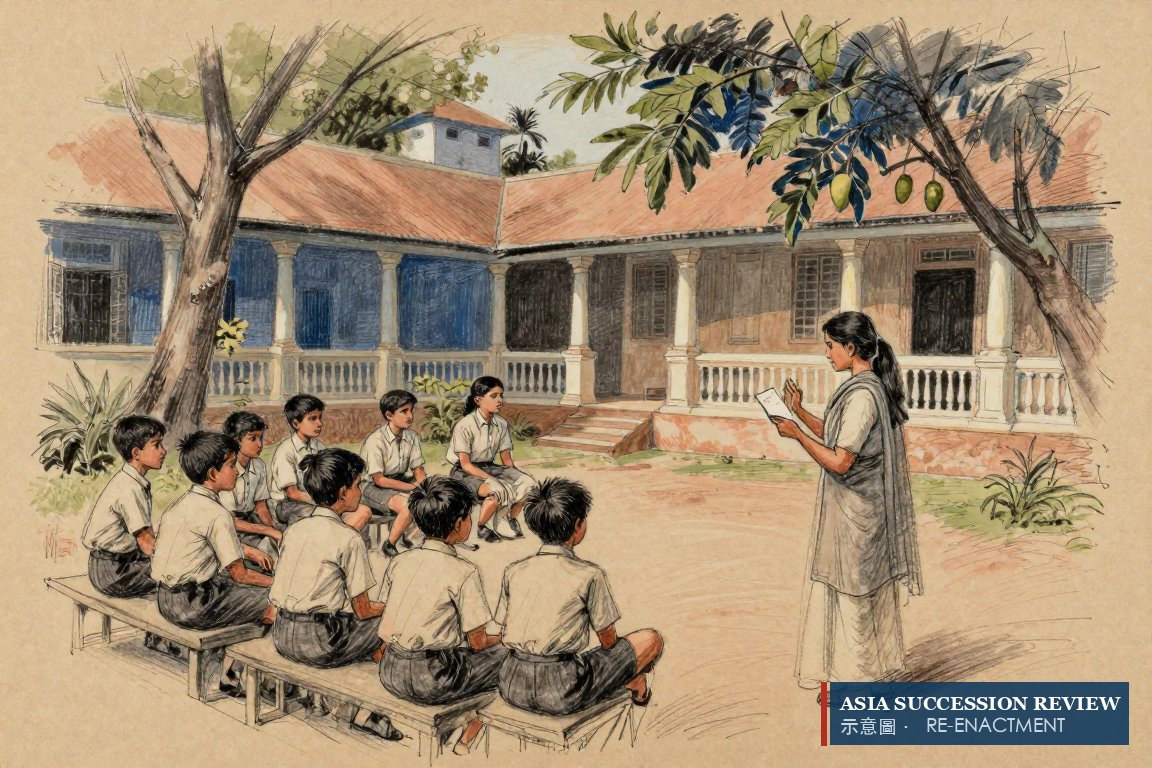
The will never mentions the star's memoir, so a 2012 court sends its copyright to the widow by intestacy
One asset the will did miss is on the record. In a judgment of 21 June 2012, recounted in the order, the High Court held that the copyright in MGR's autobiography had not been disposed of by his will and had passed to Janaki on intestacy.
- 1Madras High Court, O.P. No. 484 of 2021 and A. Nos. 4094 & 4095 of 2026, order of Dr Justice A.D. Maria Clete pronounced 24 Sep 2026 (full text as published by Sekar Reporter): the wills, the dates, the sale deed, the affidavit of assets, the marriage dates and the reasons for dismissal
- 2Bar and Bench, 26 Sep 2026: MC Ramamurthy v M Rajendran, the Virugambakkam petition of 2012 dismissed; Sathya Garden vested in the school trust; nine years unlisted
- 3UNI India, 26 Sep 2026: the Tiruchirappalli petition dismissed; missing tax, revenue and ownership records
- 4Wikipedia, M. G. Ramachandran: born in Kandy 1917, Chief Minister 1977–1987, no children, the Ramapuram school set up under the January 1987 will
- 5Intestate Succession Act 1967 s3 ('intestate' includes a person who leaves a will but dies intestate as to some beneficial interest; 'child'), s7 rules 1 and 6, s10 (partial intestacy), Singapore Statutes Online
- 6Wills Act 1838 s19 (a will speaks from death) and s20 (failed devises fall into the residuary devise), Singapore Statutes Online
- 7Women's Charter 1961 s11 (marriage void where either party is already married), Singapore Statutes Online
- 8Probate and Administration Act 1934 s26 (grants subject to an exception; a further grant of the excepted part), Singapore Statutes Online
- 9Limitation Act 1959 s22 (trust property held by the trustee: no limit) and s23 (claims to a deceased person's personal estate: 12 years), Singapore Statutes Online
A founder lists the assets he remembers, and the book and plot he forgets fall to the intestacy rules
A will is a list, and lists miss things. MGR's will dealt with what he was thinking about in January 1987: the house that became a school, the land around Sathya Garden. It did not deal with the copyright in his own life story; a court decided that in 2012. His stepson says it also missed a plot bought three years before he signed. Whatever a will does not give away passes as if there were no will at all, asset by asset.

A forgotten plot makes a 1962 wedding date decide who inherits, and pulls the brother's grandchildren into court
That reopens the one question the will had closed: who are the heirs? A will that names Janaki gives her the gift whether or not the law calls her MGR's widow. Intestacy gives it only to a lawful widow. The stepson's own papers dated her marriage to MGR nearly ten years before her first husband died. So a forgotten plot turned a marriage date from 1962 into a live question in 2026, and put the brother's grandchildren in the room.
The heir files 27 years after the grant, and when the judge asks for the land records, nobody has them
Time made every step harder. The land was found by reading a book. The petition came 23 years after Janaki died and 27 years after the grant, before a court that turned out to be the wrong one. The judge asked for a tax assessment, a revenue record, an encumbrance certificate and the executor's inventory. Nobody had them.

Two petitions fail, nobody wins, and a ₹7.75 crore plot waits with no owner for the next lawsuit
Nobody won either. Two petitions were dismissed and every question left open, so the next round can begin with a fresh suit. The land has a sworn value of ₹7.75 crore and no settled owner. The estate of a man who died in 1987 is still open because one line was never written.
In Singapore the forgotten plot would also pass by intestacy, because the Intestate Succession Act treats a will that misses an asset as no will for that asset. One sentence prevents it: a residuary clause giving everything not otherwise given to a named person, with a second name if that person dies first.
Singapore treats a forgotten asset exactly as Chennai does: it goes to the intestacy heirs, not the will's beneficiaries
Start with the rule, because Singapore gets the first step exactly as Chennai did. Section 3 of the Intestate Succession Act 1967, read on Singapore Statutes Online on 27 September 2026, says an 'intestate' includes a person who leaves a will but dies intestate as to some beneficial interest in his property. Section 10 applies the Act to the part of the property the will does not dispose of, subject to what the will says. A plot or a copyright the will never mentions goes to the intestacy heirs, not to the will's beneficiaries.

In Singapore a lawful widow with no children or parents-in-law takes everything the will missed, and the nephews take nothing
Next, who those heirs are. Under rule 1 of section 7, a person who leaves a spouse, no issue and no parent leaves the whole estate to the spouse. Rule 6 reaches brothers and sisters and the children of deceased ones only if there is no spouse, no descendant and no parent. A lawful widow would shut the brother's line out in Singapore, as the Madras judge said a Class I heir shuts out Class II heirs under the Hindu Succession Act.
A Singapore stepson has no claim of his own on his stepfather's estate and can inherit only through his mother
A stepson has no claim of his own either. Section 3 defines a 'child' as a legitimate child or one adopted by court order. Surendran could claim only through his mother's estate, which is how he framed his petition.

Intestacy asks who your lawful spouse was, while a will asks only whom you named, and that difference decides fortunes
The marriage question would follow the estate here too. Section 11 of the Women's Charter 1961 says a marriage is void if either party is, at the date of the marriage, married to anyone else. Whether a particular marriage of 1962 was valid would depend on the law that governed it then, and for a Hindu couple in India the judge pointed to the Hindu Marriage Act 1955. The lesson is the same in both places. Intestacy asks who your lawful spouse was. A will asks only whom you named.

One closing line giving 'the rest of my estate' to a named person leaves intestacy nothing to reach
The fix is one clause. Lawyers call what it covers the residuary estate: everything the will does not give away by name. A Singapore will that ends by giving 'the rest of my estate' to a named person leaves nothing for the intestacy rules to reach.

A will speaks at death, so a home bought after signing still falls into the general gift of everything else
Two sections of the Wills Act 1838 make that clause work harder. Section 19 says a will speaks as if it had been signed immediately before death, so a general gift catches property bought after the will was made. Section 20 says a gift of land that fails, because the beneficiary died first or the gift is void, falls into the residuary gift if there is one. A named second beneficiary covers the residuary gift itself.

A Singapore executor who already holds the grant handles a forgotten plot as the heirs' trustee, with no new case
Administration would also be simpler. In Singapore a grant covers the estate unless the court makes it 'subject to such exception as the will or the circumstances of the case require', and only then is a further grant made of the excepted part (Probate and Administration Act 1934, s26). Under the proviso to section 10 of the Intestate Succession Act, the personal representative already holds any undisposed part as a trustee for the intestacy heirs. The executor holding the grant is the person to deal with a forgotten plot.

Thirty years on, a Singapore trustee who still holds an unwilled asset can still be made to account for it
Time alone would not have closed the question. Section 23 of the Limitation Act 1959 gives 12 years to bring a claim to a share of a deceased person's personal estate, under a will or on intestacy. Section 22(1) sets no limit on a beneficiary's action to recover trust property the trustee still holds. A trustee who still holds an unwilled asset thirty years on can still be made to account for it.

A father keeps a current list that includes his copyrights and royalties, the assets an executor finds last
The list matters as much as the clause. The Madras judge said the executor's inventory and accounts could have shown whether the land was ever part of the estate. The schedule of assets the Singapore court asks for is the same list, and a founder can keep it current while alive. It should name the assets that earn without looking like property, such as copyrights, royalties and image rights, because those are what an executor finds last.

We read the 24 September order in full but not MGR's will, so the court's open questions stay open
Now the honest limits. Indian law governs this estate, and no Singapore rule will be applied to it. We read the order of 24 September in full as published by Sekar Reporter. We know the Virugambakkam order only through Bar and Bench, and the 2012 copyright judgment only as the new order recounts it. We have not read MGR's will, so we cannot say whether it had a residuary clause or why it did not catch the copyright. The court decided nothing about who owns the Tiruchirappalli land.
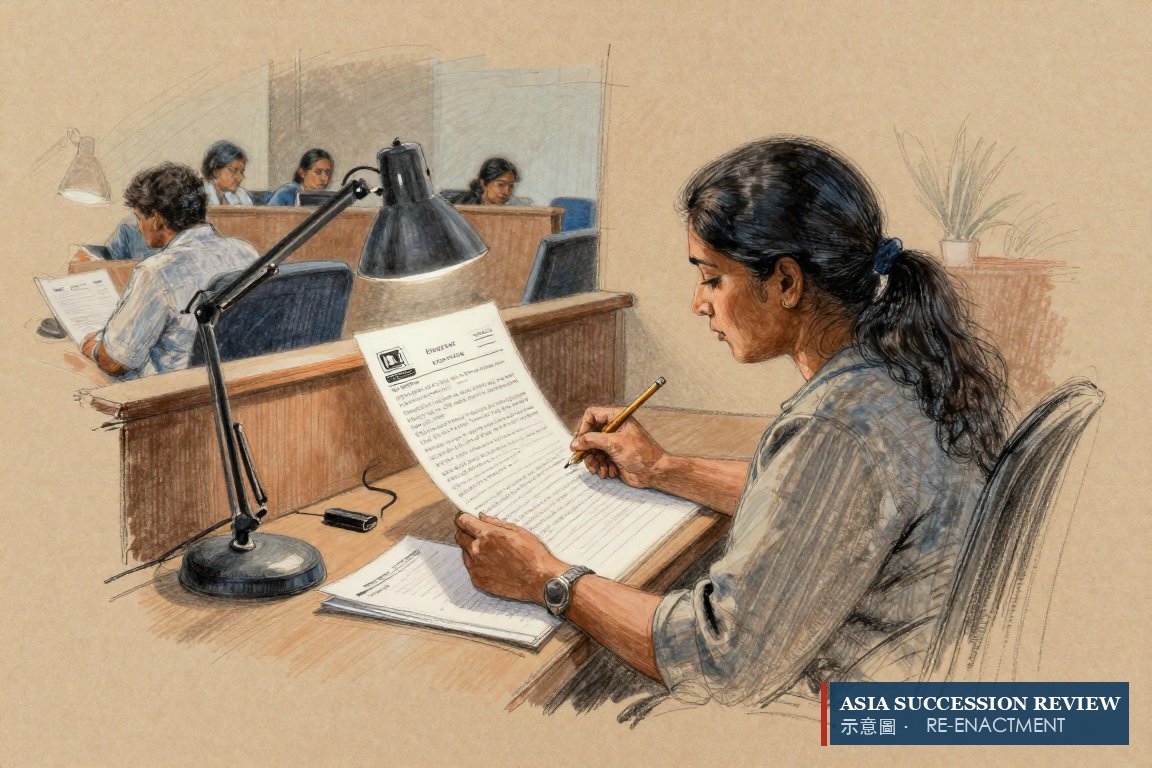
A family asks at dinner whether the will ends with 'everything else', and saves its heirs a 39-year fight
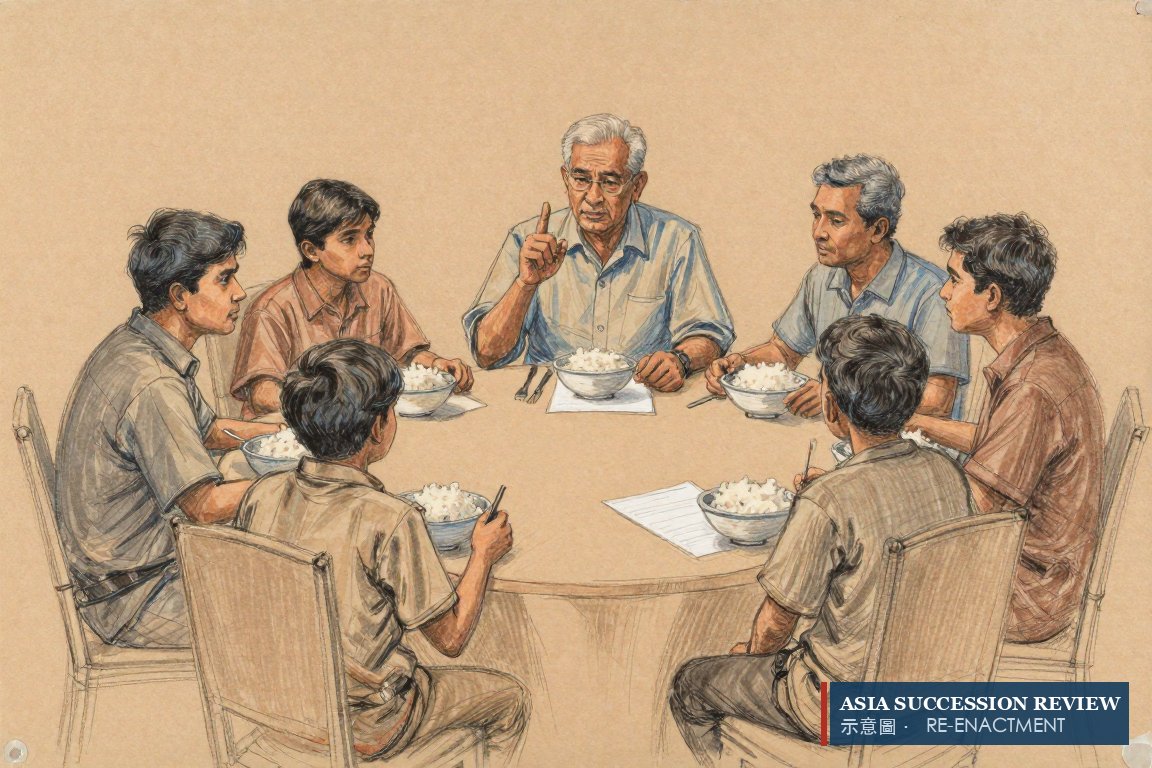
For the reader outside the room, the questions fit on one page and can be asked in front of everyone. Does the will end by giving everything else to someone? Who takes if that person dies first? Is there a current list of assets, including anything that earns royalties? If there has been a second marriage or a stepchild, does the will name people, rather than leaving it to the law to decide who counts as a spouse or a child?
J. Surendran, Janaki's son by her first marriage — petition dismissed on 24 September 2026 with no order on costs and liberty to bring a proper suit; in Singapore not a 'child' of MGR under ISA s3, so a claim only through his mother's estate
The eleven descendants of M.G. Chakrapani, MGR's brother — their applications to join dismissed with the petition, and their own Virugambakkam petition of 2012 dismissed; in Singapore rule 6 would reach them only if MGR left no lawful spouse, no descendant and no parent
V.N. Janaki Ramachandran (died 1996) — named in the will as MGR's sole surviving legal heir; the autobiography's copyright on intestacy (2012 judgment); in Singapore, under rule 1, the whole of anything the will missed, if she was his lawful spouse
The trust that runs the MGR school for children with speech and hearing impairments — the Sathya Garden land at Virugambakkam, which the court found was covered by the probated will
The Tiruchirappalli plot — a sworn net value of ₹7.75 crore and no settled owner; the order leaves title open
The reader who has signed a will — one clause to check (everything else goes to a named person, with a second name behind it) and one list to keep current
A counterfactual, not advice. The verified machinery is on the Singapore page; where your family stands is the briefing.
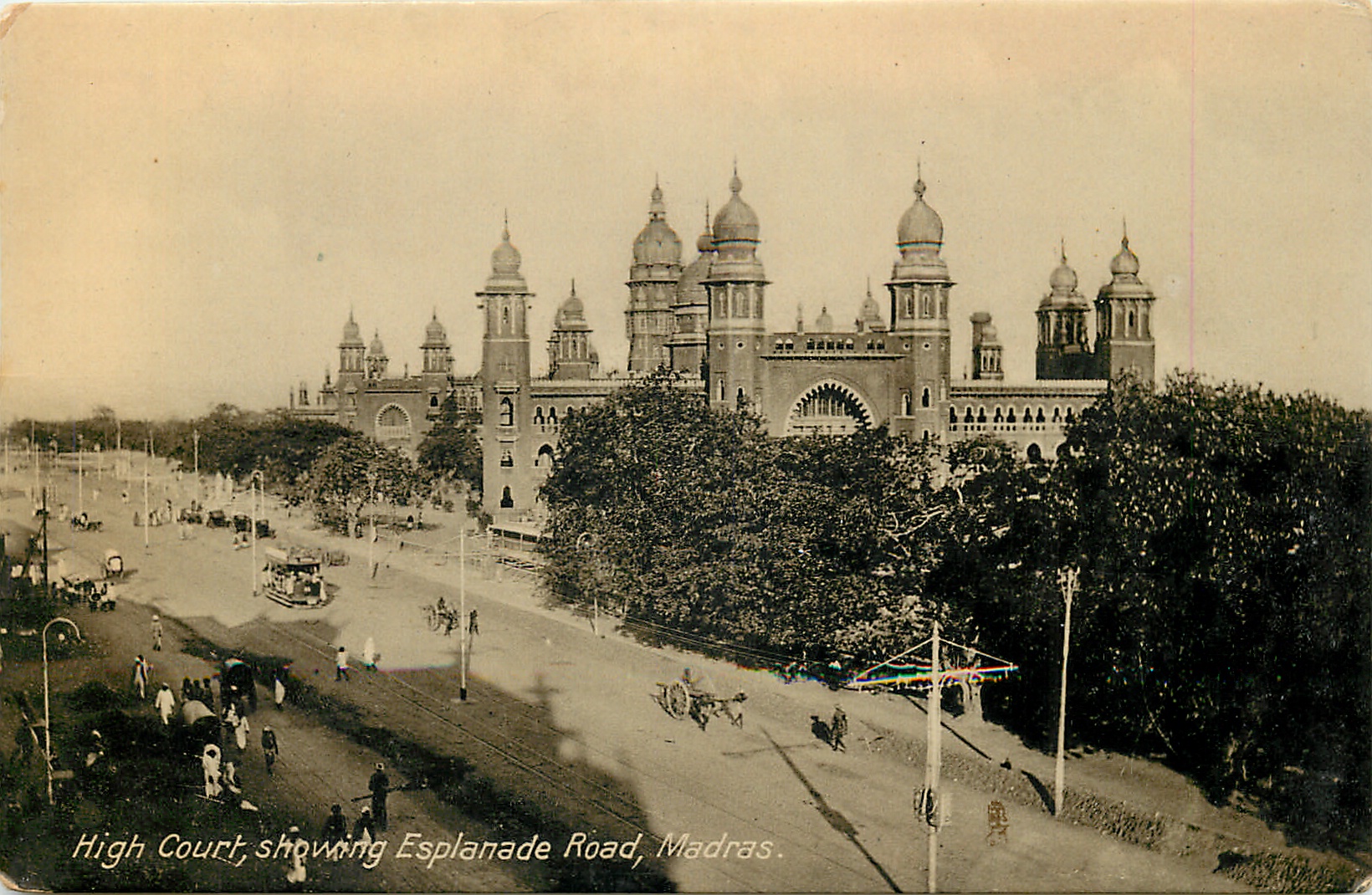
From the case files: What Singapore's Intestate Succession Act does, rule by rule, when there is no will for an asset