OK Lim's grandson loses a S$3.8m condo: a family promise needs paper
OK Lim paid for a Tanglin condominium in his daughter Huey Ching's name. After Hin Leong fell, the family said the flat had always belonged to her late sister. On 5 November 2026 the High Court found no trust and called the suit a last-ditch attempt, so the flat stays with Huey Ching's creditors. A family that means such a promise needs one signed page.
Read this in: EN · 简体 · 繁體 · ไทย · ID
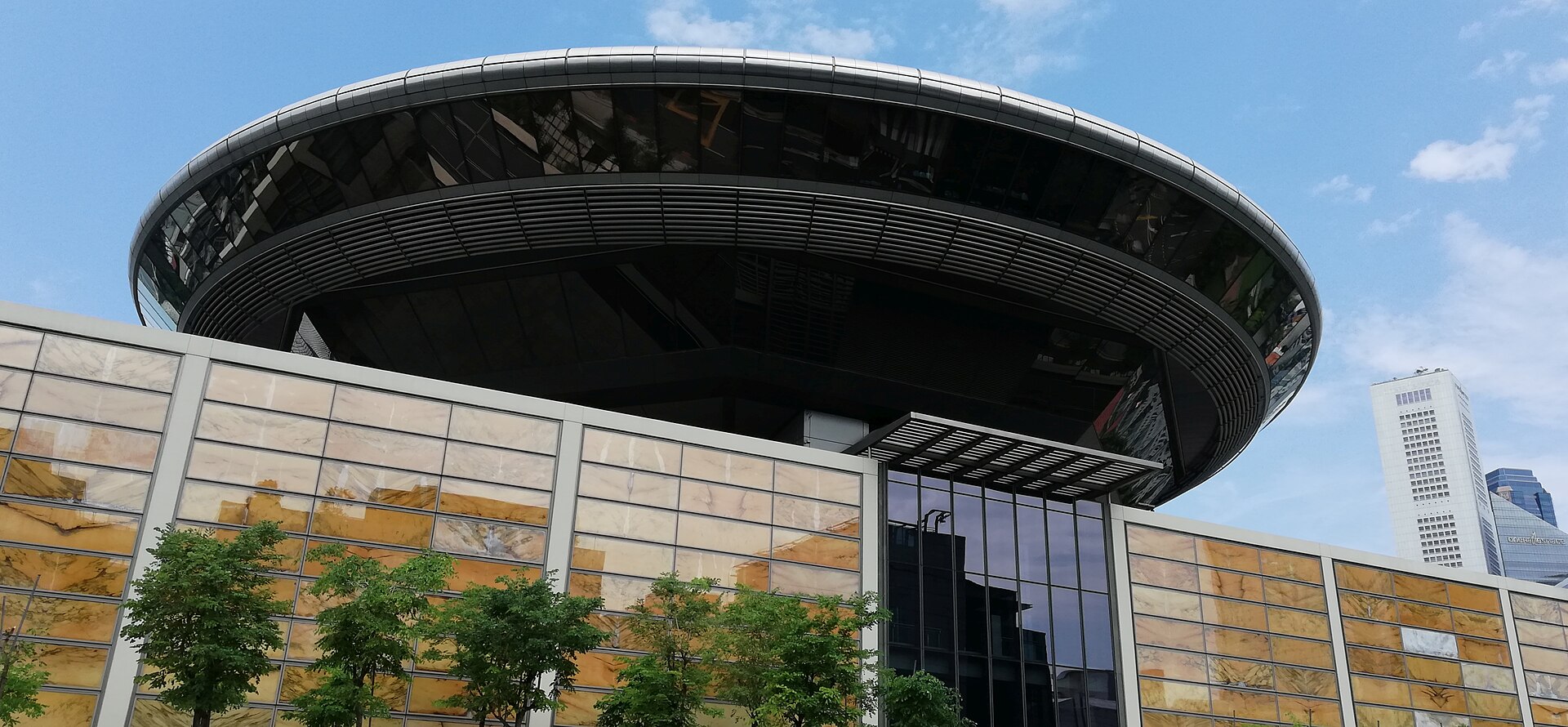
A tycoon's grandson sues for a Tanglin flat in his late mother's name, and the court leaves it with creditors
On 5 November 2026 the High Court of Singapore dismissed a claim by Denzel Pak Juin Tern, grandson of the former oil tycoon Lim Oon Kuin, better known as OK Lim, over a Chelsea Gardens condominium on Walshe Road in Tanglin. He sued as administrator of his late mother, Lim Huey Yih, saying the flat was held on trust for her. It is registered to her sister, Lim Huey Ching, a bankrupt. Low Siew Ling JC held that there was no trust, so the flat stays in Huey Ching's bankruptcy estate for her creditors. Costs are still to be heard.
A father pays S$4.48 million for one daughter's flat, and the other's claim rests on a spoken deal
The flat was bought in 1997 for S$3,819,270, with the agreement, the title and the mortgage all in Huey Ching's name. Her father paid: the first 20% from a bank account she held jointly with him, and the rest through a loan of about S$3,055,000 cleared in June 2013. With interest the total reached S$4,476,995. Press estimates of its value now run from over S$4 million (Lianhe Zaobao) to over S$4.5 million (The Straits Times). The family says that in 2000, during Huey Yih's divorce, the three agreed by word of mouth that the flat was hers and that she would repay her father when she could.
The aunt swears twice in 2021 that the flat is hers, then reverses just before US$4 billion in judgments
Huey Yih died on 29 June 2017. In July 2018 Huey Ching and her mother became joint administrators of the estate, and the schedule of assets they filed on 19 October 2018 left the flat out. In May 2021 Hin Leong's liquidators froze the family's assets worldwide, up to US$3.5 billion, and Huey Ching swore twice that June that the flat was 'held solely' by her. She reversed on 16 September 2024, shortly before consent judgments for more than US$4 billion and her bankruptcy filing of 14 October 2024.
The judge rejects a S$4.9 million repayment story and calls the suit a last-ditch attempt to beat creditors
The judge found the case 'fraught with inconsistencies from the outset'. The repayment was said to be S$4,909,480 of 2015 dividends from two family ship-owning companies, but no one had tracked what was owed, and the sums overshot every expense by S$120,356. The grandson's own payments began only in 2024. The family's conduct, the judge said, supported a strong inference that the suit was 'a last-ditch attempt to place the Property beyond the reach' of Huey Ching's creditors. In a separate appeal on 4 March 2026, OK Lim's conviction was upheld and his sentence cut from 17½ to 13½ years.
- 1Pak Juin Tern Denzel v Leow Quek Shiong [2026] SGHC 231 (Low Siew Ling JC, 5 Nov 2026), read in full on eLitigation 7 Nov 2026: the purchase, the alleged 2000 agreement, the affidavits, the dividends, the findings
- 2Lim Yan Yi Michelle v Leow Quek Shiong [2025] SGHC 118 (Mohamed Faizal JC, 1 Jul 2025), read on eLitigation 7 Nov 2026: three AIA policies, surrender value slightly over S$521,000 at 16 Jan 2025, no trust deed
- 3Lim Oon Kuin v Public Prosecutor [2026] SGHC 47 (Hoo Sheau Peng J, 4 Mar 2026), conclusion read on eLitigation 7 Nov 2026: conviction upheld, aggregate sentence reduced to 13 years and six months
- 4The Straits Times via Yahoo News Singapore, 6 Nov 2026 (secondary): the flat described as worth over S$4.5 million
- 5Lianhe Zaobao, 6 Nov 2026 (secondary): current value over S$4 million; the family's Chinese names
- 6Civil Law Act 1909 (Singapore) s7, as at 6 Nov 2026, read on Singapore Statutes Online 7 Nov 2026
- 7Insolvency, Restructuring and Dissolution Act 2018 (Singapore) s327, as at 5 Nov 2026, read on Singapore Statutes Online 7 Nov 2026
- 8Insolvency, Restructuring and Dissolution Act 2018 (Singapore) s329, as at 5 Nov 2026, read on Singapore Statutes Online 7 Nov 2026
- 9Insolvency, Restructuring and Dissolution Act 2018 (Singapore) s361 and s363, as at 6 Nov 2026, read on Singapore Statutes Online 7 Nov 2026
- 10Insolvency, Restructuring and Dissolution Act 2018 (Singapore) s438, as at 6 Nov 2026, read on Singapore Statutes Online 7 Nov 2026
- 11Land Titles Act 1993 (Singapore) s115, as at 6 Nov 2026, read on Singapore Statutes Online 7 Nov 2026
- 12IRAS, Buyer's Stamp Duty (page last updated 9 Oct 2026, read 7 Nov 2026): declaration of trust, S$10 fixed duty or ad valorem duty
- 13IRAS, Remission of ABSD (Trust) (page last updated 14 Aug 2026, read 7 Nov 2026): ABSD (Trust) of 65%, refund for identifiable individual beneficiaries, six-month application
A family that formalises other trusts writes nothing down for this flat, and twenty years of silence sink the claim
A family works on memory and a court works on records. A registered title says who owns a flat. Relatives can agree otherwise, but that agreement binds outsiders only if it can be shown to have existed before they arrived. Here no email, WhatsApp message or note recorded it. The earliest writing was a 2022 email from Huey Ching to her lawyers, after Hin Leong had fallen. Yet this was a family whose son agreed that they 'commonly use nominee and trust arrangements', and he had declared formal trusts for his mother in 1995 and 2004.
Two sworn explanations filed four days apart contradict each other, and the judge traces everything back to 2024
Timing turned that gap into a defeat. A trust claim over a bankrupt's property takes that property away from creditors, so the judge assessed the evidence with 'especial caution'. Every earlier sworn paper pointed the other way: the 2018 estate schedule, then the two affidavits of 2021. The reversal came on the eve of bankruptcy, with two explanations filed four days apart that could not both be true. 'All roads seem to lead back to the year of 2024,' the judge wrote.
The heir turns 21, the flat misses his mother's estate list 79 days later, and others carry his case
The heir carried the cost. The grandson accepted that he had no personal knowledge of the arrangement, so his case rested on an aunt and a grandfather the court did not find credible. He turned 21 on 1 August 2018, and 79 days later the flat was left off his mother's estate schedule, filed by the aunt who held the title. The family had already lost this argument once: in 2025 his cousin Michelle Lim failed to keep three AIA policies, worth slightly over S$521,000 on surrender, out of her father's bankruptcy estate, with no trust deed to show.
In Singapore a family arrangement over a flat beats the registered owner's creditors only if it can be proved from before the trouble, and one signed page does that better than twenty years of family memory.
The court finds no trust ever existed, so a page signed later could never rescue this flat
This one happened in Singapore, so the useful question is what a family that truly means such an arrangement should do. Two limits come first. The court found that no trust ever existed, so nothing here says a signed page would have saved this flat: paper records an agreement, it cannot create one after the fact. And this is a first-instance judgment of 5 November 2026, with costs outstanding and an appeal still possible.
Singapore demands writing for a declared trust over land, so a family without it must prove intent in court
The statute draws the line. Section 7(1) of the Civil Law Act 1909 says a declaration of trust over land must be manifested and proved by writing, signed by a person able to declare it. Section 7(3) leaves resulting, implied and constructive trusts outside that rule, which is why the grandson could sue with no document at all. Those routes, though, mean proving a shared intention or who paid, on evidence. The law did not demand paper here. The proof did.
A page dated 2000 predates the collapse by twenty years and sits outside the three-year creditors' window
Proof matters because of what bankruptcy does. Under sections 327 and 329 of the Insolvency, Restructuring and Dissolution Act 2018, a bankrupt's property vests for division among creditors, and property held on trust for someone else is excluded. The exclusion is real, but it has to be proved. Our reading: a page signed and dated in 2000 would have been twenty years older than the collapse. The three-year undervalue window in section 363 would have closed long before. Section 438 has no fixed window, but it needs a purpose of defeating claimants, which is hard to show so far back.
A 2024 lawyer's demand for a 2018 transfer looks like a paper trail, and it counts against the family
Writing after the trouble starts works the other way. A transfer or a declaration made while creditors are circling invites exactly those attacks. Here even the paperwork of 2024 counted against the family. The judge saw much force in the suggestion that a solicitor's demand letter of 30 July 2024 was part of a paper trail, since it asked for a transfer the family said had been due in 2018. Bank payments that began that year were treated the same way.
The aunt moves one flat to her husband in 2002 but never transfers this one, though nothing stops her
A better answer than a private page is the register. Huey Ching admitted nothing stopped her transferring the flat, and she did move a larger unit in the same development to her husband in 2002. If the title cannot move, section 115 of the Land Titles Act 1993 lets a person claiming an interest in land lodge a caveat, which puts the claim where a later creditor can see it.
A trust declaration costs S$10 when nothing changes hands, and far more when real value moves
Stamp duty needs advice before anyone signs. IRAS charges a fixed S$10 on a declaration of trust that changes no beneficial interest and ad valorem duty where it does, and it lists ABSD (Trust) of 65% on residential property, with a refund route for identifiable individual beneficiaries. The cheap page is the one that records what is already true.
The aunt holding the flat also helps list the estate, and the heir's first demand comes nearly six years late
The heir's moment is the estate schedule. When a parent dies, the administrators swear to what the estate holds, and that list becomes the family's first formal statement. Here the person holding the flat was also one of the two people listing the estate. A child who believes a parent owned something in another name should ask to see the schedule, and ask why the asset is or is not on it, while the people who remember are alive and nobody is in debt. In this record the first formal demand came nearly six years after the grandson turned 21.
Trustees ask for the trust agreement in January 2025, and the family answers that no written one exists
For the reader whose family keeps any asset in a relative's name, three questions are worth asking now, while everyone is solvent and can still answer. Is there a signed, dated page saying who really owns it? Does the register or the bank's record show anything beyond the name on the title? And if the holder failed or died tomorrow, would the sworn lists match what the family says at dinner? This family met that question in January 2025, when the trustees asked for the trust agreement. The answer was that there were 'no written trust agreements'.
Lim Huey Ching's creditors — the Chelsea Gardens flat, which stays in her bankruptcy estate for division
Denzel Pak, the grandson — nothing from the flat: trust and unjust enrichment claims dismissed on 5 Nov 2026, costs still to be heard, an appeal still possible
Lim Huey Ching — her evidence rejected as inconsistent; she remains an undischarged bankrupt
OK Lim — found to have funded the purchase, with his account of a repayment not accepted
Michelle Lim, the cousin — the same answer in 2025: three AIA policies, slightly over S$521,000 on surrender, stayed in her father's bankruptcy estate
A family that signed a page in 2000 — on our reading, a provable exclusion under section 329(2)(a), dated twenty years before the collapse
The reader with an asset in a relative's name — three questions: is there a signed page, does the register show it, and do the sworn lists match the story
A counterfactual, not advice. The verified machinery is on the Singapore page; where your family stands is the briefing.
From the case files: Shares put in other people's names, and the heirs had to sue: Ve Wong