No wife, no kids: the law makes Xie Lei's siblings his heirs at 84
The singer of 苦酒滿杯 never married and has no children. His heirs in law are his brothers and sisters; the people he wants to provide for — a godson, an assistant, the nephews and nieces he raised — are not heirs at all. He owns one house in Taipei, one in Hong Kong and one in Malaysia, each passing under a different law. What if it had been Singapore?
Read this in: EN · 简体 · 繁體 · ไทย · ID
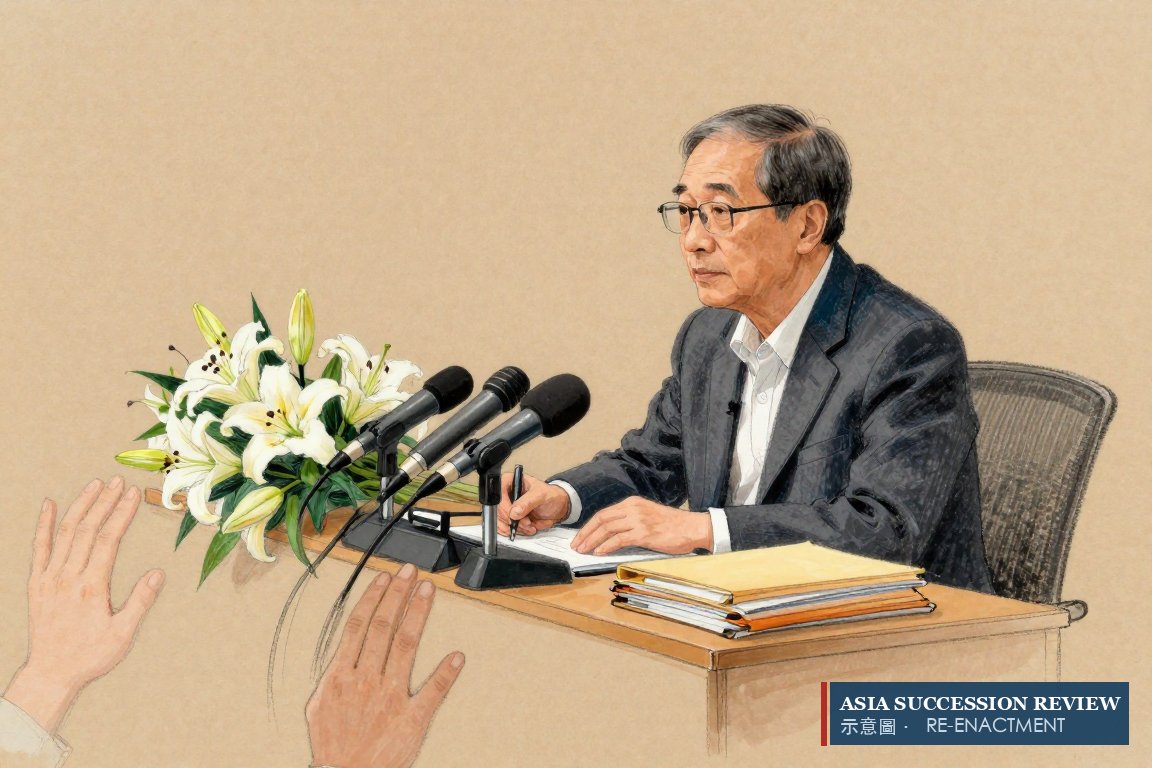
An 84-year-old singer tells a Kaohsiung press room his will is notarised, and names a godson, an assistant and his brother's children as the ones who get it
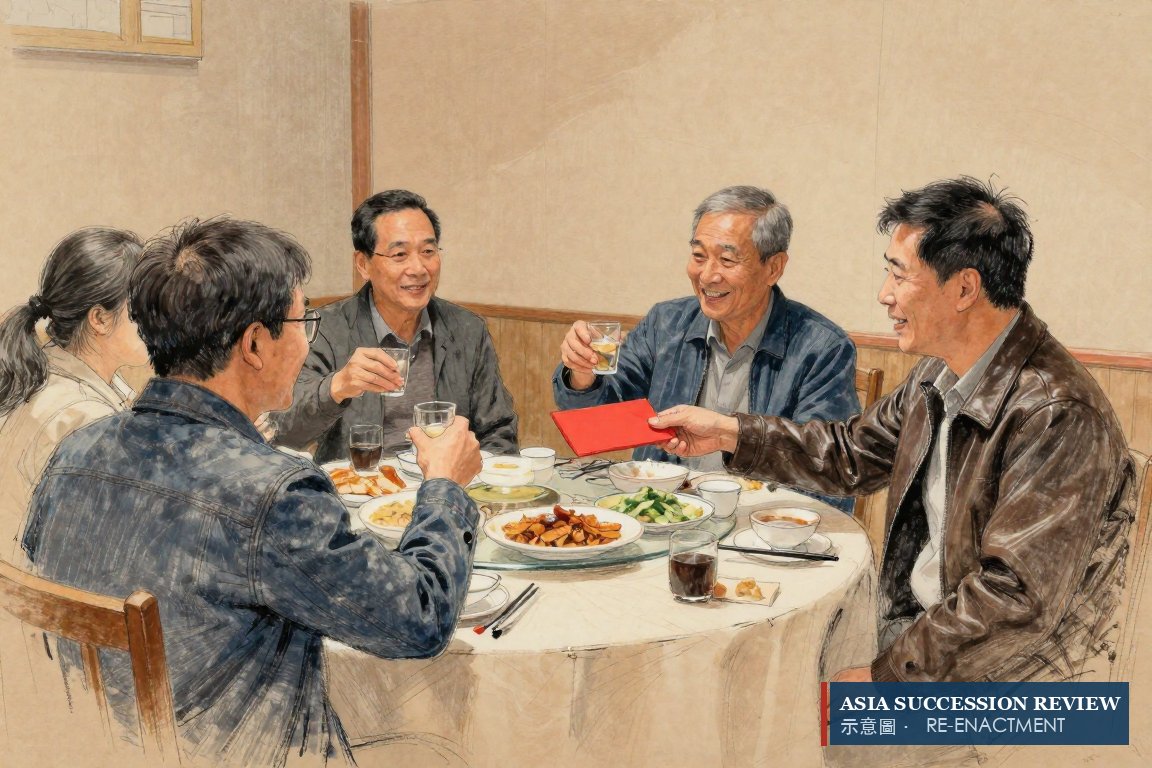
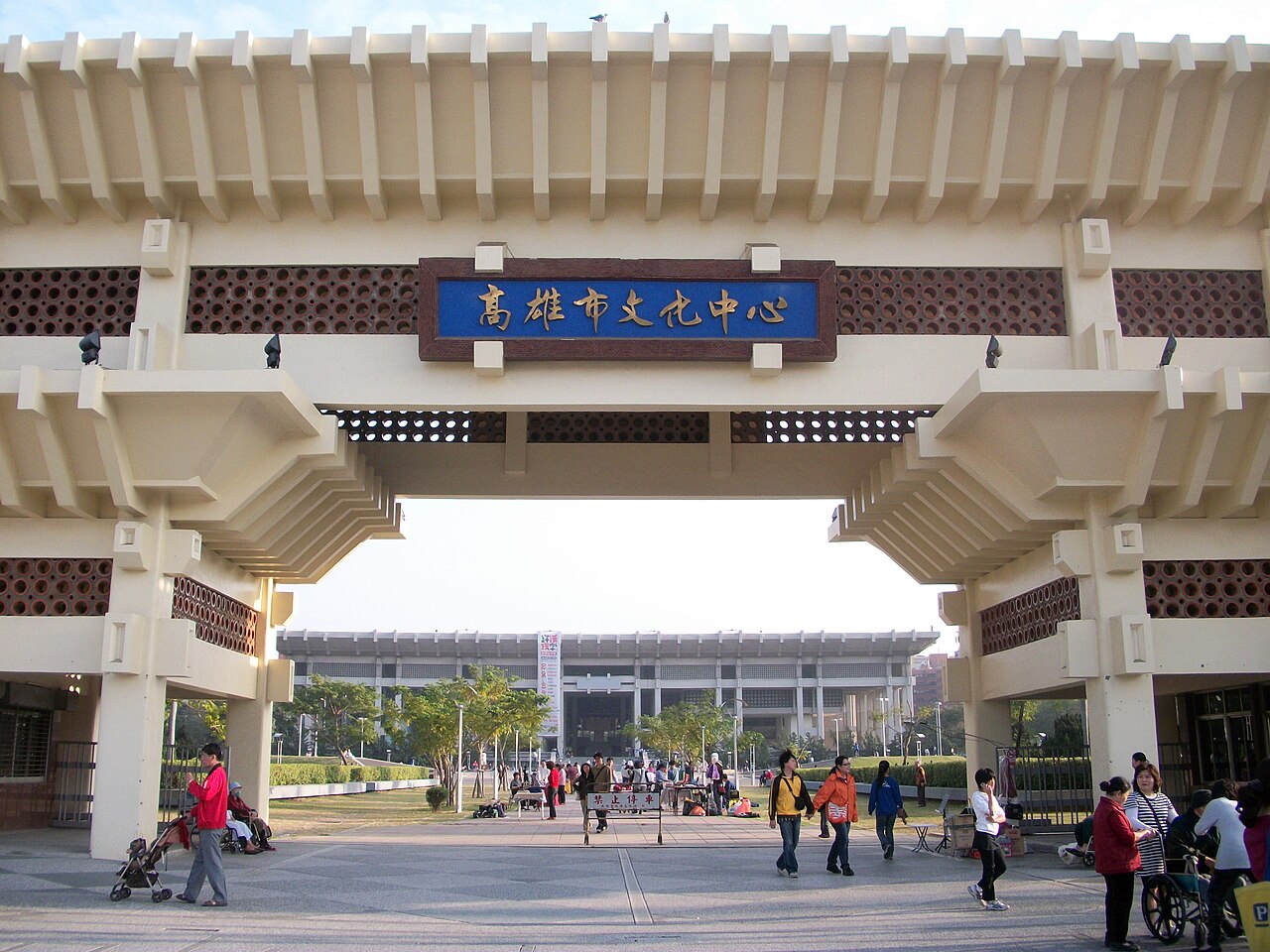
On 11 September 2026, at a press event for his 17 October concert at the Kaohsiung Cultural Center's Zhide Hall, the Taiwanese singer Xie Lei (謝雷), known for six decades as the 'Island Song King' (寶島歌王), told reporters that his will is done. It was completed through a court notary office, he said, and the compulsory portion (特留分) has been dealt with. The estate goes mainly to his godson Xie Xiao-yu (謝小魚), his assistant known as Xiao-xiong (小熊), and the children of his second brother, whom he raised. He is 84 by his own account; press profiles have long said 86.
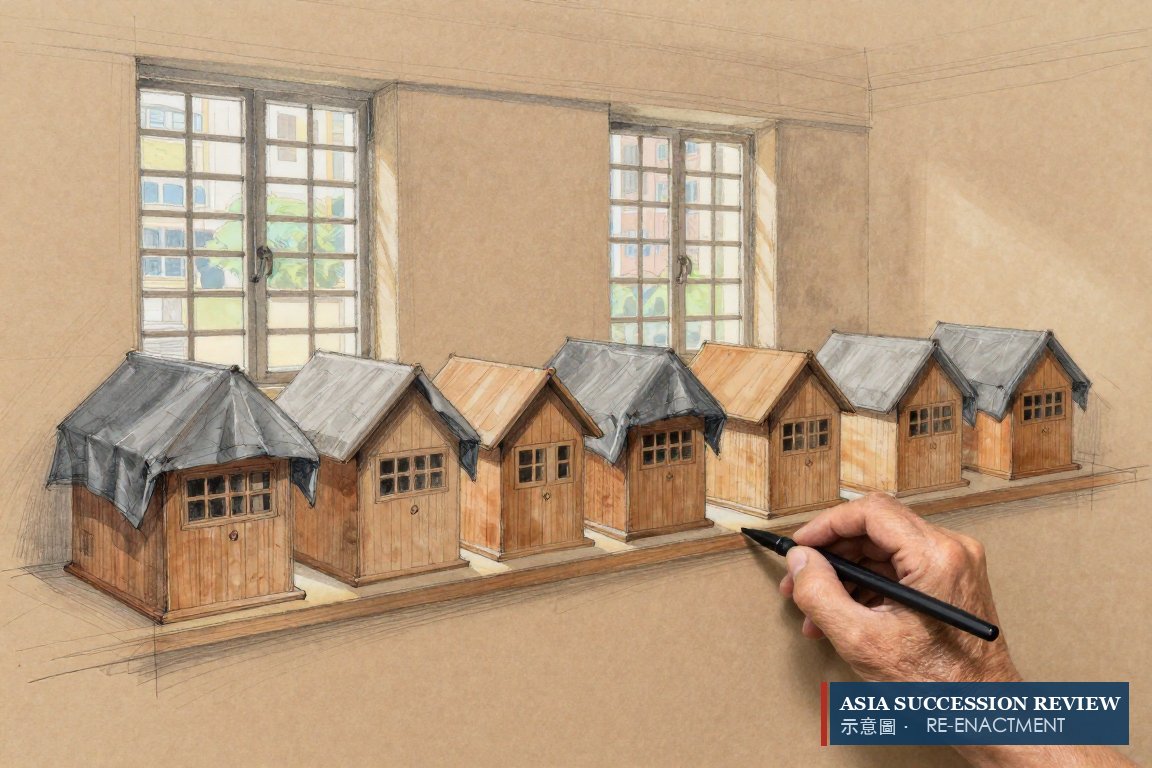
A singer turns sixty years of fees into eight houses, and by 2026 keeps only three, in Taipei, Hong Kong and Malaysia
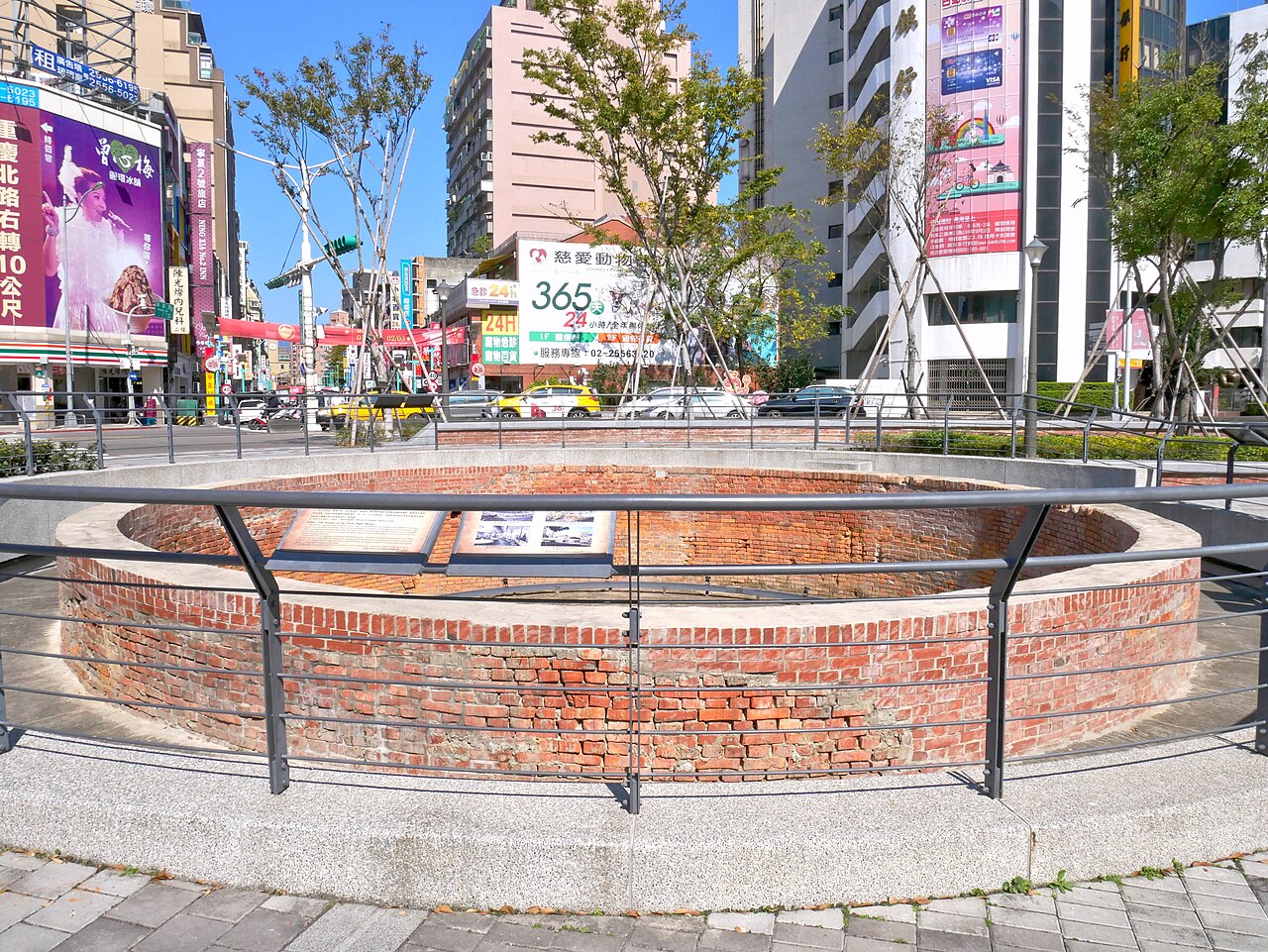
The houses came first, then went. Xie Lei told Next Apple News that what he earned in the 1960s and 1970s went into property, and that at the peak he owned eight houses. Three remain: one in Taipei, one in Hong Kong, one in Malaysia. A lawyer's column in the Economic Daily News on 15 September, working from the singer's own description, put the Taipei house near the old Jiancheng roundabout (台北圓環) at a market value above NT$100 million. No valuation has been published, and this newspaper treats the figure as the singer's, not the market's.
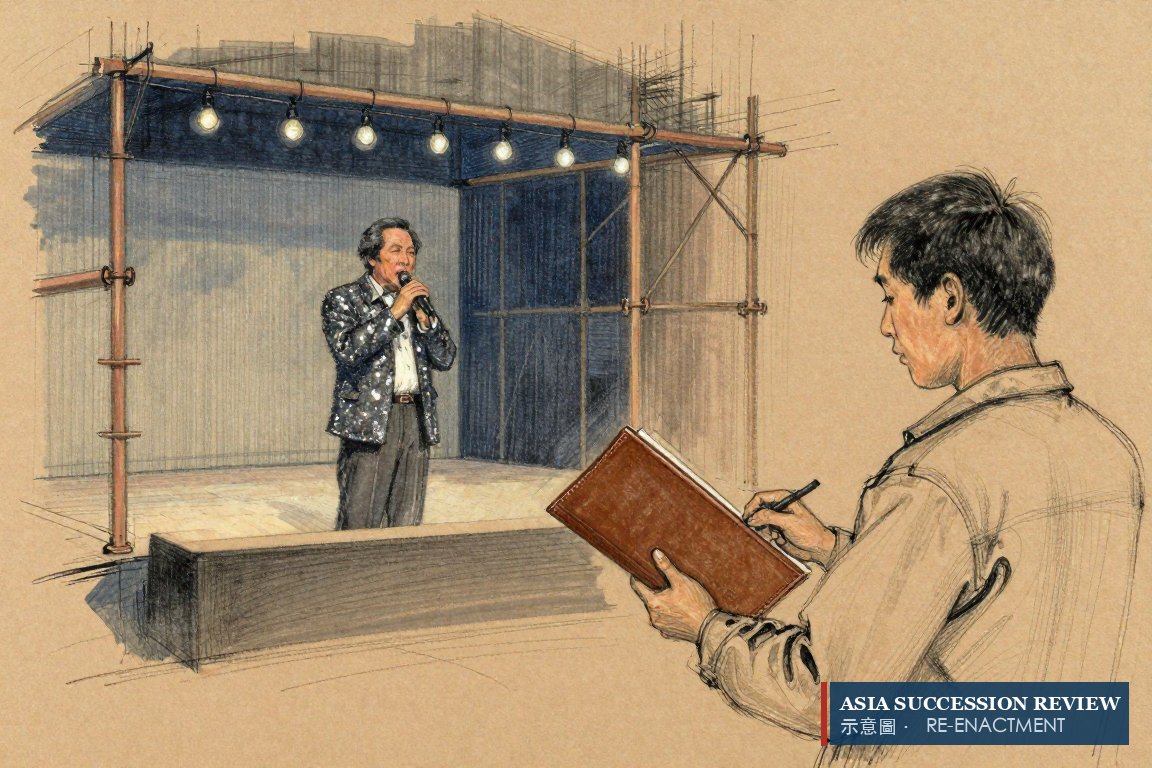
A singer hides his age by putting a Taichung house in his assistant's name, and the assistant sells it without a word
One house was lost to his own assistant. During his years of construction-site shows in Taichung, Xie Lei said, he did not dare show his identity card because it would have revealed his real age, so the property was registered in the assistant's name. Years later the assistant sold it without telling him. 'I didn't pursue it, and he no longer works for me,' he said. United Daily News put the loss in the low millions of New Taiwan dollars; the lesson is not the amount but the title.
A singer lends friends and fellow performers more than NT$10 million on a handshake, and none of it comes back
The other losses were loans. Friends and fellow performers borrowed more than NT$10 million over the years, he said, and it was never repaid. 'I am a muddled person,' ran the NOWnews headline, quoting him. Between the house on someone else's title and the money lent on a handshake, the count of houses fell from eight to three.
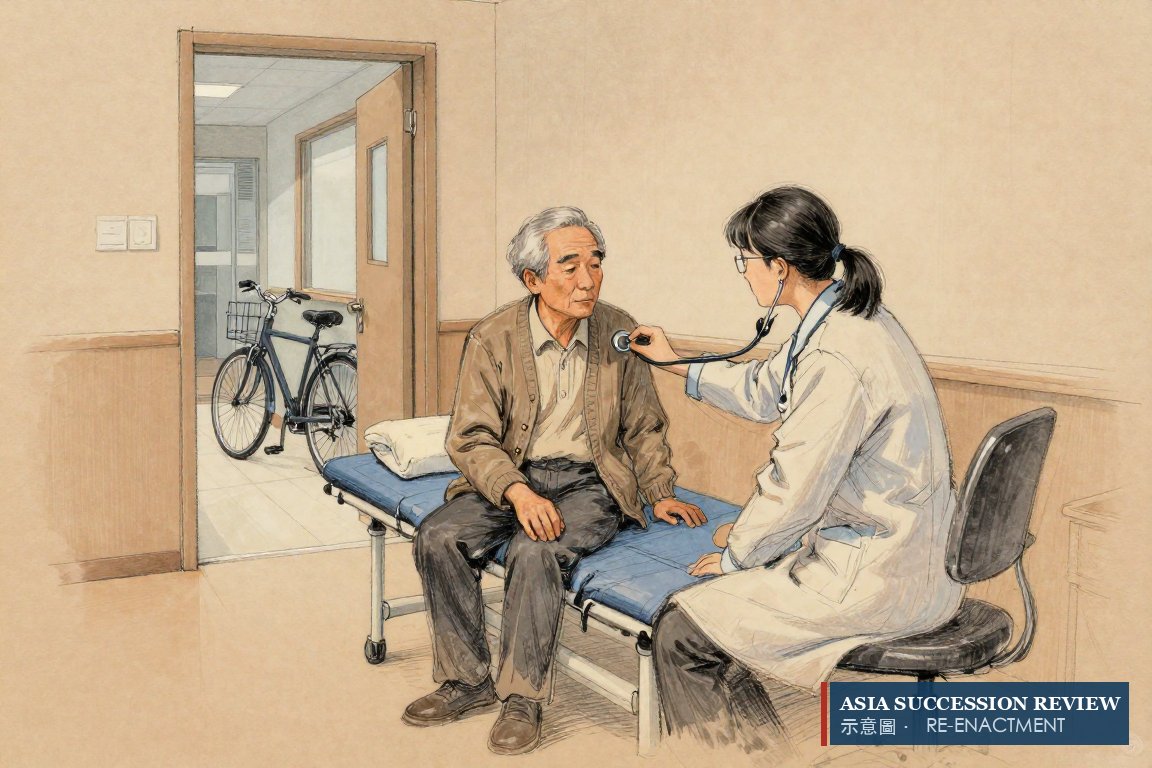
A man with three heart attacks is examined every three months, and finishes his will before the next check-up
Health is the reason the will is done now. Xie Lei has survived three heart attacks and, he told Liberty Times, is examined every three months and keeps to his cardiologist's diet. He never married and there are no children. The joke he offered the room was that the will does not say who gets which house: 'only that whoever wants the bicycle can have it.'
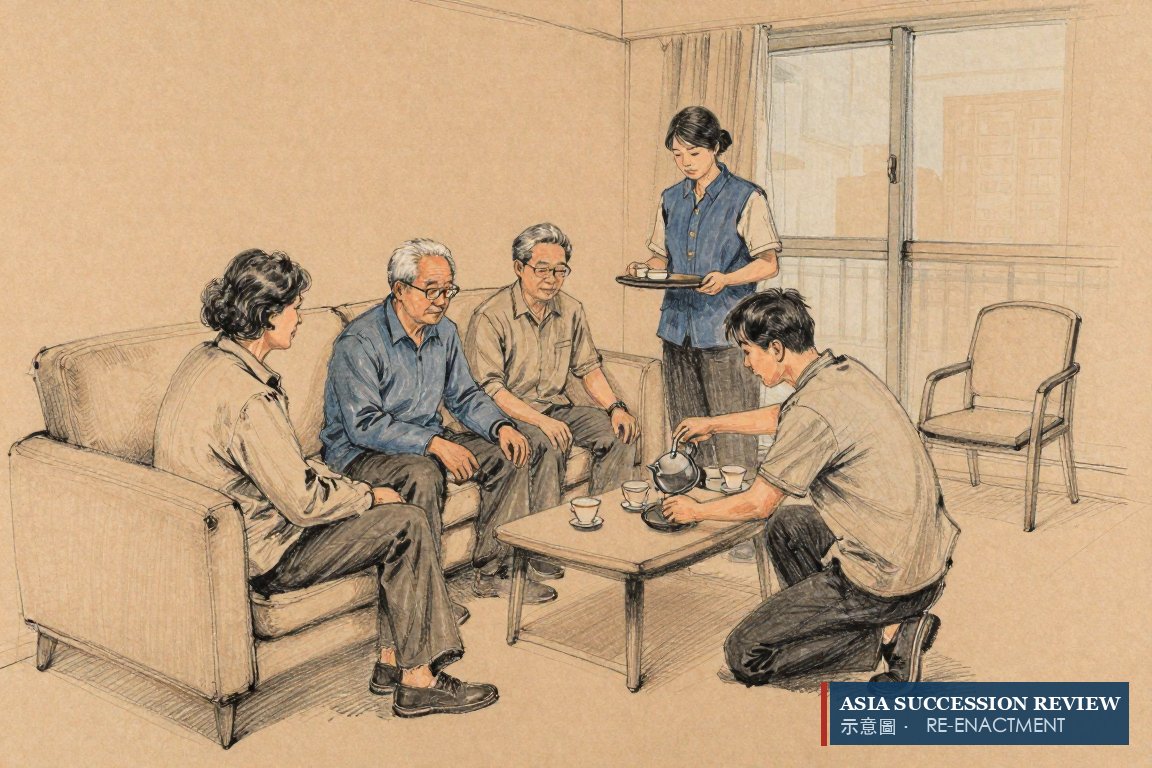
A godson, an assistant and three nephews surround the singer at home, and Taiwan's Civil Code counts none of them as heirs
The beneficiaries are the story. A godson is a relationship of affection, not of law. An assistant is an employee. Nephews and nieces, even ones raised in the house, are not heirs under Taiwan's Civil Code while any brother or sister of the deceased is alive — and, if the second brother has died, they do not step into his place either: the substitution rule in Article 1140 reaches only the descendants of the deceased's own children (law.moj.gov.tw, read 17 September 2026). With no spouse, no children and no living parents, Xie Lei's heirs in law are his brothers and sisters (Article 1138). Whether any survive is not on the public record.
A surviving sibling can cut a will back by one third until February 2027, and then the Legislature's deletion takes that share away
That is why the compulsory portion matters. Under the text of Article 1223 in force today, a brother or sister's compulsory share is one-third of the intestate share. A will that leaves everything to a godson, an assistant and nephews can be cut back by a surviving sibling to that extent. The Legislative Yuan deleted the sibling share by an amendment promulgated on 17 August 2026; under Article 12 of the Enforcement Act for the Book of Succession it takes effect six months after promulgation, so from about 17 February 2027. Until then the singer's will lives with it, and the Economic Daily News column said so in terms.
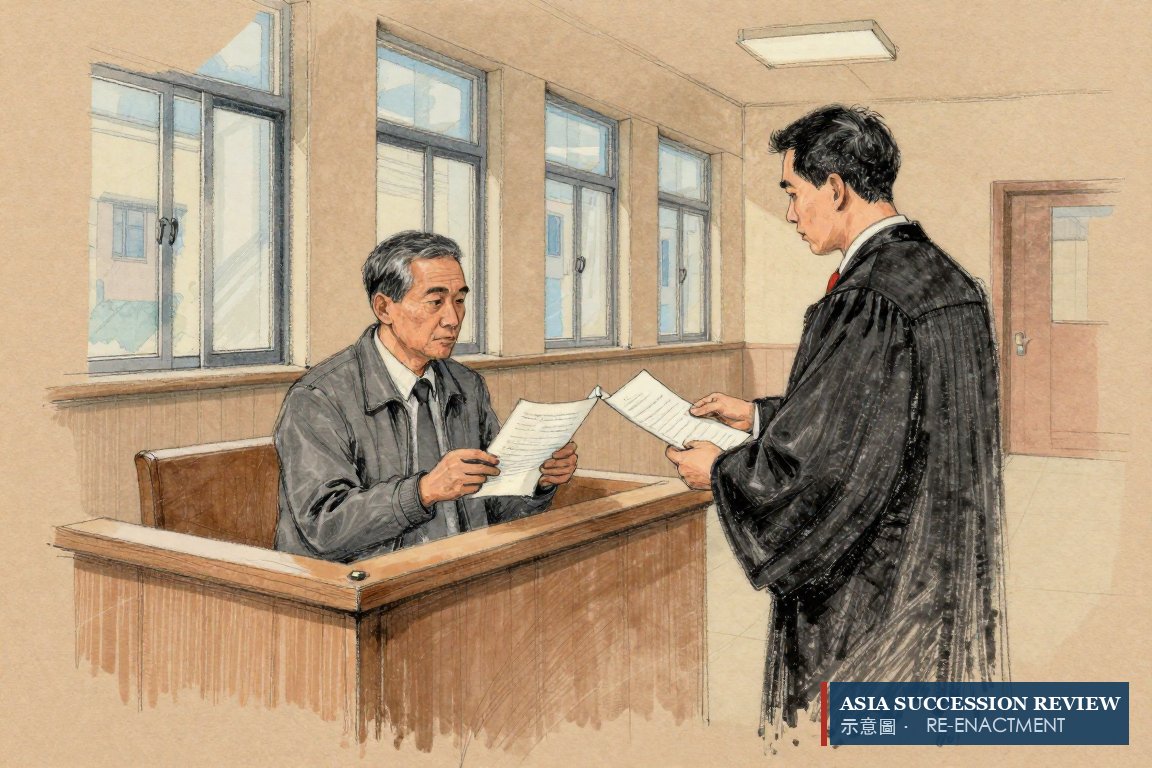
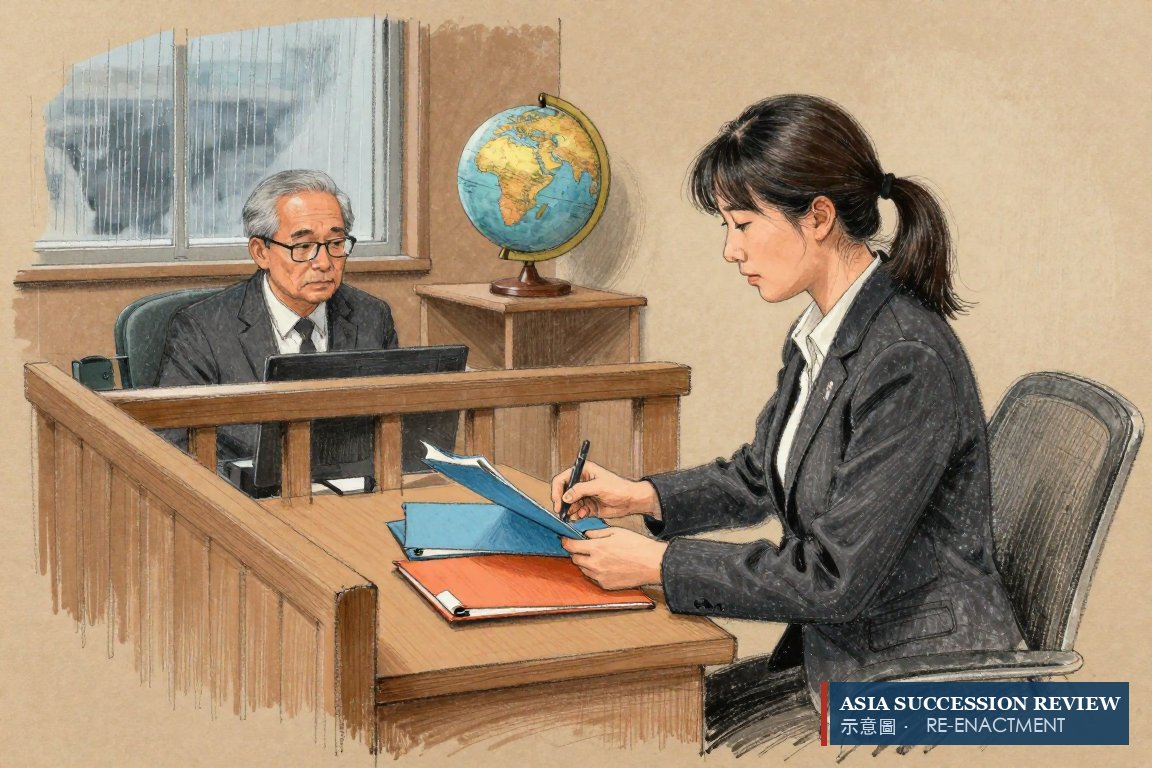
A Taipei lawyer tells a client with houses in three countries to sign three wills and a guardianship contract, and he has signed one
Two other points in that column matter for anyone with property in more than one place. A will made under Taiwan law is valid, but to use it for a house in Hong Kong or Malaysia it must be translated, authenticated through the foreign-affairs channel and then fitted to that country's own procedure; the lawyer's advice was a separate local will for each foreign house. And a man of 84 with three heart attacks is more likely to lose capacity than to die suddenly: the column recommended a voluntary guardianship contract (意定監護) under Articles 1113-2 to 1113-10 of the Civil Code, which no report says he has.
- 1Next Apple News 壹蘋新聞網, 11 Sep 2026
- 2Liberty Times 自由娛樂, 11 Sep 2026
- 3United Daily News 噓!星聞, 11 Sep 2026
- 4Economic Daily News 經濟日報, lawyer's column, 15 Sep 2026
- 5ERA Ticket 年代售票 — 永遠的巨星 謝雷 2026演唱會, 17 Oct 2026, Kaohsiung Cultural Center Zhide Hall
- 6Civil Code 民法 Art 1138 (order of heirs) — law.moj.gov.tw
- 7Civil Code 民法 Art 1140 (substitution limited to the first order)
- 8Civil Code 民法 Art 1191 (notarial will)
- 9Civil Code 民法 Art 1223 (compulsory portion — amended text shown as not yet in force; in-force text under 舊法規內容)
- 10民法繼承編施行法 Art 12 (the 28 Jul 2026 amendment of Art 1223 takes effect six months after promulgation)
- 11Civil Code 民法 Art 1113-2 (voluntary guardianship contract) and Art 1113-4
- 12Civil Code 民法 Art 759-1 (registration presumed correct; bona fide third party protected)
- 13Civil Code 民法 Art 1185 (estate passes to the treasury when no heir accepts)
- 14Intestate Succession Act 1967 s7, rules 6–9 — Singapore Statutes Online
- 15Wills Act 1838 s6 (mode of execution) — Singapore Statutes Online
- 16Land Titles Act 1993 s46 (estate of registered proprietor paramount) — Singapore Statutes Online
- 17Limitation Act 1959 s6 (six years, contract and tort) — Singapore Statutes Online
- 18Mental Capacity Act 2008 s11 (lasting powers of attorney) — Singapore Statutes Online
- 19Probate and Administration Act 1934 s47 (resealing of Commonwealth grants) — Singapore Statutes Online
- 20MSF parliamentary reply, 5 Mar 2026 — 404,000 citizens with an LPA as at 20 Feb 2026; Form 1 free for citizens
- 21IRAS — Estate Duty removed for deaths on and after 15 February 2008
A man with no wife and no children gets heirs he never chose, and the people he loves get nothing without a paper
Strip the celebrity away and this is the most common estate in Asia's cities: a person with no spouse and no children, with heirs he did not choose and beneficiaries the law does not recognise. His brother's line inherits by default. The godson, the assistant and the nephews inherit only if a document says so, and only to the extent the compulsory share leaves. He has done the one thing most people in his position never do: made the document, and made it in the strongest form Taiwan offers, before a notary with two witnesses (Article 1191).
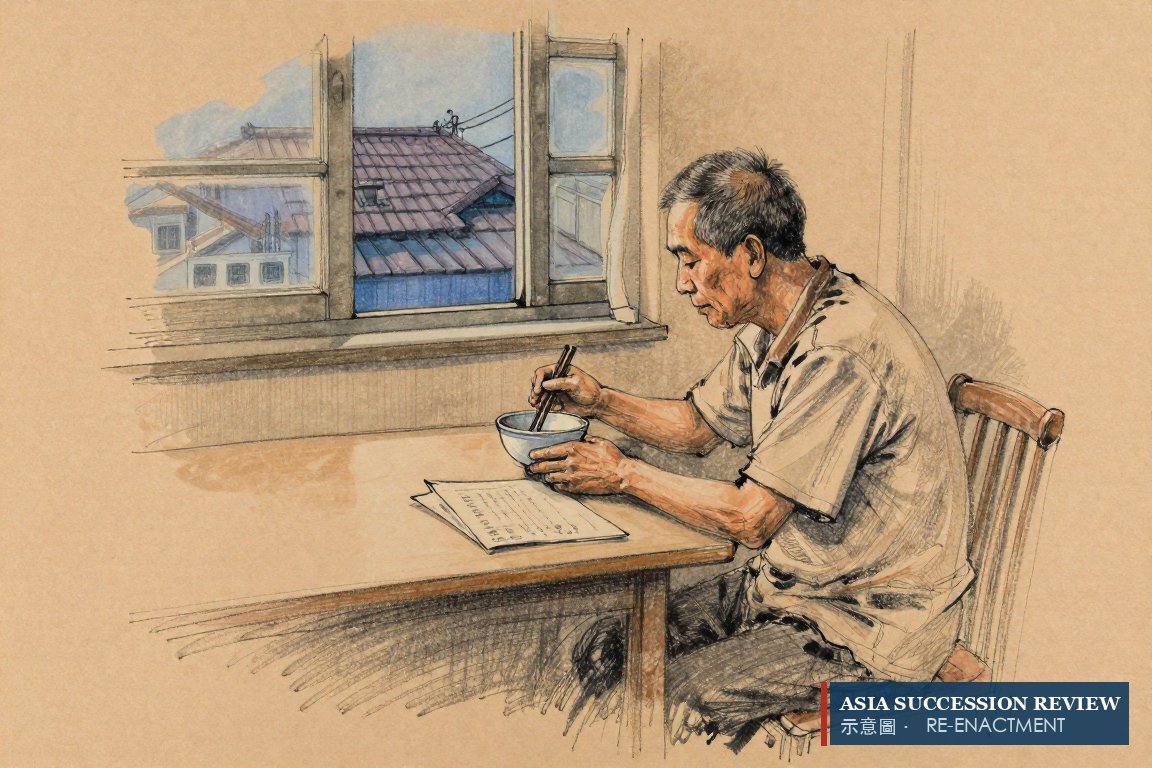
A buyer who trusts the register keeps the house, and the singer whose name was never on it keeps only the story
But the document does only what a will can do. It cannot change who the heirs are, and it cannot reach the two losses already taken. The house registered in the assistant's name was the assistant's house as far as any buyer was concerned: Article 759-1 of the Civil Code presumes the registered owner is the true owner and protects a third party who relies on the register. The loans to friends were never papered. Both losses are the same failure — trust without a document — and a will written afterwards recovers neither.
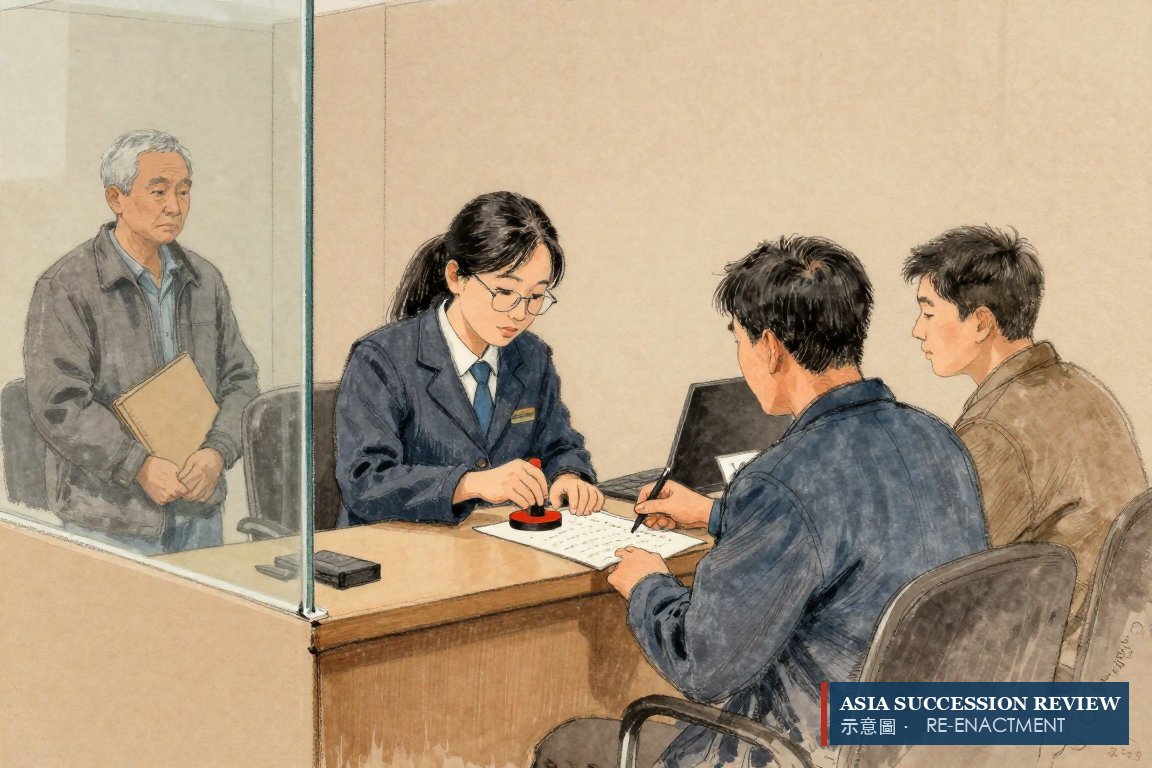
One will signed in Taipei must clear three probate systems in three languages, and each system asks its own questions
Then there is geography. The Taipei house passes under Taiwan law, with the sibling share until February 2027. The Hong Kong house passes under Hong Kong law and the Malaysian house under Malaysian law, because land goes by the law of the place where it sits, everywhere. One notarised will in Taipei is three procedures in three languages, each of which asks whether the will meets its own formalities. And all three houses sit inside Taiwan's estate tax on the worldwide estate of a person habitually resident there; the tax does not care where the house is.
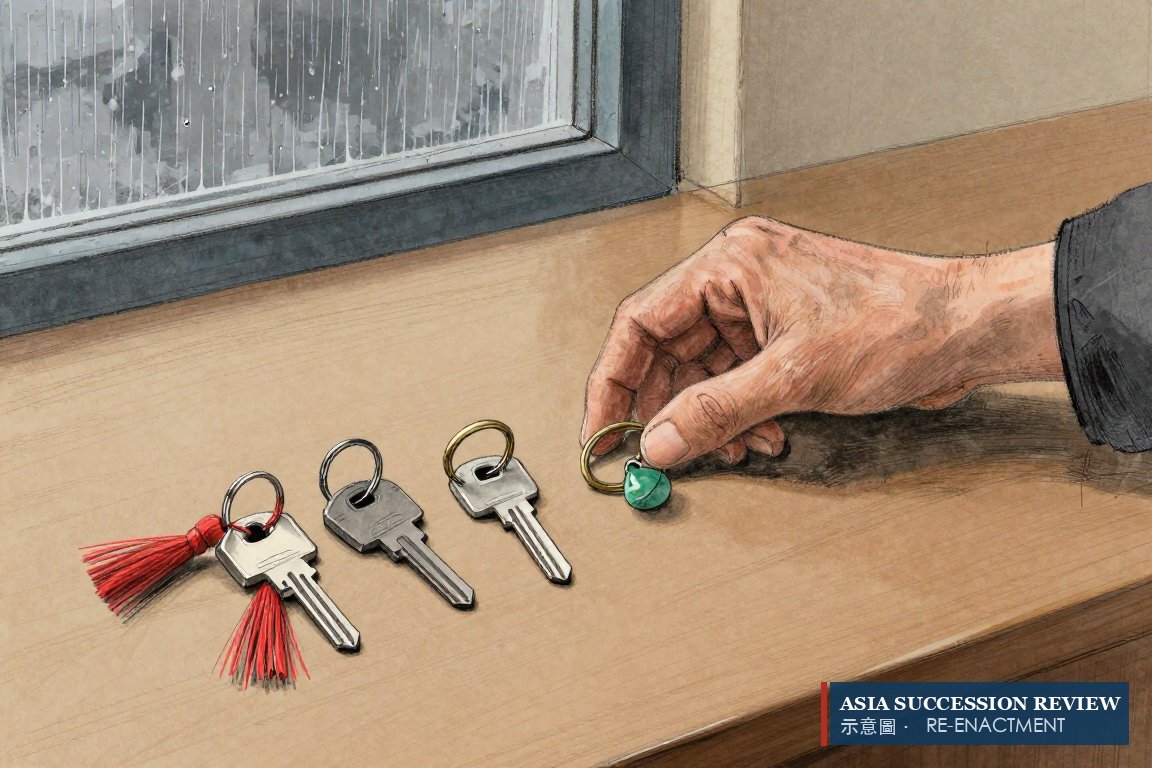
A will is silent while its maker lies in hospital, and the man holding the keys is the assistant
The last knot is the one nobody at the press event asked about. A will speaks at death. Between now and then sits the more probable event for a man of 84 with three heart attacks: a period when he cannot sign. In that period the will is silent, the houses cannot be sold or let without a court, and the people around him — the same assistant, the same friends — are the people with access. The document he has not mentioned is the one that governs that period.
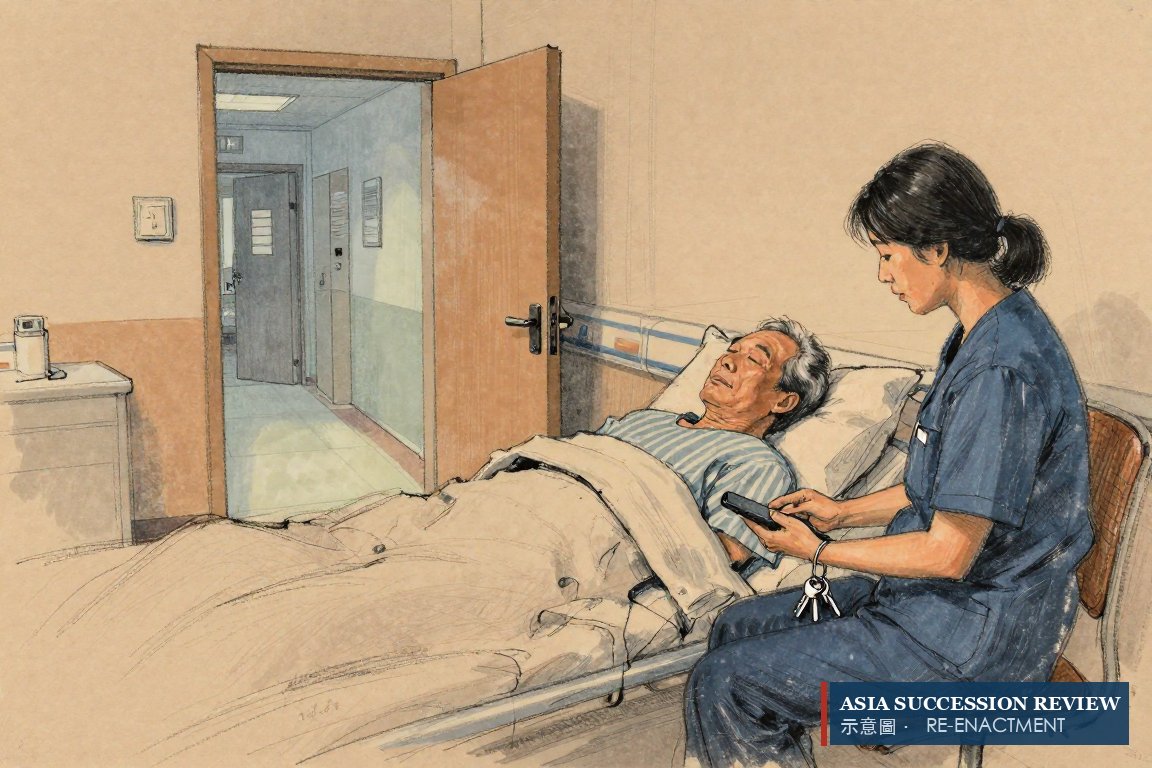
A Singapore will gives a godson, an assistant and nephews everything with no sibling share to cut it back, a Lasting Power of Attorney governs the years before the will speaks, and title in one's own name is the only cure for a house on someone else's — but Singapore law stops at the border of a Hong Kong or Malaysian house, and Taiwan's estate tax follows the owner, not the house.
A nephew inherits in Singapore by standing in his dead father's place under rule 6, while a godson still needs a will
Start with the heirs. In Singapore the intestacy rules for a man with no spouse, children or parents are in section 7 of the Intestate Succession Act 1967 (read on Singapore Statutes Online, 17 September 2026): rule 6 gives the estate to brothers and sisters, with the children of a deceased brother or sister taking his share by stocks; rule 9 gives it to the Government if nobody in rules 1 to 8 exists. So a nephew raised in the house would inherit by substitution in Singapore where in Taiwan he would not — a real difference — but a godson and an assistant still get nothing without a will.
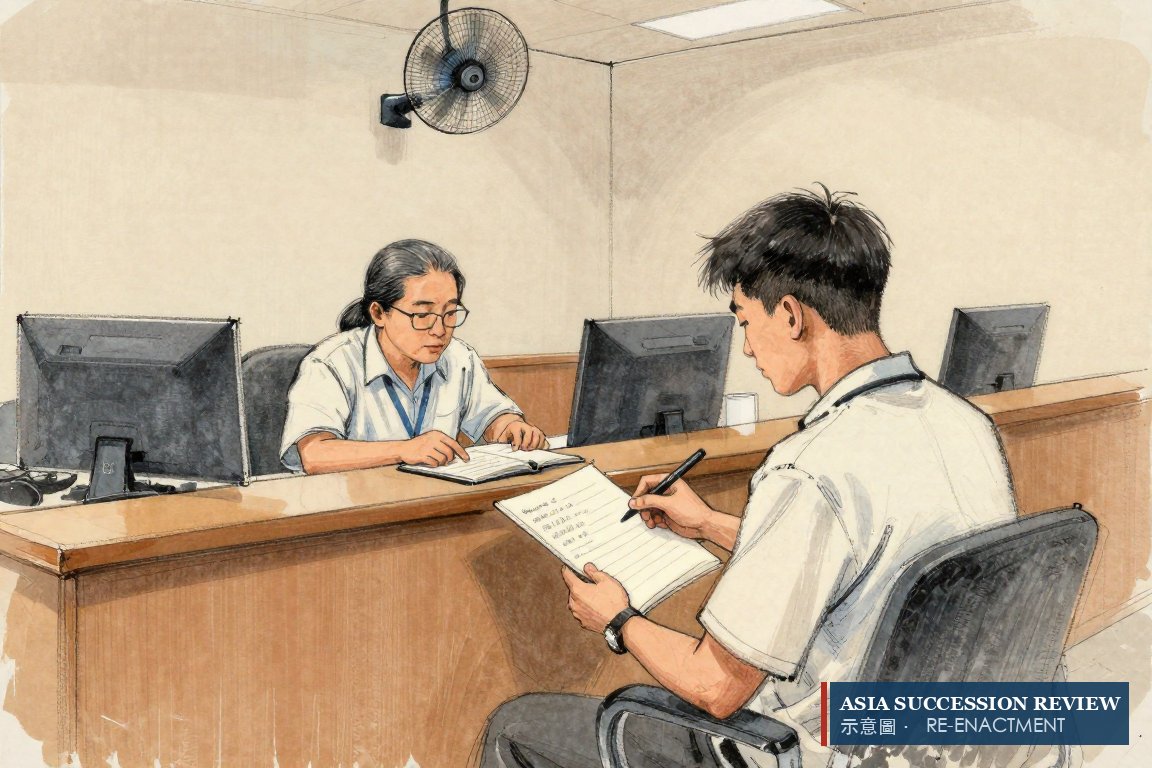
Two witnesses at a Singapore dining table make a will that gives a godson everything, and no sibling can cut it back
Now the will. Section 6 of the Wills Act 1838 asks for writing, the testator's signature, and two witnesses present at the same time; no notary, no court. And for a non-Muslim testator Singapore has no compulsory portion of any kind — no one-third for siblings, no half for children. The will Xie Lei has already made would, under Singapore law, give the godson, the assistant and the nephews exactly what it says, today, with nothing for a surviving sibling to claim against it. The wait until February 2027 does not exist here.
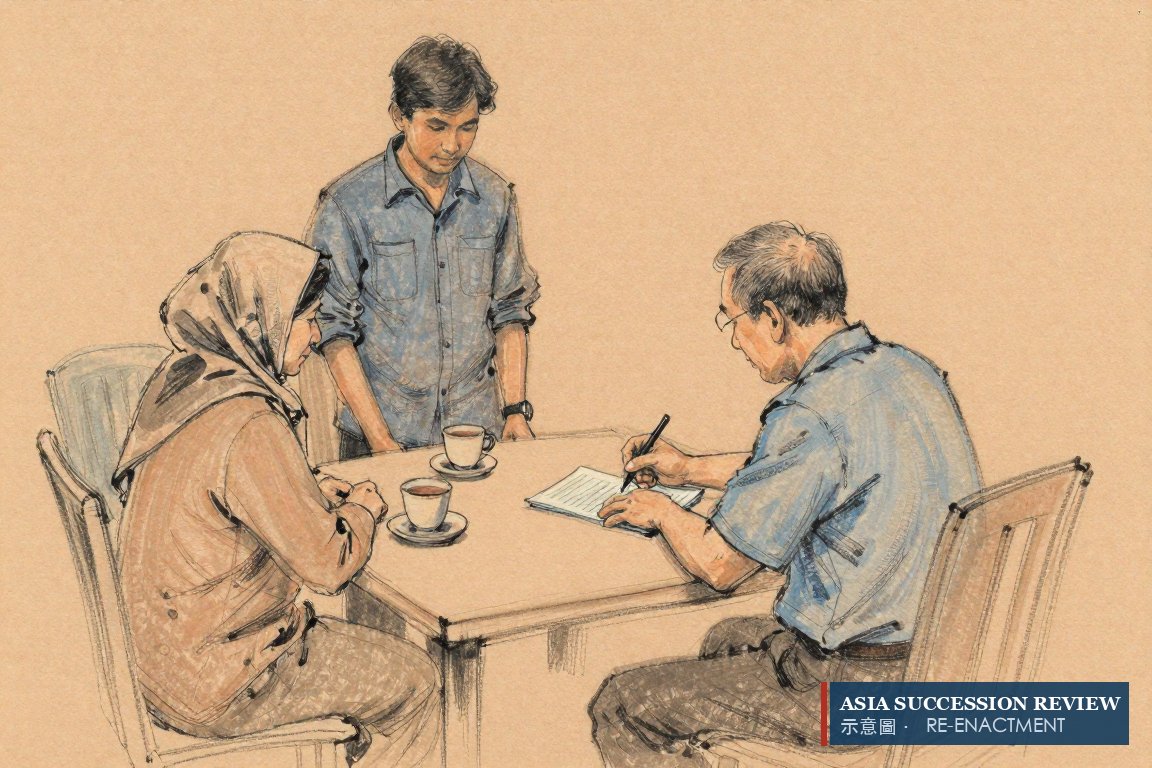
A registered buyer keeps the house under section 46, and the owner whose name was on nothing has six years to sue the nominee
The house on the assistant's title gets the same answer in Singapore as in Taipei. Section 46(1) of the Land Titles Act 1993 gives whoever becomes registered proprietor a title free of interests not on the register; section 46(2) preserves claims against a proprietor who is a trustee, but once the nominee has sold to a buyer party to no fraud, the buyer keeps the house and the claim is a personal one against the nominee for the money. Section 6 of the Limitation Act 1959 gives six years to bring it. A house left in a friend's name for twenty years is, in most cases, neither a house nor a claim.
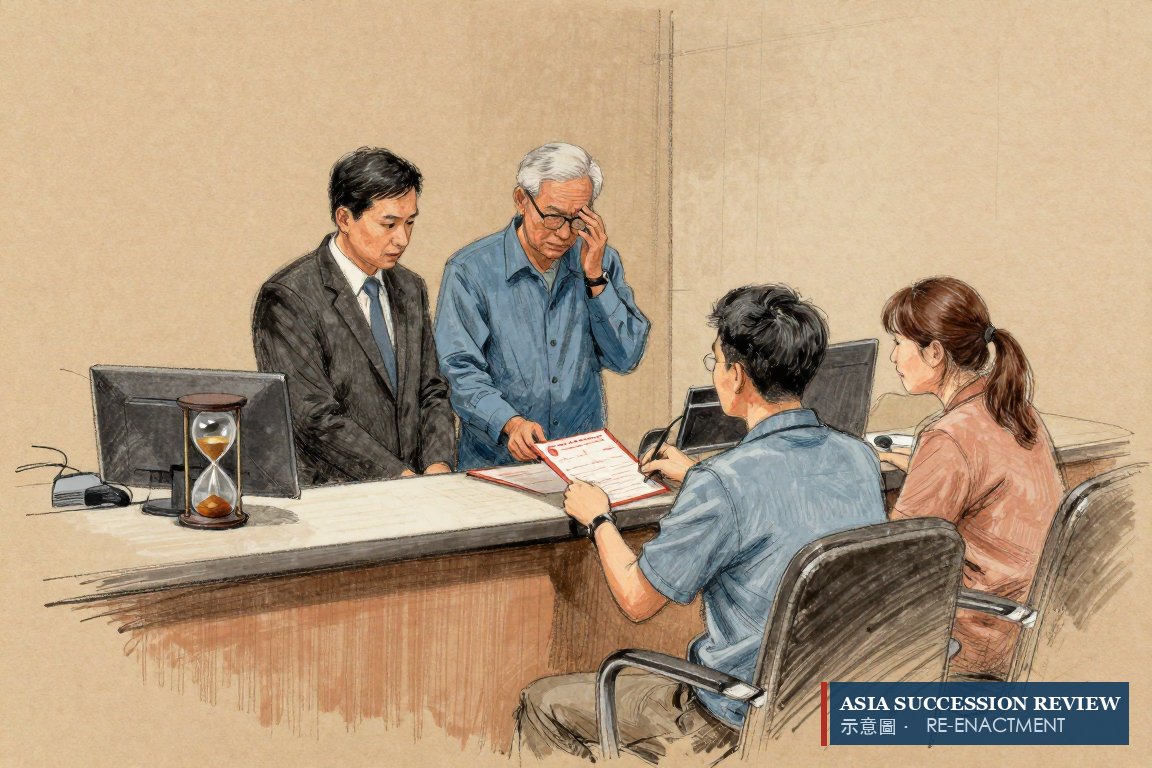
An owner who wants privacy uses a licensed trustee's deed instead of a friend's name, and every loan gets a date the clock can run from
The cure is not a better lawsuit but a different title. A Singapore owner who does not want his own name on a property for reasons of privacy holds it through a written trust with a licensed trust company as trustee, or through a company whose register shows who owns it — never through an individual's bare word. The same rule covers the loans: money lent to friends is lent against a signed acknowledgment with a date, so that the six-year clock has a start and the estate's executor has something to sue on. The reader outside the room can ask for this list without asking for a cent.
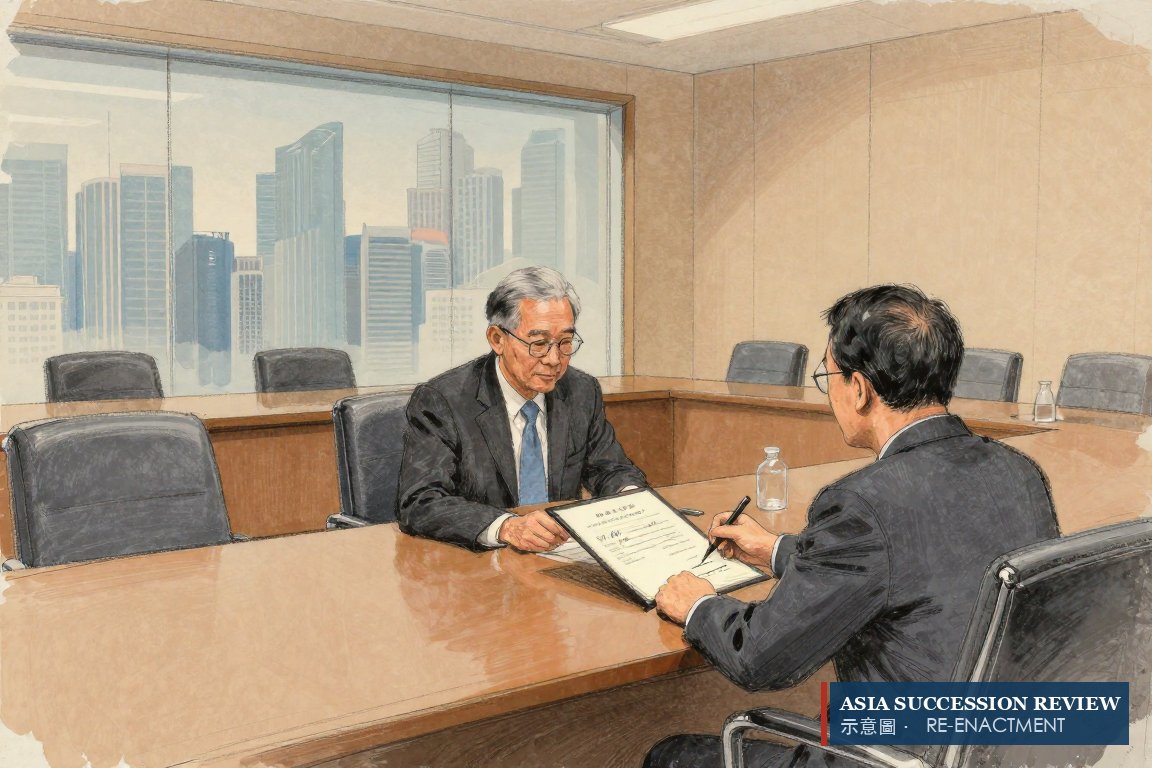
One Singapore grant can be resealed in Hong Kong and Malaysia, but each foreign house still needs its own local will
The three houses need three answers, and honesty requires saying so. A Singapore will disposes of the testator's movables wherever they are and of Singapore land; it does not change the law that passes a Hong Kong or Malaysian house. What Singapore adds is procedure: section 47 of the Probate and Administration Act 1934 lets a grant from any Commonwealth court be resealed here, and Hong Kong and Malaysia, both Commonwealth probate systems, have their own resealing provisions, so one grant can travel instead of three fresh applications. The practical answer is the one the Taipei lawyer gave: a local will for each foreign house, drawn so that none revokes the others.
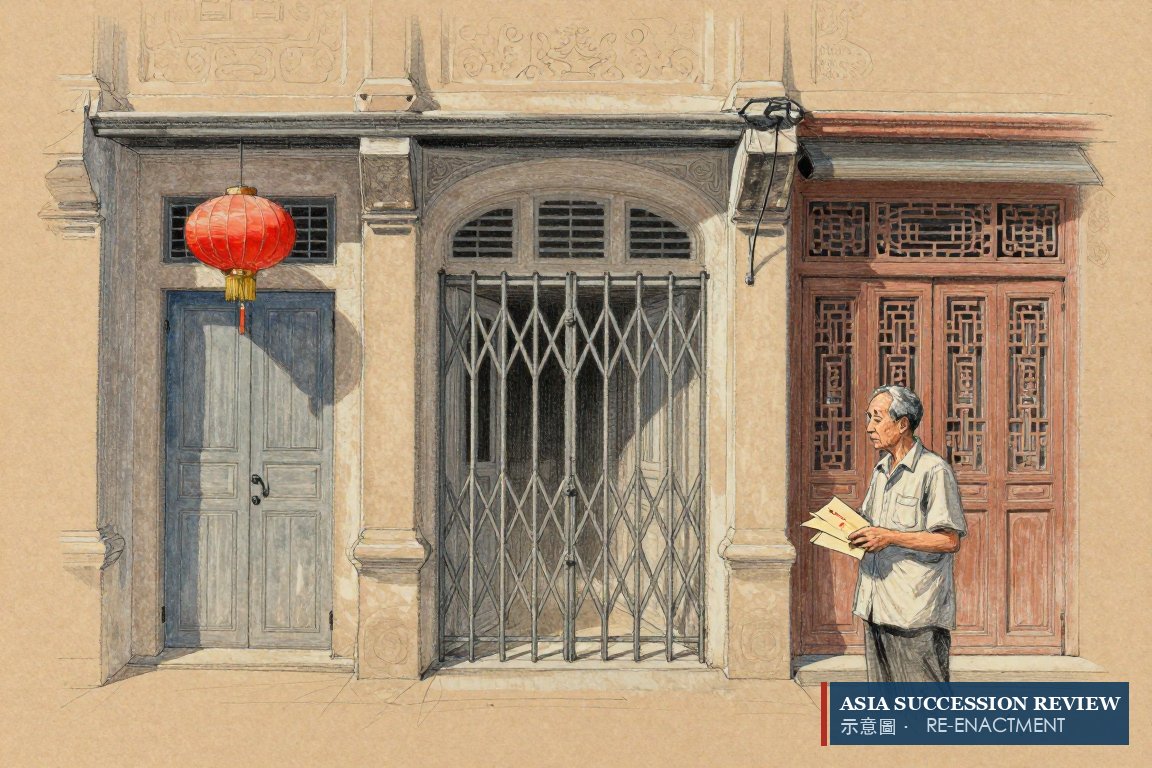
Taiwan taxes all three houses in the worldwide estate of a resident, and a Singapore will removes none of that tax
The tax does not move either. Taiwan's Estate and Gift Tax Act taxes the worldwide estate of a person habitually resident in Taiwan, so the Hong Kong and Malaysian houses are in the Taiwan return whatever a Singapore will says. Singapore itself removed estate duty for deaths on and after 15 February 2008 and levies no inheritance tax, which means a Singapore structure adds no tax — and removes none in Taipei. The page on Taiwan's estate tax on overseas assets sets out the numbers and the credit for foreign tax paid.
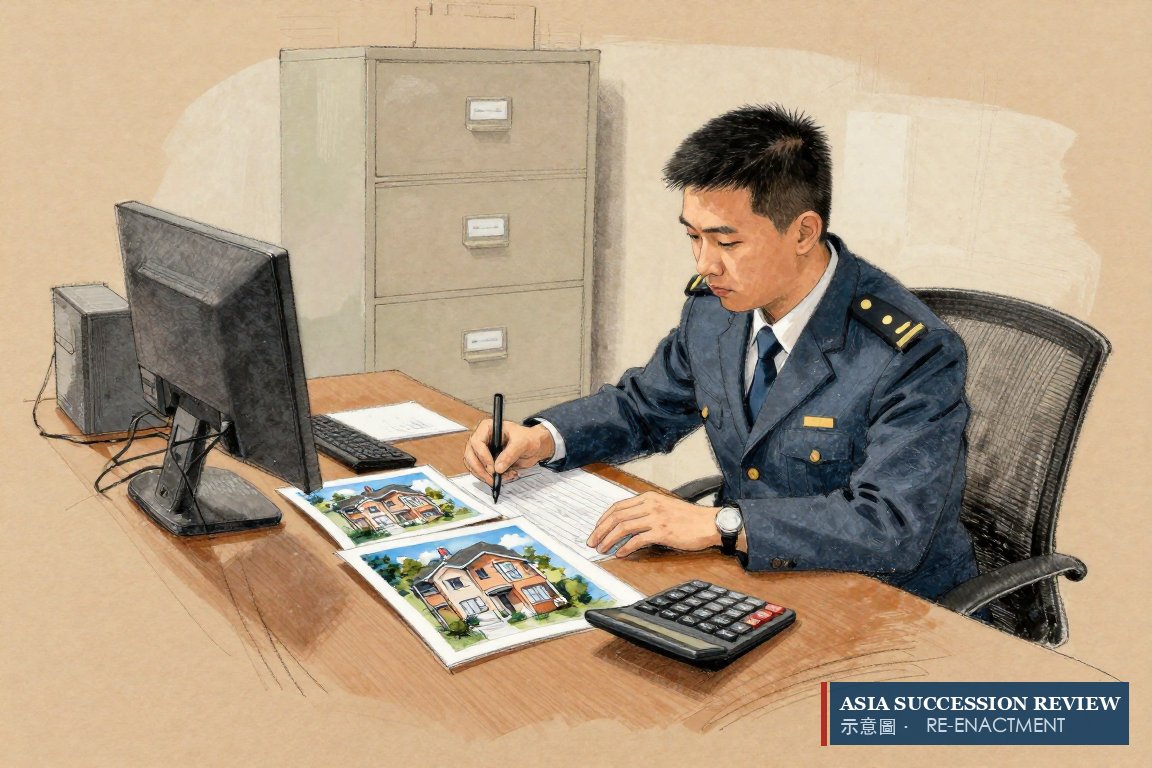
A doctor's certificate switches on a Singapore Lasting Power of Attorney, while Taiwan's guardianship contract waits for a court
The years before the will speaks are governed by a different document. A Lasting Power of Attorney under section 11 of the Mental Capacity Act 2008 lets a person appoint a donee to decide on property and affairs, and personal welfare, once capacity is lost. The Ministry of Social and Family Development told Parliament on 5 March 2026 that 404,000 Singapore citizens had made one as at 20 February 2026, and that Form 1 is now free for citizens permanently. Taiwan's voluntary guardianship contract (Article 1113-2) is the same tool, but it bites only when a court declares guardianship (Article 1113-4); the LPA is activated by a doctor's certificate, not a court.
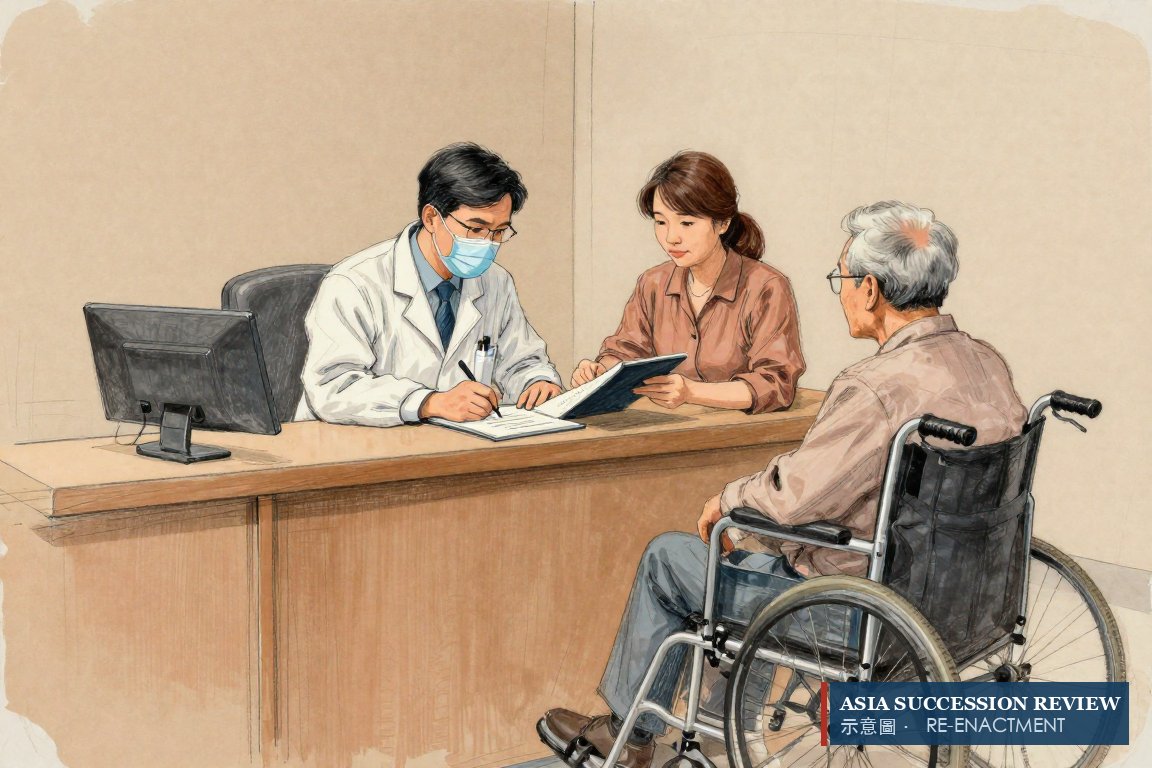
Two donees must sign together for any sale while the singer is in hospital, and the man with the keys is left out of the deed
An LPA is also the answer to the question the press event left hanging: who, in the hospital months, decides whether the Taipei house is let, whether the Malaysian house is sold, who pays the assistant. Written now, it names the person and the limits; it can require two donees to act jointly for any sale, and it can leave out the people with the keys. Without it, in Singapore as in Taiwan, the family goes to court for a deputy, with the estate frozen meanwhile.
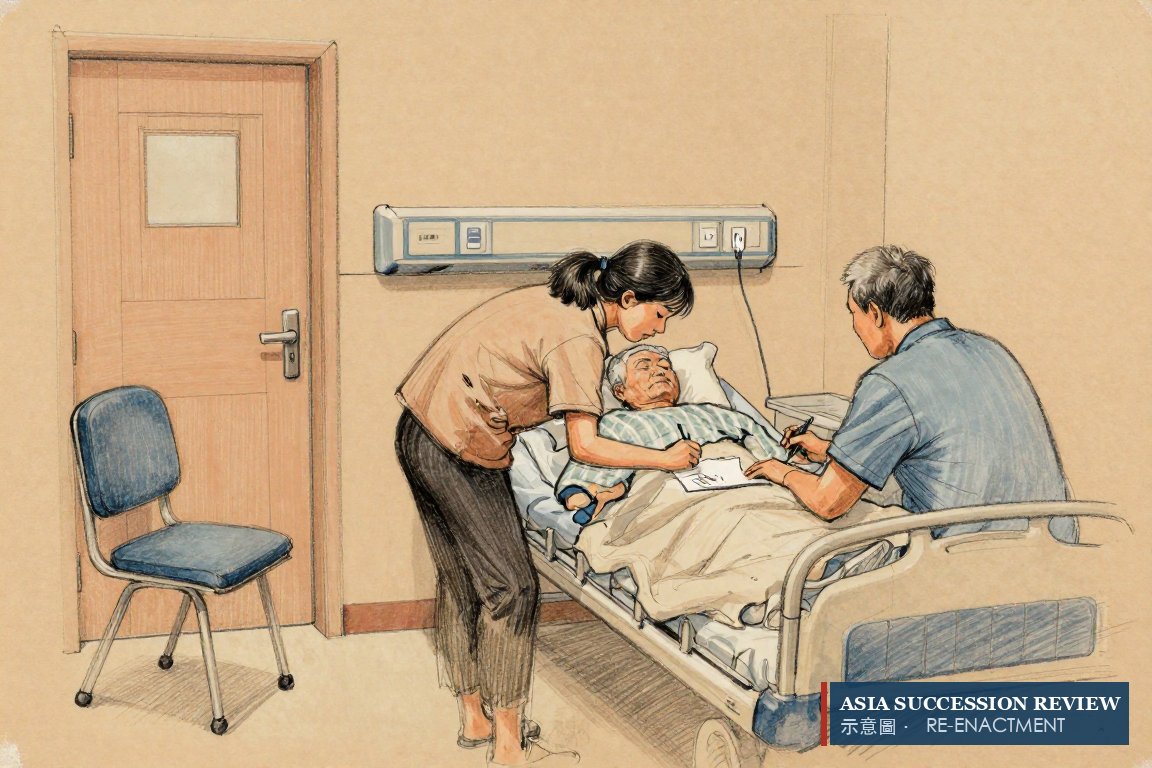
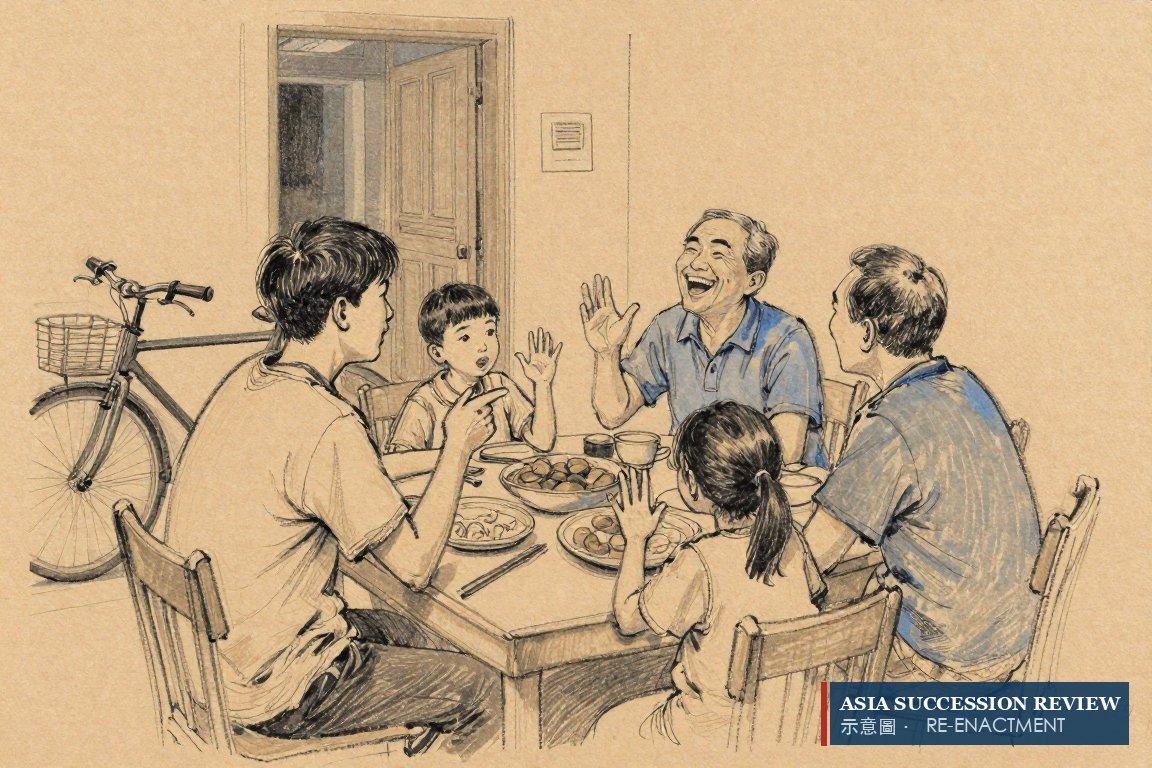
A nephew asks six questions at dinner without asking for a cent, and the uncle answers three with a joke about a bicycle
What this changes for the person outside the room. If you are the nephew or the godson, the questions that are legitimate at any dinner table are the five this newspaper always lists — is there a will, where is the original, who is executor, is there a Lasting Power of Attorney, and who signs if he is in hospital next month — with a sixth for this family: which country's will covers which house. None asks for a share. Xie Lei answered the first three in public, with a joke about a bicycle. The fourth and the sixth are still open.
Xie Xiao-yu, the godson, and Xiao-xiong, the assistant — what the notarised will gives them, less a surviving sibling's one-third until about 17 February 2027; under a Singapore will, exactly what it says, today
The second brother's children — legatees under the will in Taiwan; heirs by substitution under Singapore's rule 6 even without one — but not heirs at all under Taiwan's Article 1140 if their father has died
A surviving brother or sister, if any — one-third of an intestate share by cutting the will back, until the amendment commences; nothing after; nothing at any time for a non-Muslim testator under Singapore law
The assistant who sold the Taichung house, and its buyer — the buyer keeps the house in both systems; the assistant keeps the price, uncollected
The friends who borrowed more than NT$10 million — no paper, so nothing for an executor to sue on; in Singapore the six-year clock would in most cases have run
The Taiwan treasury — estate tax on all three houses whatever will is made; the whole estate under Article 1185 if no heir accepts and no will exists
A counterfactual, not advice. The verified machinery is on the Singapore page; where your family stands is the briefing.
From the case files: The sibling share, both texts and the flip date: can Taiwan's compulsory portion be avoided?