東門鴨莊: give the shop to your son, and his in-laws can end up with it
Yao Mei-chen built a Taipei roast-meat house over forty years and put the company and its trademark in her only son's name. He died on a motorcycle in 2021; his wife died within a year; their children inherited the company; the children's other grandmother became their guardian and, with that, the company's voice. By 2025 the founder was barred from her own sign and trading as 1+1 燒臘 down the road.
Read this in: EN · 简体 · 繁體 · ไทย · ID
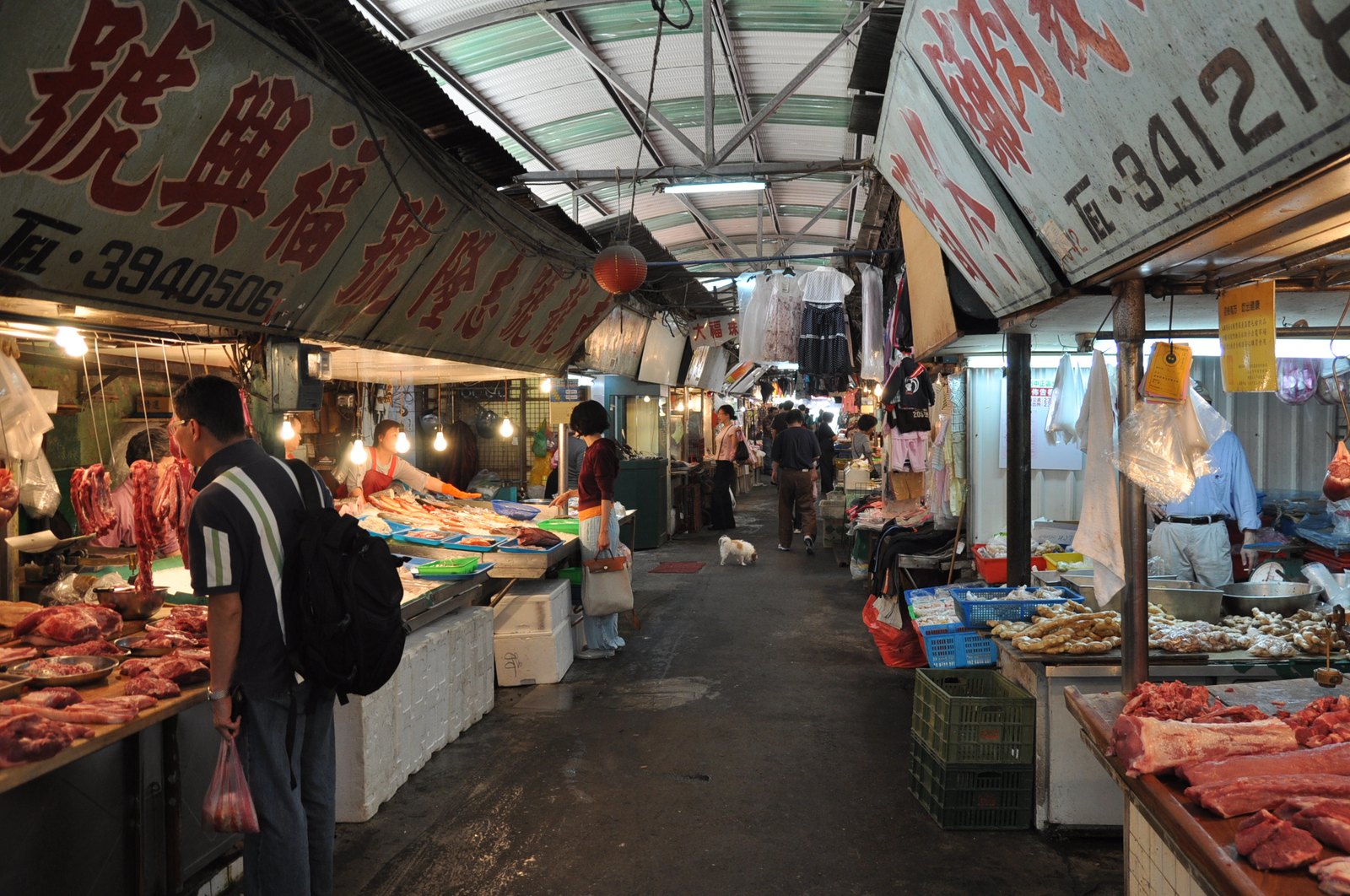
A cook and his wife open a duck counter by Dongmen Market in 1979, and she keeps it after the 1984 divorce
東門鴨莊 opened in 1979 on Jinshan South Road, a few doors from Taipei's Dongmen Market, run by a Hong Kong-trained cook, Chen Sung-ken 陳松根, and his wife Yao Mei-chen 姚美貞. They divorced in 1984; he took the two branches, she kept the original shop, learned the roasting herself and turned the recipes toward a Taiwanese palate. Hong Kong customers complained the duck was too Taiwanese and kept ordering it. For four decades it was one of the city's best-known 燒臘 counters. The family account that follows is the founder's own, given to 鏡週刊 in a five-part series published on 20 February 2026 and to 東森 in August 2025.
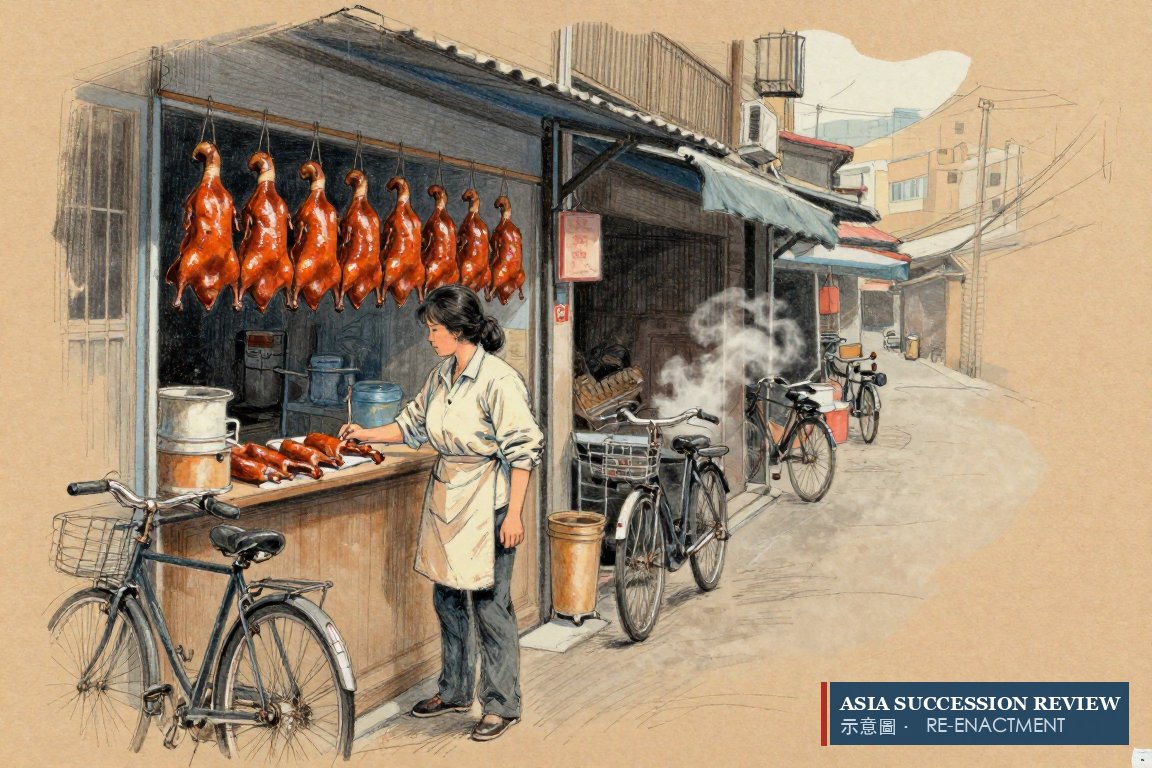
The founder hands the shop to her only son around 2009, and he puts company and trademark in his own name
Around fifty she handed the shop to her only son, Chen Tsai-wen 陳載聞, who had studied hotel management in Sydney and come home to the counter. 自由時報 reported after his death that he had delivered lunch boxes through Dongmen Market by bicycle at twelve and taken over around 2009 when his mother's health faltered. He opened two more branches and a central kitchen; his mother says monthly sales reached NT$12 million. He registered the trademark and set up the company in his own name; she held no title in either. He paid her NT$40,000 a month and she went travelling, learning to surf in Taitung in her sixties.
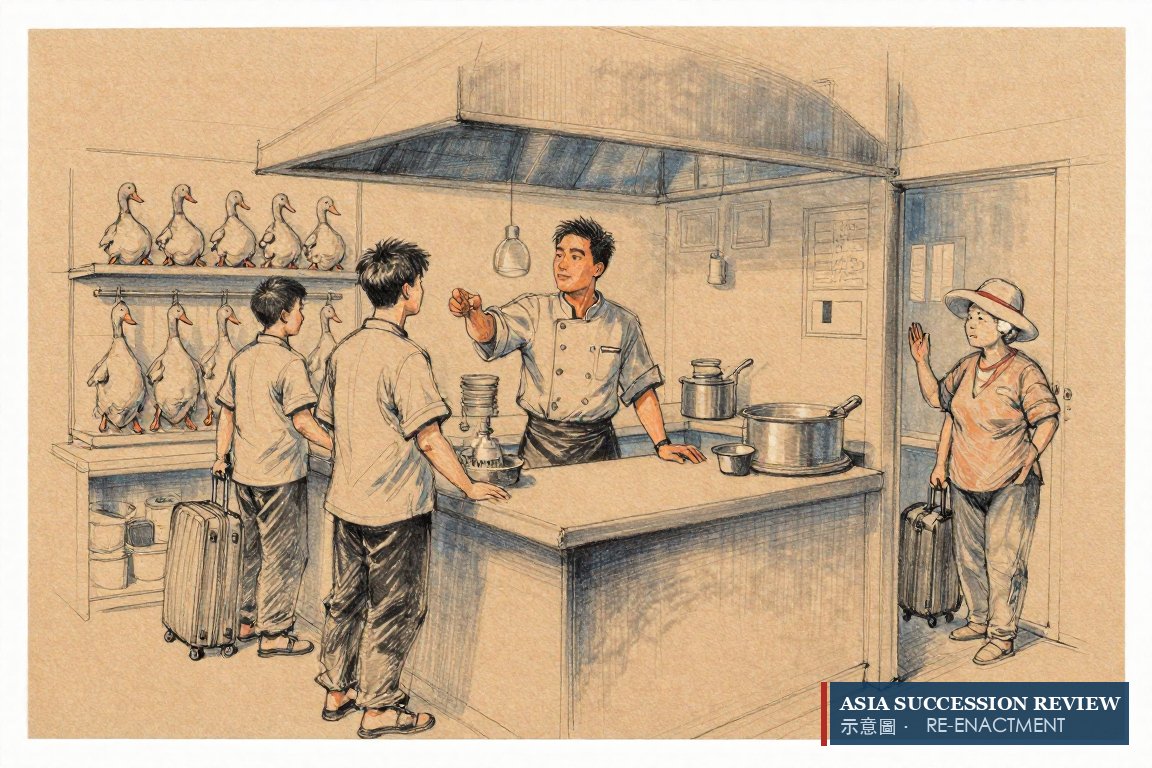

The son dies at 40 on the Taipei–Yilan highway in August 2021, and his widow dies within six months
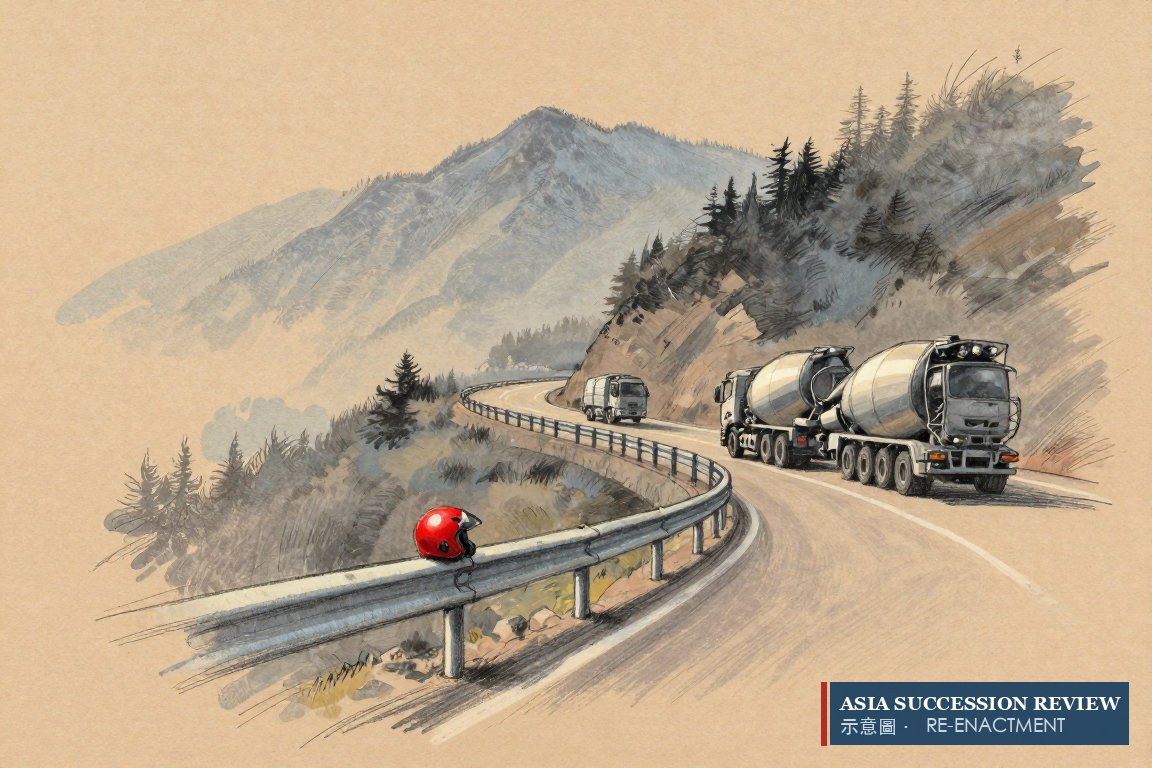
On the morning of 26 August 2021 he lost control of a motorcycle on a bend at kilometre 33.8 of the Taipei–Yilan highway and was struck by two cement mixers. He was 40. 自由時報 and 中時 carried it the next day. His widow, Chen Ya-han 陳亞涵, told her mother-in-law not to worry: she would bring her own mother in to keep the shop running. About six months later she too died. The children, still at primary school, were now the heirs of everything their father owned, which was the company, the trademark and the shop.
The maternal grandmother moves her registration into the flat and becomes guardian, and the founder upstairs ranks third
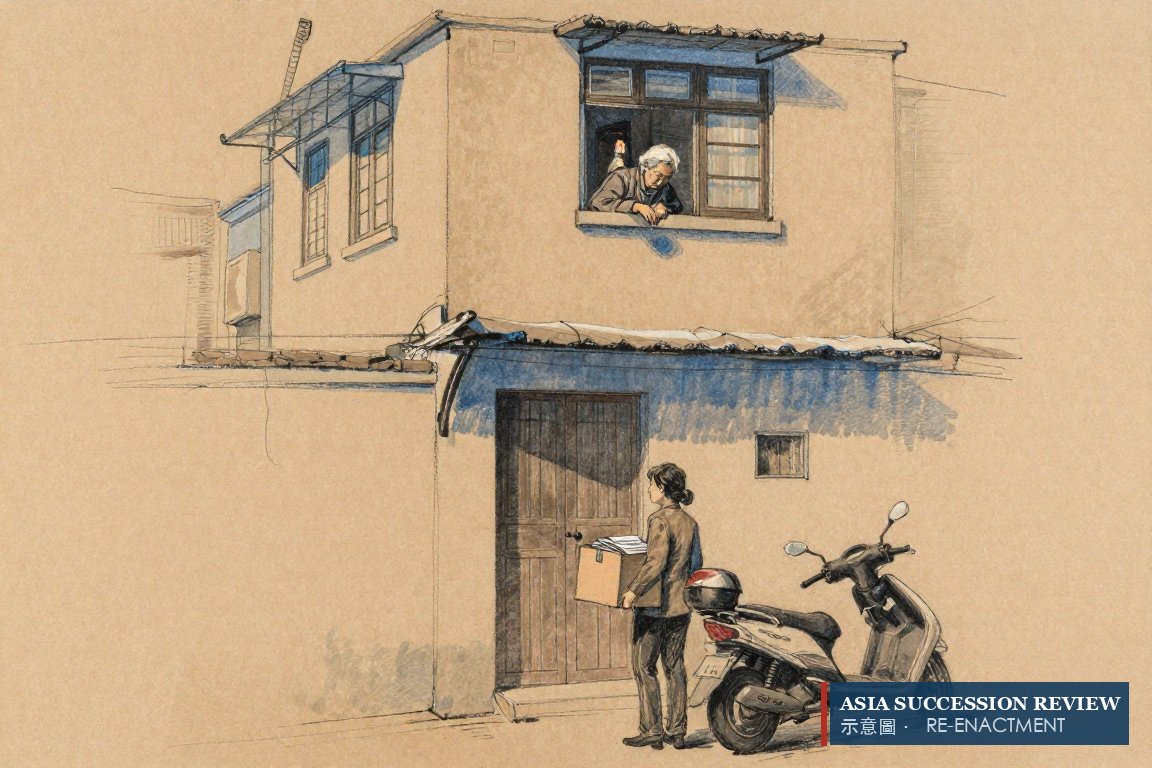
Under Taiwan's Civil Code, when both parents are dead and no guardian has been named by will, article 1094 appoints one by a fixed order: first the grandparents who live with the child, then co-resident elder siblings, then grandparents who do not. The founder says her son had rented a two-storey walk-up so that she lived upstairs and his family downstairs, which put her at a different address. Within days of the daughter-in-law's death, she says, the maternal family moved its household registration into the flat, and the maternal grandmother, a land-registration agent, was recorded as guardian. The founder was third in the statutory queue.
Police walk the founder out of her own shop, and she loses the guardianship case on the 2025 retrial
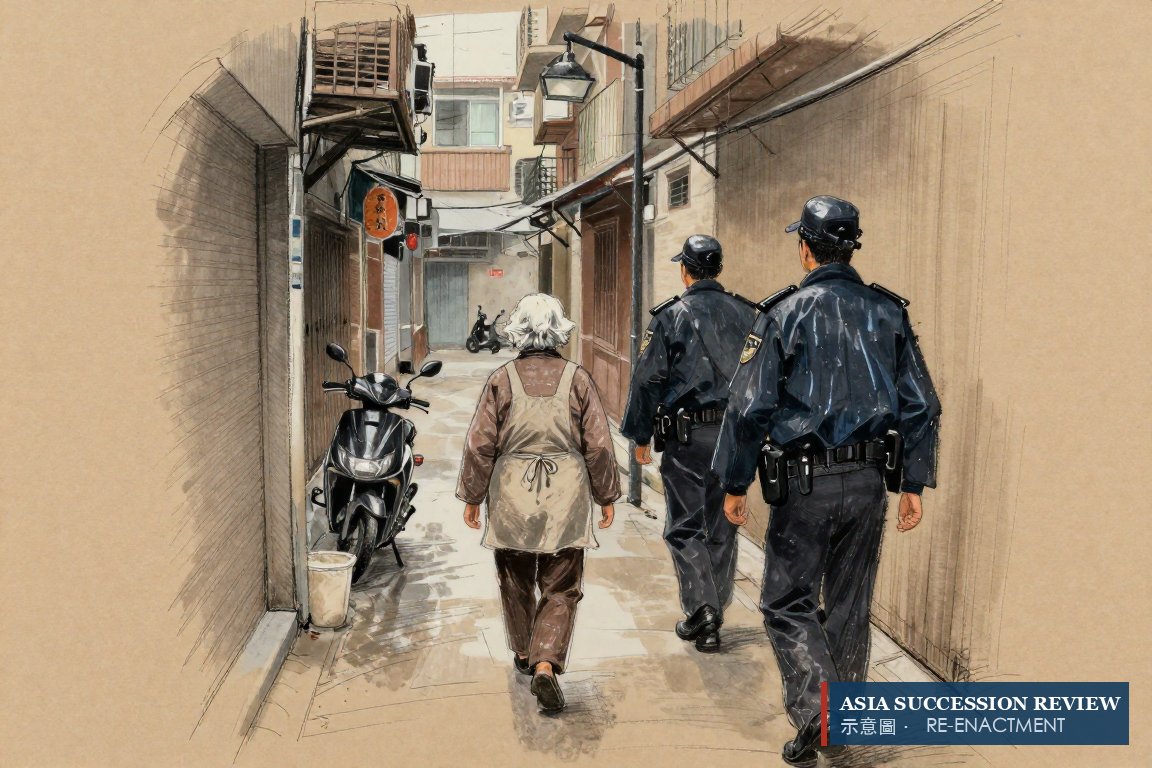
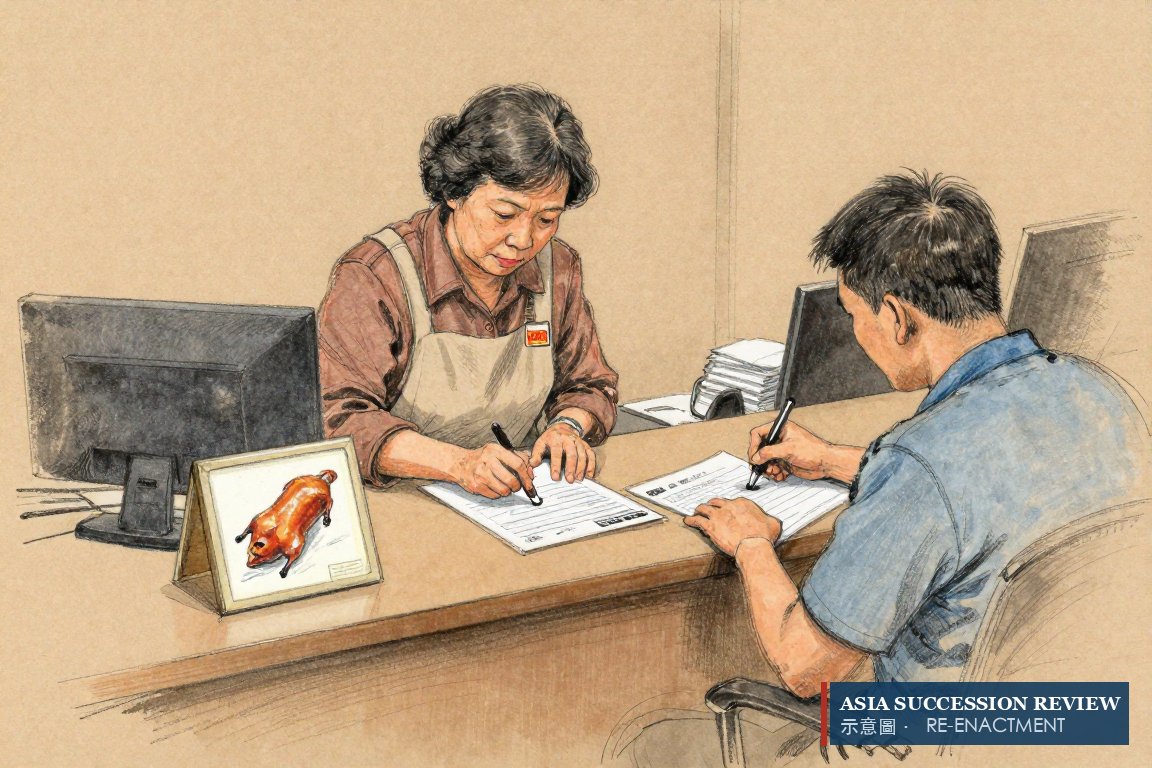
A guardian is the child's legal representative, and a child who owns every share of a company votes through the guardian. The founder says she was told the shop was the grandsons' now and would have to be sold because it was losing money; when she went back to save it she was removed by police, holding no office in it; the monthly payment stopped. She sued for guardianship: lost at first instance, won on appeal, lost the second retrial in 2025 after, she says, her grandson gave evidence against her. She did not appeal further. The Family Court file is not public; the maternal family's side has not been reported.
Barred from her own name, the founder reopens as 1+1 燒臘 in July 2025 and teaches the recipes to strangers
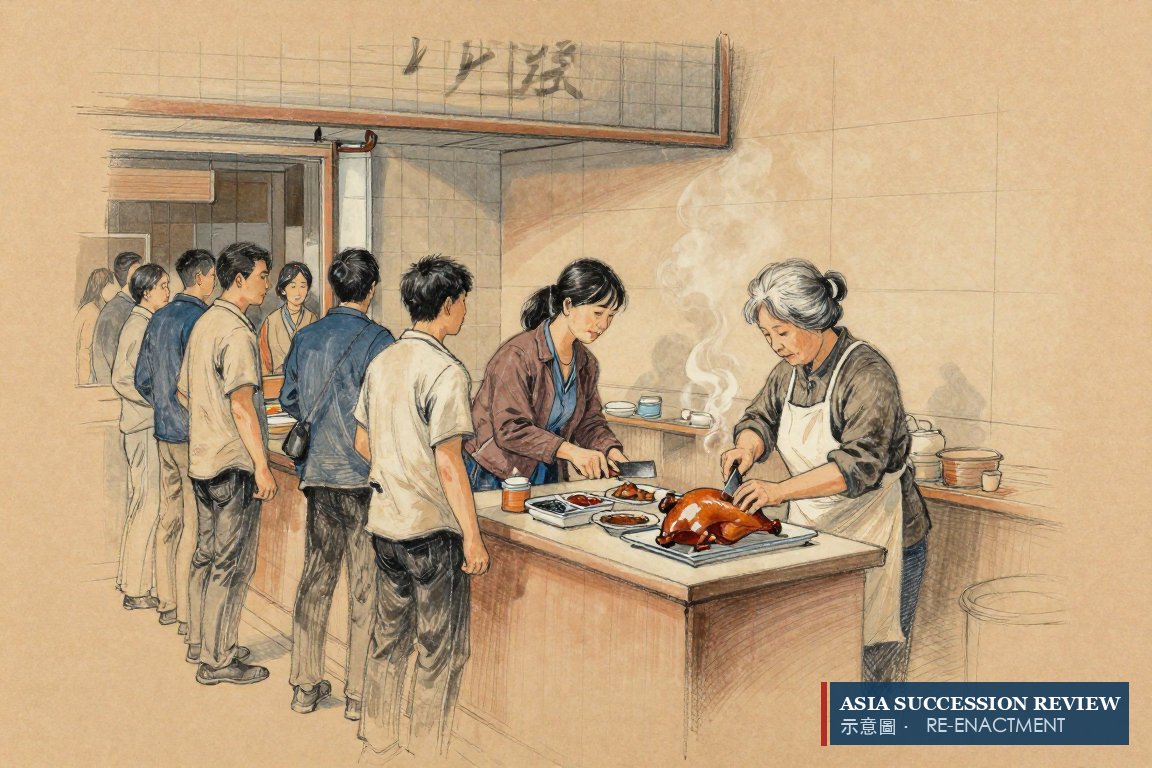
The new operators then told her to stop using the name. In July 2025 she reopened the Nanmen branch she had started with her son's life-insurance money as 1+1 燒臘, at the corner of Nanchang and Nanhai Roads, with her daughter, a specialist nurse who left a NT$100,000-a-month post for the counter. Former staff have told her the original company was sold to a Taichung businessman for NT$30 million; she says she does not know if it is true. 'That trademark was created by me,' she told 東森. 'I simply didn't register it.' She is over seventy and teaching the recipes to anyone poor enough to need them.
The founder gave away the shares, the trademark and the right to be consulted, and kept none. Each passed to her son outright, so on his death each went to his children, and a child's property is run by whoever the law makes guardian. Taiwan's Civil Code article 1094 answers that by address, not merit: the grandparent under the same roof comes first. A lease that put mother and son on different floors, a registration moved within days, and a company with one shareholder did the rest. No will named a guardian; no trust held the shares; no licence separated the name from the company. Forty years had become one man's property, with nothing written for the day he was gone.
Move the same family to Singapore and the same shop can be lost the same way — what changes it is a will that names the children's guardian, a trust that holds the shares so that no guardian ever votes them, a trademark registered to the founder and licensed to the company, and a statute that stops a guardian selling an infant's shares without a judge.
Singapore's intestacy rule 3 gives a dead son's estate to his children, so the grandmother inherits nothing there either
Start with who inherits, because Singapore changes nothing there. Section 7 of the Intestate Succession Act 1967, read on Singapore Statutes Online on 19 September 2026, gives the estate of a person who dies leaving children to those children in equal shares (rule 3), and the parents take only where there are no descendants (rule 5). A son who owns the company outright and dies leaves it to his children in Taipei and in Singapore alike. The founder, as a grandparent, inherits nothing in either place.
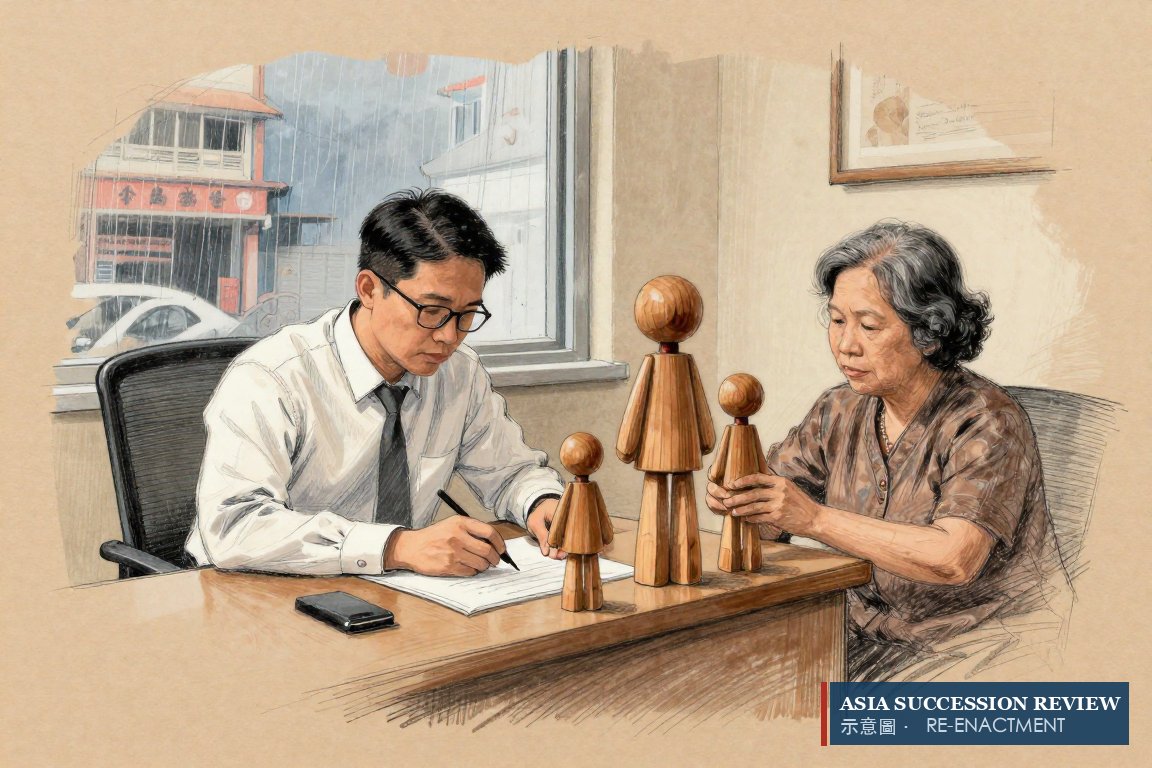
A one-page will names the children's guardian, so the court starts from the father's choice, not an address
Now the guardian. Singapore has no statutory queue by address. Under the Guardianship of Infants Act 1934 the welfare of the child is the first and paramount consideration (section 3); where a child has no parent the court appoints a guardian on application (section 6(3)); and either parent may, by deed or will, appoint a guardian to act after that parent's death (section 7). The son's will, one page, could have named his mother, or his mother and the maternal grandmother jointly, to act with his widow and after her. A named guardian is not first by postcode; the court starts from the instrument.
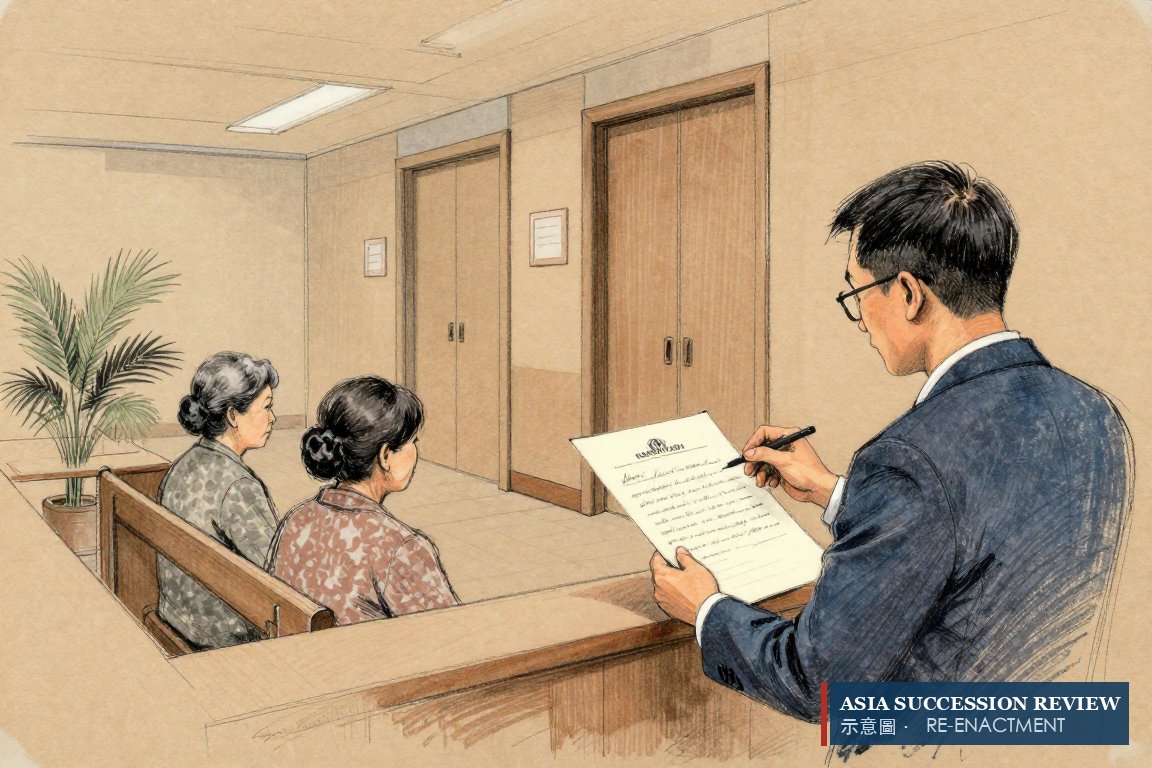
A Singapore guardian cannot sell a child's shares without the court, and a sale made anyway can be reversed
Then the shares, which is where the case is really decided. In Singapore a guardian of an infant's property cannot sell, mortgage or otherwise part with any of the infant's movable or immovable property without the permission of the court (section 16(1)), the court grants it only where necessary or advisable in the child's interests (section 16(3)), and a sale made without it may be declared void and the property ordered back (section 16(2)). Taiwan's article 1101 requires court permission for a guardian's dealings in the ward's immovable property; it does not list the shares of a company. A Taipei guardian could sign the sale. A Singapore guardian could not.
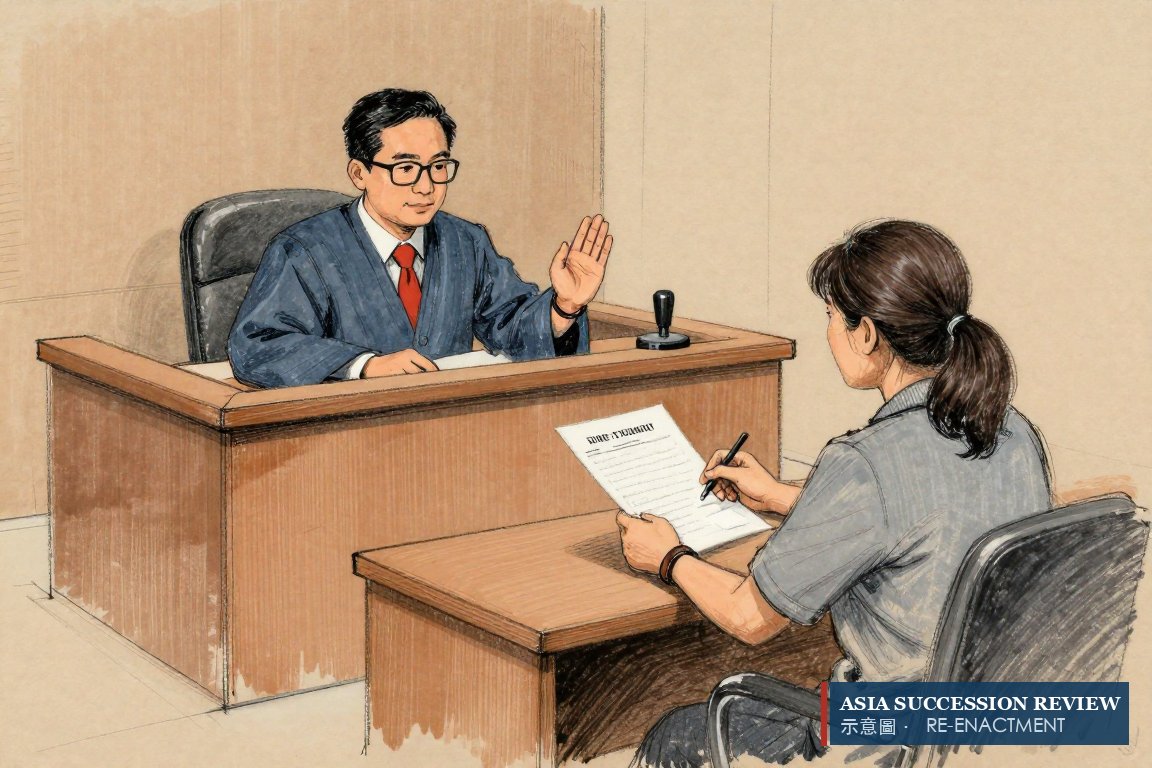
A trust holds the shop, so the trustee keeps the shares, pays the founder monthly, and the guardian gets custody
Better still, no guardian votes the shares at all. The founder settles the company into a Singapore-law trust during her life, with a licensed trust company as trustee, the son as manager under a written mandate, and the grandchildren as beneficiaries taking at a stated age. On the son's death the trustee still holds the shares, still appoints the manager, still pays the founder the NT$40,000 a month the deed provides, and a guardian, whoever the court chooses, has custody of the children and no seat at the company. The Trustees Act 1967 lets the deed name who appoints a replacement trustee (section 37).
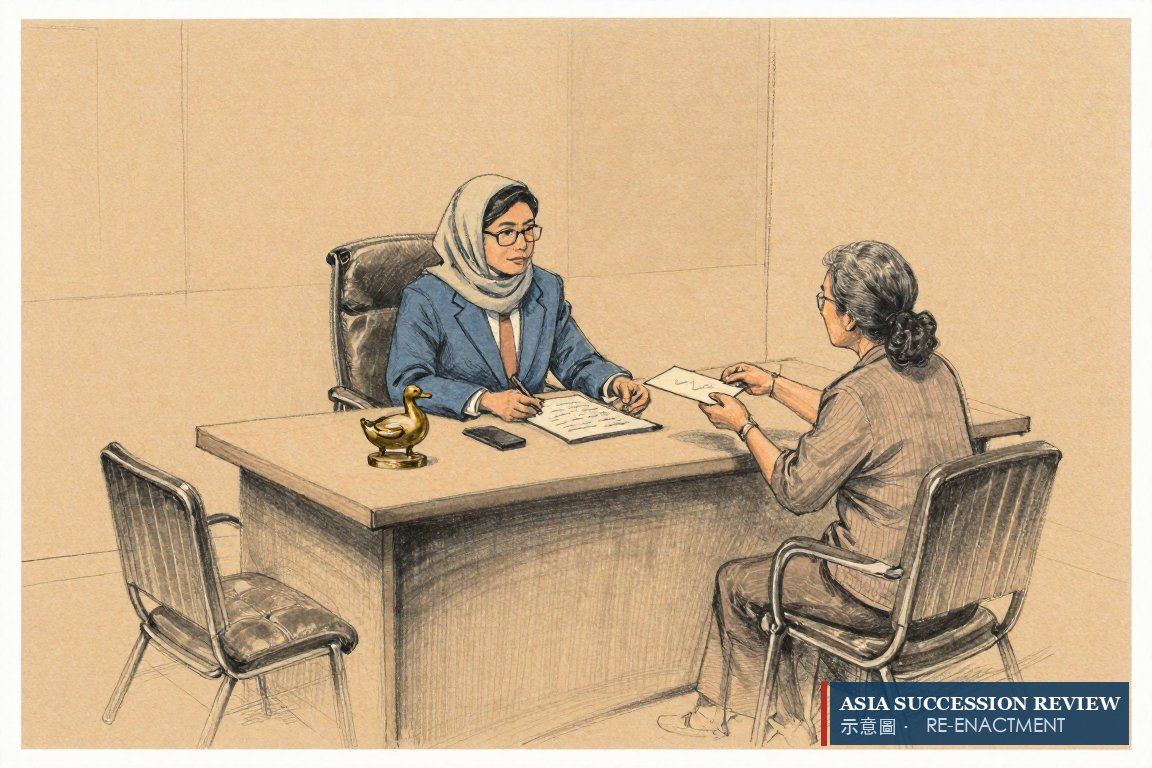
A trademark in the founder's name stays with its maker, though a Singapore court might still choose the same grandmother
The name is a separate asset and should have been kept separately. A registered trade mark is personal property, assignable or transmissible with or without the goodwill of the business (Trade Marks Act 1998, section 38); registered to the son, it went with his estate. Registered to the founder, or to a family holding company, and licensed to the operating company while the family runs it, the sign stays with its maker. The honest limit: none of this brings back custody. A Singapore court applying section 3 might well have placed the boys with the same grandmother. What it would not have handed her is the company.
The grandchildren — the company and its income through a trustee who holds it until they are of age — instead of shares voted by a guardian and sold before they could read a balance sheet
The founder — the trademark, a stated monthly income under the deed, and the right to be consulted written into the manager's mandate — instead of removal by police from her own counter
The guardian, whoever the court chose — custody and the children's welfare — and no vote at the company, and no power to sell the shares without a judge
The customers of forty years — the same duck under the same sign — instead of a name sold to a stranger and a founder trading two streets away under 1+1
A counterfactual, not advice: real structures need licensed hands and your family's facts.
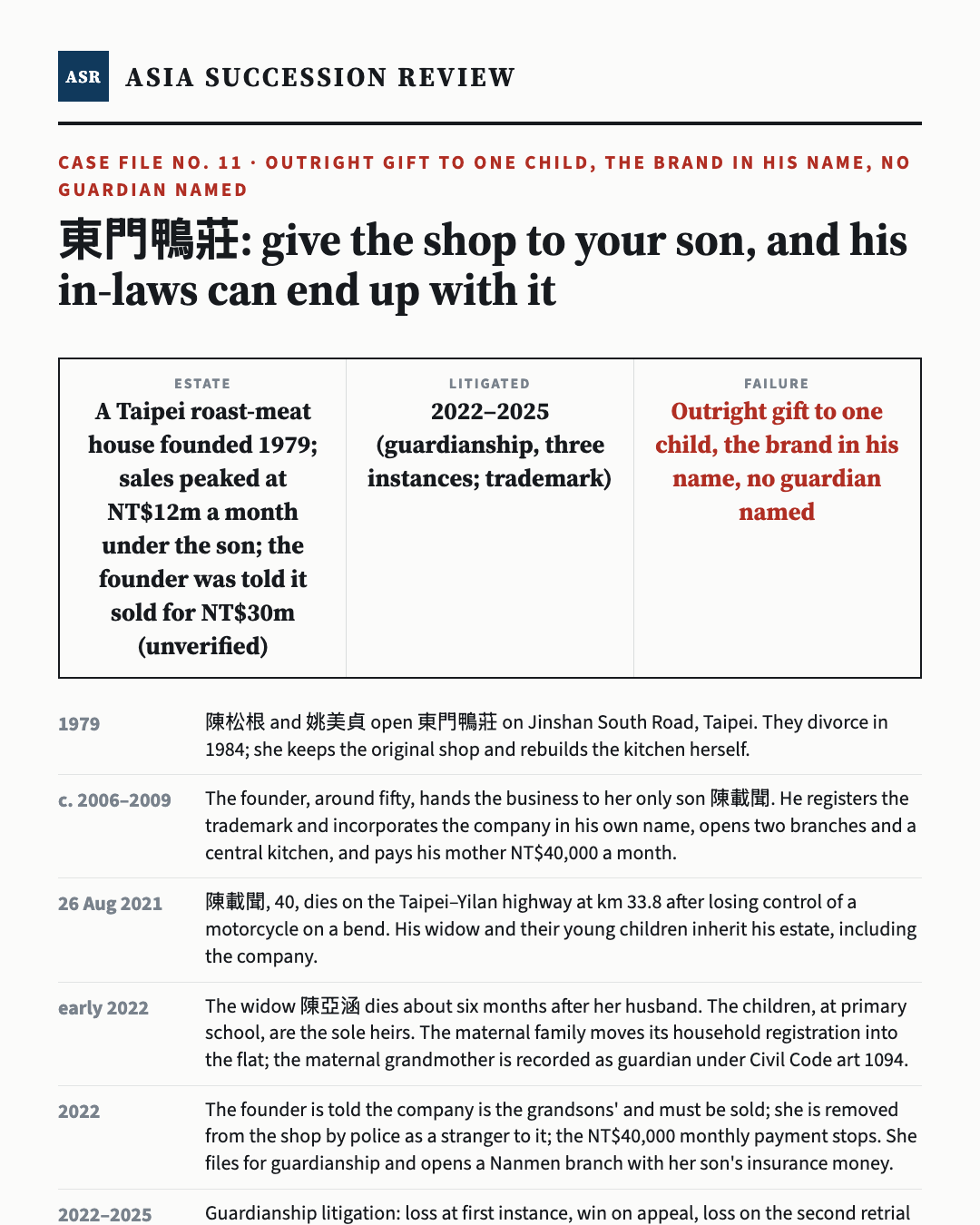
The case in one card — press and hold to save, or forward it as it is.
If the business, the brand and the lease are in one child's name
Most family businesses in the region are handed over the way 東門鴨莊 was: the parent steps back, the child's name goes on the company, the trademark and the lease, and the parent keeps a monthly envelope and no document. It works for as long as the child is alive and married to someone who agrees. On the day one of those stops being true, the parent's position is whatever the child's estate and the child's spouse's family say it is. The questions are short: whose name is the trademark in; who is named guardian in the child's will; what does the parent receive under a written instrument rather than by habit; and who, on the child's death, holds the shares. Wanting those answers while everyone is alive is stewardship, not distrust.
東門鴨莊 爭產 — what actually happened to the Dongmen Duck House?
The founder, 姚美貞, gave the business to her only son 陳載聞 around 2009; he registered the trademark and the company in his name. He died in a motorcycle crash on 26 August 2021, aged 40; his wife died about six months later; their young children inherited. The maternal grandmother became guardian under Civil Code art 1094 and controlled the company. The founder lost the guardianship case on the second retrial in 2025, was barred from the trademark, and reopened as 1+1 燒臘 in July 2025.
Why did the maternal grandmother become guardian rather than the founder?
Because article 1094 of Taiwan's Civil Code ranks guardians of a child whose parents are dead, absent a will, by co-residence: grandparents living with the child first, then co-resident elder siblings, then grandparents who do not live with the child. The founder lived on a different floor at a different address; the maternal family moved its household registration into the children's flat. The founder was third in the queue. A guardian named in the father's will under article 1093 would have come first.
Can a guardian in Taiwan sell a company owned by a minor?
Article 1101 forbids a guardian from using or disposing of the ward's property except for the ward's benefit and requires court permission for dealings in the ward's immovable property and the family home; it does not list company shares among the acts needing the court. Whether the sale reported by the founder took place, and on what terms, is not on the public record.
Who would inherit in Singapore if a son died leaving children and no will?
The children. Rule 3 of section 7 of the Intestate Succession Act 1967 gives the estate of an intestate who leaves issue to the children in equal shares, subject to a surviving spouse's half under rule 2; parents take only where there are no descendants (rule 5). A Singapore grandmother, like a Taiwanese one, inherits nothing from a son who leaves children.
Can a guardian in Singapore sell a child's shares in the family company?
Not without the court. Section 16(1) of the Guardianship of Infants Act 1934 stops a guardian of an infant's property from selling, mortgaging or otherwise parting with any of the infant's movable or immovable property without the court's permission; the court grants it only where necessary or advisable in the child's interests (s16(3)); a sale in breach may be declared void and the property restored (s16(2)).
How do parents name a guardian for their children in Singapore?
By deed or will. Section 7 of the Guardianship of Infants Act 1934 lets the father and the mother each appoint a guardian to act after that parent's death, jointly with the surviving parent, and after both parents die the guardians appointed by each act jointly. Where no guardian is appointed and the child has no parent, the court appoints one on application (s6(3)), with the child's welfare as the paramount consideration (s3).
How should a family business trademark be held so it does not pass with one person's estate?
Register it to the founder or to a family holding company, not to the child who runs the shop, and license it to the operating company. Under Singapore's Trade Marks Act 1998, section 38, a registered mark is personal property assignable or transmissible with or without the goodwill; registered to an individual, it passes with that individual's estate. A licence tied to family management keeps the sign with its maker whatever happens to the company.
A question of your own that these don't answer — put it to the desk.
- 1鏡週刊 Mirror Media, 20 Feb 2026 — 改名戰逆局 part 4: 拿不到孫子監護權 東門鴨莊創辦人痛失商標 另開新店免費傳授秘方 (the guardianship litigation, the trademark bar, 1+1, the reported NT$30m sale)
- 2鏡週刊, 20 Feb 2026 — 改名戰逆局 part 3: 一家燒臘店年收可破億 少東夫妻雙亡全變調 (NT$12m monthly sales, the son's death, the widow's death, the household registration, the NT$40,000 stopped)
- 3鏡週刊, 20 Feb 2026 — 改名戰逆局番外: lawyer 呂秋遠 on Civil Code art 1094 and the address; the 100 per cent shareholding held by the minor
- 4鏡週刊, 20 Feb 2026 — 改名戰逆局 parts 1 and 2: the founding in 1979, the 1984 divorce, the recipes
- 5東森新聞 EBC, 19 Aug 2025 — 獨家/「東門鴨莊」早易主!創辦人姚美貞高齡再創業 (the change of hands, the trademark suit, the July 2025 renaming, 'I simply didn't register it')
- 6自由時報, 27 Aug 2021 — 過彎摔車 東門鴨莊老闆 魂斷北宜公路 (the crash at km 33.8 on 26 Aug 2021; 陳載聞, 40; the handover around 2009)
- 7民法 Civil Code art 1094 (statutory guardians of a minor, in order of co-residence) — 全國法規資料庫, read 19 Sep 2026
- 8民法 art 1093 (a parent may appoint a guardian by will) — 全國法規資料庫
- 9民法 art 1098 (the guardian is the ward's legal representative) and art 1101 (limits on a guardian's dealings with the ward's property; court permission for immovables) — 全國法規資料庫
- 10民法 art 1138 (order of heirs: lineal descendants first) — 全國法規資料庫
- 11Intestate Succession Act 1967 s7 (rules 2, 3 and 5) — Singapore Statutes Online
- 12Guardianship of Infants Act 1934 s3 (welfare paramount), s6 (rights of surviving parent; court appointment where no parent), s7 (testamentary guardians) — Singapore Statutes Online
- 13Guardianship of Infants Act 1934 s16 (no disposal of an infant's property without the court) and s17 — Singapore Statutes Online
- 14Trade Marks Act 1998 s38 (a registered mark is assignable and transmissible as personal property) — Singapore Statutes Online
- 15Trustees Act 1967 s37 (appointment of new trustees by the person the instrument nominates) — Singapore Statutes Online