Cousins who can't share an empire can divide it. Ask ABS-CBN's Lopezes
On 12 November 2026 First Philippine Holdings, chaired by Federico 'Piki' Lopez, agreed to sell its 90.74% voting stake in Rockwell Land to the private company of his cousin Gabby Lopez for P15.92 billion. That is 94 days after Gabby's branch sold its 25.68% of the family's top holding company to Ramon Ang. The cousins are dividing the group by business. What if it had been Singapore?
Read this in: EN · 简体 · 繁體 · ไทย · ID
A listed company's board sells the family's property developer to the chairman's own cousin, and signs within a day
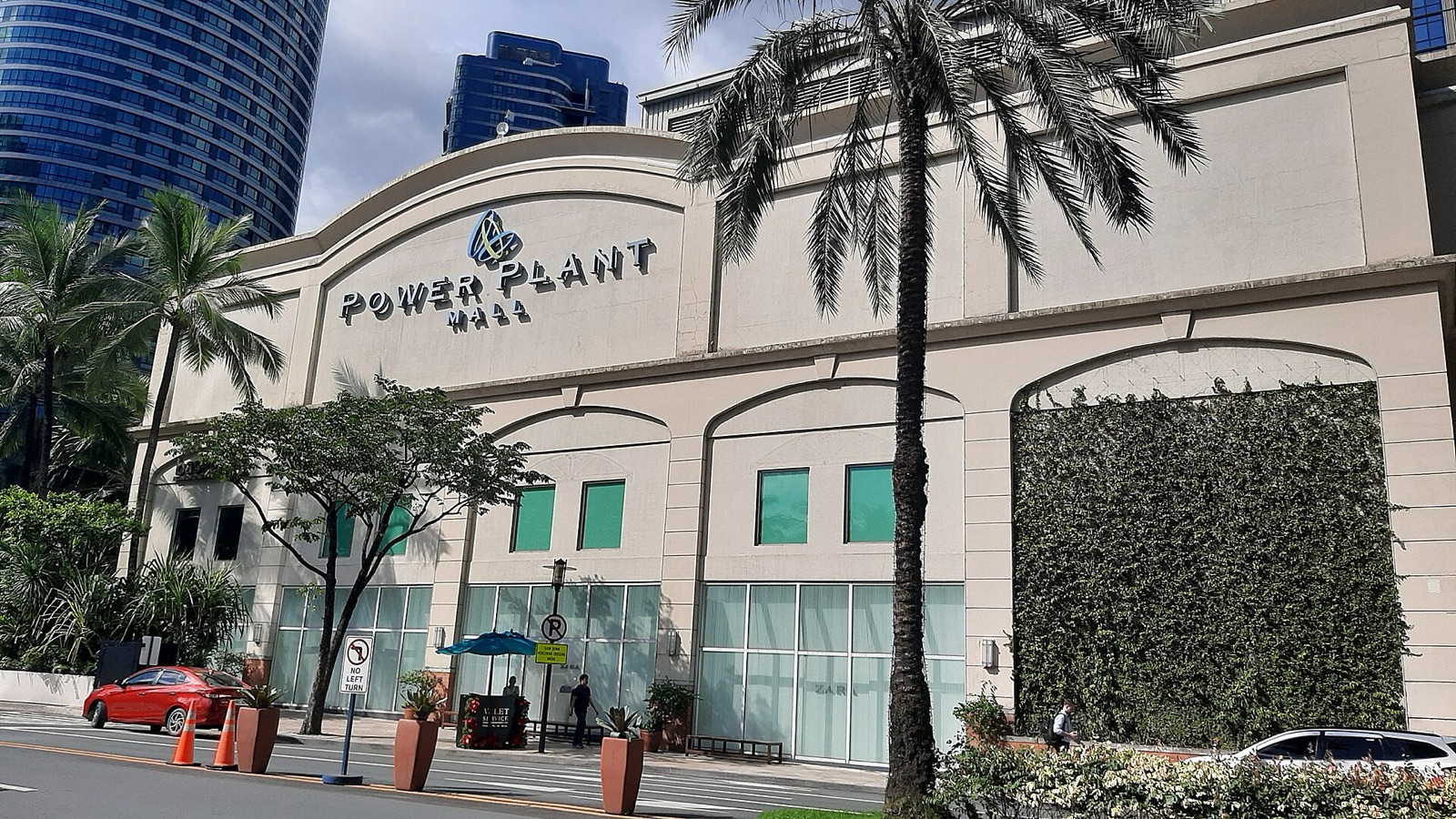
On 12 November 2026 the board of First Philippine Holdings (FPH) approved the sale of its entire 90.74% voting stake in Rockwell Land, the developer of Makati's Rockwell Center and Power Plant Mall. The buyer is Crème Investment Corporation, the private company of Eugenio 'Gabby' Lopez III and his siblings. FPH is chaired by their cousin Federico 'Piki' Lopez. The two sides signed the share purchase agreement the next day, FPH told the Philippine Stock Exchange in an amended filing on 16 November.
The seller hires a valuer and takes P3.00 a share in cash, the top of his range: P15.9 billion
The filing gives the price to the peso: P15,915,546,125 in cash, for 5,296,015,375 common shares at P3.00 each and 2,750,000,000 voting preferred shares at their P0.01 par value. BDO Capital valued the common shares at P2.47 to P3.09 for FPH. The board says it also relied on its independent directors and outside lawyers, and that the price was negotiated at arm's length.
The seller tells the exchange that buyer and seller are family to the fourth degree, which in Manila's counting means first cousins
Under the heading for relationships, FPH wrote that certain directors of FPH and Crème 'are related within the 4th civil degree of consanguinity or affinity'. In the Philippine Civil Code's counting, first cousins are the fourth degree.
The buyer must still clear the competition regulator and offer to buy the 13.4% others hold, within 11 months
The sale is not finished. It needs clearance from the Philippine Competition Commission, and Crème must make a mandatory tender offer to Rockwell's other shareholders. They hold 820,746,823 of the 6,116,762,198 common shares outstanding, about 13.4% (our arithmetic from Rockwell's filing of 16 November). The parties have 11 months from signing to close.
One branch sells its quarter of the family's top company to an outsider, and 94 days later buys the family's malls
It is the second half of a swap. On 10 August Crème sold its entire 25.68% of Lopez Inc., the private company at the top of the family pyramid, to San Miguel's Ramon Ang. No price was disclosed then; Rappler now puts it at about P11 billion. Ninety-four days later the same branch is buying the family's property company from the listed company its cousin runs. Rappler's reading, in a special report published from 14 November, is that Gabby Lopez is gathering the consumer businesses, ABS-CBN and Rockwell, and leaving the power plants to Piki.
The developer earns P4.73 billion and the broadcaster loses P4.72 billion, yet only P247 million a year reaches the family
The money explains the choice. Rockwell earned P4.73 billion in 2025; ABS-CBN lost P4.72 billion. Yet little of the group's profit reached the family: FPH sent P567 million a year up to Lopez Holdings, and about P247 million arrived at Lopez Inc. in 2025, Rappler reports. As Rockwell's owner, Crème would collect about P642 million a year at the 2025 dividend rate, Rappler calculates, with no cousin's board in between. That is not guaranteed. Dividends depend on profits and on Rockwell's own board.
The heirs who manage the developer own 0.53% of it, and trade one cousin as boss for another
The split is not clean. The children of the late Manuel 'Manolo' Lopez hold senior posts at Rockwell, but their branch company, Mantes, owns 0.53% of it. They sided with Gabby in the fight over Piki's leadership that we described in October, and they will now answer to Gabby's company instead of Piki's. Mantes still owns 29.17% of Lopez Inc. and the Presta branch 15.98%, beside Piki's Croslo at 29.17% and Mr Ang at 25.68%. Their money stays in the energy group their cousin runs.
- 1First Philippine Holdings, PSE disclosure C08223-2026 (amended Form 4-2, filed 16 Nov 2026): board approval of 12 Nov; 8,046,015,375 shares, 90.74%; P3.00 per common and P0.01 per preferred share; P15,915,546,125; BDO Capital range P2.47 to P3.09; directors related within the 4th civil degree; share purchase agreement signed 13 Nov; long stop 11 months
- 2First Philippine Holdings, PSE disclosure C08183-2026 (Form 4-2, 13 Nov 2026): the original filing; conditions are definitive agreements, Philippine Competition Commission approval and Crème's mandatory tender offer
- 3Rockwell Land, PSE disclosure C08231-2026 (Form 4-5, Change in Control of Issuer, 16 Nov 2026): 5,296,015,375 common and 2,750,000,000 preferred shares; 6,116,762,198 common shares outstanding
- 4PSE Edge, First Philippine Holdings stock data, read 16 Nov 2026: previous close P83.00 on 13 Nov 2026 (424,500,608 shares outstanding per the company's filing)
- 5Rappler (Lala Rimando), 14 Nov 2026: The Lopez heirs who ran Rockwell but never controlled it (Mantes 0.53%, Croslo 0.01%; Lopez Inc. now Mantes 29.17%, Croslo 29.17%, Presta 15.98%, Ramon Ang 25.68%)
- 6Rappler (Lala Rimando), 15 Nov 2026: Why Gabby Lopez wants Rockwell as ABS-CBN struggles (about P11 billion for the Lopez Inc. stake; 94 days; Rockwell 2025 profit P4.73 billion, ABS-CBN 2025 loss P4.72 billion; P567 million and P247 million up the chain; about P642 million a year in dividends)
- 7The Manila Times, 14 Nov 2026: FPH sells Rockwell Land stake to Geny Lopez heirs' firm for P15.92B (the SSS president elected an FPH director by the same board)
- 8Civil Code of the Philippines (Republic Act No. 386), art 966: a person is four degrees removed from his first cousin (text on Lawphil, read 16 Nov 2026)
- 9SGX Mainboard Rules, Rule 1014 (a major transaction, where a Rule 1006 figure exceeds 20%, must be made conditional upon shareholders' approval) and Rule 1006(c) (consideration compared with market capitalisation), read 16 Nov 2026
- 10SGX Mainboard Rules, Rule 904 (interested person; Rule 904(4A) deeming power) and Rule 906 (shareholder approval at 5% of net tangible assets), read 16 Nov 2026
- 11SGX Mainboard Rules, Definitions and Interpretation: 'associate' and 'immediate family' (spouse, child, adopted child, step-child, sibling and parent), read 16 Nov 2026
- 12The Singapore Code on Take-overs and Mergers, edition of 16 June 2026, Rule 14.1 (mandatory offer at 30% or more of the voting rights) and Rule 14.3 (cash at not less than the highest price paid in the previous 6 months)
- 13Companies Act 1967 s76B (20% limit on share purchases in a period), s76D (selective off-market purchase; subsection (2A) in force 6 May 2026) and s78B (capital reduction by a private company), read on Singapore Statutes Online as at 16 Nov 2026
Two feuding cousins stop sharing: one takes the malls he understands, the other keeps the power plants he runs
The Lopez cousins have done what feuding families are usually told to do: stop sharing. One branch takes the business it understands, and the other keeps the business it runs. There was a valuation, a review by independent directors and a price inside the valuer's range. As a parting between cousins, the Rockwell sale is orderly.
With no written way to divide, the family improvises by vote, lawsuit and sale, and a rival ends up owning a quarter
The knot is the route. Nothing in the public record shows that the family had a written way to divide the group by business. So the division was improvised in four steps: a boardroom vote to remove the cousin in charge, a lawsuit that froze the vote, the sale of one branch's top-level shares to an outsider, and now a purchase from a listed company two levels down. Each step was public. The third cannot be undone: a rival group's chairman now owns a quarter of the company that, Rappler says, was built to keep outsiders out.
The buyer's allies stay behind, their capital under the cousin they tried to remove and almost no shares in the firm they manage
And the division is by company, not by family. The branches that fought beside Gabby did not leave with him. Their capital still sits under the cousin they tried to remove, and the heirs who manage Rockwell own almost none of it. Running a business, owning it and being paid by it are three different things. This family is separating them one transaction at a time.
A Singapore-listed parent could not sell a business worth 45% of its own market value on a board vote alone, yet Singapore's related-party rule would not count a cousin; what a family agreement adds is the partition clause the Lopezes had to improvise: which branch may take which business, at whose valuation, paid for by the family company itself.
Philippine law governs every company in this sale, so Singapore can only show what its rules would ask of the same deal
Start with the limits. Every company here is Philippine, and Philippine law and regulators govern the sale, the tender offer and the family's holding company. We have not seen the share purchase agreement, Lopez Inc.'s by-laws or any agreement among the branches. What follows is how Singapore's rules would treat the same shape, and what a family can write down before it needs to.
A Singapore-listed seller parting with a business worth 45% of its market value must ask its shareholders, not just its board
First, the vote. Rule 1014 of the Singapore Exchange's Mainboard Rules makes any deal a 'major transaction' when a size test in Rule 1006 exceeds 20%, and says it 'must be made conditional upon approval by shareholders in general meeting'. One test compares the price with the seller's market value. FPH has 424,500,608 shares outstanding and closed at P83.00 on 13 November, about P35.2 billion. The Rockwell price is 45% of that, on our arithmetic. FPH's filing lists no shareholder vote among its conditions.
Every outside owner, the state pension fund included, gets the reasons for selling to a relative in writing before closing
In Singapore, then, unless the Exchange waived the rule, every FPH shareholder would receive a circular and a vote, including the state pension fund whose president joined the board at the same meeting. The controlling shareholder could still carry the vote. The gain is that the case for selling the group's property arm to a relative is made in a document, to all owners, before the deal closes.
Singapore's related-party rule stops at spouse, children, siblings and parents, so a director's cousin can buy without triggering it
Second, a point against Singapore. Chapter 9 of the same rulebook requires shareholder approval for a deal with an 'interested person' worth 5% or more of net tangible assets (Rule 906). An interested person is a director, chief executive or controlling shareholder, or an 'associate'. For an individual that means 'immediate family': spouse, child, adopted child, step-child, sibling and parent. A cousin is not on the list.
Manila asks sellers about relatives out to the fourth degree and catches the cousins, while Singapore leaves them to the exchange's discretion
On the relationship FPH disclosed, our reading is that Singapore's related-party rule would not apply by kinship alone, though Rule 904(4A) lets the Exchange deem a person interested. The Philippine form asks about relatives to the fourth degree and so caught the cousins. On this point Manila casts the wider net.
Whoever takes 30% of a Singapore company must offer every other owner cash at the highest price he paid in six months
Third, the minority. The Singapore Code on Take-overs and Mergers, in its edition of 16 June 2026, obliges anyone who acquires 30% or more of a company's votes to make an offer to all other holders (Rule 14.1), in cash or with a cash alternative at not less than the highest price the buyer paid in the previous six months (Rule 14.3). Rockwell's other shareholders are promised a mandatory tender offer under Philippine law; its price is not in the filings we read. Here the two systems point the same way.
A Singapore family company can buy out one branch itself if the others pass a special resolution, the seller not voting
The real difference is one level up, where the family's own money sits. A Singapore private company can pay a departing branch itself. Section 76D of the Companies Act 1967, read on Singapore Statutes Online as at 16 November 2026, allows a selective purchase of one member's shares if a special resolution approves the agreement, with the seller not voting. Since 6 May 2026, at least 75% of the other holders of that class must consent first.
A branch holding over 20% is too big for a buyback, so the company cuts its capital and every director vouches it stays solvent
Section 76B caps such purchases at 20% of the class in a period. A branch with 25.68% would need the other route: a capital reduction under section 78B, by special resolution, with a solvency statement from every director. Either way the company buys the branch out, not an outsider, and section 78B speaks of a distribution of 'cash or other assets'.
A family agreement names which branch may take which business and who values it, so exit and purchase become one deal
A family agreement can say which assets. This branch may take the property company and that branch the energy company, each at a price set by a named independent valuer, with the difference settled in cash. Our reading is that this is the partition clause the Lopezes lacked. With it, a branch's exit and its purchase could be one transaction among cousins, and the top company's register would still list only family.
A family clause binds only what the family company owns directly, so a business under two listed companies leaves only by public sale
That has a limit, and the Lopez pyramid shows it. Rockwell did not belong to Lopez Inc. It sat beneath two listed companies with outside shareholders, and a listed board must sell at a fair price, cousin or not. A family clause can bind only what the family company owns directly. A founder who wants the branches to be able to part one day keeps the divisible businesses where the family can reach them, or accepts that parting will take a public sale and a tender offer.
A family sharing a holding company asks four questions at home, or answers them in public within nine months, as the Lopezes did
For the reader whose family shares a holding company, four questions. If one branch wants to leave, does the company buy it out, or may it sell to anyone? If the family ever divides, is it written which branch may take which business, and who values it? Do the people running each business own enough of it to stay if control changes? And does the profit reach the family, or stop at a board one cousin controls? The Lopezes answered all four in public, in under nine months.
Eugenio 'Gabby' Lopez III and the Geny branch (Crème) — 90.74% of Rockwell Land's votes for P15,915,546,125 in cash, once the conditions are met; no longer a shareholder of Lopez Inc. after selling its 25.68% on 10 August 2026
Federico 'Piki' Lopez and First Philippine Holdings — P15.9 billion in cash to redeploy into energy and infrastructure, in the filing's words; its Rockwell stake goes to zero
The Manolo branch (Mantes) — still 0.53% of Rockwell, where its members hold senior posts, now under Crème; still 29.17% of Lopez Inc., above the energy group Piki runs
The Presta branch — still 15.98% of Lopez Inc.; no part in the Rockwell purchase
Ramon S. Ang — the 25.68% of Lopez Inc. that Crème sold him; the Rockwell cash arrives at a listed company two levels below his stake
Rockwell's other shareholders (820,746,823 common shares, about 13.4%) — a mandatory tender offer from Crème, price not yet published; at P3.00 a share the whole block would cost P2,462,240,469 (our arithmetic); Rockwell closed at P2.83 on 13 November
FPH's public shareholders, including the state pension fund — no vote among the published conditions; in Singapore, a circular and a vote, because the price is 45% of FPH's market value
The same family in Singapore — a shareholder vote at the listed seller; no related-party vote on cousinhood alone; and, at the private top company, a buyout paid by the company under section 76D or 78B instead of a sale to an outsider
The reader's family — four questions: who buys a departing branch, which branch may take which business and at whose valuation, whether the managers own what they manage, and where the profit stops
A counterfactual, not advice. The verified machinery is on the Singapore page; where your family stands is the briefing.
From the case files: The first act: own 71% and you still can't fire your cousin