Own 71% and you still can't fire your cousin. Ask ABS-CBN's Lopezes
Three branches of the Lopez family, owners of 71% of Lopez Inc., the private company above ABS-CBN and First Gen, voted 5–2 on 27 February 2026 to remove their cousin Federico 'Piki' Lopez as its president. A court froze the vote within weeks. By October one branch had sold its 25.68% to Ramon Ang, and Piki had been re-elected to run Lopez Holdings and First Philippine Holdings. What if it had been Singapore?
Read this in: EN · 简体 · 繁體 · ไทย · ID
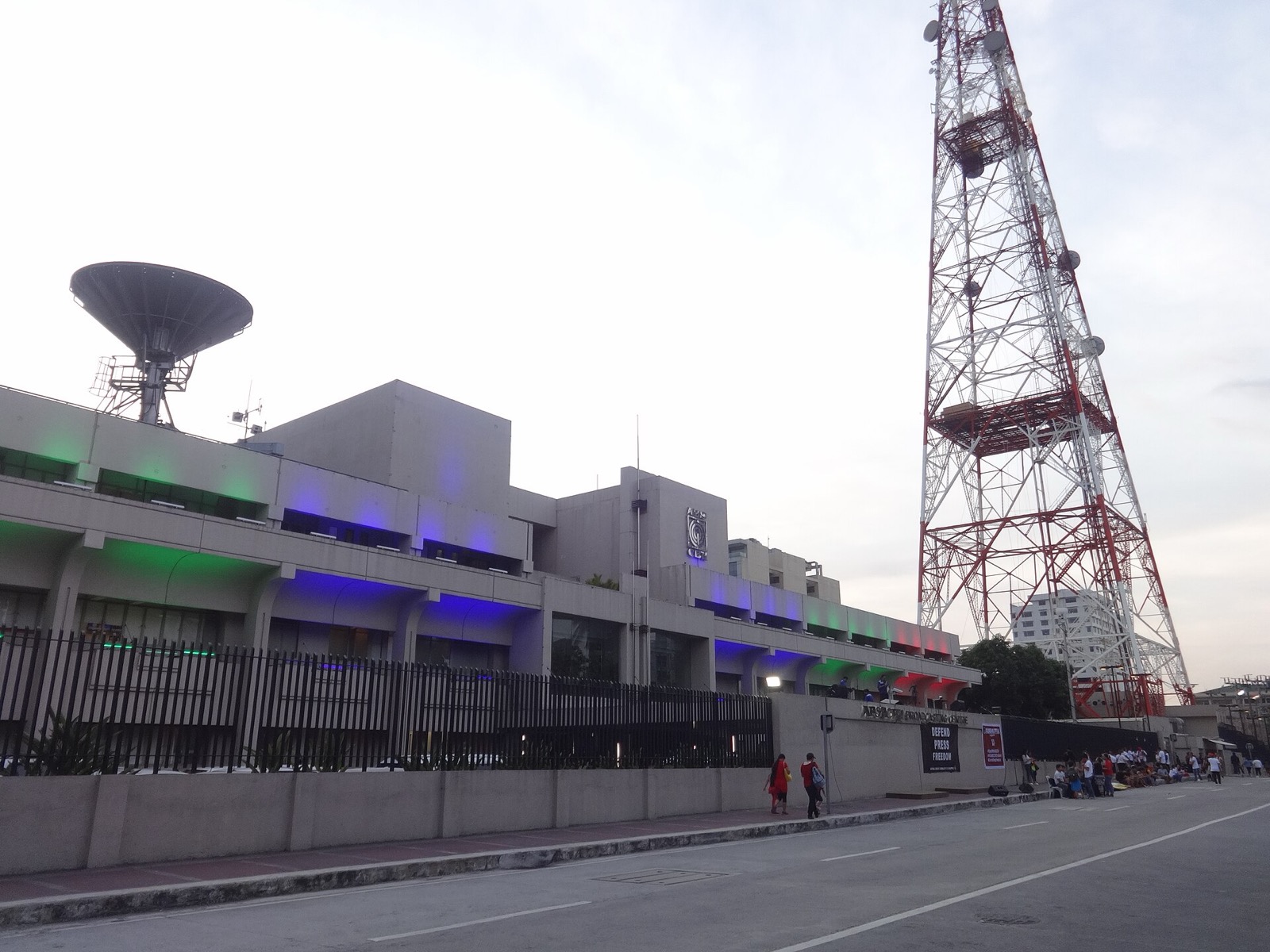
The state pension fund names a new director for FPH, the latest seat to change in an eight-month Lopez family war
On 8 October 2026 the Social Security Commission named a new nominee to the board of First Philippine Holdings (FPH), in which the state pension fund owns 6.62%. It is the latest seat to change in a fight that began eight months ago at the top of the Lopez group. That top is Lopez Inc., a private company that held 78.40% of ABS-CBN, the broadcaster, and owns 54.74% of the listed Lopez Holdings, which owns 60.67% of FPH, which controls First Gen and the geothermal producer Energy Development Corp.
Five cousins on a seven-seat board vote to remove the sixth as president of the family holding company in February 2026
Lopez Inc. was held through four investment companies, one for each branch descended from the children of Eugenio Lopez Sr.: Crème (Eugenio 'Geny' Jr.), Croslo (Oscar), Mantes (Manuel 'Manolo') and Presta (Presentacion Lopez-Psinakis). Its seven directors are grandchildren, all cousins. On 27 February 2026 the board voted 5–2 to remove Federico 'Piki' Lopez, of the Oscar branch, as president and named Rafael Lopez, Gabby Lopez's younger brother, in his place. Piki and his brother Benjamin dissented.
The ousted cousin sues on 11 March, and within fifteen days a judge freezes the majority's 5–2 vote
Piki says the trigger was his refusal to put P2 billion of Lopez Inc.'s reserves into the struggling ABS-CBN, citing unresolved audit findings there. The three factions holding 71% said on 31 March that they had lost trust and confidence in him over First Gen's deals with Enrique Razon's Prime Infrastructure, and that the by-laws let the board remove any officer without cause by majority vote. Piki sued in the Mandaluyong Regional Trial Court on 11 March. By orders of 16 and 26 March, Judge Monique Quisumbing-Ignacio granted an injunction barring the cousins from enforcing the resolutions or replacing him in any company where Lopez Inc. votes through its president.
A hydropower deal makes First Gen pay about P23.5 billion if the family removes its chairman
What made him costly to remove sat in First Gen's contracts. Its hydropower deal lets Prime Infra force First Gen to sell back its stake at a 25% discount if Piki or his written designees are removed from six named posts; Rappler put the exposure at about P23.5 billion. BDO Unibank's P24.75 billion of standby letters of credit carry similar covenants.
The cousins accuse him of hiding two poison pills, and First Gen discloses the full clause the next day
First Gen disclosed the clause in full on 14 April, 60 days after the heads of terms of 13 February and a day after the majority accused Piki of hiding 'not one, but two poison pills'. First Gen says Prime Infra asked for it, and the board, including a director from the majority side, approved both deals unanimously.
One branch sells its entire 25.68% to tycoon Ramon Ang, saying the dispute has been good for no one
The majority withdrew its removal resolution in May, Philstar reported; the case and Piki's contempt petition against four Lopez Holdings directors remain pending. On 10 August Crème sold its entire 25.68% of Lopez Inc. to Ramon Ang, chairman of San Miguel Corp., through his wholly owned Illumina Investment Holdings, at the invitation of Gabby's family and at an undisclosed price. 'This dispute has not been good for any of us,' Gabby said.
The chairman's branch wins three of seven seats at Lopez Holdings, and the seller's branch is left with none
On 14 September Piki's branch took three of the seven seats at Lopez Holdings and the Geny branch none. On 25 September Piki was re-elected chairman and chief executive of FPH. On 30 September ABS-CBN's shareholders approved P6 billion of new equity, still subject to regulatory approval: P2.2 billion from the three majority branches, P3.5 billion from I&C Holdings and P300 million from Lopez Inc. Lopez Inc.'s stake falls from 78.40% to 44.35%; Lopez-linked holders together keep about 61.37%.
- 1The Philippine Star (Richmond Mercurio), 9 Oct 2026: SSC appoints nominee to FPH board (Victor Limlingan, in place of Diana Pardo-Aguilar; notified Thursday 8 Oct)
- 2The Philippine Star, 29 Mar 2026: Lopez family feud erupts as Piki sues cousins (complaint 11 Mar; injunction orders of 16 and 26 Mar; P2 billion for ABS-CBN; seven-member board)
- 3The Philippine Star, 1 Apr 2026: Lopez majority: Piki ousted for loss of trust (three factions with 71%; 5–2 vote of 27 Feb; by-laws allow removal without cause)
- 4Rappler (Lala Rimando), 5 May 2026: First Gen sat on a P23.5-billion Lopez clause for 60 days, then the family went to war (heads of terms 13 Feb, definitive agreements 6 Mar, full disclosure 14 Apr, amended filings 30 Apr; BDO P24.75 billion SBLCs)
- 5BusinessWorld, 10 Aug 2026: Ang acquires 25.68% Lopez, Inc. stake amid family dispute (SMC disclosure: Illumina Investment Holdings, deed of assignment for the Crème shares)
- 6The Philippine Star, 10 Aug 2026: Ramon Ang acquires Gabby Lopez's 25.68% stake in Lopez Inc. (price undisclosed; removal resolution withdrawn in May)
- 7Rappler, 14 Sep 2026: Piki Lopez ring-fences the Lopez Holdings board (branch seats; injunction in force; contempt petition pending; ABS-CBN 2025 loss P4.7 billion)
- 8Rappler, 28 Sep 2026: After Gabby sold to Ramon Ang, Piki Lopez is securing the family's crown jewels (FPH vote of 25 Sep; FPH 2025 net income P31.7 billion; dividends up the chain)
- 9Daily Tribune, 30 Sep 2026: ABS-CBN capital increase reshapes Lopez ownership (78.40% to 44.35%; 61.37% Lopez-linked; I&C Holdings 27.06%)
- 10Companies Act 1967 s18 (private company must restrict share transfers), s26A (entrenching provisions), s152(9) (private company may remove a director by ordinary resolution, subject to its constitution), s157 (directors' duty) and s216 (oppression), read on Singapore Statutes Online 9 Oct 2026
- 11Securities and Futures Act 2001 s203 (continuous disclosure), read on Singapore Statutes Online 9 Oct 2026
- 121987 Constitution of the Philippines, Art XVI s11(1): mass media limited to Filipino citizens or wholly Filipino-owned and managed corporations (text on Lawphil)
Three branches own 71% of the top company, but the cousin who holds every chair below keeps the keys
The Lopez fight separates two things families assume travel together: owning the top and running the bottom. The three branches holding 71% of Lopez Inc. had the votes. Piki had the chairs: president of Lopez Inc., chairman of Lopez Holdings, FPH and First Gen, chairman of EDC. And the contracts funding First Gen's next decade were written so that removing him, or his designees, could cost the company billions of pesos. A majority that owns the house cannot easily evict the person who holds the keys when lenders and partners have been promised he will stay.
Unable to win the vote, one branch sells its stake at the top, and an outsider now shares the family table
The second knot is the exit. When the majority could not use its votes, one branch used its shares instead. Crème's 25.68% went to an outsider, a rival in power, property and infrastructure, at the invitation of the selling family. The public record does not say whether Lopez Inc.'s by-laws gave the other branches a first right to buy that block, or whether one was waived. Either way, the grandchildren of Eugenio Lopez Sr. now share the top of their pyramid with Ramon Ang.
The power business earns P31.7 billion in a year, yet only about P247 million climbs to the family company
The third is cash. FPH reported record consolidated net income of P31.7 billion for 2025, Rappler says, but sent P567 million a year up to Lopez Holdings, which passed about P247 million on to Lopez Inc. ABS-CBN, whose votes Lopez Inc. held, lost P4.7 billion in 2025 and P1.83 billion in the first half of 2026. The branch running the cash engine wants the money kept in power plants; the branches attached to the broadcaster need it upstairs. Nothing in the public record says who decides.
Singapore could not host this pyramid, because Philippine law keeps mass media in Filipino hands; what a Singapore-style family constitution offers is the three rules the Lopez cousins are now settling in court and in the market: who can remove the chief, what contracts may price his removal, and who gets first offer of a branch's shares.
Philippine law keeps the broadcaster's votes in Filipino hands, so a Singapore trust could never sit on top
Start with what Singapore could not change. Article XVI, section 11 of the 1987 Philippine Constitution limits the ownership and management of mass media to Filipino citizens or to corporations wholly owned and managed by them. Lopez Inc. holds ABS-CBN's votes because it qualifies. A Singapore trust or holding company placed above it would break that, and Philippine law, not Singapore's, governs Lopez Inc., its by-laws and the Mandaluyong case. Read what follows as a design for the rules, not a new address for them.
In a Singapore private company, members remove a director by ordinary resolution, and a court can still undo an oppressive vote
The first rule is removal. In a Singapore private company, section 152(9) of the Companies Act 1967, read on Singapore Statutes Online on 9 October 2026, lets the members remove a director by ordinary resolution before his term ends, subject to the constitution and despite any agreement with him. Who appoints and removes a president or chief executive is whatever the constitution says. A majority's decision can still be challenged: under section 216 a member may ask the court for relief where affairs are conducted oppressively or in disregard of his interests, and the court may cancel a resolution, regulate future conduct or order a buyout.
A family agreement can require that any contract pricing one executive's removal comes to the family first
The second rule is the one this family seems to have lacked: what the companies below may sign about the people at the top. Section 157(1) requires every director to act honestly and with reasonable diligence. Whether a clause that makes one executive costly to remove serves the company or the executive is the question a court would ask, and First Gen's answer is that Prime Infra wanted it for its own protection. A family can ask earlier. A shareholders' agreement can make any contract that names a person, or prices his removal, a matter on which the holding company must be consulted before its nominees vote.
A family pact can bind its own votes at the top, never the duty a listed board owes the pension fund
That has a limit, and it matters here. FPH and First Gen are listed; the state pension fund and thousands of others own part of them. A family agreement can bind how Lopez Inc. and its nominees vote at the top. It cannot override the duty a listed company's directors owe to all its shareholders. The rule therefore belongs where the family's own money sits, and the listed boards keep their independence.
Singapore makes a listed company's reckless silence on a required disclosure an offence, and First Gen took 60 days
Singapore would also ask when investors heard. Section 203 of the Securities and Futures Act 2001 forbids a listed company to fail, intentionally, recklessly or negligently, to notify the exchange of information its listing rules require, and makes the failure an offence where it is intentional or reckless. First Gen disclosed the full clause 60 days after the heads of terms. Whether that met Philippine rules is for the Philippine regulators, and nothing here prejudges it.
A first-refusal clause would have offered the 25.68% block to the cousins before any outsider could buy it
The third rule is the exit. Section 18(1) of the Companies Act requires a Singapore private company's constitution to restrict the transfer of its shares. Families use that restriction to give the other branches a first right to buy at a formula price before any outsider can, and section 26A lets them entrench the clause so it can be changed only if every member agrees. With such a clause, Crème's 25.68% would have gone to the cousins first. They might still have declined, and the price would have been the formula's.
A written cash rule and a private arbitrator settle the tie before it ever reaches the newspapers
The last rule is about cash. A family constitution can say what share of the operating companies' profits travels up, who decides a rescue of a loss-making family business and with what ceiling, and how a branch that wants out is paid. It can send disputes to confidential arbitration instead of an open courtroom. None of this removes disagreement. It decides in advance who breaks the tie, before the tie is in the newspapers.
The by-laws, the sale deed and the key contracts stay private, and every accusation remains denied and untested
Now the honest limits. We have not seen Lopez Inc.'s by-laws, any agreement among the branches, the deed with Ramon Ang or the Prime Infra and BDO contracts; the P23.5 billion figure is Rappler's computation from First Gen's amended filings. The validity of the 27 February vote, the contempt petition and every accusation either side has made are unresolved and denied. Reports of further share purchases by Mr Ang are unconfirmed and are not relied on here.
Four questions to settle while everyone is alive: who removes the chief, who signs, who buys first, who decides cash
For the reader whose family owns a holding company above an operating one, the questions are short. Who can remove the person running the business, by what vote, written where? May the companies below sign contracts that make him costly to remove, and who must be told first? If a branch wants to sell, who gets the first offer, and at what price? How much of the operating profit goes up, and who decides a rescue? If the answers live only in a grandfather's memory, the Lopez fight is the template.
Federico 'Piki' Lopez, of the Oscar branch (Croslo) — still president of Lopez Inc. under a court injunction; re-elected chairman and chief executive of Lopez Holdings on 14 September and of FPH on 25 September 2026; his removal priced into First Gen's Prime Infra and BDO contracts
Eugenio 'Gabby' Lopez III and the Geny branch (Crème) — sold its entire 25.68% of Lopez Inc. to Ramon Ang on 10 August 2026 at an undisclosed price; no seat on the Lopez Holdings board after 14 September; part of the P2.2 billion going into ABS-CBN
The Manolo branch (Mantes) and the Presta branch — still Lopez Inc. shareholders and co-funders of ABS-CBN's rescue; Martin Lopez chairs ABS-CBN and kept the Lopez Holdings vice-chairmanship
Ramon S. Ang, chairman of San Miguel Corp. — 25.68% of Lopez Inc. in his personal capacity through Illumina Investment Holdings; no direct vote at Lopez Holdings, whose 2026 record date preceded the purchase
ABS-CBN — P6 billion of new equity approved on 30 September 2026, subject to regulatory approval; Lopez Inc. diluted from 78.40% to 44.35%, Lopez-linked holders about 61.37%, I&C Holdings 27.06%
FPH's public shareholders, including the state pension fund (6.62%) — a board re-elected on 25 September after months of delay, a new pension-fund nominee named on 8 October, and P567 million a year in dividends from FPH to Lopez Holdings
The same family in Singapore — the same Philippine media rule at the top; written rules on removal, on contracts that name a person, on first refusal and on cash, agreed before the fight rather than litigated during it
The reader whose family owns a holding company — four questions: who removes the chief and by what vote, who must know before a contract prices his removal, who gets first offer of a branch's shares, and who decides how much cash goes up
A counterfactual, not advice. The verified machinery is on the Singapore page; where your family stands is the briefing.
From the case files: Tan Chong: if nobody writes down the exit, the exit is a lawsuit