The son left out of Anita Mui's trust is now fighting over the funeral
Tam Mei-kam died on 30 August aged 102, closing the trust her daughter settled in 2003. On 7 September her eldest son, Mui Kai-ming, called a press conference in Causeway Bay: he will bury her, not cremate her, at a cost of about HK$1.5 million he has not yet found; he will seek an injunction against the grandson her will names; and he says a will signed by a woman of nearly 100 who had disowned him in the newspapers cannot be trusted. The trust is beyond him. Her own estate is not. What if it had been Singapore?
Read this in: EN · 简体 · 繁體 · ไทย · ID
A mother dies at 102, and the trust her daughter signed in 2003 stops paying that same morning
Tam Mei-kam, the mother of the late Cantopop singer Anita Mui (Mui Yim-fong), died on the morning of 30 August 2026, aged 102, after collapsing while eating at her flat on Leighton Road, Causeway Bay; she was taken to Ruttonjee Hospital and certified dead there. Her death ended the Karen Trust her daughter executed on 3 December 2003, under which the trustee, HSBC International Trustee Limited, paid her a monthly allowance for life — HK$70,000 at the outset — with the remaining fund to pass on her death to New Horizon Buddhist Association Limited.
A trustee pays her HK$200,000 a month, and refuses the HK$71 million lump sum she asks for in 2017
By 2024 the allowance stood, on the court judgments as reported by Sing Tao on 15 October 2024, at HK$200,000 a month; her eldest son had put it at HK$250,000 in February 2022; HK01 reports that it rose 3.5 per cent a year for inflation and that her requests for HK$800,000 for a world trip in 2009 and for a lump sum of HK$71 million over fifteen years in 2017 were refused.
A mother of 98 disowns her eldest son in a newspaper, and 4 years later he cannot claim her body
She was made bankrupt in 2012 over unpaid legal costs from her failed challenge to the will, discharged in 2016, petitioned again in 2017 by her former trustees in bankruptcy and paid, and on 14 October 2024, at 100, was the subject of a bankruptcy petition by the Secretary for Justice, HCB 7053/2024. On 14 February 2022 she had published a newspaper notice severing relations with her eldest son, Mui Kai-ming; he replied the next day that she received HK$250,000 a month and gave him HK$20,000 of it.
A grandson carries her identity card to the mortuary, and the burial the eldest son wants stops there
On 6 September 2026 DotDotNews reported that she had left a will placing her funeral in the hands of a grandson, Mui Pak-lun, the son of her late second son Mui Tak-ming, with a wish that it be handled quietly; that the grandson had brought her identity card to the mortuary and Mui Kai-ming had been unable to sign for the body; and that Mui Kai-ming intended to draw on his sister's trust for the funeral and to sue if the fund refused.
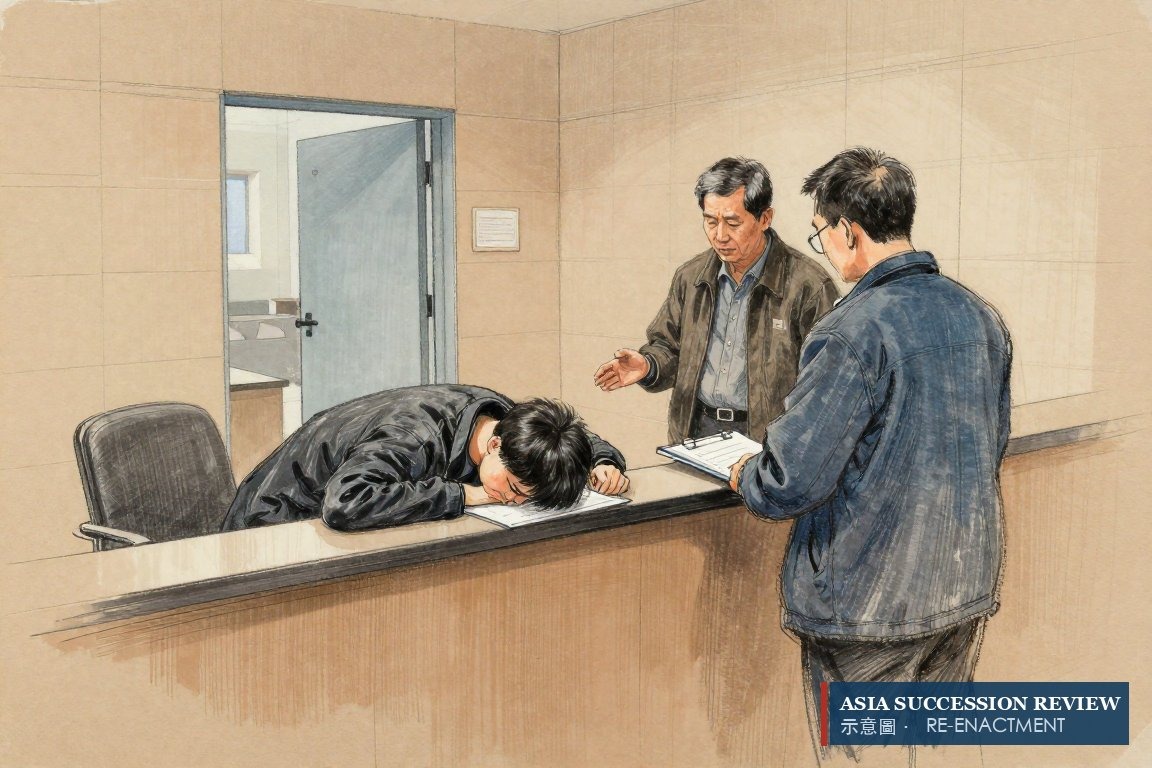
The eldest son announces a HK$1.5 million burial, admits he has paid nothing, and says the money will come
On 7 September, at a restaurant in Causeway Bay, Mui Kai-ming read a statement to reporters: as eldest son he would arrange the funeral; it would be a burial, not a cremation, at Tseung Kwan O Chinese Permanent Cemetery, through what he called the top funeral company, with a permanent plot, a funeral-parlour hall, offerings and monks, at a budget of about HK$1.5 million; he had not paid anything and said money would come; asked whether the trust would be used, he said that was a separate matter.
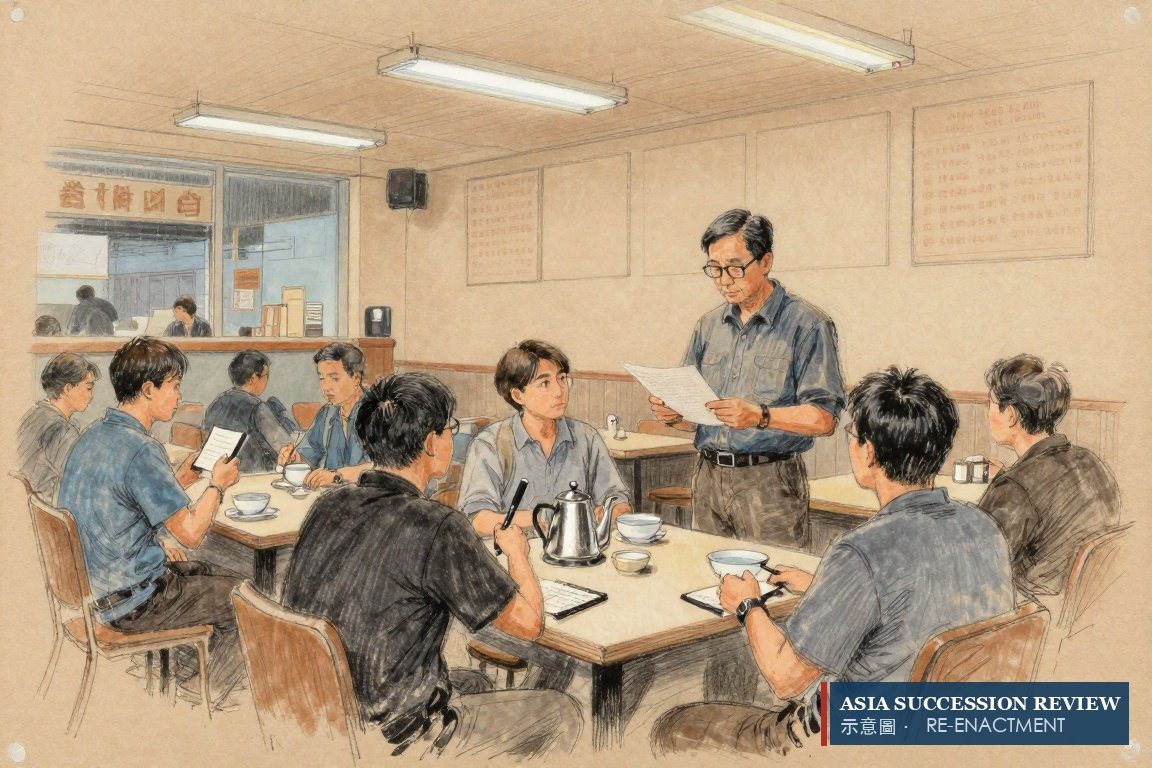
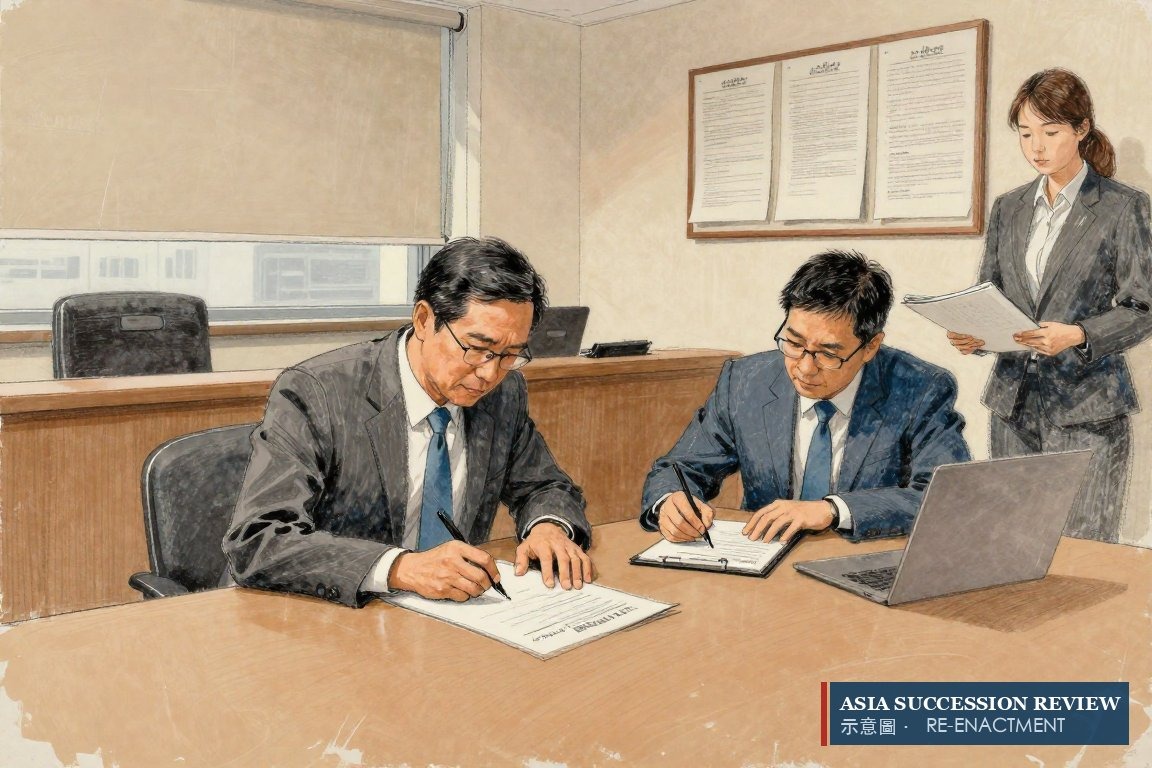
He asks a court to stop the cremation and calls the will forged, because without it he inherits a share
He said he would apply for an injunction to stop the grandson cremating her, questioned whether her will existed and said a will could be forged or signed under pressure, and said of the 2022 notice that his mother was then nearly 100 and incoherent. He said her identity card and effects were held at Happy Valley police station pending a coroner's inquiry, that he had instructed a lawyer to obtain the death certificate, that he had taken not a cent of his sister's estate and would donate any he received.
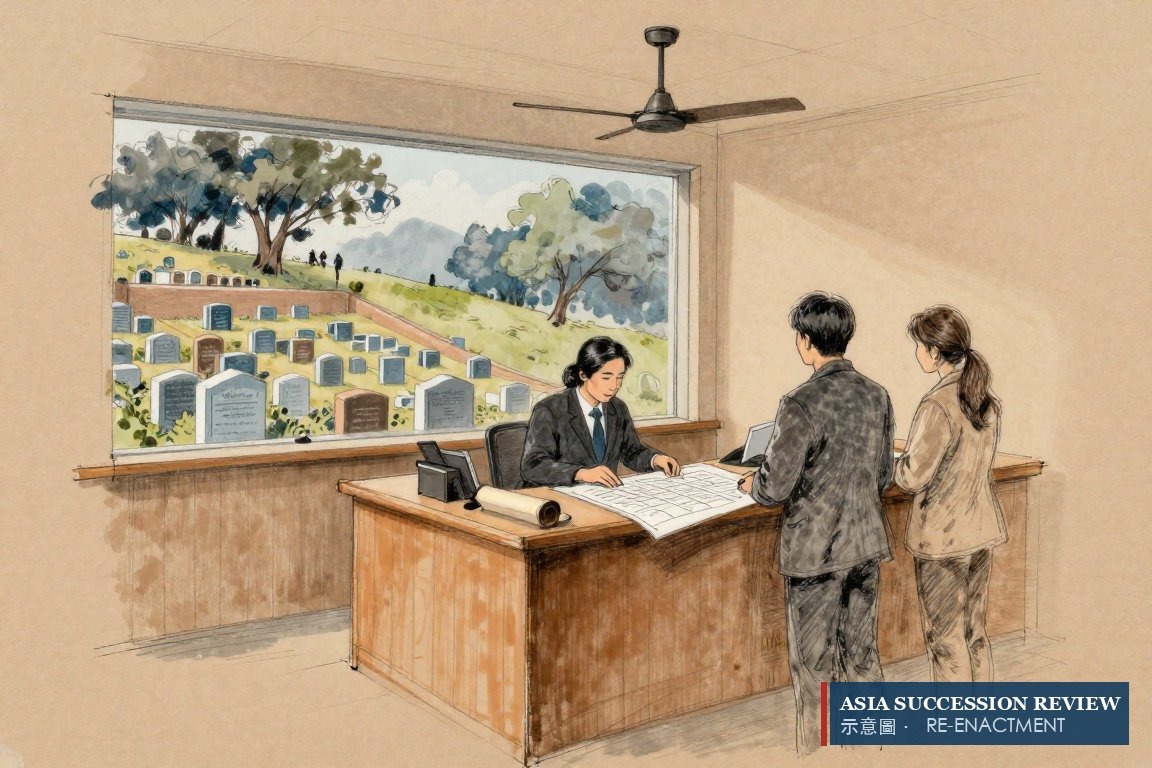
The cemetery lists one permanent plot at HK$418,880, and without a death certificate no body leaves the mortuary
Wen Wei Po and Ming Pao carried the statement on 8 September; on 9 September Sing Tao reported two commentators observing that without a death certificate no body leaves the mortuary, and that a permanent plot at the Chinese Permanent Cemeteries alone is listed at HK$418,880.
- 1HK01, 30 Aug 2026 — death at Leighton Road aged 102; the allowance from HK$70,000; 2009 and 2017 applications refused; 3.5% annual uplift; bankruptcy over costs
- 2DotDotNews (點新聞), 6 Sep 2026 — the will naming grandson Mui Pak-lun; the identity card at the mortuary; the intention to draw on the trust
- 3Sing Tao, 7 Sep 2026 — the press conference: HK$1.5m burial, Tseung Kwan O, injunction against cremation, the 2022 notice 'meaningless'
- 4Wen Wei Po, 8 Sep 2026 — the statement as read; 'that is a separate matter' on the trust; the will 'can be forged or signed under pressure'
- 5World Journal / UDN (citing Ming Pao and Wen Wei Po), 8 Sep 2026 — the plan, the funding, the injunction, the identity card at the police station
- 6Sing Tao, 9 Sep 2026 — no death certificate, no body; a permanent plot listed at HK$418,880
- 7Sing Tao, 15 Oct 2024 — Secretary for Justice's bankruptcy petition HCB 7053/2024; bankrupt 2012, discharged 2016, 2017 petition paid off; HK$200,000 a month on the court judgments
- 8HK01, 15 Feb 2022 — the newspaper notice severing relations; the son's reply: HK$250,000 a month, HK$20,000 to him
- 9Tam Mei Kam v HSBC International Trustee Ltd [2011] HKCFA 34 — the Karen Trust of 3 Dec 2003 upheld; HK$70,000 a month; the residue to New Horizon Buddhist Association
- 10Coroners Act 2010 (Singapore), s22 — the Coroner's control of the body and the order for release for burial or cremation
- 11Probate and Administration Act 1934 (Singapore), s67 — proper funeral expenses suitable to the station in life of the deceased
- 12Intestate Succession Act 1967 (Singapore), s7 — rule 3: children equally, grandchildren of a predeceased child by stocks
The trust remainder goes to a Buddhist association, and the son who was never a beneficiary cannot touch it
A life-interest trust always leaves two estates behind, and this family is now fighting over the second. The first is the trust fund itself. On 30 August the life interest ended, and the remaining fund goes where the settlor's memorandum sent it in 2003, to a Buddhist association; the son was not a beneficiary in 2003, was not one in 2011 when the Court of Final Appeal upheld the trust, and is not one now. He appears to know it: asked on 7 September whether the trust would pay, he said that was a separate matter. The second estate is the one nobody planned for.
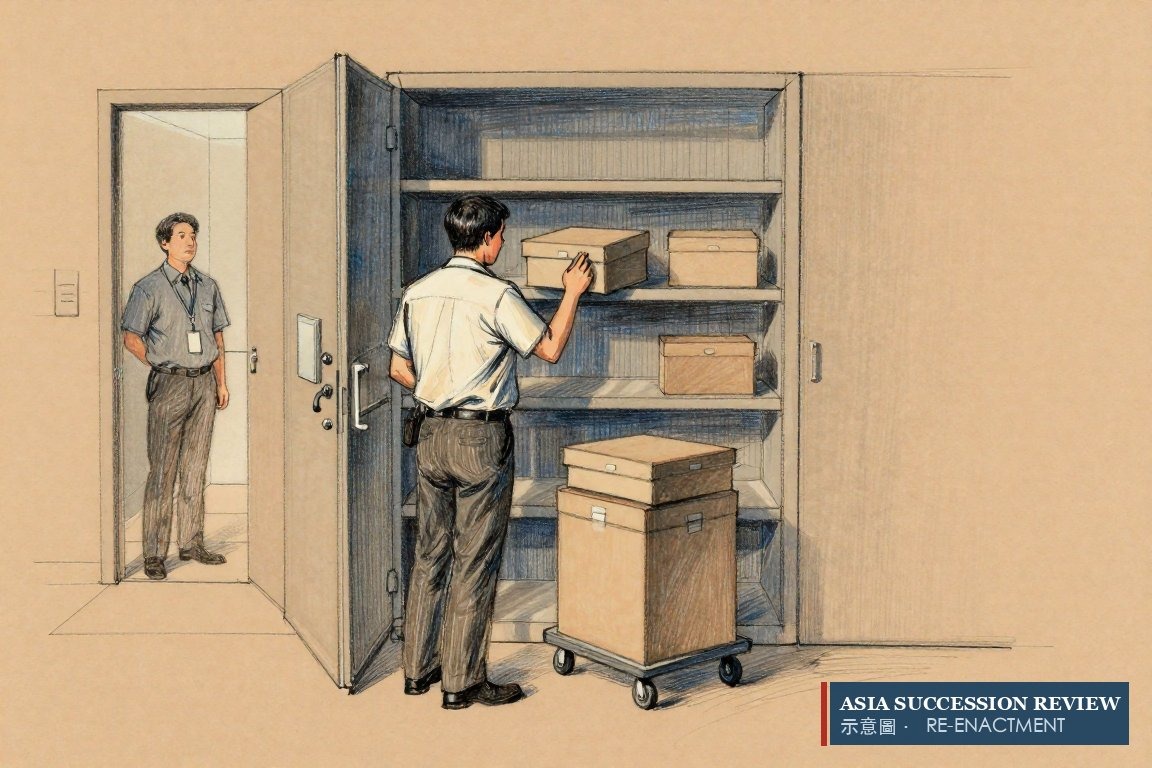
22 years of allowance build a second estate, and it passes under her own will, not her daughter's deed
For 22 years and eight months a trustee paid a woman a monthly sum that rose from HK$70,000 to HK$200,000; a woman who lived to 102 and was in and out of bankruptcy on legal costs may have saved nothing, or may have saved a great deal, and whatever she kept, together with the contents of a flat on Leighton Road, is hers, not her daughter's, and passes under her own will. That will reportedly names a grandson to carry out a quiet funeral. If it stands, the eldest son gets nothing from it.
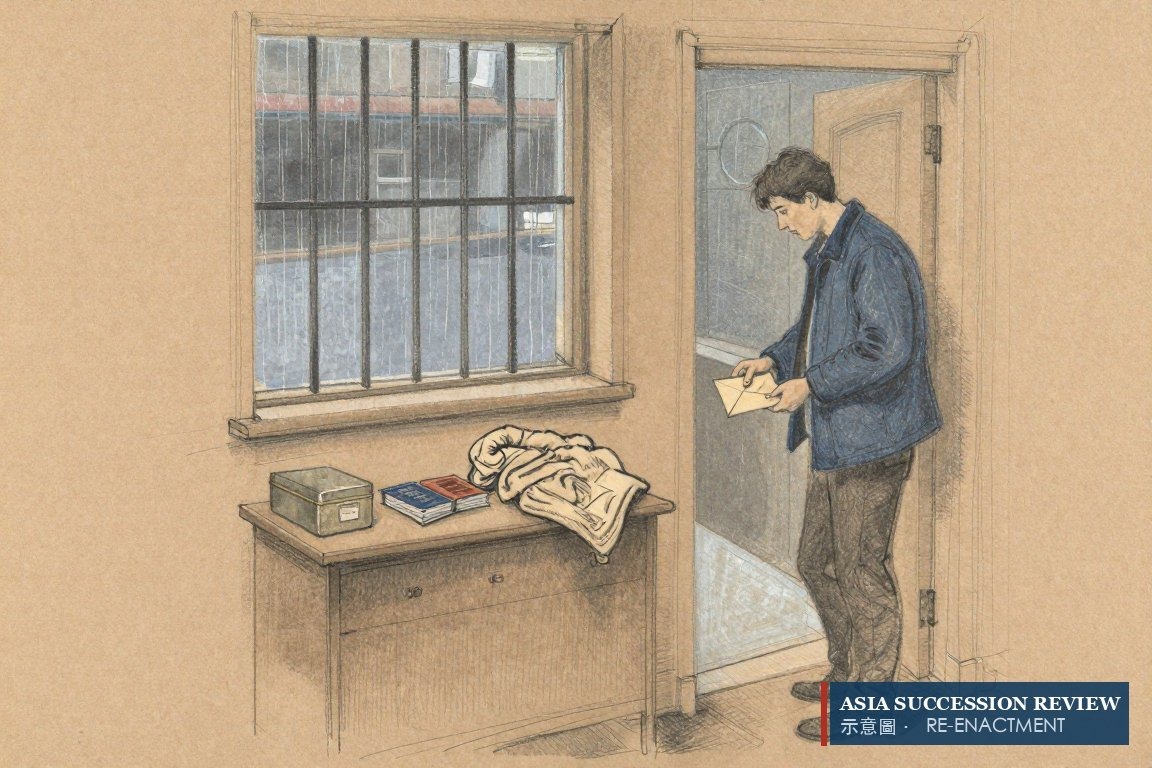
Break the will and she dies intestate, so the son she disowned in the newspapers shares her estate again
If it falls — and a will signed by a woman of about 98 who disowned him in the newspapers at about the same time is the kind of will that gets challenged — she died intestate, and under Hong Kong intestacy her children share, the son among them. That is why the injunction, the burial, and the attack on the will are one argument, not three.
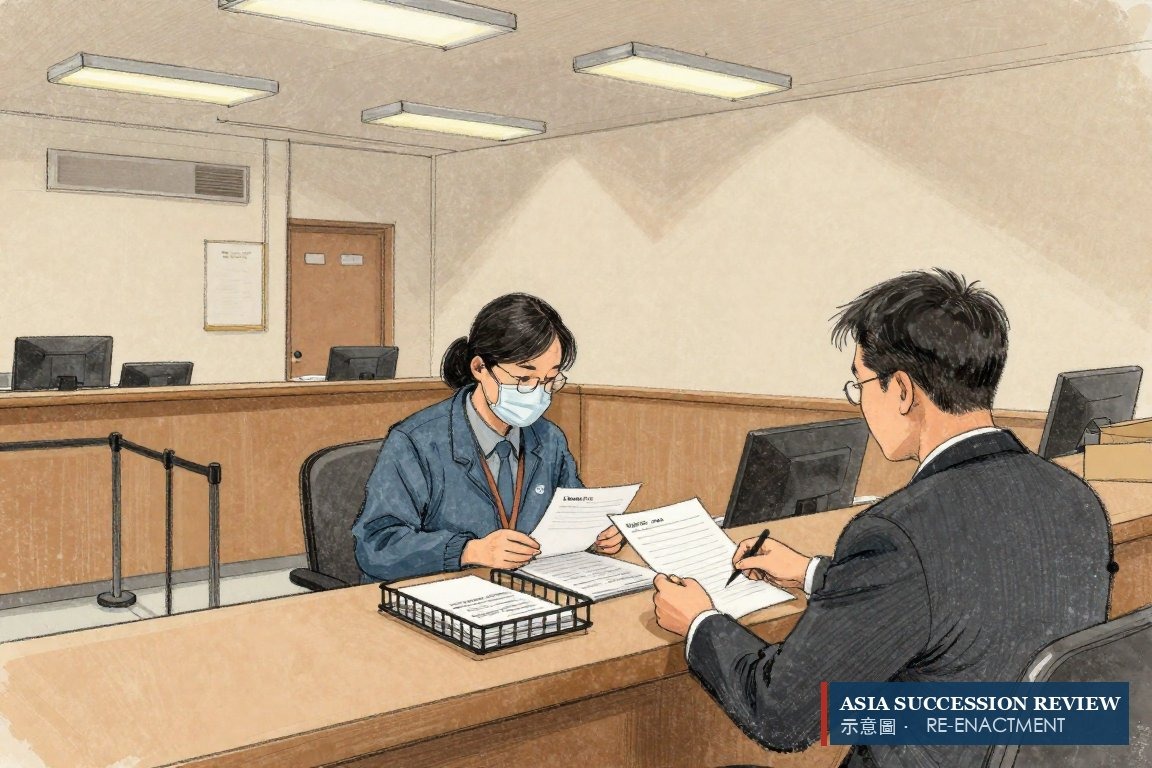
The funeral is the visible fight and the card the practical one, but only the will has money in it
Control of the funeral is the visible fight; the identity card at the mortuary is the practical one, because without it there is no death certificate and without that, as Sing Tao's commentators put it on 9 September, no body leaves the building; and the will's validity is the only fight with money in it.
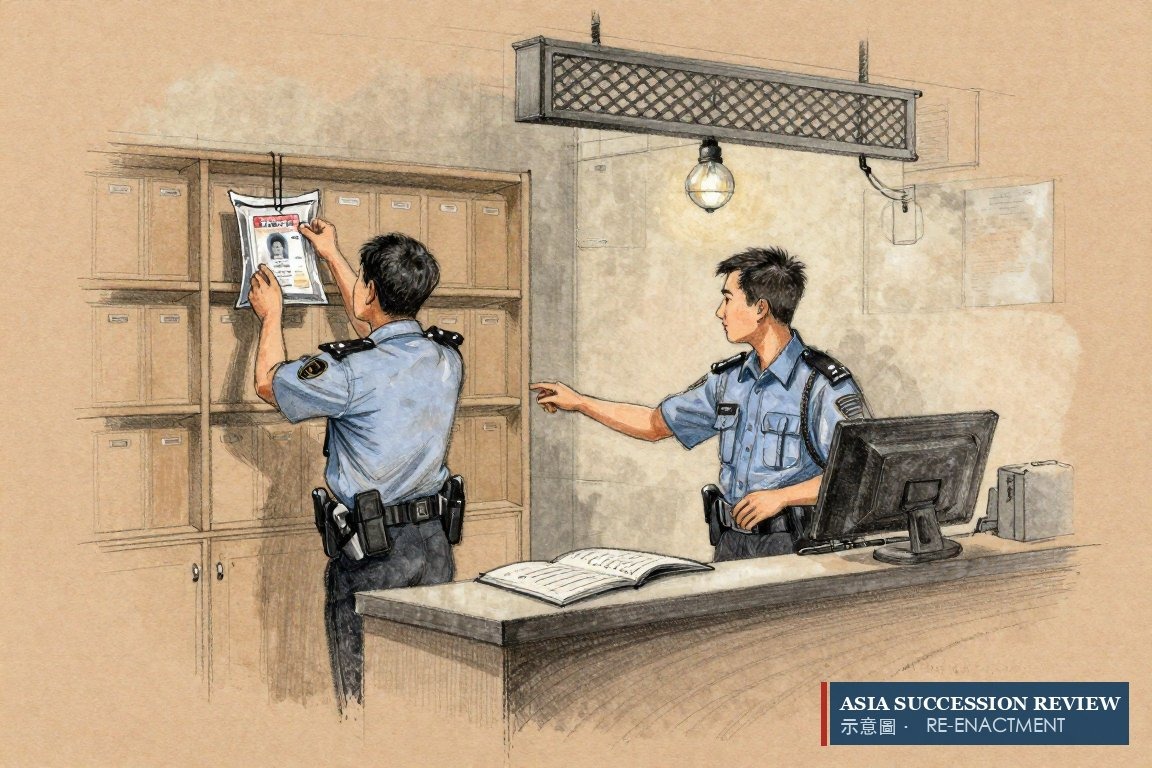
She draws HK$250,000 a month and passes her son HK$20,000, and he now announces a funeral costing HK$1.5 million
Underneath sits a smaller, bitter arithmetic: the son says his mother received HK$250,000 a month and gave him HK$20,000; a permanent plot at the cemetery he has chosen is listed at HK$418,880; and he has announced a HK$1.5 million funeral he has not paid for, to be paid, he says, from money that will come. Nothing in the trust deed her daughter signed reaches any of this. That is not a drafting failure. A trust decides where its own fund goes. It has never been able to decide what the beneficiary does with the money once it is hers, or who buries her.
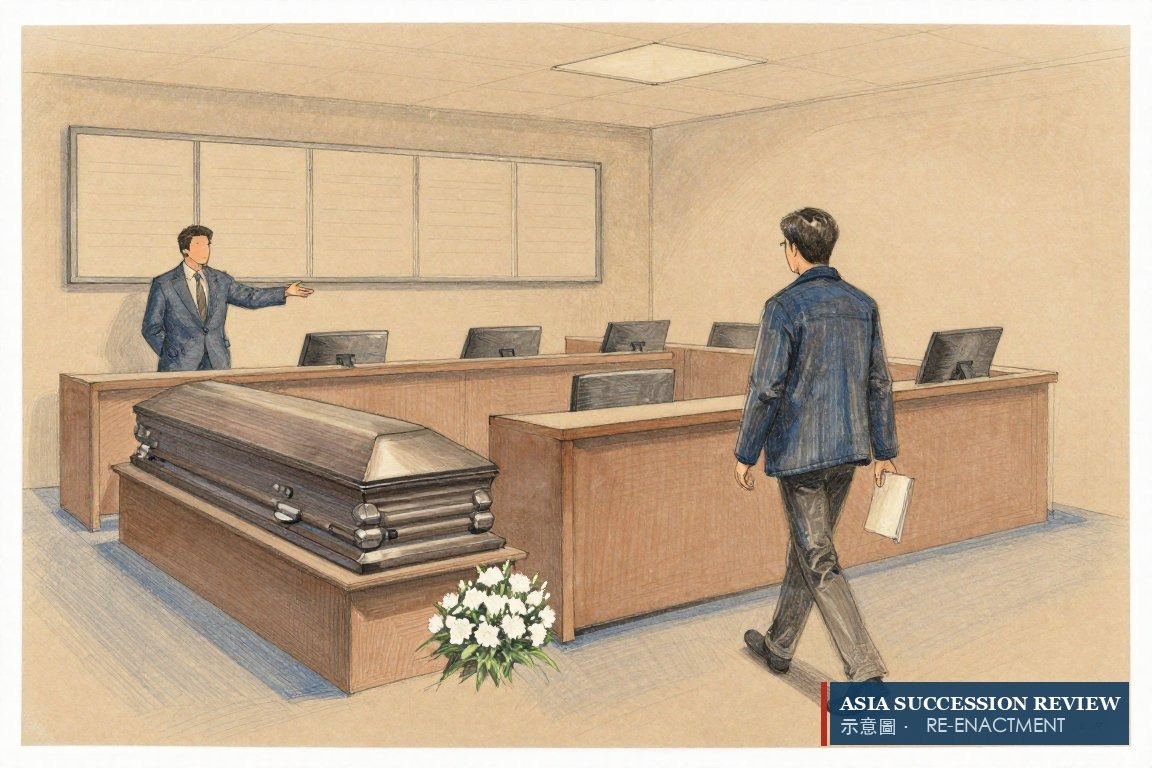
In Singapore the person who buries her is the executor her own will names, the Coroner holds the body until he releases it, her funeral is paid from her own estate at a cost suitable to her station, the trust remainder goes to the charity in the deed, and the son gets a share only if he can bring the will down — which is exactly why the will, not the funeral, is the thing to have made unassailable.
In Singapore the coroner holds a reportable death's body, so no press conference decides where she is buried
Start with the body, because it is the one question Singapore answers by statute rather than by press conference. A woman of 102 who collapses at home and dies in hospital is a reportable death, and section 22 of the Coroners Act 2010 provides that where such a death has been reported and the body is in Singapore, the Coroner has control of the body until he issues an order to release it; the release may be for burial or cremation, and he must issue a certificate of it.
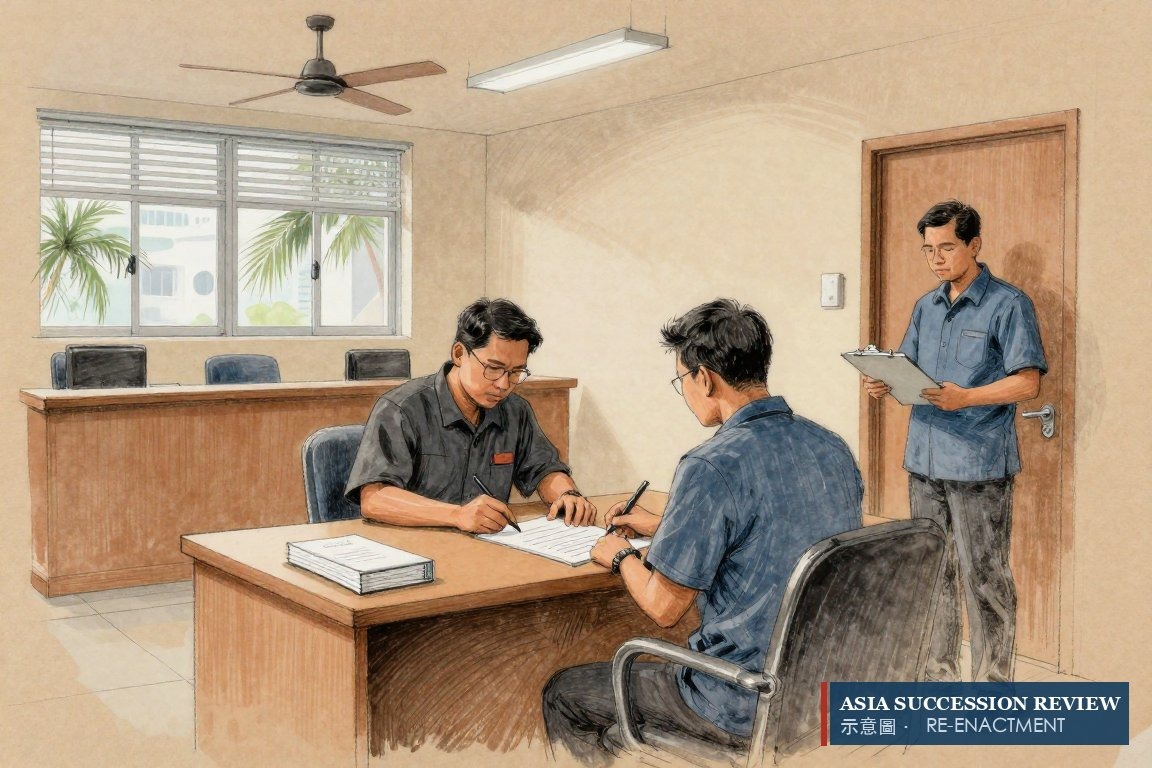
The coroner releases the body first, so a card locked in a police safe blocks nobody at all
Section 22(4) makes it an offence for any person, without reasonable excuse, to bury, cremate or otherwise dispose of the body of a reportable death before that. No eldest son, no grandson, no funeral company moves the body until the Coroner does, and the identity card in a police safe is a document, not a veto.
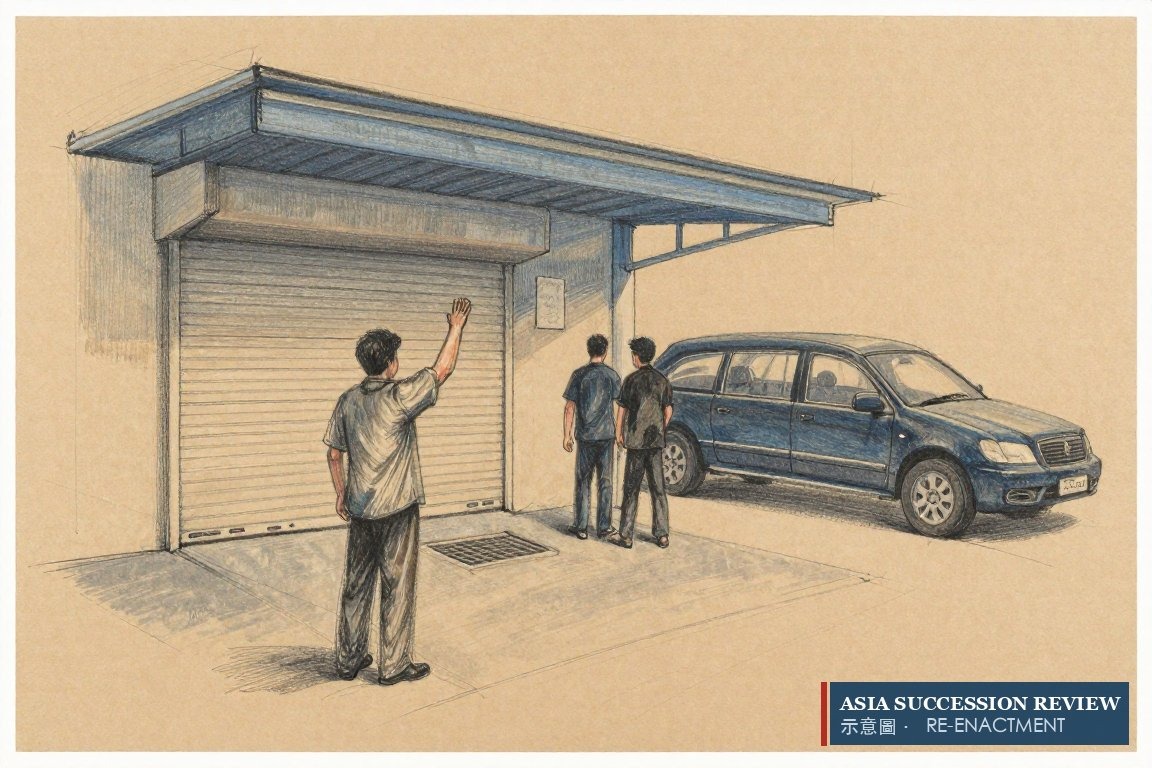
The will names a grandson executor, so the mortuary hands him the body and the son must attack the will
When the Coroner releases the body, the common law decides who receives it: there is no property in a corpse, and the person with the right and the duty to dispose of it is the executor named in the will, a rule the English courts settled in Williams v Williams in 1882 and that Singapore's courts apply. A will that names a grandson to arrange a quiet funeral therefore does more in Singapore than express a wish. It appoints the person the mortuary hands the body to. A son who wants a different funeral must first displace that executor, which means attacking the will, which brings him to the fight he has actually announced.
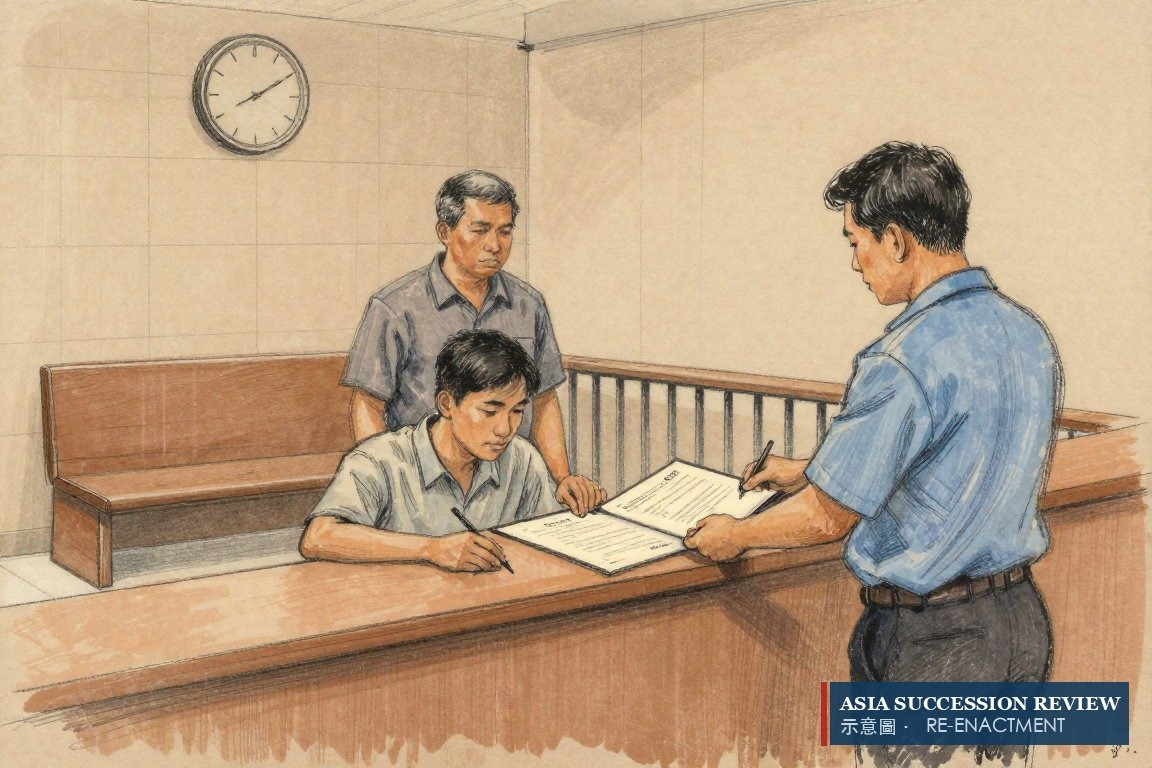
A funeral is the first charge on her own estate, so the son cannot bill his sister's trust for it
Now the money for the funeral, which is where the trust and the estate part company and where the announced HK$1.5 million meets a statutory measure. In Singapore a funeral is a first charge on the deceased's own estate, not on anyone else's, and section 67 of the Probate and Administration Act 1934 states the measure: the court allows the executor proper funeral expenses and all reasonable expenses of subsequent religious ceremonies suitable to the station in life of the deceased.
A registrar tests the HK$1.5 million funeral against a saved allowance, and any beneficiary can force the accounts open
Suitable to her station, and out of her estate — an estate that, on the record, consists of what she saved from her allowance and the contents of a flat. A HK$1.5 million burial with a permanent plot listed at HK$418,880 and, as the son described it, monks and a parlour hall, would be tested against that sentence by whoever administers her estate, and a beneficiary who objected would have the registrar take the accounts. The trust her daughter settled is a different pocket with a different rule.
A trustee pays only what the deed says, and this deed funds school fees and an allowance but no funeral
A Singapore trustee pays what the deed says and nothing the deed does not say; a life interest ends at the death of the life tenant and the remainder passes to the person named, and if the settlor wanted her mother's funeral paid from the fund she had to write a funeral-and-last-expenses clause into the deed while she was alive to write it. Anita Mui's memorandum provided a sum for her nephews' and nieces' education and a monthly sum for her mother; nothing reported provides for the mother's burial.
One free sentence lets the trustee pay the funeral, and it would have made the 7 September press conference unnecessary
That is the sentence a Singapore deed for a parent should contain, and it costs nothing to include: the trustee may pay the life tenant's reasonable funeral expenses before the remainder passes. It would have made the 7 September press conference unnecessary, because the question of who pays would have had a written answer and a named payer.
The son argues capacity and undue influence, and those are the two grounds that decide every will made at 98
Then the will, which is where the son's own words become the case against him and where a Singapore lawyer would have spent the effort. He said on 7 September that his mother was nearly 100 and incoherent when she disowned him in 2022, and that a will can be forged or signed under pressure. Those are the two grounds, capacity and undue influence, on which a will of a very old person is challenged everywhere, and Singapore has no magic against them; what it has is the ordinary practice that decides them.
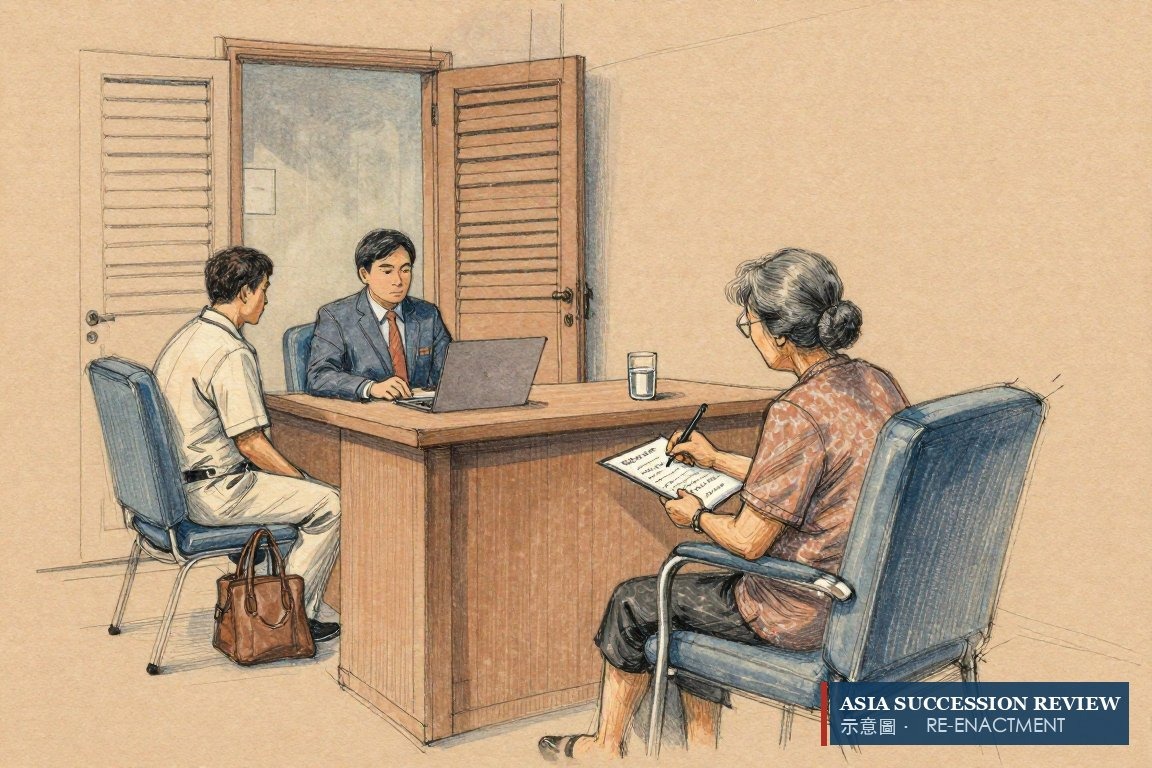
A doctor records her capacity on the day she signs, and a will made at 98 survives the son's attack
A will made at 98 by a woman who had just cut off a son and was, at the same time, the respondent to bankruptcy petitions, is a will that should be signed in front of a doctor who records her capacity that day, with a solicitor's attendance note of her reasons in her own words, and with the son's exclusion stated in the will rather than left to be inferred.
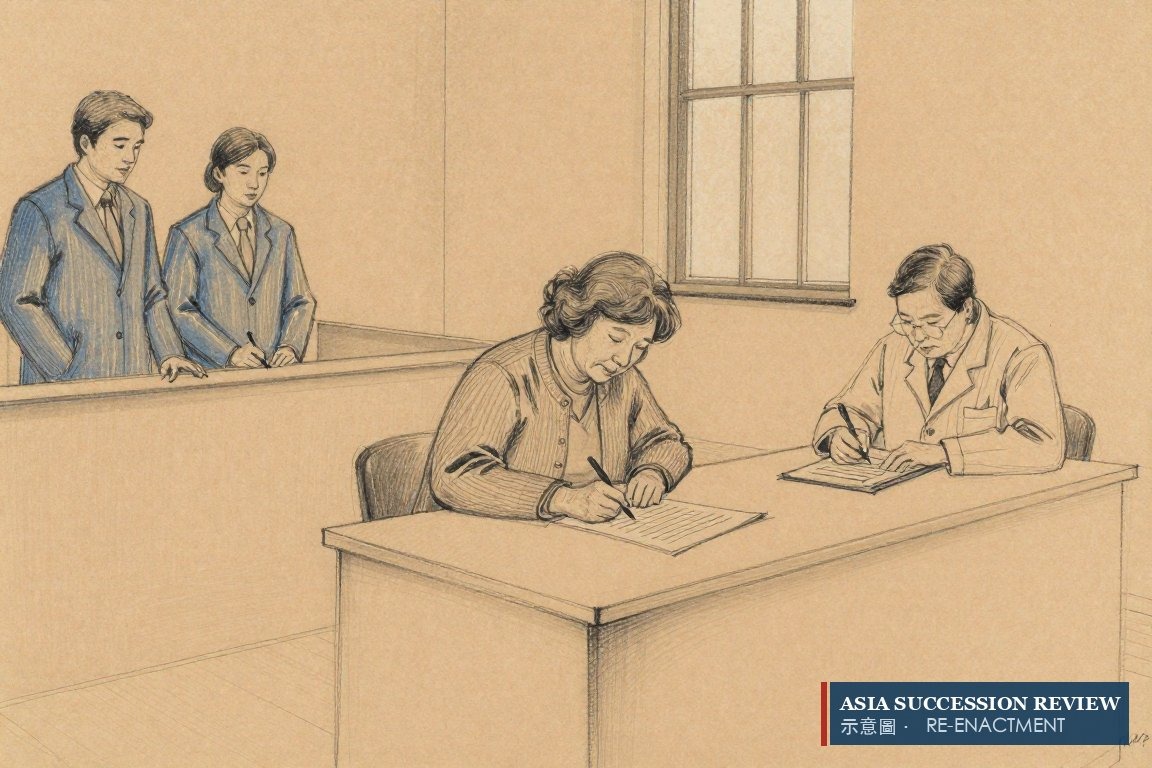
A Singapore court can write a will for someone who has lost capacity, and without one her children share equally
The Mental Capacity Act 2008 supplies the test, and section 23(1)(k) even allows the court itself to make a statutory will for a person who has lost capacity, which is the route a family takes when the window is closing rather than leaving a contested signature behind. What is at stake if the will fails is arithmetic, and it is worth stating so that nobody mistakes the funeral for the point: section 7 of the Intestate Succession Act 1967, rule 3, divides the estate of a person who dies without a valid will and without a spouse equally among her children, with the children of a child who died before her taking that child's share by stocks.
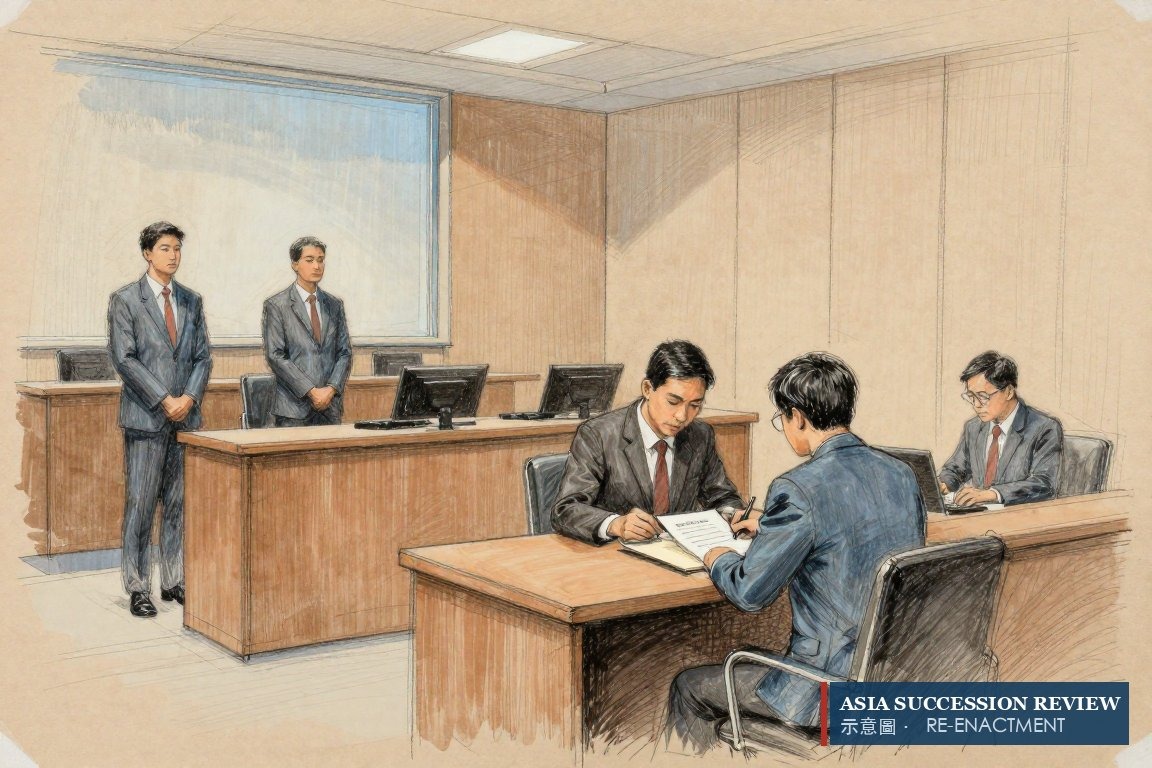
She outlives 3 of her children, so an intestacy pays her surviving son while the reported will pays him nothing
Tam Mei-kam outlived three of her children. On an intestacy her surviving son and the branches of the deceased children share; under the reported will he takes nothing. Every hour of the argument about burial versus cremation is, in Singapore as in Hong Kong, an hour spent on the only question that pays.
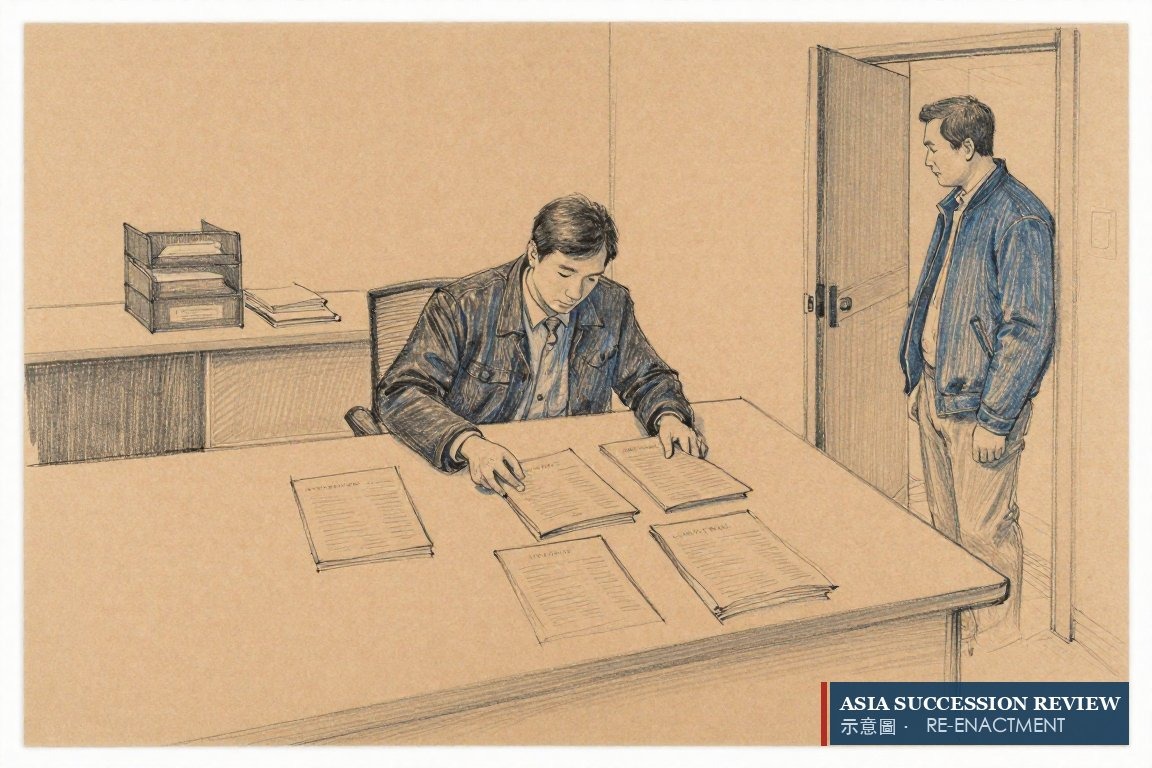
Singapore still lets him hold a press conference and lodge a caveat, which delays the grandson's grant for months
The honest limits, because a page that pretends Singapore removes the son is worthless. Singapore does not stop a man holding a press conference, does not stop him lodging a caveat that delays the grant of probate to the grandson, and does not stop him pleading incapacity in a woman who lived to 102; the Coroner's process takes the time it takes, and a body released to an executor can still be the subject of an application by a disappointed relative. What Singapore changes is the order of the questions and who answers them.
The trustee owes the son nothing and explains nothing, and the charity takes the remainder without meeting him
The body is the Coroner's, then the executor's. The funeral is the estate's, at a cost fit for her station, approved by the court if anyone objects. The trust remainder is the charity's, and the trustee owes the son no explanation. The will is the whole contest, and its strength was decided on the day it was signed, by whether a doctor was in the room. The lesson for a family that has provided for a parent through a trust is the one this family has now learned twice: the trust looks after the money it holds and nothing else.
A parent's will, her funeral instructions and a funeral clause are 3 documents, and this family wrote none of them
The parent's own will, her own funeral instructions, and a funeral clause in the deed are three separate documents, and the ones nobody wrote are the ones the family will spend September arguing about.
The grandson named as executor — the body, on the Coroner's release under Coroners Act s22, and the right and duty to bury it — as executor, not as the loudest relative
Her own estate — the funeral bill, at a cost suitable to her station in life under Probate and Administration Act s67, tested by the registrar if a beneficiary objects
The Buddhist association — the remainder of the Karen Trust on the life tenant's death, exactly as the 2003 memorandum directed — untouched by the son's plans
The eldest son — nothing from the trust, nothing from a valid will, and a share under Intestate Succession Act s7 rule 3 only if the will falls — which is why the will needed a doctor's note more than the funeral needed a budget
A counterfactual, not advice. The verified machinery is on the Singapore page; where your family stands is the briefing.
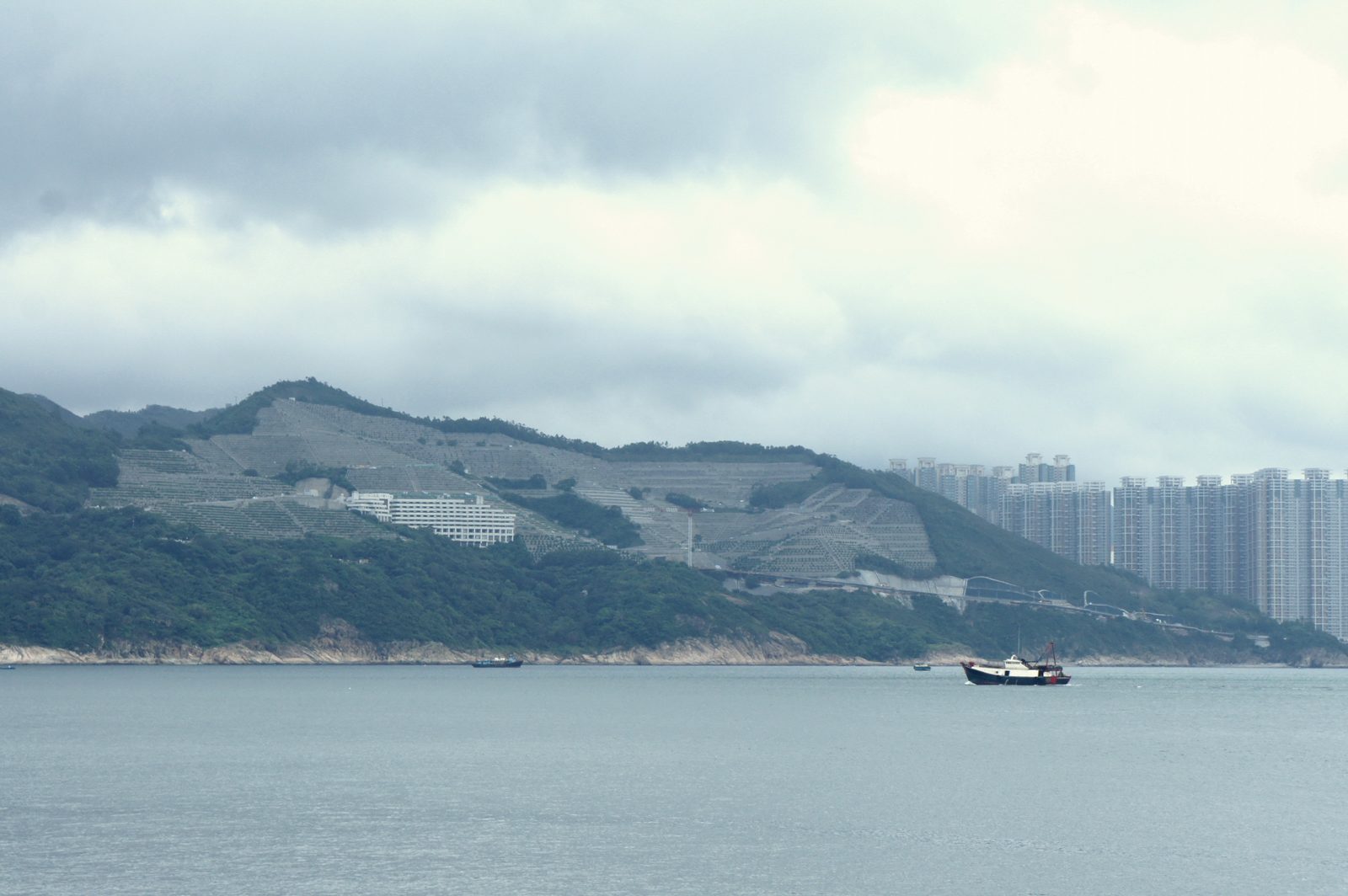
From the case files: The first act, written on 31 August: the trust her daughter settled and the seven years her mother spent fighting it