Hide a home in your child's name and you lose it. Ask Laguna's owner
Peter Kwee, the motoring tycoon who owns Laguna National, bought five properties between 1995 and 2000 and put them in his daughter's name, partly, he said, so that estate duty and his creditors could not reach them. When she went bankrupt he asked for them back. On 18 November 2026 the Court of Appeal agreed they had always been his, and still refused: a trust hidden from creditors is illegal, so her creditors keep them. What a family that means such an arrangement should do instead.
Read this in: EN · 简体 · 繁體 · ไทย · ID
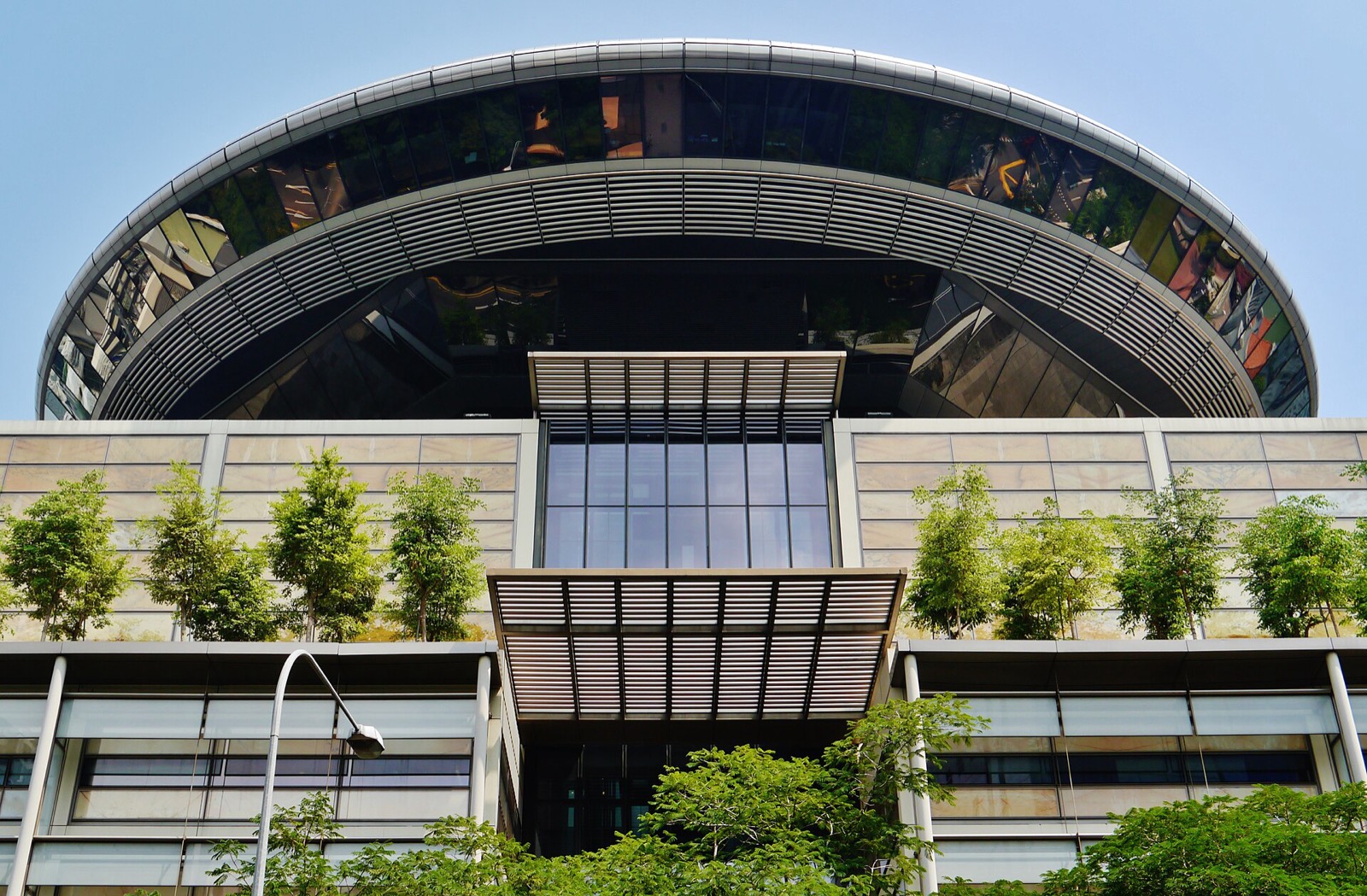
A father appeals for five homes in his daughter's name, and Singapore's top court refuses on 18 November 2026
On 18 November 2026 the Court of Appeal of Singapore dismissed an appeal by Peter Kwee Seng Chio in Kwee Seng Chio Peter v Lai Seng Kwoon [2026] SGCA 45, decided by Ang Cheng Hock JCA, Hri Kumar Nair JCA and Andrew Phang Boon Leong SJ.
A motoring tycoon buys two Bukit Timah houses and three abroad in 1995 to 2000, all in his daughter's name
Mr Kwee, described by The Straits Times as a motoring tycoon and the owner of Laguna National Golf Resort Club, asked the court to declare that five properties in the sole name of his daughter, Karen Kwee, belonged to him, with three bank accounts that collected their rent. Two are landed houses in Bukit Timah, King's Drive and Teneriffe; two are in Canada and one in Australia. All were bought between 1995 and 2000.
The daughter signs for a S$4.1 million loan in 2020, and by October 2022 she is declared bankrupt
The daughter's bankruptcy is why it mattered. In February 2020 she and her then husband borrowed S$4.1 million from two lenders; she says she was misled into signing. An arbitration award, a statutory demand and, on 6 October 2022, a bankruptcy order followed. Mr Lai Seng Kwoon is her private trustee in bankruptcy, and what she owns is divided among her creditors. Property she held on trust for her father would sit outside that pool. That is what he sued to establish.
The father admits using her name to dodge estate duty and creditors, and that admission decides the case
His own account of the arrangement was simple. Before each purchase, he said, he told the family member: 'I put under your name… It is mine… After I die already, it is yours.' At the High Court trial in 2025 he gave one reason in his own words: 'those properties I bought during the estate duty is affected, so I put under Karen's name; if anything comes to me, there is no estate duty.' Under cross-examination he also named shielding the properties from his creditors.
A trial judge calls the five homes gifts in March 2025, and the father pays S$195,283.29 in costs
Justice Philip Jeyaretnam found on 20 March 2025 that the five properties were gifts to the daughter and dismissed the claim, with costs of S$91,003.50 and S$104,279.79 to the trustee ([2025] SGHC 46). The Court of Appeal disagreed on the facts. Mr Kwee had paid, managed, refinanced and decided for decades, and his daughter deferred to him, so the properties were held for him under a common intention constructive trust. Then it applied the law to his reasons.
The appeal judges agree the homes were always his, then void his trust because he hid it from creditors
The court found that he meant to conceal his ownership 'from the tax authorities and his creditors should the risk of estate duty or creditor action materialise', and noted that his own written case conceded he 'sought to conceal the real ownership of the Properties'. A trust set up to conceal assets from creditors, it held, is illegal and contrary to public policy, and therefore void and unenforceable without more. The court said it had not decided that question definitively before.
The father pleads that he repented, the court calls it financial necessity, and the homes go to the daughter's creditors
Nothing came back through a side door. Selling another property in his daughter's name, Claymore, around 2010 to pay creditors was 'financial necessity', not repentance, and he disclosed the trust only 'because of Ms Kwee's bankruptcy'. The properties and most of the money in the accounts stay in her bankruptcy estate. Mr Kwee pays S$80,000 in costs of the appeal, on top of S$195,283.29 at trial (our addition of the two orders). Whether a trust made to avoid estate duty is also void, now that the duty is abolished, the court left open.
- 1Kwee Seng Chio Peter v Lai Seng Kwoon [2026] SGCA 45 (Court of Appeal, 18 Nov 2026; Civil Appeal No 49 of 2025), read in full on eLitigation 19 Nov 2026: the name placing agreement, the purposes, the common intention constructive trust, illegality, locus poenitentiae, S$80,000 costs
- 2Kwee Seng Chio Peter v Lai Seng Kwoon [2025] SGHC 46 (Philip Jeyaretnam J, 20 Mar 2025), read in full on eLitigation 19 Nov 2026: the estate duty testimony, the gift finding, the S$4.08m King's Drive price of 12 Sep 2021, costs of S$91,003.50 and S$104,279.79
- 3The Straits Times via The Star (ANN), 20 Mar 2025 (secondary): 'motoring tycoon Peter Kwee', owner of Laguna National Golf Resort Club; two landed properties in Bukit Timah, two in Canada, one in Australia
- 4IRAS, Estate Duty ('Estate Duty has been removed for deaths on and after 15 February 2008'), read 19 Nov 2026
- 5IRAS, Buyer's Stamp Duty (page last updated 9 Oct 2026, read 19 Nov 2026): a gift including a voluntary declaration of trust is dutiable; fixed S$10 on a declaration of trust that does not change the beneficial interest
- 6IRAS, Remission of ABSD (Trust) (page last updated 14 Aug 2026, read 19 Nov 2026): ABSD (Trust) of 65%, refund for identifiable individual beneficiaries, application within six months
The father proves the homes are his, and his own reasons for hiding them cost him all five
Mr Kwee won the argument he brought and lost the property anyway. He proved the homes were his. The court took him at his word, and his word included why he had hidden them.
A parent shows the world his child as owner, then asks a court to believe otherwise, and fails
A name-placing arrangement works only while nobody looks closely. Its whole purpose is that the world sees the child as the owner. The day the parent needs a court to see him as the owner instead, he must explain why he arranged things the other way. Here the explanation was the problem: equity will not help a man recover what he hid from the people he might owe.
The secret that was meant to shield a father's homes hands them instead to his daughter's lenders
The risk was never only his. The child on the title has her own life: a marriage, a loan, a signature on a page she says she did not read. Once her creditors arrived, the appearance he built worked exactly as designed, only for them. The secret meant to protect the father's property is what handed it to his daughter's lenders.
In Singapore a parent can keep property in a child's name and still own it, if the arrangement is honest and on paper; once its purpose is to hide the property from creditors, the Court of Appeal will not enforce it, and the child's creditors take it.
One family loses a condo for want of proof, another loses five homes for its motive, in the same month
This one happened in Singapore, so the useful question is what a family that keeps property in a child's name should do now. Two weeks earlier, in the OK Lim family's flat case, a High Court judge found no trust at all for want of proof (our commentary No. 50). The Court of Appeal has now drawn a second line. Proof is the first test. Purpose is the second, and it can defeat a trust the court accepts was real.
A parent who pays and manages a child's home honestly keeps it, and only a hidden motive loses it
Rule one: an honest arrangement is still enforceable. The court found a trust here from conduct alone: Mr Kwee paid the price and the mortgages, handled the tax and the refinancing, and his daughter deferred to him. What sank it was the reason. The rule the court laid down is about a trust set up for the purpose of concealing assets from creditors. It is not a rule against putting property in a child's name to manage it or to keep the peace between children.
A family signs and stamps one page declaring who owns the flat, and pays S$10 to make it visible
Rule two: write the honest version down and pay the duty that comes with it. IRAS's buyer's stamp duty page, last updated on 9 October 2026, charges a fixed S$10 on a declaration of trust that does not change the beneficial interest, and ad valorem duty where it does. For residential property held on trust, IRAS lists ABSD (Trust) of 65%, with a refund route for identifiable individual beneficiaries applied for within six months (page last updated 14 August 2026). Our reading: a dated, stamped declaration is hard to call concealment.
Estate duty ends in February 2008, but families still holding pre-2008 name arrangements carry an open question
Rule three: the old reason may be gone, but the record is not. IRAS states that estate duty has been removed for deaths on and after 15 February 2008. The two Bukit Timah houses were bought while it applied; the trial judge recorded that as common ground. The Court of Appeal declined to decide whether a trust made to avoid a tax that no longer exists is still void, and set out arguments both ways. Families with pre-2008 arrangements should not assume the abolition cleaned them.
The daughter agrees a S$4.08 million sale without her father's permission, and he files caveats only after trouble starts
Rule four: decide whether it is a gift or a loan of a name, and tell the child which. A gift makes the child the owner, exposed to her creditors and her marriage; that is the price of giving. If the parent means to keep it, the child must know she cannot sell or sign over it. Ms Kwee agreed a S$4.08 million price for King's Drive in September 2021 without her father's permission, the High Court found. Mr Kwee lodged caveats on the two houses only in May 2022, after the trouble had started.
A family that fixes old arrangements while everyone is solvent avoids the repentance plea that failed in court
Rule five: put it right while everyone is solvent. The court rejected Mr Kwee's plea of repentance because his steps came under pressure: a sale to pay debts, a disclosure forced by the bankruptcy. The time to regularise an old arrangement, by transfer or by a signed and stamped declaration, is before anyone on either side owes money they cannot pay. After that, every document reads as a paper trail.
Two judgments name no property values, so the only price on record is S$4.08 million for one house
Now the limits. We read both judgments in full on eLitigation; quotations come from them. Neither gives the values of the five properties; the only price on record is the S$4.08 million agreed for King's Drive in 2021. Ms Kwee's account that she was misled into the loan was not tested against her former husband. The court described the purpose as evading estate duty; nobody has been charged with anything. The Laguna description comes from press reports, not the judgments.
A family asks three questions about a home in a relative's name while everyone can still answer them
For the reader whose family keeps any property in a relative's name, three questions while everyone is solvent. Why is it in that name, and would the answer survive being read aloud in court? Is there a signed, dated and stamped page that says who owns it? And if the person on the title borrowed money tomorrow, would the family's arrangement be visible to the lender, or only to the family?
Karen Kwee's creditors — the five properties and most of the money in three bank accounts, through her bankruptcy estate
Peter Kwee — found to be the real owner and refused all relief because the trust was hidden from creditors; S$80,000 costs on appeal and S$195,283.29 at trial (our addition)
Karen Kwee — bankrupt since 6 October 2022 over a S$4.1 million loan; the properties in her name go to her creditors, not to her or her father
Mr Lai Seng Kwoon, her trustee in bankruptcy — the properties and accounts to realise for the creditors, and his costs at both levels
Singapore trust law — a first definitive rule: a trust set up to hide assets from creditors is void and unenforceable; the estate duty question left open
A family that declared the trust honestly — on our reading, an enforceable trust, at the price of stamp duty and of being visible
The reader with property in a relative's name — three questions: why that name, is there a stamped page, and could a lender see it
A counterfactual, not advice. The verified machinery is on the Singapore page; where your family stands is the briefing.
From the case files: Two weeks earlier: OK Lim's grandson loses a condo to his aunt's bankruptcy for want of a signed page