Narongdej: he obeyed his mother's last wishes and was convicted for it
Krit Narongdej is the executor his mother named in her will. His brother Nop prosecuted him over rent from land she left in Samut Prakan, and a Bangkok trial court gave him prison terms of 12 months and 44 months. On 10 November 2026 Thailand's Court of Appeal reversed one conviction, finding, on his side's account, that he had done what his mother told him to do before she died. Thirteen years after her death the family is still in court. What a parent's wish needs if it is to protect the child who carries it out, in Bangkok or in Singapore.
Read this in: EN · 简体 · 繁體 · ไทย · ID
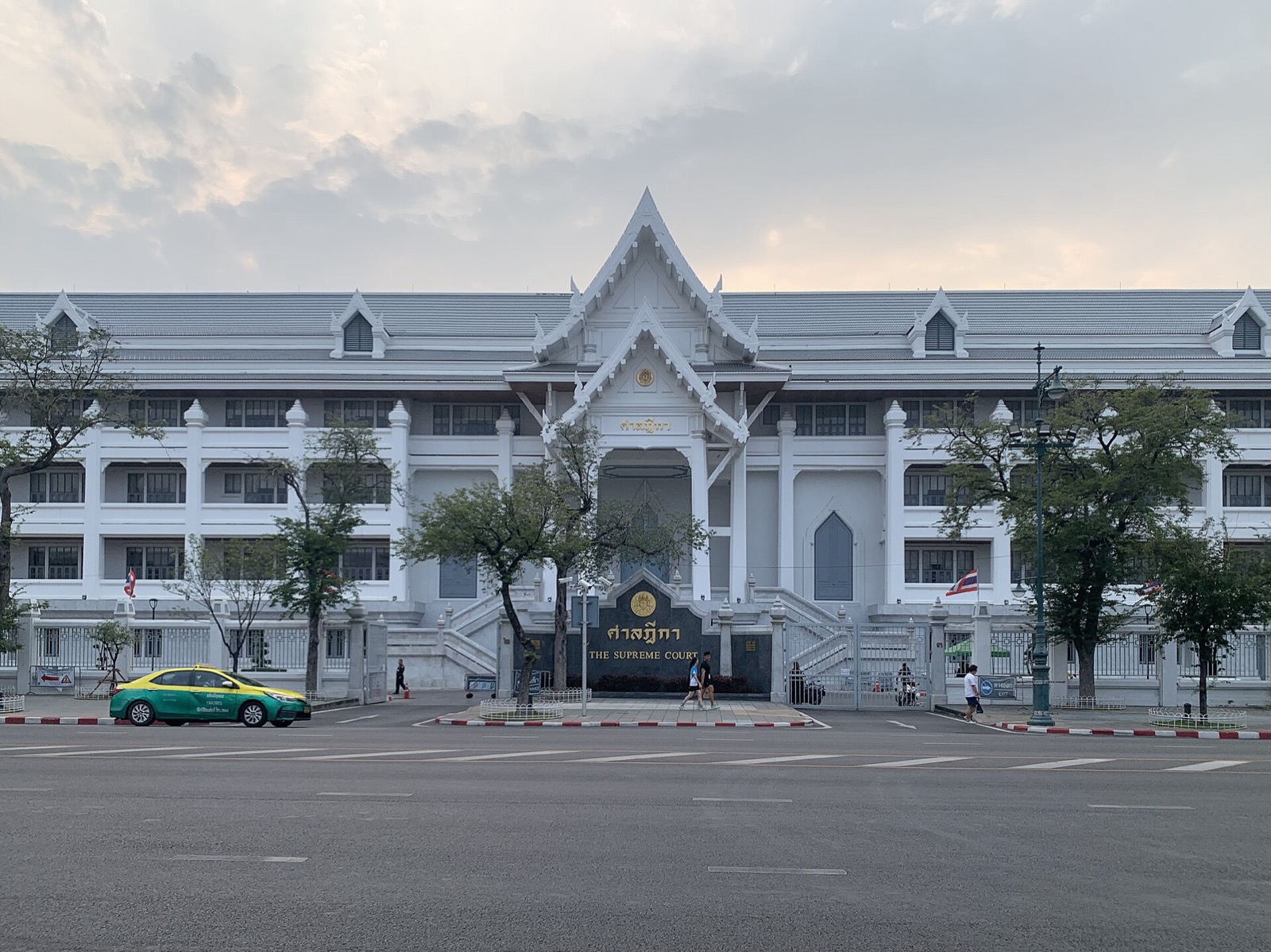
Thailand's Court of Appeal clears the Narongdej son of taking his mother's rent, six years after his brother charged him
On 10 November 2026 Thailand's Court of Appeal reversed a conviction of Krit Narongdej for embezzlement and dismissed the charge. His younger brother Nop had prosecuted him privately over rent from land in Samut Prakan, east of Bangkok, that belonged to their late mother. In the summary Krit's side gave to the press, carried by Kaohoon and Thansettakij on 11 November, the court found that he had acted as his mother instructed before she died and had not sought a dishonest gain. The judgment itself is not published, and the reports we read carry no response from Nop.
A Siam Motors heiress builds KPN, dies in 2013 and names her eldest son sole executor of a ten-billion-baht estate
The family is one of Thailand's best known. Khunying Pornthip Narongdej was a daughter of Thaworn Phornprapha, the founder of Siam Motors. She ran Siam Motors, then left in 1993 to build KPN Group with her husband, Kasem Narongdej. They had three sons: Krit, Nop and Korn. She died in October 2013. Her will named Krit, the eldest, as sole executor, and the Bangkok South Civil Court appointed him on 12 February 2014. Thai reports call the estate ten billion baht, about US$298 million at today's rate; that is a press figure, not an audited one.
The middle son says his brother kept years of rent from their mother's Samut Prakan land and paid him nothing
The land is at Sisa Chorakhe Yai in Bang Sao Thong district. Pornthip had let it to tenants including Toll Logistics. After her death the three brothers became its co-owners. Nop's complaint, as reported in March 2025, was that Krit never drew up an inventory of the estate and never paid him his share of the rent and sub-rent. Krit's lawyer answered that the land was sublet through a company, that the rent went into the company's account and on to the estate, and that none of it went to Krit.
A Bangkok court gives the executor 12 months, then 44 months in March 2025, over 35 million baht
Nop brought two rent prosecutions in the Phra Nakhon Tai Municipal Court in Bangkok. The first ended in a 12-month prison sentence. In the second, case Or.1662/2566, the court on 19 March 2025 sentenced Krit to 44 months, four months on each of 11 counts, over more than 35 million baht (about US$1.04 million). The company and its director were acquitted, and Krit was bailed for 400,000 baht. Neither sentence was suspended, and both went to appeal.
The executor's statement cites a 2020 case number, so the 12-month conviction falls and the 44-month one still awaits appeal
Which conviction fell on 10 November needs care. Krit's statement gives the case number as Or.2886/2563 and calls it "Toll 1". The number dates from 2020, three years before the case that produced the 44-month sentence, so it reads as the first prosecution, the one with the 12-month sentence. That is our reading. Thai headlines attach the 35 million baht figure to the ruling; that figure was the claim in the second case. The statement does not say where the appeal against the 44-month sentence stands.
The Supreme Court makes the eldest son sole executor again, and an appeal court gives his brother two years
The rent cases are one front of many. On 7 December 2025 the Supreme Court (judgment 3781/2568) restored Krit as sole executor and removed Nop, whom the Court of Appeal had made co-executor in 2023; it said the family had been split into two camps since 2018. On 25 September 2025 the Criminal Court dismissed another embezzlement charge against Krit, over estate money, and Nop said he would appeal. On 11 November 2025 an appeal judgment was read sentencing Nop and his mother-in-law to two years for using forged documents to transfer Wind Energy Holding shares; both were bailed pending a further appeal.
- 1Kaohoon, 11 Nov 2026: Court of Appeal judgment of 10 Nov 2026 in case Or.2886/2563 ('Toll 1') reverses the trial court and dismisses the embezzlement charge Nop Narongdej brought against Krit over rent from inherited land in Samut Prakan; Krit's statement that the court found he acted as Khunying Pornthip instructed before she died and without dishonest intent; his summary of the Wind Energy, executor, recovery and guardianship cases
- 2Thansettakij, 11 Nov 2026: the same ruling and statement; recalls the 19 March 2025 conviction and the 35 million baht figure
- 3Thansettakij, 19 Mar 2025: Phra Nakhon Tai Municipal Court, case Or.1662/2566, 44 months without suspension for Krit, company and director acquitted, bail 400,000 baht; the complaint (land at Sisa Chorakhe Yai let to Toll Logistics, no estate inventory, no share of rent, over 35 million baht; sentence to run after an earlier 12-month sentence of the same court)
- 4Thansettakij, 19 Mar 2025, both sides in their own words: Krit's lawyer (rent went to the company's account and to the estate, not to Krit; facts date from 2020-2021); Nop (first case 12 months, on appeal; second case 11 counts at four months each; no inventory despite his appointment as co-executor)
- 5Kaohoon, 9 Dec 2025: Supreme Court judgment 3781/2568, read 7 Dec 2025, keeps Krit as sole executor under the will and removes Nop as co-executor; the family split into two camps since 2018; Pornthip died in 2013 (B.E. 2556); Nop's 2020 petition, the trial court's refusal and the Court of Appeal's joint appointment
- 6Matichon, 27 Dec 2021: Bangkok South Civil Court refuses to remove Krit as executor (appointed 12 Feb 2014); will clauses 8, 10, 12, 13, 14 and 18 not yet divided; the father claims the assets as marital property and told the executor to hold the administration; Civil and Commercial Code s1481 applied
- 7Post Today, 18 Feb 2020: Nop's lawyer sends Krit a formal demand for the estate inventory and the division, more than six years after the death
- 8Kaohoon, 25 Sep 2025: Criminal Court dismisses case Or.599/2567 (embezzlement of estate money) against Krit for want of intent; Nop to appeal
- 9Bangkokbiznews, 21 Mar 2025: the three brothers' eight-year dispute; Nop says no estate inventory has been made and that his sons received their legacies only in 2024
- 10The Nation, 12 Nov 2025: Appeals Court verdict read at the Criminal Court on 11 Nov 2025 sentencing Nop Narongdej and Khunying Korkaew Boonyachinda to two years without suspension for using forged documents to transfer Wind Energy shares; bail pending appeal
- 11Thai Wikipedia, Khunying Pornthip Narongdej (nee Phornprapha), 7 Jul 1946 - 16 Oct 2013: daughter of Thaworn Phornprapha, founder of Siam Motors; left Siam Motors in 1993 to build KPN Group with Kasem Narongdej (read 11 Nov 2026; the complaint as reported in 2025 gives a different death date, 15 Feb 2016, which does not fit the executor's appointment on 12 Feb 2014)
- 12Thai Civil and Commercial Code, ss1656 (written will, two witnesses), 1663 (oral will only in special circumstances, two witnesses, reported to the district office), 1481 (a spouse cannot will away more than his or her share of marital property), 1727 (removal of an executor), 1728-1729 (inventory begun within 15 days and finished within one month, before two interested witnesses) and 1732 (accounts and division within one year unless the will, a majority of heirs or the court sets otherwise), Thai text as reproduced from the Office of the Council of State on ThaiLawOnline, read 11 Nov 2026
- 13Wills Act 1838 (Singapore), s6: no will is valid unless in writing and signed at the foot by the testator before two witnesses present at the same time, read on Singapore Statutes Online 11 Nov 2026
- 14Probate and Administration Act 1934 (Singapore), s28 (oath to administer the estate faithfully and to account for it), s32 (a grant may be revoked or amended for any sufficient cause) and s66 (the taking of executors' administration accounts), current version as at 11 Nov 2026 on Singapore Statutes Online
- 15Penal Code 1871 (Singapore), s405, illustration (a) (an executor who dishonestly disobeys the law directing him to divide the estate according to the will commits criminal breach of trust) and s406 (up to seven years' imprisonment, or fine, or both), read on Singapore Statutes Online 11 Nov 2026
- 16Exchange rate: 33.55 baht to the US dollar, ExchangeRate-API open rates updated 11 Nov 2026; the dollar figures are our arithmetic
The mother's will names an executor but not where the rent goes, and her words to him fill the gap
A will and a wish are different instruments, and this family had both. The will was strong: written, proved, and upheld by the Supreme Court twelve years after the death. It named the executor. What it did not settle, on the public record, is where the rent from the Samut Prakan land should go in the years before the estate was divided. That gap was filled by what the mother told her eldest son. The reports do not say whether she said it or wrote it down. They say only that she left instructions before she died.
Thai law counts only a written will signed before two witnesses, so a wish told to one child binds nobody
Thai law is strict about what counts. A will must be written, dated and signed before two witnesses (Civil and Commercial Code, section 1656). A spoken will is allowed only in special circumstances such as imminent danger of death, before two witnesses who must report it to the district office without delay (section 1663). An instruction given to one child is neither. It can explain what the child did. It cannot bind his brothers.
The Code gives an executor one year to divide the estate, and the brother's lawyer demands an inventory after six
The Code also sets a clock, and this estate ran far past it. An executor must start an inventory within 15 days and finish it within a month, in front of two witnesses who have an interest in the estate (sections 1728 and 1729). He must report his accounts and finish the division within a year, unless the will, a majority of the heirs or the court sets another time (section 1732). In February 2020, more than six years after the death, Nop's lawyer sent Krit a formal demand for the inventory and the division.
The father claims the will gave away marital property and tells the executor to wait, so the estate stays open
Krit had a reason, and a court accepted it. In December 2021 the Bangkok South Civil Court refused to remove him. It found that the father, Kasem, claimed property in the will as marital property, of which a spouse can will away only her own share (section 1481), and had told Krit to hold the administration while the disputes with Nop ran. So the estate stayed open, the rent kept arriving, and the only record of where it should go was the executor's own account of his mother's wish.
A brother with no inventory and no share prosecutes the executor, and the same facts bring prison, then acquittal
That is how a family argument became a criminal one. An heir who gets no inventory and no share for years has two routes: ask the civil court to remove the executor (section 1727), or prosecute him for embezzlement. Nop took both. The trial court saw a brother who collected rent on co-owned land and paid nothing out, and convicted. The appeal court, on Krit's account, accepted the mother's instruction and found no dishonesty. The same facts produced a prison sentence and then an acquittal. The executor carried that risk from 2020 because the wish that protected him was never in a form his brother had to accept.
In Singapore the wish would have needed paper too: a will must be in writing, an executor swears to account for the estate, and the Penal Code's own example of criminal breach of trust is an executor who dishonestly ignores the will. What Singapore adds is a way to write the wish into a deed that binds everyone, and to put the rent in hands that are nobody's brother.
The land stays under Thai law, so the Singapore question is only what a parent's spoken wish is worth there
Limits first. The land is in Samut Prakan, the family is Thai and the estate is being administered in Bangkok. Nothing in Singapore law reaches any of it, and this page does not claim that a Singapore structure could have held Thai land. Thai law gives a private family trust no effect (Civil and Commercial Code, section 1686; see our library page on a Singapore trust for a Thai family). The question here is narrower: what happens to a parent's wish, and to the child who carries it out, when the same facts arise under Singapore law. We read the Singapore sections on Singapore Statutes Online on 11 November 2026.
Singapore counts only a will signed before two witnesses, so an executor following his mother's words acts on his own
A spoken wish counts for no more in Singapore than in Bangkok. No will is valid unless it is in writing and signed at the end by the person making it, in front of two witnesses present at the same time (Wills Act 1838, section 6). An executor who follows what his mother told him where the will says something else, or fills a gap in the will from memory, is acting on his own authority.
Singapore's Penal Code names a dishonest executor as its first example of breach of trust, with up to seven years
Singapore also has the same crime. The Penal Code's first illustration of criminal breach of trust is an executor who dishonestly disobeys the law directing him to divide the estate according to the will and takes it for himself (section 405, illustration (a)). The punishment is up to seven years in prison, a fine, or both (section 406). The word that decides it is the one the Thai courts argued over: dishonestly. A Singapore executor in Krit's position would be making the same defence, with the same problem of proof.
A Singapore executor swears to account for the estate, which gives a shut-out heir a civil route before any prosecution
What Singapore builds into the office is the account. Everyone who takes a grant of probate swears to administer the estate faithfully and to account for it (Probate and Administration Act 1934, section 28). The Act provides for the court's registrar to take an executor's administration accounts (section 66), and a grant can be revoked or amended for any sufficient cause (section 32). These are civil routes, and an heir can reach them without accusing a brother of a crime. Whether they would have calmed this family is a guess. That they exist is not.
A parent writes the rent's purpose into a trust deed with a licensed trustee, so no child holds it alone
The stronger answer takes the wish out of the estate altogether. A parent who wants the rent from a property to serve a named purpose, for one child for a time or for all three in fixed shares, can say so in a trust deed while she is alive. The deed names who collects the rent, who is paid, how often accounts go to every beneficiary, and who replaces the trustee. A trustee who follows the deed is protected by it, and nobody has to remember what was said. A licensed trust company can hold the office, so that no brother is alone with the money. A letter of wishes can explain why; it only asks.
A Singapore trust holds a Thai family's shares and cash, but Thai land's rent needs a Thai will and accounts
For a Thai family the honest version is narrower. A Singapore trust can hold what can sit in Singapore: shares in a holding company, a portfolio, cash. Thai land stays on the Thai register under Thai law, and whether a company that owns it can be held from Singapore turns on Thailand's limits on foreign ownership of land, which we have not examined here. For land in Thailand the tools are Thai ones: a will that says in terms where the rent goes until the division, an inventory inside the Code's month, and accounts sent to every heir each year.
A couple agree in writing who owns what before either signs a will, sparing the executor a marital-property fight
One more gap shows in the 2021 judgment. The father said that property the will gave away was marital property. A will can give only what its maker owns. Who owns what between husband and wife is best agreed in writing by both of them, while both are alive and before either will is signed. No executor can settle it afterwards, and here the attempt to wait it out is what left the estate open.
A future executor asks his parents three questions now, and the answers on paper keep him out of court later
For the reader who expects to be the executor, or the brother of one, three things to ask while a parent can still answer. Is everything you have told me also in the will or in a deed? Who else has heard it? And when I am holding the money, who gets my accounts, and how often? Asking is not distrust. It is what keeps the child who does as he was told out of a courtroom.
Krit Narongdej, eldest son and executor — sole executor again since the Supreme Court's judgment read on 7 December 2025; acquitted on appeal on 10 November 2026 in one rent case; trial sentences of 12 months and 44 months, with the state of the second appeal not reported
Nop Narongdej, the middle son — removed as co-executor; two convictions of his brother at trial, one now reversed; and his own two-year sentence on appeal in the Wind Energy share case, on bail pending a further appeal
Korn Narongdej, the youngest son — the side of his father and eldest brother in every case reported, and, according to Krit's statement, the court's appointment as their father's guardian
Kasem Narongdej, the father — a claim that property his wife's will gave away was marital property, which in 2021 a court accepted as the reason the estate was not yet divided
Khunying Pornthip's estate — thirteen years open; in December 2021 the court listed six clauses of her will, 8, 10, 12, 13, 14 and 18, as not yet carried out
Her grandsons — legacies under the will paid only in 2024, a little over one million baht each, according to their father Nop in March 2025
The same family under Singapore law — the same rule that a will must be in writing (Wills Act 1838, section 6) and the same crime for a dishonest executor (Penal Code, section 405); an executor's oath to account (Probate and Administration Act 1934, section 28); and, for assets that can sit in Singapore, a trust deed and a licensed trustee in place of a spoken wish
The reader who may be an executor one day — three questions to ask now: is the wish in the will or a deed, who else heard it, and who will receive the accounts
A counterfactual, not advice. The verified machinery is on the Singapore page; where your family stands is the briefing.
From the case files: An estate still undivided years on, and the heirs in court: Ve Wong