In Singapore a stolen heirloom is lost in six years. Ask BIC's heirs
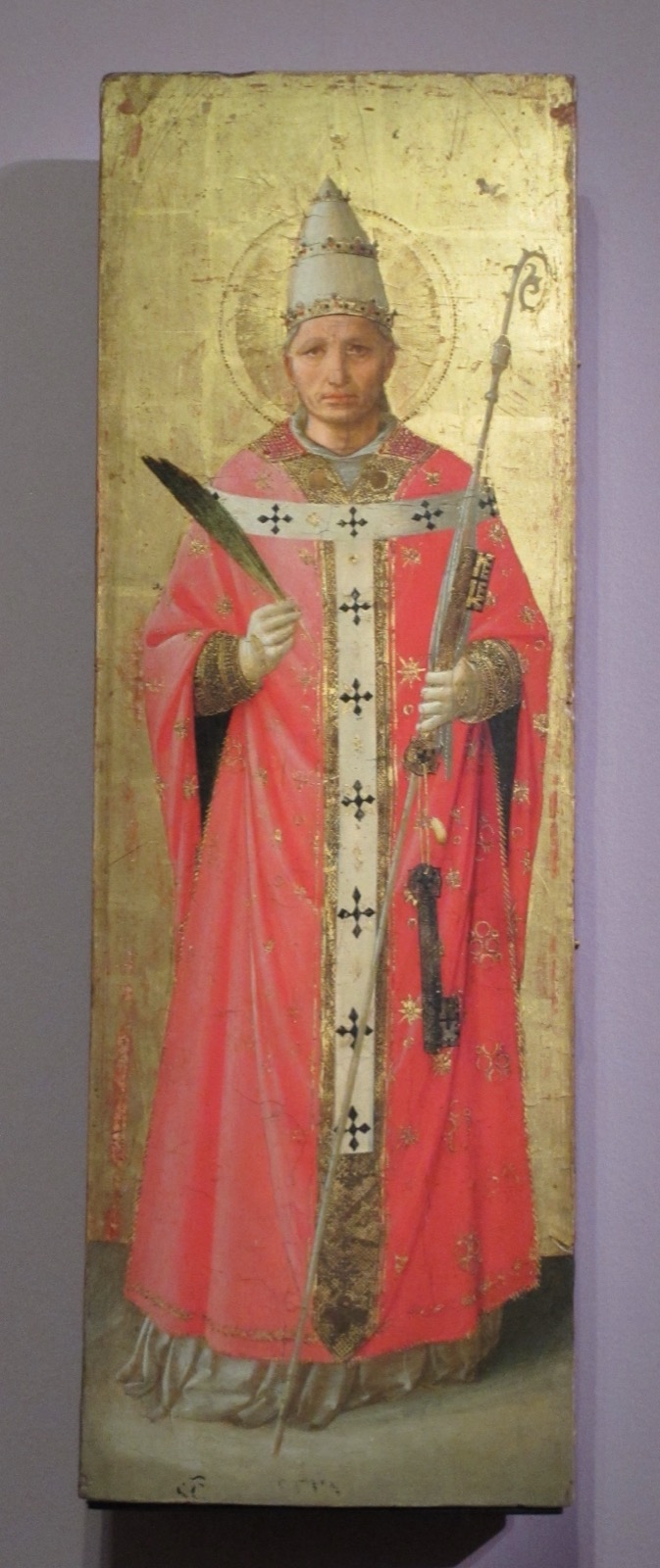
The founder of BIC bought Fra Angelico's Saint Sixtus in 1972. His son put it in trust for his three grandsons, and around 2006, they say, the family chauffeur walked out with it. On 16 November 2026 a New York judge let their claim go on, because New York starts the clock when the owner demands the painting back. Singapore's Limitation Act starts it at the taking, and on our reading the heirs' title would have ended about six years later.
Read this in: EN · 简体 · 繁體 · ไทย · ID

BIC's founder buys a Fra Angelico for £130,000 in 1972, and his son puts it in trust for three grandsons
Baron Marcel Bich, who founded BIC, bought Fra Angelico's Saint Sixtus (about 1453 to 1455) at Sotheby's in 1972 for £130,000. When he died in 1994 he left it to his son Bruno, who hung it in his Fifth Avenue apartment and, court records show, placed it in a trust for his three sons, Charles, Gonzalve and Guillaume. Bruno Bich died in 2021.
The family chauffeur allegedly walks out with the painting around 2006, and a dealer buys it for US$3 million
The sons' complaint, filed in the New York Supreme Court on 19 March 2026, says the family chauffeur, Roy Morrow, took the painting in or around 2006 and sold it to the dealer Richard Feigen for US$3 million. Feigen insured it for US$8.5 million and in 2018 consigned it to Christie's, which sold it privately for US$5.4 million to the Chilean collectors Álvaro Saieh and Ana Guzmán. Morrow died in 2020 and Feigen in 2021. The family made no police report; the NYPD told Gothamist it has none on file.
The grandsons find the painting in a collector's hands in 2023, and the collectors refuse to return it in 2024
The sons say they learned where the painting was only in 2023, and that the Saiehs refused to return it in 2024. Feigen's estate says Morrow signed a bill of sale stating he owned the work, that Feigen hid nothing and lent it to public exhibitions, and it points to a 2021 affidavit in which Bruno Bich accused his then-wife of giving the painting to Morrow. She could not be reached. The Saiehs say they bought in good faith, relying on Christie's research.
A New York judge refuses on 16 November 2026 to throw the heirs' claim out as too late
In a decision dated 26 October and filed on 16 November 2026, Justice James G. Clynes refused to dismiss the case as too late. ARTnews reported on 20 November that, under New York law, a good-faith buyer of stolen art is generally not in time-trouble until the owner demands the work back and is refused; for someone who knowingly dealt in stolen property the clock can start earlier, and the judge found too many open questions about Feigen's purchase to decide that now.
The dealer's estate keeps fighting while the claims against his own trust are dismissed for now
He also rejected, for now, the argument that the family waited too long. Claims against Feigen's revocable trust were dismissed, with leave to bring them again. Nobody has yet decided who owns the painting, or whether it was stolen.
- 1ARTnews, 20 Nov 2026 (Daniel Cassady): Justice James G. Clynes's decision dated 26 Oct, filed 16 Nov 2026; motion to dismiss on limitation and laches denied for now; demand-and-refusal rule; claims against Feigen's revocable trust dismissed with leave; US$3m, US$8.5m insurance, US$5.4m in 2018; discovery 2023, demand 2024
- 2Gothamist, 27 Mar 2026 (Walter Wuthmann), on the complaint: Sotheby's 1972 at £130,000; willed to Bruno Bich in 1994 and placed in trust for Charles, Gonzalve and Guillaume; 'in or around 2006'; no NYPD report; the 2021 affidavit; Morrow died 2020, Feigen 2021, Bruno Bich 2021
- 3Bloomberg Law, 1 Apr 2026: the 1972 price of £130,000 (US$172,000) from court records; the Saieh purchase in 2018
- 4Limitation Act 1959 ss6(1)(a), 7(1)-(2), 22(1)-(2), 29(1)-(2) and 32, read on Singapore Statutes Online as at 21 Nov 2026
- 5Sale of Goods Act 1979 s21(1) (a buyer from a non-owner gets no better title than the seller had), read on Singapore Statutes Online as at 21 Nov 2026
A trust owns the painting on paper while it hangs in a parent's home, and nobody reports it missing
A trust can own a painting on paper while the painting hangs on the settlor's wall. That is what the record describes: the Fra Angelico belonged to a trust for three grandsons, but it lived in their father's apartment, and when it went, nobody reported it to the police and nobody outside the family looked for it. The beneficiaries learned where it was 17 years later, from the market.
New York starts the clock when the owner asks for the painting back, and Singapore starts it at the taking
Whether that delay costs them the painting depends on which clock applies. New York's clock is unusually kind to owners: against a good-faith buyer it starts only when the owner asks for the work back and is refused. Singapore's statute is less patient.
In Singapore the clock for a stolen chattel starts at the taking, an innocent buyer is protected from the fraud extension, and on our reading the BIC heirs' title would have ended about six years after the painting left the apartment.
A thief passes no title in Singapore either, so the dealer and the collector own nothing on paper
Start with what Singapore shares with New York. Section 21(1) of the Sale of Goods Act 1979 says a buyer from someone who is not the owner gets no better title than the seller had. A chauffeur who takes a painting has no title, so neither does the dealer who buys from him, nor the collector who buys from the dealer. On title alone, the Bich trust would still own Saint Sixtus in Singapore as in New York.
Singapore gives an owner six years from the first taking, then extinguishes the owner's title outright
The difference is time. Section 6(1)(a) of the Limitation Act 1959 gives six years for a claim in tort, which includes converting someone's goods. Section 7(1) says a later conversion of the same chattel does not restart the count: six years run from the first one. Section 7(2) then goes further: once that period expires and the owner has not got the goods back, the owner's title is extinguished. The section does not treat theft differently from any other conversion. Read on Singapore Statutes Online as at 21 November 2026.
On the heirs' own dates, Singapore's six years end around 2012, six years before Christie's sells the work
Applied to the heirs' own account, the first conversion was the taking in or around 2006. On our reading, the six years ran out in about 2012, and with them the trust's title, six years before Christie's sold the painting to the Saiehs. That is inference from the statute; no Singapore court has ruled on these facts.
The fraud extension helps the owner, but an innocent buyer who paid still keeps the painting
Section 29 is the owner's way back. Where the claim rests on fraud, or the right to sue was concealed by fraud, the clock does not start until the owner discovered it or could with reasonable diligence have done so. But section 29(2) stops it from reaching property bought for value by someone who was not party to the fraud and had no reason to believe there had been one. The Saiehs say that describes them. If a court agreed, the extension would not touch the painting.
If the heirs prove the dealer knew, a money claim against his estate could stay open until about 2029
Against the dealer's side the picture is different. If the heirs could show that Feigen knew, or had reason to believe, the work was stolen, section 29 could start their clock in 2023, when they say they found it, which would leave a claim for money against his estate open until about 2029. The fight would then move to diligence: the family made no police report, and Feigen's side says he lent the painting to public exhibitions. Section 32 keeps the court's power to refuse relief for delay, as New York's laches argument does.
Every fact here is still an allegation, and New York's rule is the only reason the case lives
Now the honest limits. Every fact here is an allegation in a live case; no court has found that the painting was stolen, and Feigen's estate denies wrongdoing. New York law governs this dispute, and New York's rule is the reason it is still alive. A Singapore court applying Singapore law to a theft in Manhattan is a hypothetical. And the statute fixes deadlines, not facts: who knew what in 2006 would decide most of it.
A trustee who lists, insures and checks each piece every year leaves a record a court can use
What the trust could have done is plainer. Section 22(1) gives beneficiaries no deadline against their own trustee for trust property the trustee holds; the risk is property that has left the trustee's hands. A trust that owns art should list each piece in a schedule, say who holds it and where, insure it in the trustee's name, and have someone other than the occupant of the house sight it once a year. A missing piece is reported to the police the week it is missed, because the report is the dated record that a later claim depends on.
A family with valuables at home needs a list held outside the house and a report the week anything goes
For the reader whose family keeps paintings, jewellery or watches in a parent's home, four questions. Is there a written list, with photographs, that someone outside the house holds? Who is responsible for each piece: the person living with it, or a trustee? When did anyone last check that the list and the walls match? And if something went missing, would the family report it, or keep it quiet as the Bich family did?
Charles, Gonzalve and Guillaume Bich, beneficiaries of the trust — a live case in New York after the 16 November 2026 decision; in Singapore, on our reading, a title extinguished about six years after the taking, and a money claim against the dealer's estate only if they prove he knew
Álvaro Saieh and Ana Guzmán, who bought at Christie's in 2018 for US$5.4 million — the painting while the case runs; under Singapore's sections 7 and 29(2), a good-faith buyer for value would likely keep it
The estate of Richard Feigen, who bought for US$3 million — the claims still running, the limitation and laches defences open for later; the claims against his revocable trust dismissed for now
Bruno Bich's household, 2006 to 2021 — a painting that left the apartment with no police report; the question of who gave it to whom is the heart of the case and is not decided
The reader whose family keeps valuables at home — four questions: a written list held outside the house, a named custodian, a yearly check, and a report the week anything is missed
A counterfactual, not advice. The verified machinery is on the Singapore page; where your family stands is the briefing.