Chadwick Boseman left no will, so one heir holds everyone's share
The Black Panther star died in 2020 without a will. The court put his widow in charge of the estate she inherits half of, and his parents' quarters had to pass through her hands. Six years on, his brothers want her removed, and on 24 September she called it a public-relations stunt. What if the estate had been in Singapore?
Read this in: EN · 简体 · 繁體 · ไทย · ID
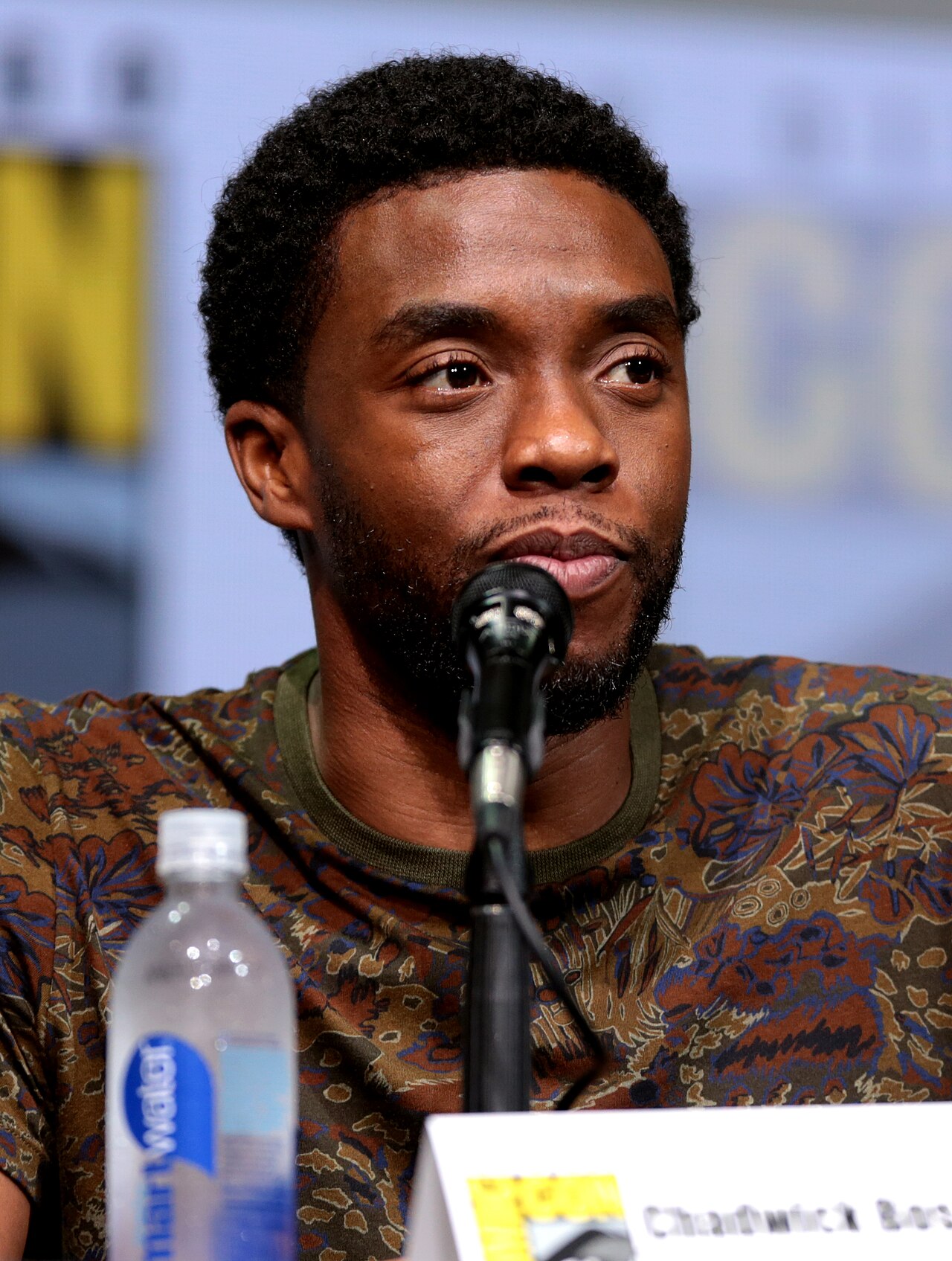
A film star's widow answers his brothers in Los Angeles on 24 September 2026 and calls their bid a stunt
On 24 September 2026 Taylor Simone Ledward, the widow of Chadwick Boseman, answered in a Los Angeles court a petition to remove her as administrator of his estate. The petition was filed in July by his older brothers, Derrick and Kevin Boseman, on behalf of their parents, Leroy and Carolyn.
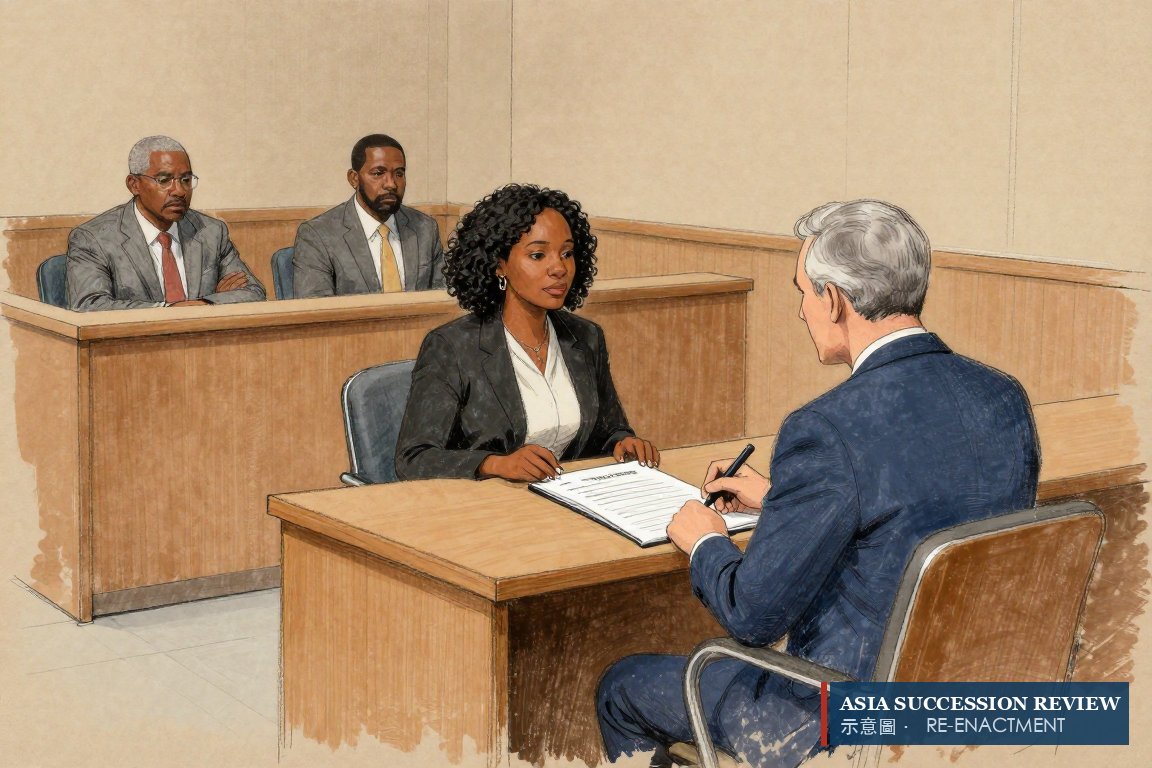
Her lawyer says every asset is paid out except one $300,000 retirement account the brothers themselves blocked
Her lawyer, Adam Streisand, called it 'a public-relations stunt to smear Simone in the tabloid press'. He wrote that she had 'distributed all of the assets of Chadwick's Estate save one account Petitioners themselves blocked from distribution', an individual retirement account of about $300,000, and that 'no Estate asset has been lost, wasted, or mismanaged'.
A 43-year-old actor dies of cancer in August 2020 after four private years of illness, leaving no will
Boseman, the star of Black Panther, died of colon cancer on 28 August 2020, aged 43. His family's statement that day said he had been diagnosed in 2016. He left no will. In October 2020 his wife applied to the Los Angeles probate court to administer the estate, and was appointed. Under California's intestacy rules she inherited half and his parents a quarter each.

A court orders the estate shared in October 2022, with $2.3 million left of $3.8 million after costs
In June 2022 the filings valued the estate at about $3.8 million gross and $2.3 million after fees, taxes and costs. A court order of 4 October 2022 directed the distribution.
The actor's elderly parents say their half never fully arrived, and list a bank account nobody told them about
The brothers' petition says the parents' half was never fully distributed. It lists royalties and residuals, image and intellectual-property rights, real property, a previously undisclosed City National Bank account, retirement accounts and a long-term-care policy for their mother.

She signs a documentary deal for the family company, and the parents who own half say nobody asked them
It says Ledward named herself chief executive of Chadwick Boseman, Inc. without board meetings and signed a documentary deal and a stage production without consulting his parents. It asks the court to replace her with Jason Rubin, a private professional fiduciary and forensic accountant, to order a full accounting since 2020 and to find her in contempt.
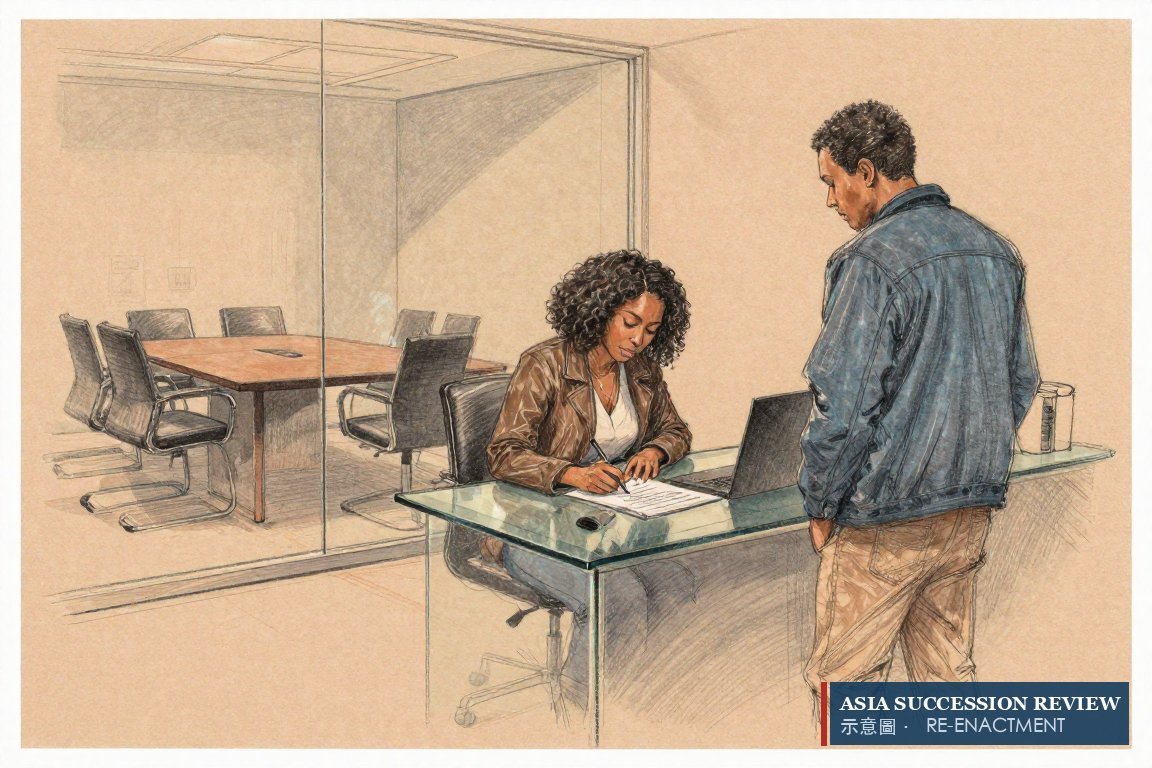
Her list shows the money: company shares worth $3,396,969, two bank accounts, a $40,000 policy and 88 cents
Her answer, as reported by Page Six, TMZ and The Blast, lists what the estate held and what went out. There was a Bank of America account of $151,558, 100 shares of Chadwick Boseman, Inc. valued at $3,396,969, a $40,000 life-insurance policy, a second account of $241,180.75 and $0.88 of unclaimed property.

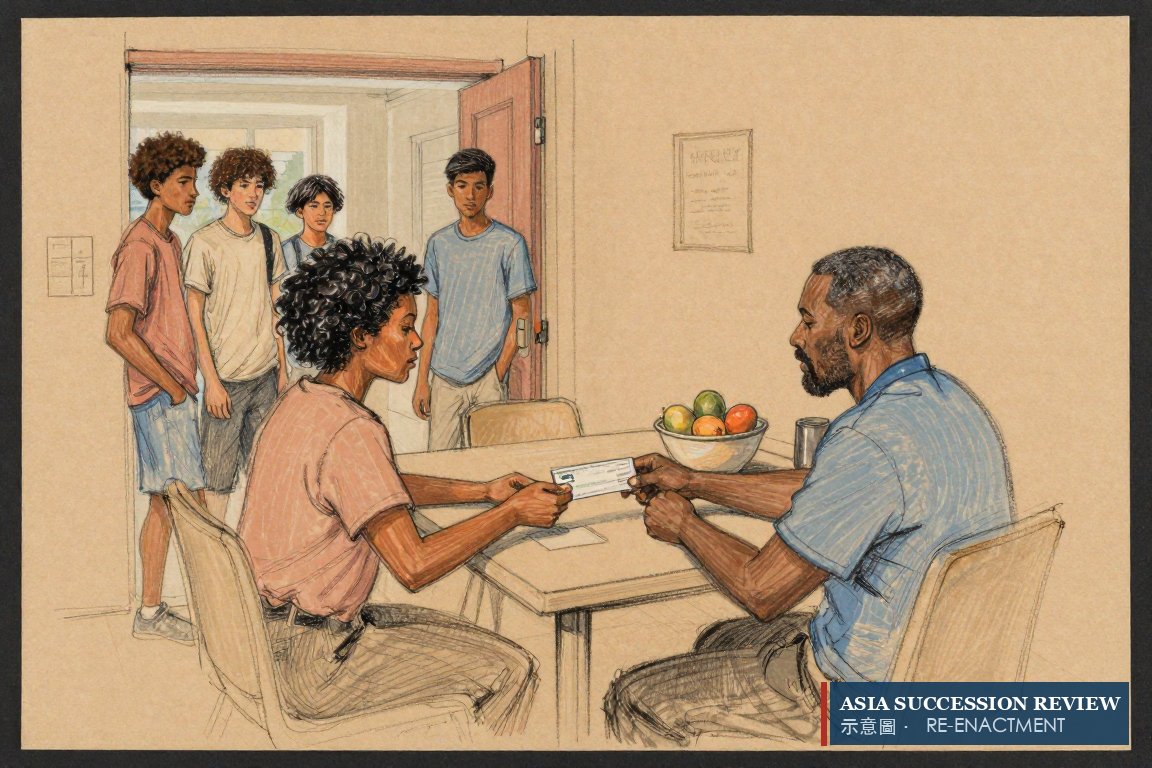
The widow says she gave one brother's children over $300,000 of her own money; no court has weighed it
She says she gave more than $300,000 of her own money to Derrick's four children, and that residuals were paid to the two brothers at their parents' request, $75,000 each. She asks the court to keep her in office and questions Rubin's record. No hearing date has been reported, and the court has decided nothing.
- 1The Blast, 24 Sep 2026: the response, the asset list with values, the $300,000 gift and the undistributed IRA
- 2TMZ, 24 Sep 2026: the widow's response and the 'public-relations stunt' characterisation; Jason Rubin
- 3BANG Showbiz via Yahoo, 25 Sep 2026: $75,000 to each brother; about $300,000 in SAG-AFTRA residuals since his death; the IRA blocked by the brothers' earlier action
- 4ABC News, 22 Jul 2026: the petition in Los Angeles Superior Court, the 4 Oct 2022 order, the assets listed and the relief sought
- 5NBC News, 23 Jul 2026: the 50/50 split, an estate of more than $3.8 million excluding royalties and image rights, the undisclosed account
- 6Complex, 27 Jul 2026: the brothers' statement; City National Bank account, IRA accounts, the long-term-care policy
- 7Law Commentary, 26 Jul 2026: the petition's allegations on Chadwick Boseman, Inc., the documentary and the stage production; contempt and accounting sought
- 8REVOLT, 29 Jun 2022: death on 28 Aug 2020 without a will; administration sought in Oct 2020; $3.8 million gross, $2.3 million net, split evenly
- 9California Probate Code s8502: grounds for removing a personal representative, California Legislative Information
- 10Intestate Succession Act 1967 s7, rules 4 to 6, Singapore Statutes Online
- 11Probate and Administration Act 1934 s18 (letters of administration on intestacy), Singapore Statutes Online
- 12Probate and Administration Act 1934 s29 (administration bond), s31 (assignment of bond), s32 (revocation of grant), s66 (commission), Singapore Statutes Online
- 13Trustees Act 1967 s3 ('trustee' includes a personal representative), Singapore Statutes Online
- 14Limitation Act 1959 s22 and s23 (breach of trust; claims to a deceased person's estate), Singapore Statutes Online
- 15Companies Act 1967 s216 (oppression; s216(7) persons to whom shares are transmitted by operation of law), Singapore Statutes Online
- 16Wills Act 1838 s6 (mode of execution), Singapore Statutes Online
The court gives the estate to the nearest heir who asks, so the biggest heir decides when others are paid
A will names an executor. Without one the court chooses, and it usually chooses the nearest heir who asks. That is sensible, and it has a flaw built in. The person running the estate is also its largest beneficiary, and the other heirs are owed their shares and the accounts by the one person with the least reason to hurry. Nobody has to behave badly for this to become a fight. They only have to disagree, years later, about what is left.
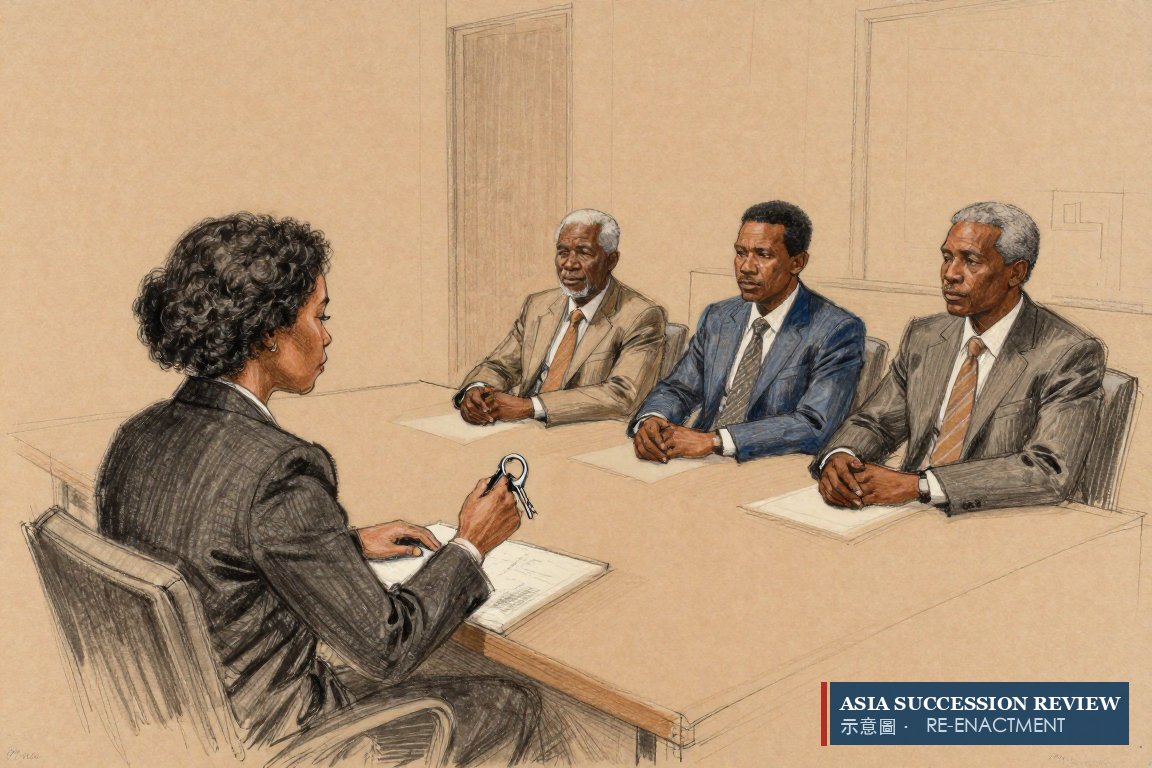
Nine-tenths of what the actor left is one company, and splitting its shares never settles who runs it
The second knot is the company. On the widow's own list of what was distributed, 100 shares of Chadwick Boseman, Inc., valued at $3,396,969, were about 89 per cent of the total. Dividing them closes the estate but not the question. Whoever runs the company decides the residuals, the image deals and the documentary.
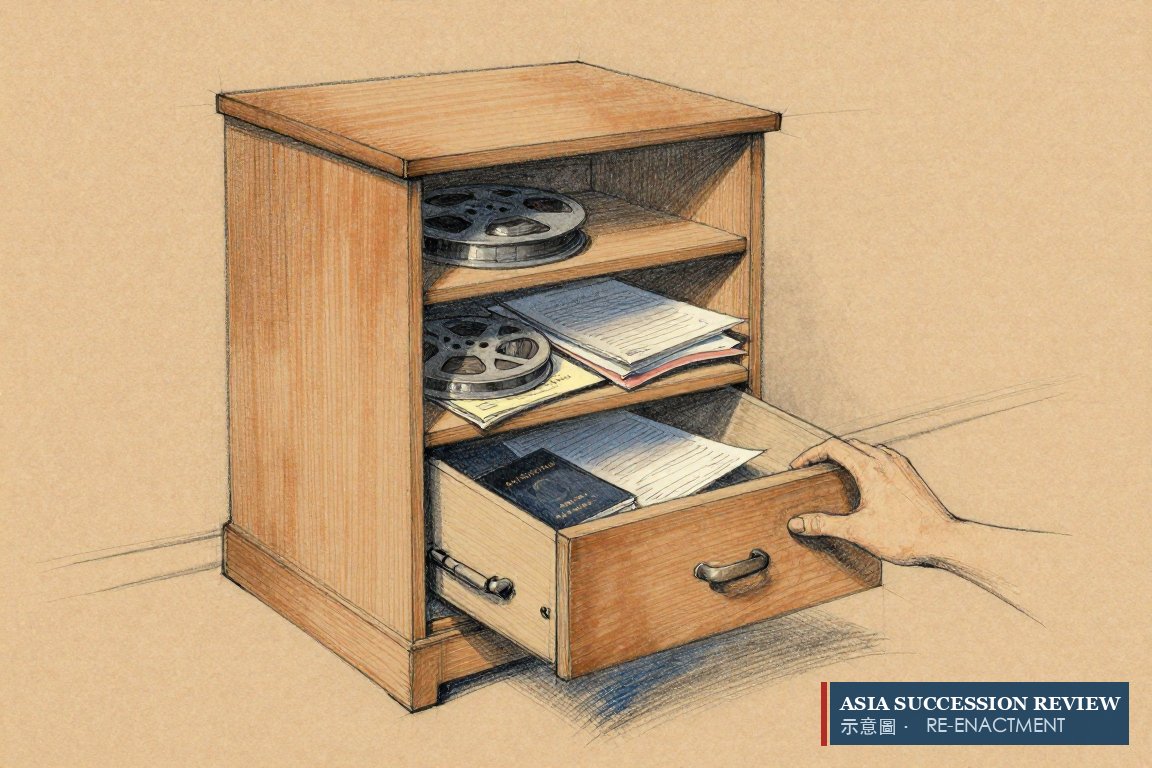
Split half and two quarters, the company gets one driver and two passengers, and the parents sue in probate
If the shares are split half and two quarters, a company with that register has one manager and two passengers unless its constitution says otherwise. The brothers' complaints about a chief-executive title and unapproved contracts are shareholder complaints, made in a probate court because that is the only room the family has.
Six years on, the family fights over $300,000, a $40,000 policy and 88 cents while the name keeps earning
The third knot is time. Residuals, royalties and likeness income arrive for decades, and an estate is built to close. Six years after the death the family is arguing about a $300,000 retirement account, a $40,000 policy and 88 cents, while the asset that matters, the name, earns under whoever holds the company pen.
The brothers inherit nothing while their parents live, yet they carry the family's fight to the front page
The brothers themselves inherit nothing while their parents are alive. They speak for them, which is how the brothers of a man who died young end up on the front page.
Singapore would have split Boseman's estate exactly as California did, half to his widow and a quarter to each parent. What changes the ending is who holds the pen: an executor named in a will who takes nothing, a company constitution that tells three owners how to decide, and accounts owed by a date rather than by a lawsuit.
A Singapore judge applying rule 4 gives the widow half and each parent a quarter, exactly as Los Angeles did
Start with the heirs, because Singapore changes nothing there. Section 7 of the Intestate Succession Act 1967, read on Singapore Statutes Online on 25 September 2026, gives a surviving spouse with no children but a living parent one half of the estate, and the parents the other half (rule 4). Two parents share their half equally (rule 5). Ledward, Leroy and Carolyn Boseman would have inherited half, a quarter and a quarter, as they did in California.
In Singapore too, brothers wait outside the door while their parents live, because rule 6 reaches siblings last
Rule 6 reaches brothers and sisters only if there is no spouse, no descendant and no parent. In Singapore, as in Los Angeles, Derrick and Kevin would have had no share of their own while their parents were alive.
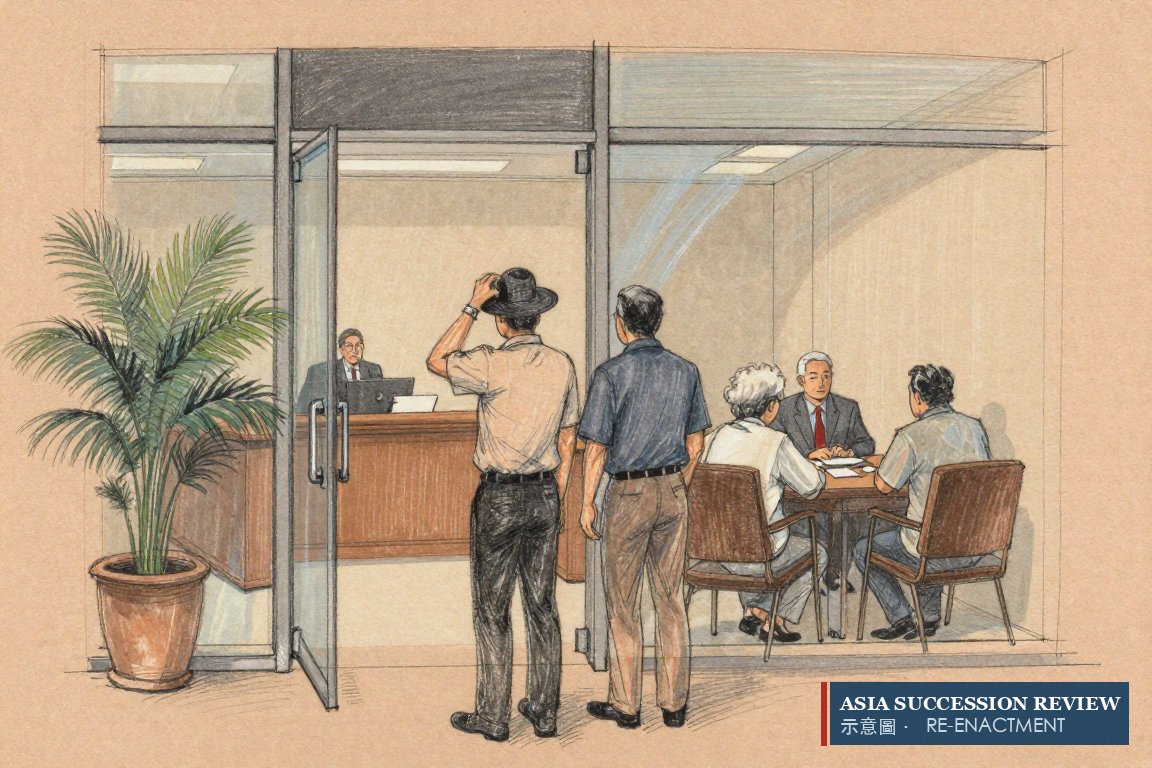
A Singapore court would likely give the widow the same grant, because the law names the widow first
The administrator would very likely have been the same person. Section 18(4) of the Probate and Administration Act 1934 allows letters of administration to be granted to 'the husband or widow or next of kin or any of them', and leaves it to the court's discretion to choose one or more. A widow who applies first and holds the largest share is the ordinary grantee here too.

Singapore makes the administrator sign a bond with two guarantors, which the court can hand to someone to sue on
What Singapore adds on paper is security. Under section 29(2) an administrator ordinarily gives a bond, with two sureties, in the sworn value of the estate. If the bond's condition is broken, section 31 lets the court assign it to a named person, who can sue on it for everyone interested in the estate.
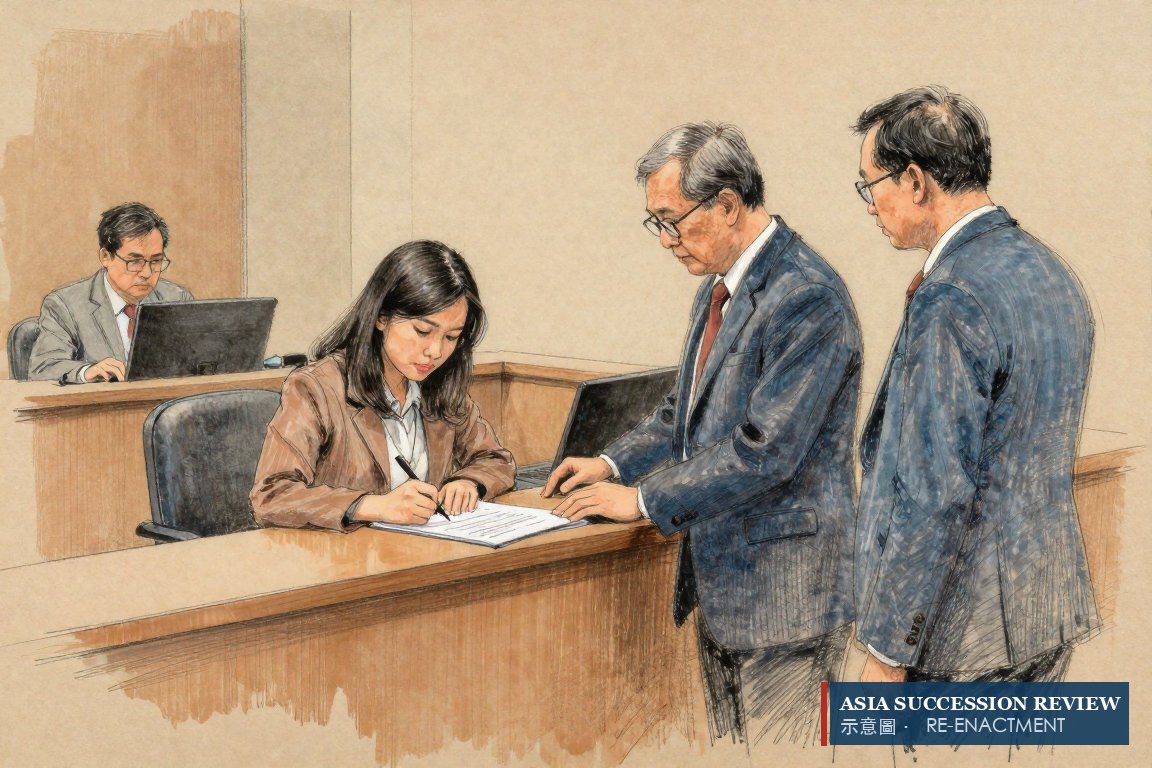
The bond protects the parents only if they ask at the start, because courts often waive it
The bond is weaker than it sounds. The court may dispense with sureties (s29(3)). They are usually dispensed with when the administrator takes the whole estate (s29(5)). And a grant from a Family Court carries no security at all unless an infant benefits or the court thinks fit (s29(8)). The parents' first protection is one they would have had to ask for when the grant was made, not six years later.
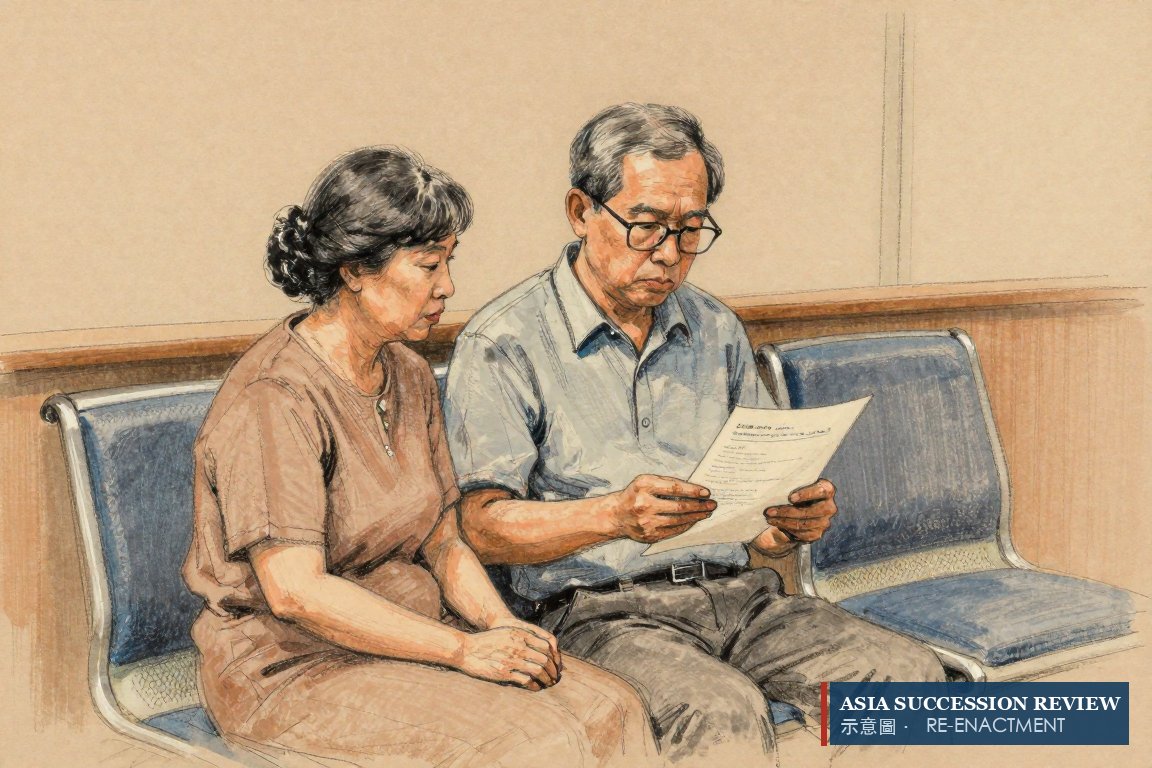
Singapore makes the administrator a trustee, so the widow's own half gives her no licence to delay the parents'
Once appointed, the widow would have held the estate as a trustee. Section 3 of the Trustees Act 1967 says 'trustee' includes a personal representative, and that the Act covers trustees who also have a beneficial interest. She would have owed the parents a trustee's duties over their share, and her own half would give her no licence to delay theirs.
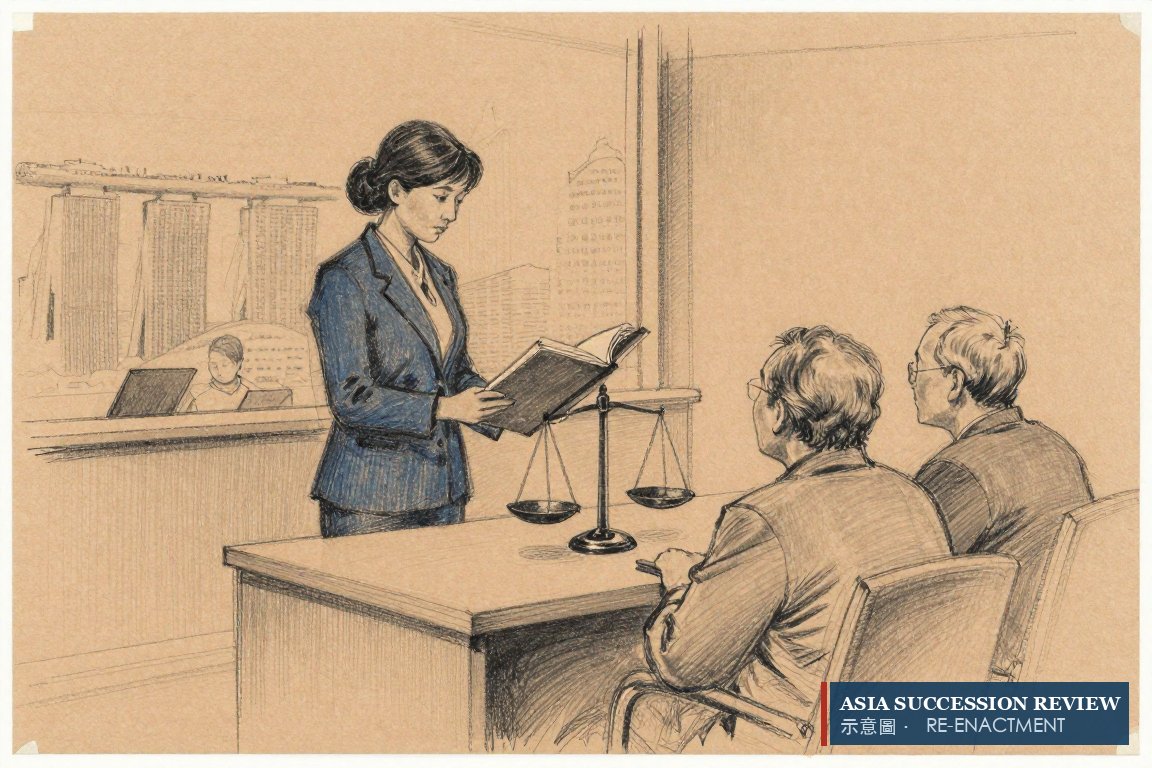
A Singapore judge can revoke the grant for any sufficient cause and cut the administrator's commission for poor conduct
Section 32 of the Probate and Administration Act lets the court revoke or amend any grant 'for any sufficient cause', which is the Singapore route to what the brothers are asking for. It is the counterpart of California Probate Code section 8502, whose grounds include mismanagement and 'wrongful or prolonged neglect'. Section 66 lets the court allow or refuse an administrator up to 5 per cent in commission, guided by its view of how the estate was run.
Six years on, the parents' Singapore claim is still in time, because an estate share allows twelve years
The clocks would still be running. Under section 23 of the Limitation Act 1959, a claim to a share of a deceased person's estate may be brought within 12 years of the date the right to receive it accrued. Section 22(2) allows 6 years for breach of trust, and section 22(1) sets no limit where a trustee holds trust property or has converted it to their own use. On either count, the parents' claim would be in time in Singapore today.
Heirs who receive shares on a death can go straight to the company court in Singapore and complain as shareholders
The company question would go to the right court. Section 216 of the Companies Act 1967 lets a member complain that the company is run oppressively or in disregard of their interests. Section 216(7) extends that to anyone to whom shares have passed 'by operation of law', which includes heirs whose shares came to them on a death.
The company court can rewrite how the firm is run, force a buy-out, or close it down
Under section 216(2) the court can regulate how the company is run in future, order one owner to buy out another, or wind the company up. The complaint about a self-appointed chief executive and unapproved contracts belongs there, not in a probate petition about an accounting.
One signed page and two witnesses let a man pick an executor who inherits nothing, so no heir rules alone
Now the documents that would have made most of this unnecessary. The cheapest is a will under section 6 of the Wills Act 1838: in writing, signed, and witnessed by two people present together. It lets the testator choose the executor. That can be someone who takes nothing, or the widow jointly with a professional, so that one heir never holds the pen alone over the others' shares.
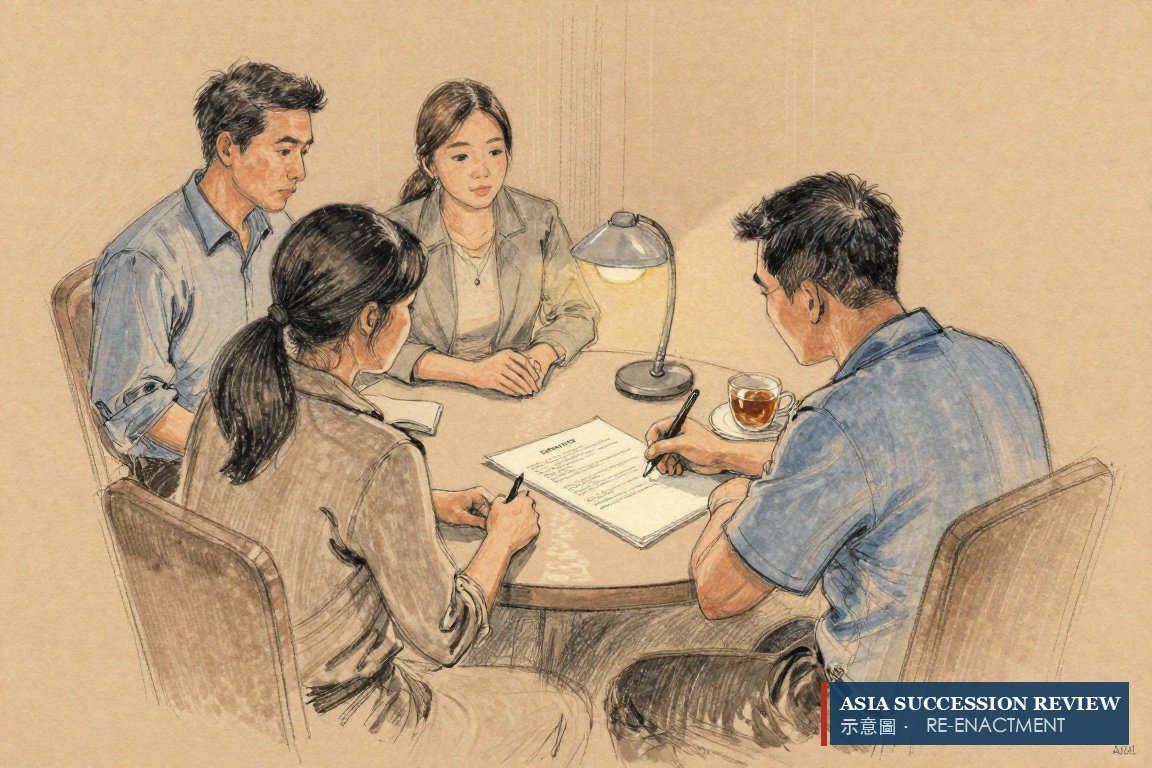
The actor kept four years of illness private, and a will could have been signed just as privately
Boseman knew of his illness from 2016, four years before his death, and kept it private. A will could have been signed privately too.

A founder who writes company rules while alive tells three heirs who licenses the name and who sees the accounts
The second document is the company's constitution, written while the founder is alive. If three heirs may one day own a company whose only asset is a name, the constitution can list the decisions that need their joint consent, such as licensing the name and likeness, contracts above a stated sum, and who holds the chief-executive title. It can promise each owner the accounts by a stated date, and fix a deadlock rule and a priced exit.
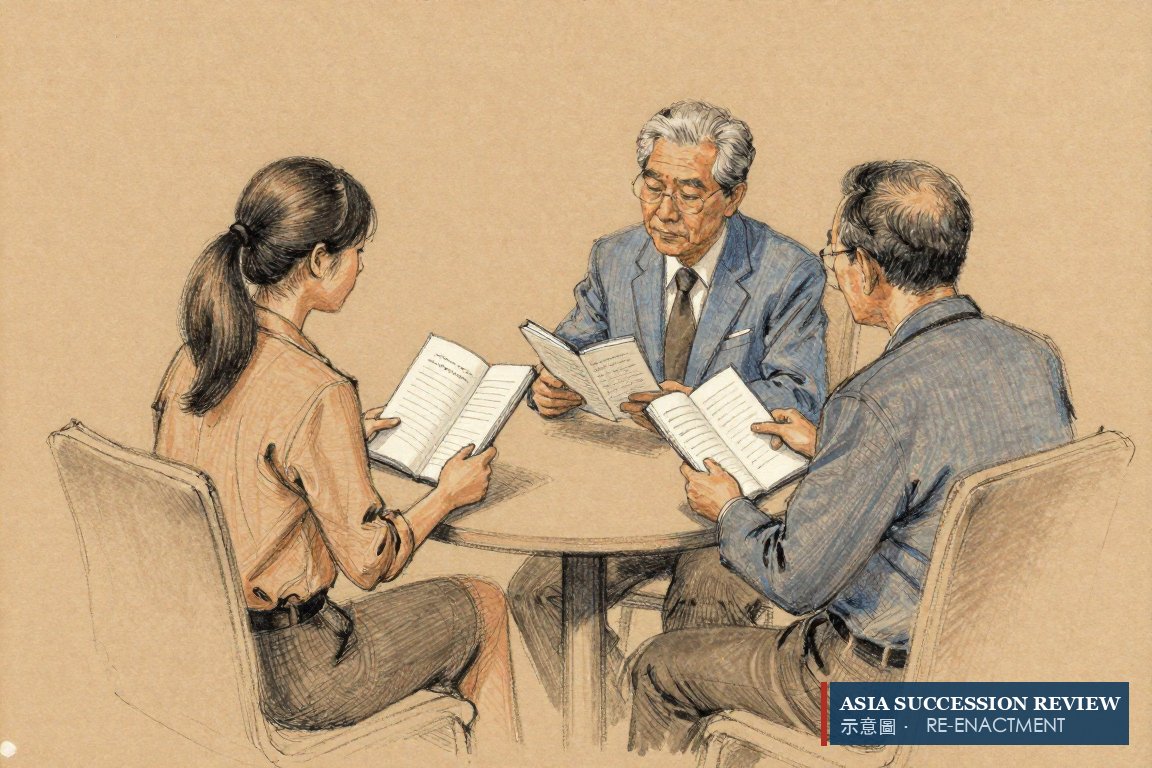
Clauses written by the founder bind whoever inherits the shares, and the court reads them before anything else
Those clauses bind whoever inherits the shares, and a court applying section 216 reads them first.
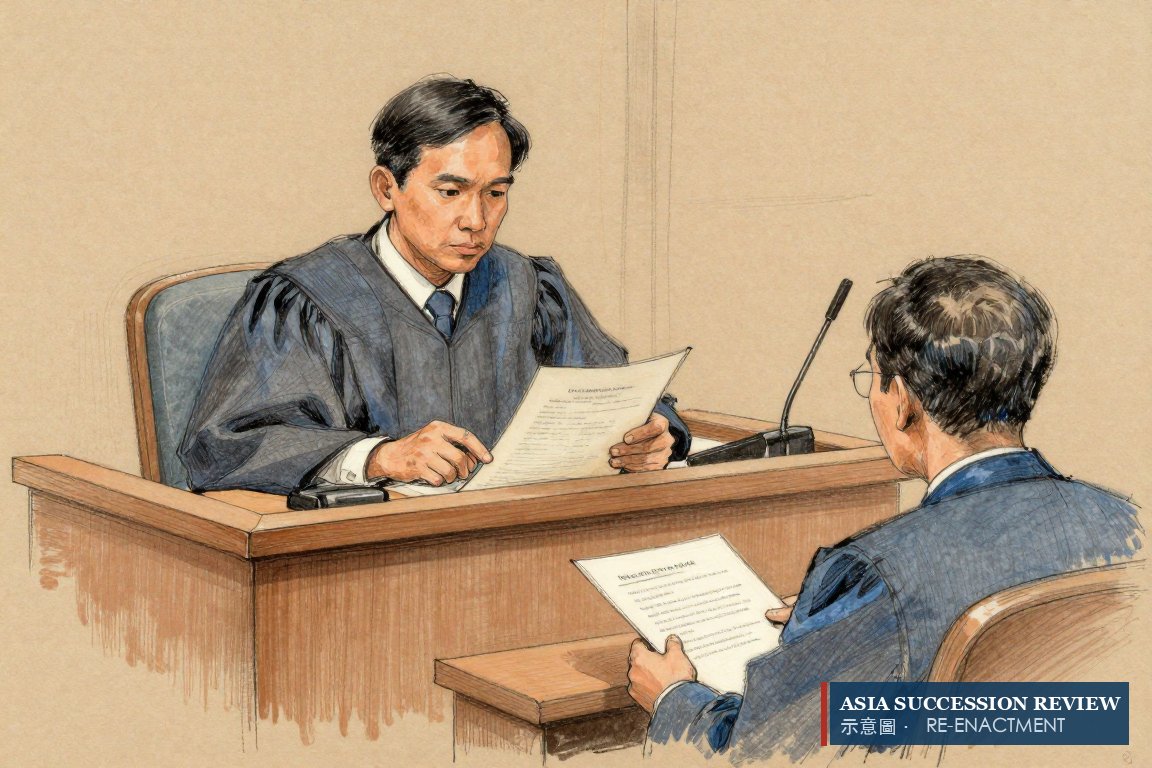
A founder who puts his company into a Singapore trust while alive leaves no heir holding another's money
The third document keeps the company out of the estate altogether. A founder who settles his shares during his lifetime into a Singapore-law trust, with a licensed trust company as trustee, leaves nothing for an administrator to hold. The deed can pay the widow and the parents in whatever proportions he chooses, owe them accounts by a stated date, and carry a letter of wishes about how the name is used. The shares never enter probate, and no heir ever holds another heir's money.
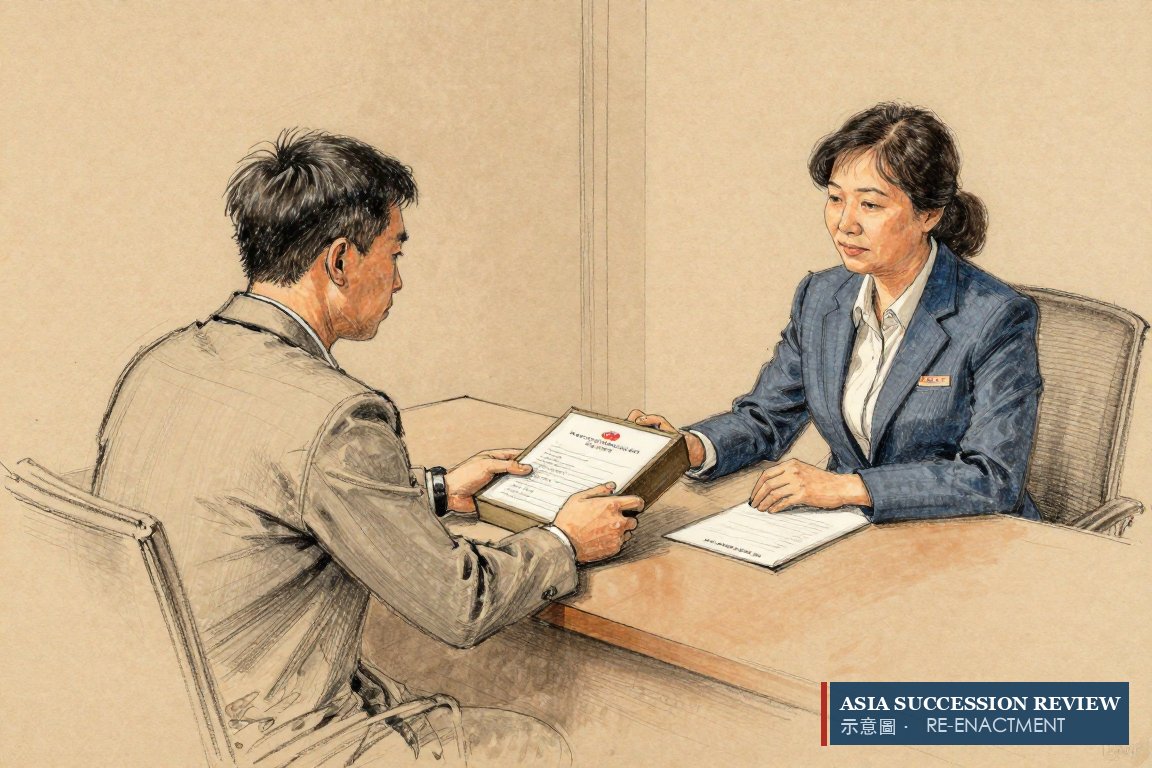
Neither filing has been read in the original, so where the two sides' numbers differ we report both
Now the honest limits. California law governs this estate, and no Singapore rule will be applied to it. Neither the petition nor the response has been read here in the original; both are known through the press accounts linked above. Where the two sides' numbers differ, such as the $40,000 policy, we report both and decide nothing. No hearing date has been reported.
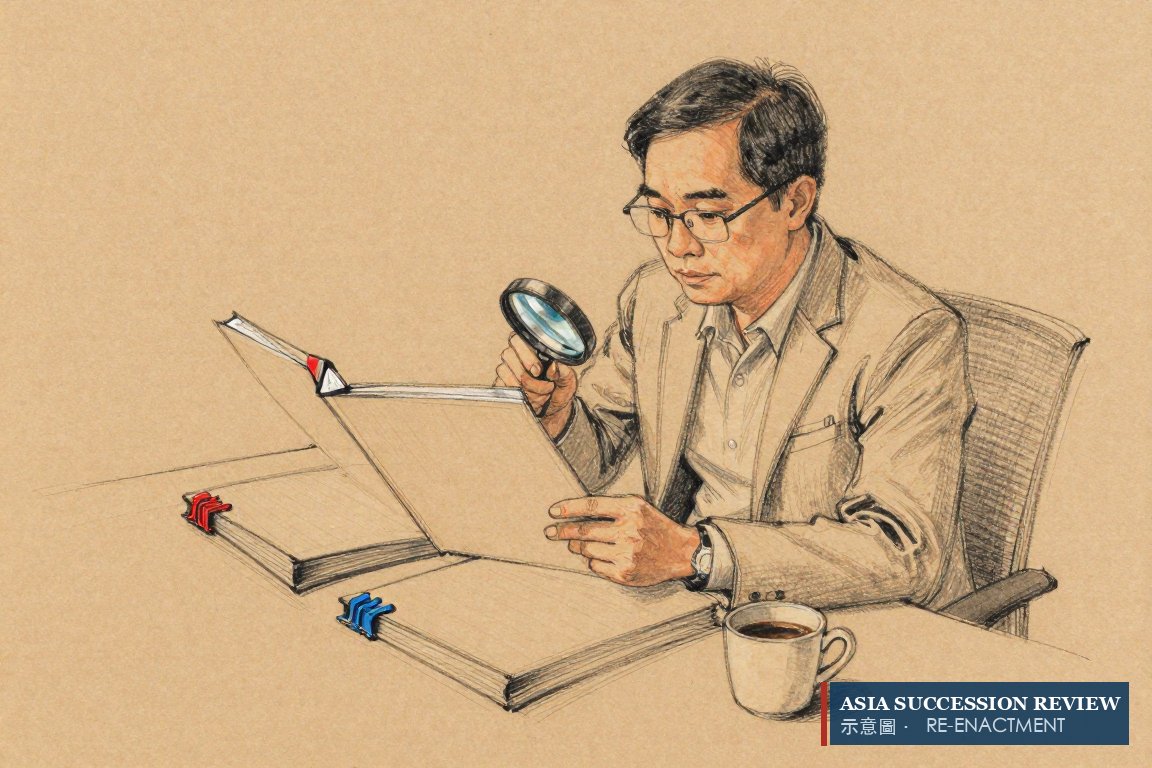
Singapore's edge is four checks, not a better rule: a revocable grant, a bond, trustee duties, a shareholder remedy
Singapore's advantage is not a better intestacy rule, since the rule reaches the same people. It is a court that can revoke the grant, a bond the parents could have demanded at the start, a trustee's duties that attach to the administrator, and a shareholder remedy that sends the company dispute to the company court.
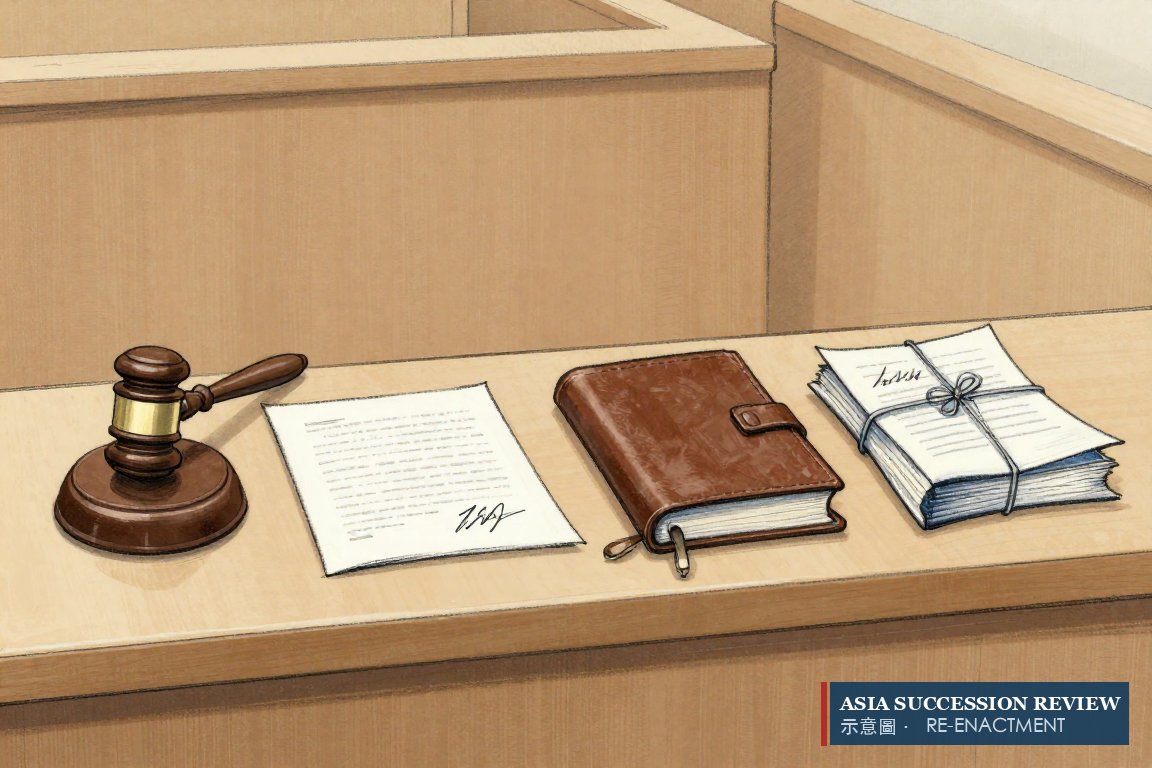
An heir asks four questions at the family dinner: will, executor, company rules, and who owes the accounts by when
For the reader outside the room, the questions are the same in any family, and each can be asked in front of everyone. Is there a will, and who is the executor? Does the executor inherit? If the family's most valuable asset is a company or a name, what does the constitution say when three heirs own it? And who owes accounts, to whom, and by what date?
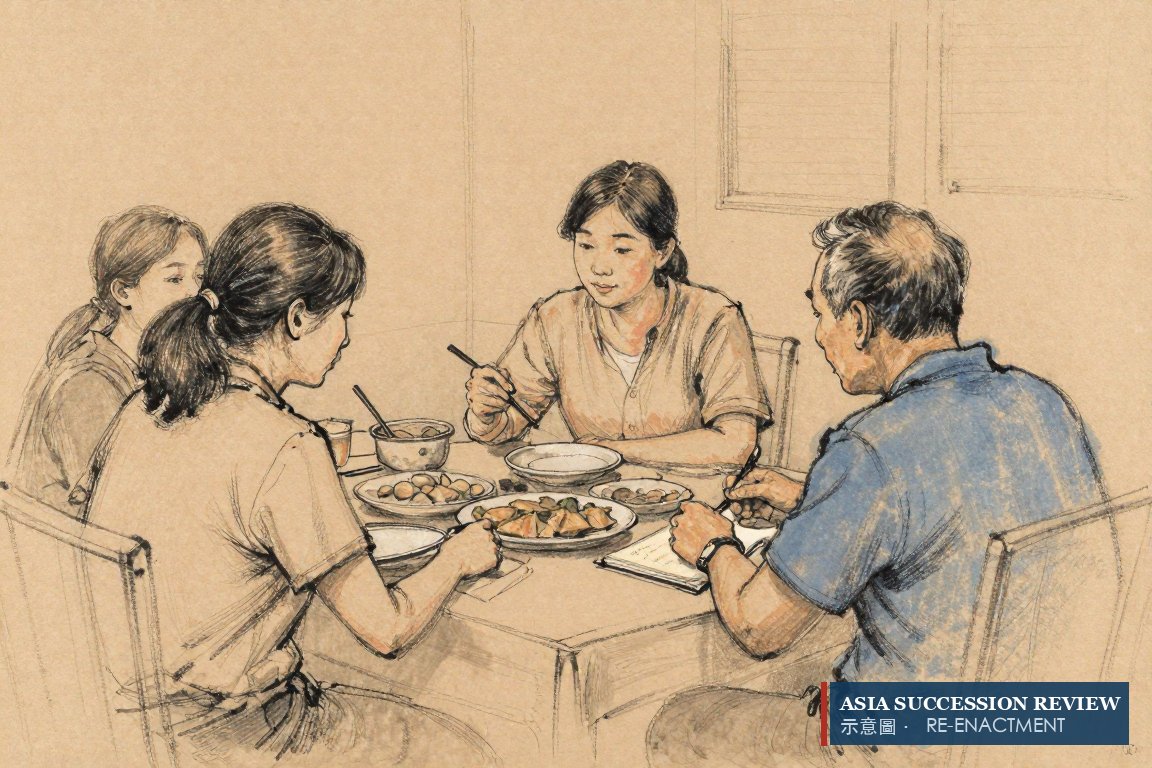
Taylor Simone Ledward, widow and administrator — half the estate under California law and under rule 4 of Singapore's Intestate Succession Act; in Singapore the same grant under s18, a trustee's duties under the Trustees Act s3, and removal only for sufficient cause under s32; under a will with a neutral executor, her half without the pen
Leroy and Carolyn Boseman, the parents — a quarter each in both systems; in Singapore a bond they could have asked for at the grant, twelve years to claim their shares, and standing under Companies Act s216(7) as shareholders by transmission
Derrick and Kevin Boseman, the brothers — no share in either system while their parents live (rule 6 reaches siblings only when there is no spouse, descendant or parent); a voice on their parents' behalf; $75,000 each in residuals, by the widow's account
Chadwick Boseman, Inc. — 100 shares valued at $3,396,969, about 89 per cent of the assets on the widow's list; in either system a company with three owners and no written rule for deciding; under a constitution or a lifetime trust, a named decision-maker and accounts by a stated date
The retirement account of about $300,000 — undistributed, which the widow says the brothers' earlier action caused and the petition counts among the unaccounted assets; a judge will decide
The reader whose family's value sits in one company — four questions: is there a will, does the executor inherit, what does the constitution say when heirs own the company together, and who owes accounts by what date
A counterfactual, not advice. The verified machinery is on the Singapore page; where your family stands is the briefing.
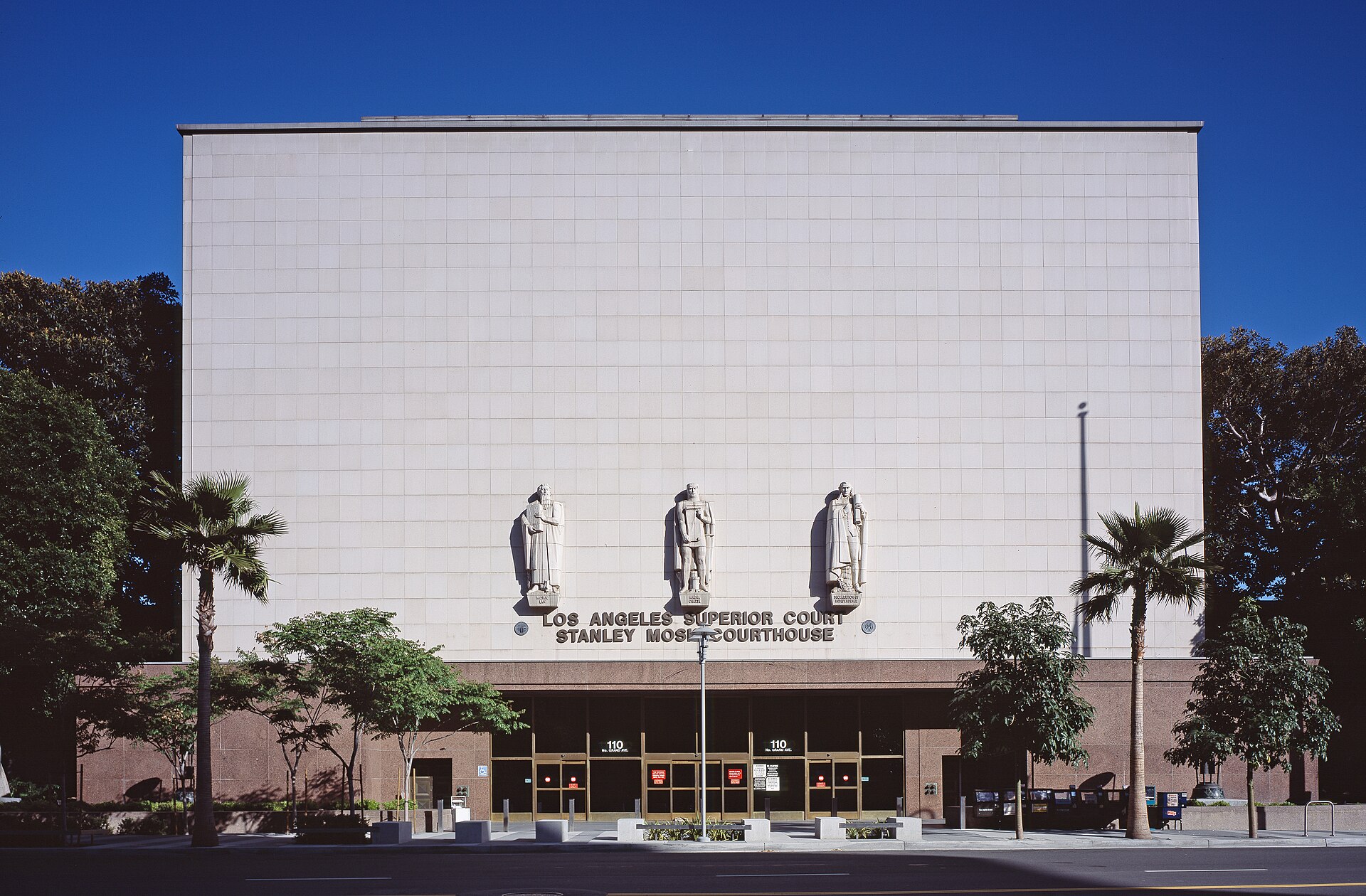
From the case files: When parents have no will: what the Intestate Succession Act does, and who gets to run the estate