Contest a will and strangers run the estate. Ask Genting's heirs
Lim Siew Kim, a daughter of Genting founder Lim Goh Tong, died in July 2022 with an estate put at RM1.6 billion and a will signed from a hospital bed 17 days after the one before it. Two daughters sued, and the court put two outsiders in charge. On 5 and 7 October 2026 her son asked the Kuala Lumpur High Court to remove them over more than RM2 million paid to lawyers. They deny enriching themselves. What if it had been Singapore?
Read this in: EN · 简体 · 繁體 · ไทย · ID
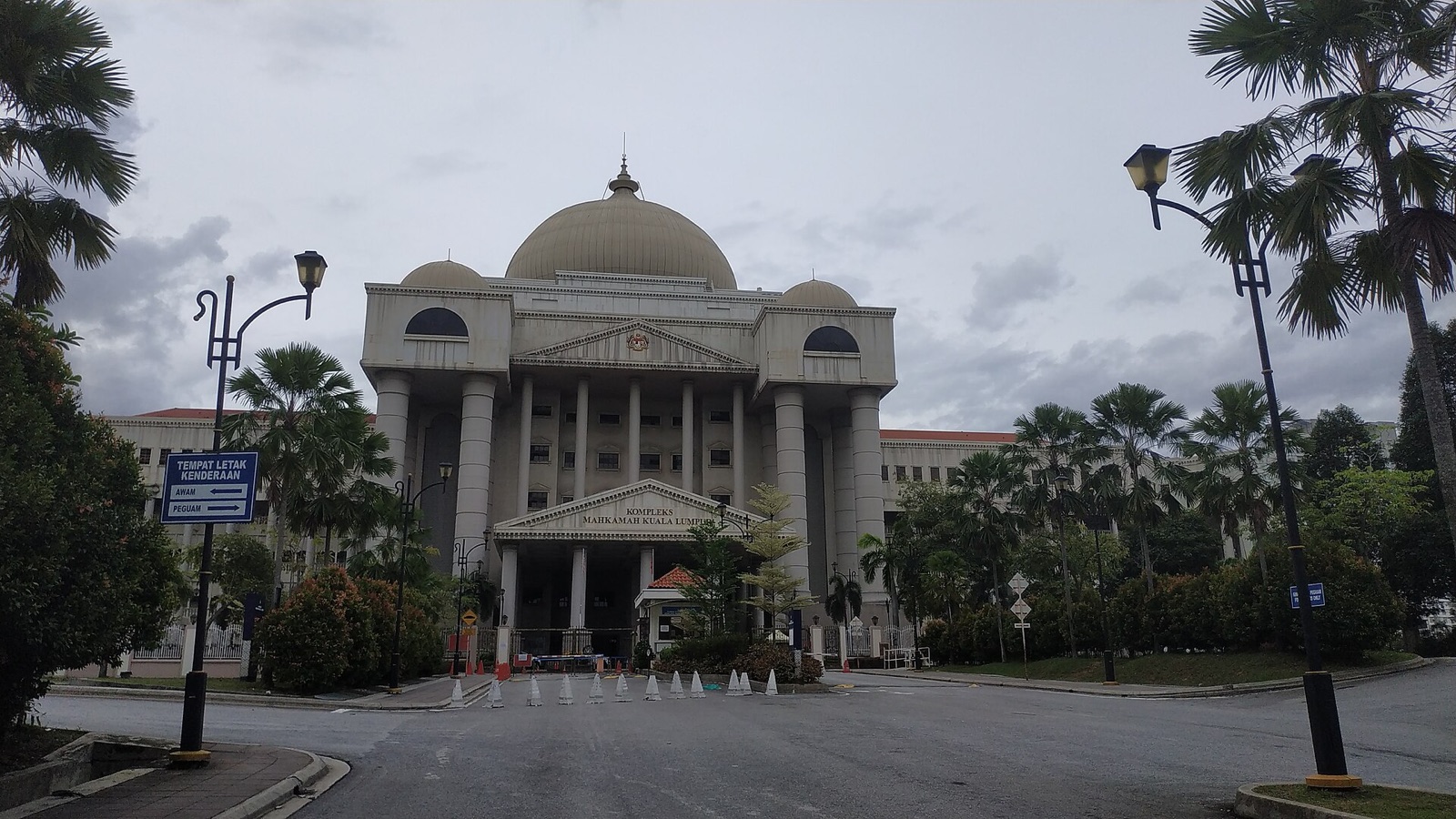
A Genting heiress signs her third will from a hospital bed, and leaves 70% of the residue to a foundation
Lim Siew Kim, a daughter of Genting founder Tan Sri Lim Goh Tong, died of cancer in July 2022, aged 73. Her estate is put at more than RM1.6 billion. She left three daughters, one son, Marcus Chan Jau Chwen, now 42, and three wills, dated 2 November 2021, 11 April 2022 and 28 April 2022. She signed the last from her bed in a private hospital in Kuala Lumpur, seventeen days after the second. It leaves more than 70% of the residue to the Dikim Foundation, which she set up with her late husband, Dick Chan Teik Huat, and 30% to Marcus.
Two daughters left RM900,000 and RM100,000 sue in 2023, and the court hands the estate to two outsiders
On 19 January 2023 two daughters, Chan T'shiao Li and Kimberly Chan T'shiao Miin, left RM900,000 and RM100,000, filed a probate suit against the 28 April will. They argue that stage 4 ovarian cancer left their mother without testamentary capacity, and they allege fraud. The defendants are the executors the will names, Malcolm Fernandez and Chan Mei Yee, with Marcus and Datuk Low Beng Choo, the lawyer who prepared it; she denies their claims. On 27 November 2023 the High Court appointed two administrators pendente lite, the lawyer Datuk S. Satharuban and Khoo Siew Kiat, to manage the estate until the will's validity is decided.
The son's counsel tells the Kuala Lumpur High Court the outsiders paid lawyers RM2 million without approval
Marcus now wants them removed. On 5 October 2026 his counsel, Datuk Kamarul Hisham Kamaruddin, told the High Court that the administrators had paid lawyers more than RM2 million without approval, including RM1.4 million and more than RM800,000 in 2024. That breached, he said, an earlier order that payments for debts other than Siew Kim's own be subject to the court's scrutiny. 'Scrutiny must mean the court looks at it before the payment is made,' he said. The test for removal, he argued, is a reasonable suspicion of misconduct or unsuitability.
The son lists more complaints, and since January 2026 an injunction stops the administrators acting at all
The other complaints: payments from individual accounts instead of the designated trust account; interference in companies linked to the estate; nearly paying RM4.73 million in assessments for Prominview Sdn Bhd, a liability he says belongs to a joint-venture partner; and private caveats and property valuations, although the administrators have no power to distribute or dispose of the assets. Since 23 January 2026 an ad interim injunction has barred the two from acting for the estate until the application is decided.
The administrators deny enriching themselves on 7 October, and four years on no judge has ruled on the will
The administrators answered on 7 October. According to the New Straits Times, the court heard that they had not enriched themselves through the legal fees paid from the estate. They are represented by B. Thangaraj. The judge, Datuk Mahazan Mat Taib, dismissed their preliminary objection to the application on 26 February 2026; the trial over the will opened before her on 23 February 2026. No ruling on removal and no judgment on the will has been reported. Every complaint above is an allegation, and none has yet been tested.
- 1New Straits Times (Dawn Chan), 5 Oct 2026: Genting founder's grandson seeks removal of late mother's RM1.6b estate administrators — appointment 27 Nov 2023; RM1.4m and over RM800,000 paid to lawyers in 2024; RM4.73m Prominview assessments; ad interim injunction 23 Jan; wills of 11 and 28 Apr 2022; probate suit 19 Jan 2023
- 2New Straits Times (Dawn Chan), 7 Oct 2026: Genting heiress' RM1.6bil estate: administrators deny enriching themselves through legal fees
- 3New Straits Times, 24 Feb 2026: Estate of Genting founder's daughter: RM1.6bil hearing begins — wills of 2 Nov 2021, 11 Apr 2022 and 28 Apr 2022; signed from a private-hospital bed; Dikim Foundation over 70% of the residue; son 30%; daughters RM900,000 and RM100,000; stage 4 ovarian cancer and fraud alleged
- 4Free Malaysia Today, 26 Feb 2026: Court quashes objection from administrators in Genting estate case (Mahazan Mat Taib J; removal application by a 30% residuary beneficiary)
- 5Probate and Administration Act 1934 s20 (letters of administration pending probate action: no power to distribute, under the court's control and direction), s29 (administration bond and sureties) and s32 (revocation of grant for any sufficient cause), read on Singapore Statutes Online 8 Oct 2026
- 6Re BKR [2015] SGCA 26 (Court of Appeal, 19 May 2015): a wealthy widow's decisions, including a 2010 trust, set aside for want of capacity
A family contests a will, and the estate it fights over pays the strangers the court puts in charge
A fight over a will does not pause an estate. It hands the estate to someone else. When a will's validity is in court, the executors it names cannot take charge, because the document that appoints them is the thing in dispute. The court fills the gap with administrators of its own choosing. They are professionals, they are paid, and their costs, including the lawyers they hire, come out of the estate the family is fighting over.
The son accuses the court's administrators, they deny it, and the family's money waits inside two disputes
That is the knot. The family loses control of the money at the moment it most needs to trust whoever holds it. Each branch then watches the stranger as closely as it watches the other branch. Here the son, who takes 30% of the residue under the disputed will, accuses the court's administrators of spending without permission, and they deny it. Since January the two have been barred from acting until the court rules on that dispute, which sits inside a second dispute that is still open.
A dying mother writes three wills in six months, and four years later her estate is still undistributed
The arithmetic belongs to the reader. Siew Kim died in July 2022. Four years and three months later, the validity of her will is undecided, and an administrator appointed while that question is open holds the estate rather than hands it out. The root sits in the six months before her death: three wills, the last two seventeen days apart, with large differences between them, the last signed from a hospital bed by a woman with stage 4 cancer. Whoever is right, that pattern is what invites the suit.
Singapore would put a contested estate in the same hands, a court-appointed administrator who cannot distribute; what a Singapore plan changes is how much of the fortune waits for that fight, and how hard the last will is to attack.
A Singapore family that contests a will also loses the estate to a court-chosen administrator who cannot distribute
Start with what Singapore would not change. Section 20 of the Probate and Administration Act 1934, read on Singapore Statutes Online on 8 October 2026, says that pending any probate action, letters of administration may be granted to such person as the court may appoint. That administrator is not empowered to distribute the estate and is subject to whatever control and direction the court thinks fit. Contest a will in Singapore, and the court, not the family, chooses who holds the estate until the case ends.
A Singapore beneficiary can ask the court to revoke a grant, and every administrator must first post a bond
The controls have the same shape too. The words of section 20 are wide enough for the court to require approval before payments, which is what Marcus says the Malaysian order did; that is our reading. Section 32 lets any grant be revoked or amended for any sufficient cause, which is the door a beneficiary knocks on to replace an administrator. Section 29 requires security, ordinarily a bond with two sureties in the amount at which the estate is sworn, which the court may reduce or dispense with. On a fortune this size it would almost certainly be reduced; that too is inference.
A parent who settles a trust while clearly capable keeps those assets out of any will fight
So the Singapore lesson is not about the courtroom. It is about what never reaches it. Assets a parent settles into a trust while her capacity is beyond question are no longer part of her estate. They are not frozen pending a grant, and the trustee goes on acting under the deed while any fight over the will runs. The proceeds of a life policy with a valid nomination are paid to the nominee without waiting for probate. The will then governs only what is left, and a fight over it holds up less.
A wealthy widow signs a trust in 2010, and Singapore's Court of Appeal sets it aside for incapacity in 2015
Timing is the whole of it. A trust signed in the same last weeks is no safer than a will. On 19 May 2015, in Re BKR [2015] SGCA 26, the Court of Appeal set aside decisions a wealthy widow had made in 2010, including a trust, because she lacked the capacity to make them. Two doctors had seen her around the signing. A structure is only as strong as the day on which it was made.
A parent who records capacity and reasons on the signing day makes a late will far harder to topple
Then the will itself. Three wills in six months, the last two seventeen days apart, during a terminal illness, is the pattern a capacity challenge is built on, in Singapore as in Malaysia. What protects a late will is evidence made on the day: a doctor briefed on what the will does and whom it favours, a written report before signing, an independent lawyer, no beneficiary in the room, and the reasons for any unequal share written down by the parent. None of this need have been missing here. The public record does not say.
Siew Kim's chosen executors end up as defendants, because a court never hands a disputed estate to them
Executors are the third lever, and they have a limit. A will can name an independent professional executor and a reserve, which helps in an ordinary estate. It does not help when the will itself is attacked, because a court will not hand a disputed estate to the person the disputed document appoints. Section 20 exists for exactly that gap. The executors Siew Kim chose are defendants in the suit, not managers of the estate.
Malaysian law governs this estate, the administrators deny every complaint, and no court has ruled on either dispute
Now the honest limits. Malaysian law governs this estate, and Malaysia has its own rules on administration pending suit, which we have not set out. Every complaint against the administrators is an allegation, they deny wrongdoing, and no ruling has been reported. The daughters' claims of incapacity and fraud are denied and untested. We have not seen the wills, the order on scrutiny of payments or the estate accounts. Whether the April 2022 will is valid is for the High Court, and nothing here suggests an answer.
A reader whose parent changes a will late asks four questions now, or inherits Genting's exposure without its fortune
For the reader whose parent has made, or is about to make, a late change to a will, the questions are short. If the will were challenged tomorrow, what would sit outside the estate? Who would hold the rest, and who would choose that person? Was capacity checked for this document, on this day, in writing? Are the reasons for any unequal share written down by the parent? If the answers are 'nothing', 'a stranger', 'no' and 'no', the family carries the Genting estate's exposure without a Genting fortune to absorb it.
Marcus Chan Jau Chwen, the son — 30% of the residue, properties in Jalan Ampang and shares in Mantap Awana Sdn Bhd under the disputed will, and an application to remove the administrators heard in February and October 2026 with no ruling yet
The Dikim Foundation, set up by Siew Kim and her late husband — more than 70% of the residue under the disputed will; the two daughters say its real purpose is unknown
Chan T'shiao Li and Kimberly Chan T'shiao Miin, two daughters — RM900,000 and RM100,000 under the April 2022 wills, and a probate suit filed on 19 January 2023 that is still undecided
Datuk S. Satharuban and Khoo Siew Kiat, the court's administrators — charge of the estate since 27 November 2023, barred from acting since 23 January 2026 pending the application; they deny enriching themselves through legal fees
The lawyers paid from the estate — more than RM2 million, according to the son's counsel, including RM1.4 million and more than RM800,000 in 2024
The same family in Singapore — the same court-appointed administrator under section 20 for whatever sits in the estate; much less in the estate if a trust and nominations were set up while capacity was beyond question
The reader whose parent is changing a will late — four questions: what sits outside the estate, who would hold the rest, was capacity checked on the day in writing, and are the reasons written down
A counterfactual, not advice. The verified machinery is on the Singapore page; where your family stands is the briefing.
From the case files: Genting: the settlement that never settles