Liechtenstein's 400-year family charter bends to a two-thirds vote
Europe's richest ruling family, owner of LGT and its CHF 412.6 billion under management, rewrote its house law on 11 August 2026: daughters now vote, the first-born of either sex will succeed, and the head's disciplinary rulings bite before any appeal. Two princes told the Financial Times they may sue. The charter says no constitution can touch it and hears its own appeals. What if the family had written it in Singapore?
Read this in: EN · 简体 · 繁體 · ไทย · ID
Two princes tell a newspaper they may sue the head of Europe's richest family, and the family paper confirms it the same night
On 18 September 2026 the Financial Times reported that members of the House of Liechtenstein are threatening to sue Hereditary Prince Alois, the country's de facto ruler, over reforms to the family's house law. The Liechtensteiner Vaterland, the principality's daily, confirmed the same evening that two members of the house had spoken to the newspaper anonymously, that some are 'considering a lawsuit', and that the princely house 'sees the matter differently'. The family is Europe's wealthiest monarchy by any published measure: it owns LGT, the private bank that reported CHF 412.6 billion under management on 30 June 2026, and the Liechtenstein Group's farms, forests and property.
The heir announces from the castle meadow on 15 August 2026 that daughters vote and the first-born of either sex succeeds
The reform itself was announced by the Hereditary Prince from the castle meadow on 15 August 2026, the national day. The press release of that morning records that the amendment had been adopted 'with the required two-thirds majority of all voting members'; his speech dated the count to 'Wednesday'. Two changes were named. All female descendants of the house now hold the same participation rights in house-law matters as the men. And the succession moves from male to absolute primogeniture: the first-born child, of either sex, will become heir and later Prince or Princess. The second change applies only to descendants of Alois's children not yet born.
The amendment of 11 August is gazetted on 3 September and in force on 4 September, rewriting almost every article of the 1993 law
The amendment is dated 11 August 2026, was published in the Landesgesetzblatt as LGBl 2026 Nr 300 on 3 September and came into force on 4 September. The consolidated text, read on the government's gesetze.li in the version of 4 September 2026, shows that it rewrote almost every article of the 1993 law, not two. A transitional provision confirms that the new succession rule 'is not to be applied to princesses by birth who were born before the entry into force'. The princess born in 1996, Alois's daughter, stays where she was.
The charter needs two-thirds of all voters to change, gives the head a veto, and tells the state to keep out
The house law is unlike any family constitution an Asian family has signed, and that is the point of reading it. Article 1 calls the house 'an autonomous family community formed and organised at the level of the constitution of the Principality'. Article 20 states that the constitution of Liechtenstein 'can neither alter nor repeal the house law', and that the same applies to the state's treaties. Article 21 reserves amendment to a motion of the Prince, the family council or ten per cent of voting members, adopted by 'a two-thirds majority of all voting members', with a two-month veto for the Prince, who must then table a counter-proposal.
One man holds head of state, head of family and chairman of the foundations that own LGT, and the law says the three cannot be split
Article 12 is where the money is. The Prince 'unites in himself the function of head of state, of Regierer of the princely house and of chairman of the Princely Foundations', three functions that 'cannot be separated'. As chairman of the foundations and 'beneficiary of the princely assets' he supports members in need 'as far as the income of the assets permits'. The family's companies, its own website says, are 'held by the Princely Foundations'. Members hold no shares. A vote on the house law is therefore a vote on who will chair the owner of LGT, and on whose discretion the family lives.

The head can strip a member of name, title, arms and vote for twenty years, and an unreturned ballot counts as a no
Article 8 gives the Prince the discipline. Where a member's conduct damages 'the reputation, honour or welfare of the house or of the Principality', the Prince opens proceedings and may impose a warning, suspension of the vote, withdrawal of title and arms, or withdrawal of name, title and arms, each for up to twenty years. Article 7 requires the Prince's consent to every marriage. Article 9 gives the whole body of voting members the last word, by secret circular ballot, and a ballot not returned within two months counts as an abstention, which under the two-thirds-of-all rule is a no.
The 1993 text gave the vote to the men; the 2026 text gives it to every adult born into the family and makes sanctions run before the appeal
What changed on 4 September can be read by putting the 1993 text, reprinted in full in the Liechtenstein-Institut's 2003 paper, beside the new one. In 1993 the vote belonged to 'the male members of the princely house'; it now belongs to every adult member by birth. In 1993 an appeal against a disciplinary ruling had suspensive effect; now appeals against a warning, a vote suspension or a withdrawal of title and arms have none, and the sanction runs while the appeal is heard. A new article 4(2) gives the Prince the power to set the principles for how members use their names, titles and arms.
A member who walks out now takes his unborn children with him, and the family council grows to five with the head barred from it
There is more in the fine print. A member who renounces membership or the succession now takes 'his descendants not yet born' with him; in 1993 a renunciation bound the renouncer alone. A new article 12(3) provides that where a guardian has been appointed for the heir at the moment the throne falls vacant, his right of succession 'expires and does not revive' even if the guardianship is lifted. The family council grows from three members to five, and the Prince, the heir and any regent may no longer sit on it; in 1993 it was chaired by the highest-ranking member in the line of succession.
An aggrieved member appeals to the family council within two months, then to the full family, and the text then points nowhere
Which of these the dissenting princes object to, the record does not say: the Financial Times' account is behind its paywall and the Vaterland's summary names no article. What both report is the threat of a lawsuit, and the house law's answer to that is written into it. A member aggrieved by a ruling of the Prince appeals to the family council within two months (article 11(8)); against the council he may seek revision from the full body of voting members (article 11(10)). Beyond that the text points nowhere.
A 2003 paper leaves open whether any state court can review the house, since the 1921 constitution hands succession to the house laws
Whether a state court may review an act of the house was the open question of the 2003 paper, which noted that Article 3 of the 1921 constitution simply leaves succession, majority and guardianship 'to the house laws'.
Hans-Adam II, who rebuilt the fortune from 1972, hands his powers to his eldest son in 2004 and the bank to his second
The family that wrote these rules is not new to long planning. Prince Hans-Adam II, born 14 February 1945, was given the reorganisation of the family's assets by his father in 1972, succeeded him on 13 November 1989, and on 15 August 2004 delegated his sovereign powers to Alois, his eldest son, to prepare him for the throne. His second son, Prince Max, chairs LGT. The house had, its website recorded in March 2021, just over 120 members. Alois told the Neue Zürcher Zeitung in 2019 that the family opposed reigning princesses 'for reasons of stability'; on 15 August 2026 he said the question had been discussed for decades.
- 1Financial Times, 18 Sep 2026 — 'Liechtenstein royals threaten lawsuit over dynasty reforms: feud in Europe's wealthiest monarchy deepens after Prince Alois tightens control over family members' (headline and standfirst; the article is paywalled and was not read)
- 2Liechtensteiner Vaterland, 18 Sep 2026 — 'Zwei Prinzen schiessen quer und kritisieren neues Hausgesetz': two members spoke to the FT anonymously; some are considering a lawsuit; the house sees it differently (paywalled beyond the standfirst)
- 3Fürstenhaus Liechtenstein, press release, 15 Aug 2026 — 'Fürstliches Haus Liechtenstein stärkt langfristige Ausrichtung': adopted with the required two-thirds of all voting members; equal participation rights for female descendants; absolute primogeniture for descendants of the Hereditary Prince's children not yet born (PDF)
- 4Hereditary Prince Alois, national-day address, 15 Aug 2026 — the amendment 'found the required two-thirds majority of the voting family members on Wednesday'; 'discussed in parts for decades within the family' (PDF)
- 5Hausgesetz des Fürstlichen Hauses Liechtenstein, LGBl 1993 Nr 100, consolidated version of 4 Sep 2026 incorporating the amendment of 11 Aug 2026 (LGBl 2026 Nr 300, published 3 Sep 2026, in force 4 Sep 2026) — arts 1, 4, 7, 8, 9, 11, 12, 13, 20, 21 and the transitional provision, read in full on gesetze.li (PDF)
- 6Wilfried Marxer, 'Das Hausgesetz des Fürstenhauses von Liechtenstein und dessen Verhältnis zur staatlichen Ordnung Liechtensteins', Beiträge Liechtenstein-Institut Nr 17/2003 — the 1993 text reprinted in full as an appendix (arts 1, 6, 8, 9, 10, 11, 12, 13, 18 compared); Article 3 of the 1921 constitution quoted; the open question of state-court review (PDF)
- 7Fürstenhaus Liechtenstein — 'Das Hausgesetz': the Prince as head of state, Regierer and chairman of the Princely Foundations; amendments need two-thirds of all voting members; neither the constitution nor treaties can alter it; Hans-Adam II delegated sovereign powers to Alois on 15 Aug 2004
- 8Fürstenhaus Liechtenstein — 'Das Fürstenhaus als Unternehmer': the group of companies formed by Hans-Adam II from the 1970s is held by the Princely Foundations; LGT described as the largest private-banking and asset-management group fully owned and run by one family
- 9Fürstenhaus Liechtenstein — biography of Prince Hans-Adam II: born 14 Feb 1945; entrusted with the reorganisation of the family assets in 1972; succeeded 13 Nov 1989; four children (Alois 1968, Maximilian 1969, Constantin 1972, Tatjana 1973)
- 10Fürstenhaus Liechtenstein — biography of Hereditary Prince Alois: deputy to the Prince since 15 Aug 2004 under Article 13bis of the constitution; four children (Joseph Wenzel 1995, Marie Caroline 1996, Georg 1999, Nikolaus 2000)
- 11LGT, 20 Aug 2026 — half-year results: 'owned by the Princely Family of Liechtenstein'; assets under management CHF 412.6 billion at 30 June 2026; group profit CHF 281.6 million; net new assets CHF 12.3 billion
- 12LGT — 'Our owner': Prince Max von und zu Liechtenstein, Chairman LGT; the family's companies from agriculture and forestry to financial institutions
- 13SRF, 15 Aug 2026 — the house had 'just over 120 members' in March 2021 per its website; Alois's 2019 NZZ interview opposing reigning princesses 'for reasons of stability'
- 14Companies Act 1967 s26 (constitution altered by special resolution) and s26A (entrenching provisions: inserted or removed only if all members agree; may require a majority greater than 75% or other specified conditions) — Singapore Statutes Online
- 15Companies Act 1967 s39 (a registered constitution binds the company and its members as if signed and sealed by each) and s184 (special resolution: not less than three-fourths of members who vote) — Singapore Statutes Online
- 16Companies Act 1967 s216 (a member may apply where a resolution 'unfairly discriminates against or is otherwise prejudicial to' a member; the court may cancel or vary any resolution) — Singapore Statutes Online
- 17Arbitration Act 2001 s4 (an arbitration agreement must be in writing; may be a clause in a contract or a separate agreement) and s6 (the court may stay proceedings brought in breach of it) — Singapore Statutes Online
The charter has three locks, and the man who proposed the reform holds the key to the second while the third keeps the courts out
A family constitution is a promise made by the people who signed it to people not yet born, and the only clause that decides whether the promise holds is the one that says how it can be changed. Liechtenstein's has three locks. Amendment needs two-thirds of all voting members, not of those who vote, so silence counts against it. The Prince may veto anything he did not propose. And the state may not touch it. The August reform passed the first lock, was proposed by the man who holds the second, and now runs into the third: the charter the dissenters want a court to read forbids the court.
The old electorate votes to add every adult daughter to the roll, and the dissenters lose the arithmetic of every vote to come
The second knot is the roll. The reform did not only change the rules; it changed who votes on the rules. Every adult princess by birth now counts in the denominator of every future two-thirds, and the ballot that added them was cast by the electorate that existed before. That is how every family charter is amended in practice: the sitting majority rewrites the roll, and the next majority is a different set of people. The princes who object did not lose a vote. They lost the arithmetic of every vote to come.
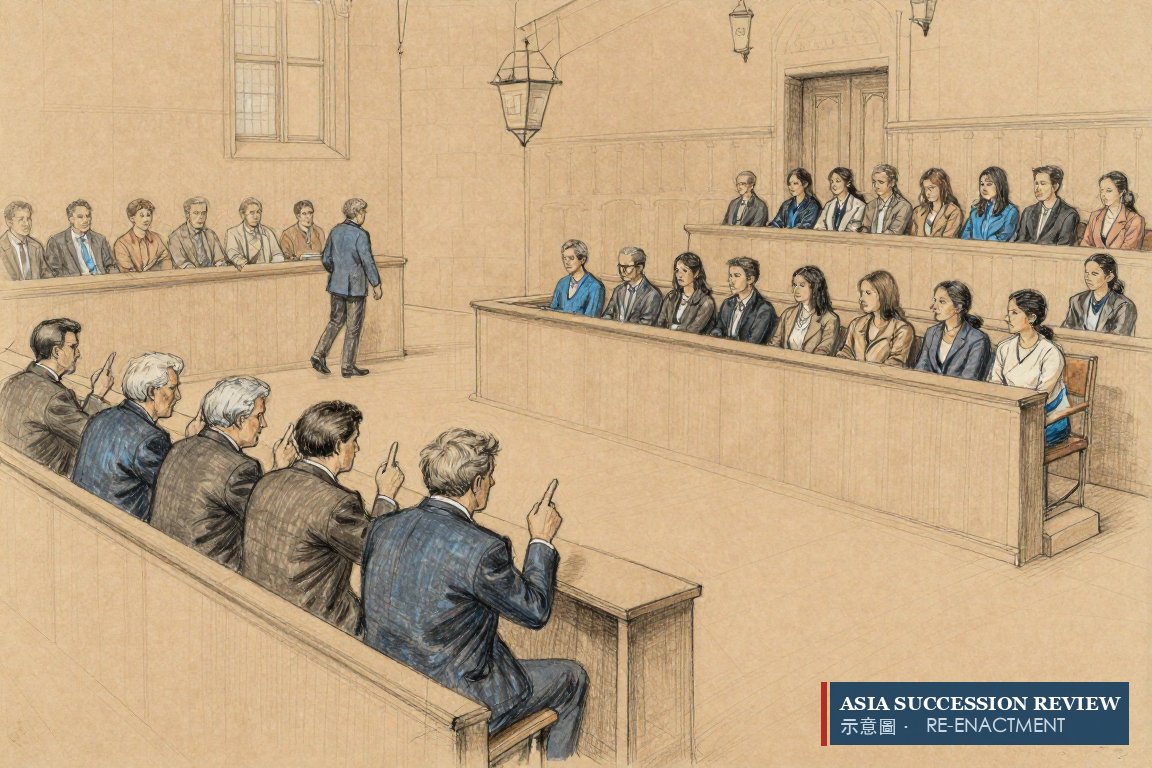
Since 4 September the head's sanction bites while the appeal waits, in a family that lives on money he distributes at his discretion
The third knot is enforcement. Since 4 September the head's sanctions bite while the appeal is pending, and the appeal climbs a ladder that ends inside the family, in a body he chairs. In a house where the assets sit in foundations he chairs by birth order and are distributed at his discretion 'as far as the income permits', that is not a small change. A member who loses his vote for twenty years does not lose money the law can count; he loses standing in the only room where money is decided.
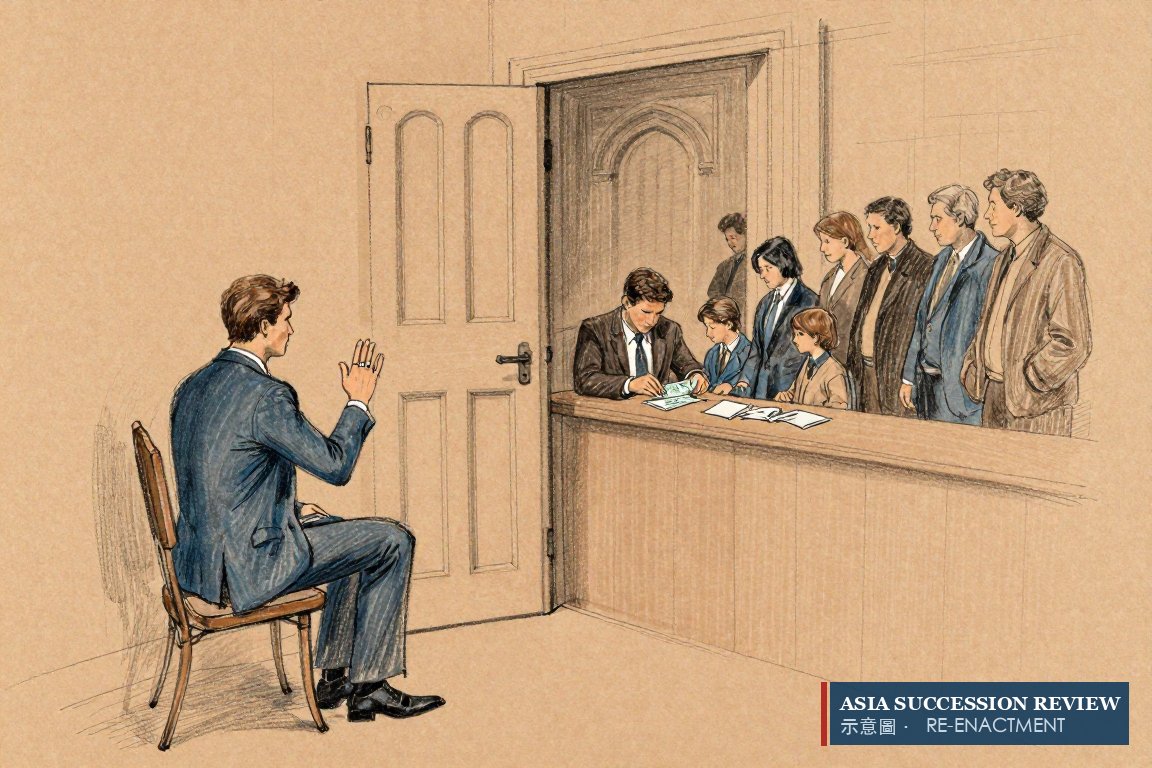
Asian charters say the same three things in gentler words, and Liechtenstein took 33 years to be asked whether its charter is law or a letter
None of this is exotic. Family constitutions drafted across Asia in the last decade say the same three things in gentler language: a family council; two-thirds to amend; disputes resolved within the family. Liechtenstein has run that model for thirty-three years and reached its first contested amendment. The question its dissenters are now asking is the question every Asian charter will eventually be asked by its first loser: is this document law, or is it a letter?

Singapore would not let a family charter place itself above the courts; it would make the charter bind by writing it into the holding company's constitution and the trust deed, entrench the clauses that matter so that only unanimity can unlock them, and name the referee in writing, so that the appeal ladder ends outside the family room instead of inside it.
Singapore refuses a charter above the courts, but a rule written into the registered constitution binds every member as if he signed it
Start with what Singapore refuses. No private document can declare, as article 20 of the house law does, that the state's constitution cannot alter it. A family charter here is either a contract or a letter, and the difference is where it sits. Section 39(1) of the Companies Act 1967, read on Singapore Statutes Online on 20 September 2026, provides that a registered constitution 'binds the company and the members thereof to the same extent as if it respectively had been signed and sealed by each member'. Rules inside the holding company's constitution, or inside a trust deed, bind. Rules in a framed charter on the boardroom wall bind nobody.
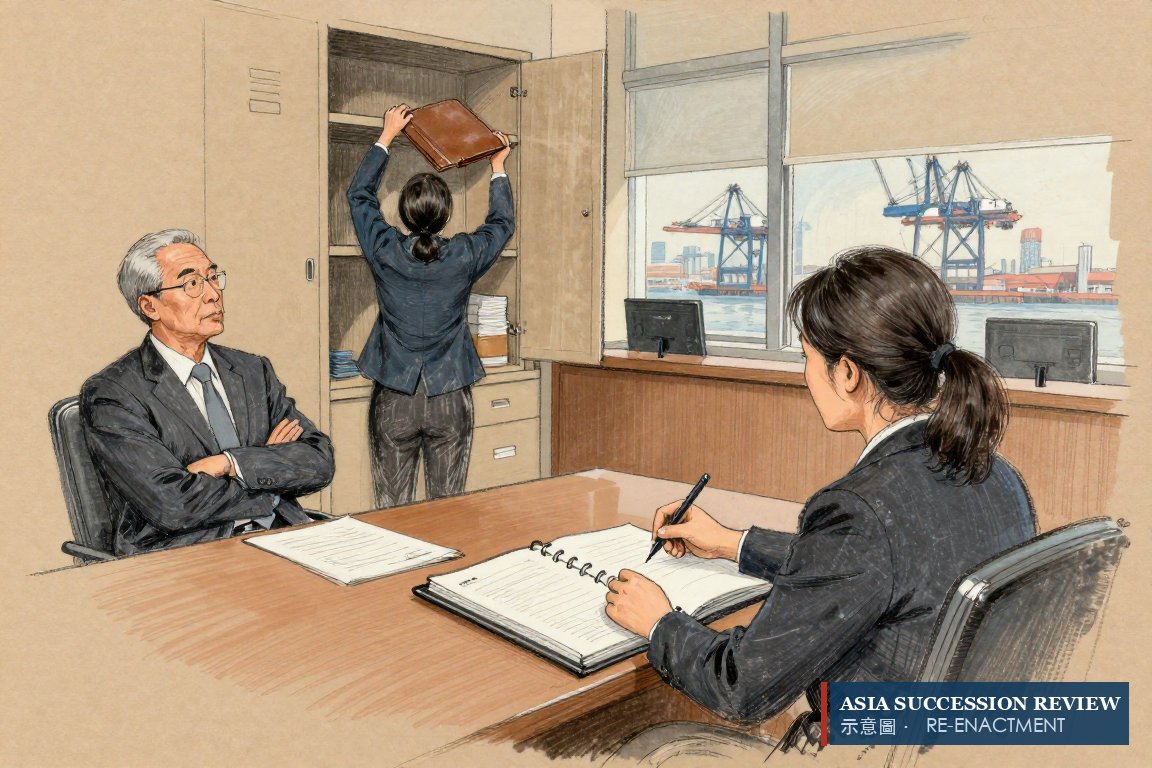
A special resolution takes three-quarters of those who vote, a lower lock than Vaduz, so a family that wants the Liechtenstein lock reaches for section 26A
So the first thing a Singapore drafter does with Liechtenstein's Article 21 is move it into the constitution. Section 26(1) lets a constitution be altered by special resolution, which section 184(1) defines as 'not less than three-fourths of such members as, being entitled to do so, vote'. That is a lower lock than Vaduz: three-quarters of those voting, where an abstention is not a no. A family that wants the Liechtenstein lock, or a stronger one, uses section 26A.

Section 26A lets a family entrench a clause so only unanimity can remove it, and no one holding two-thirds can pick that lock
Section 26A allows an 'entrenching provision': a clause that specified provisions of the constitution may not be altered 'except by a resolution passed by a specified majority greater than 75%' or 'where other specified conditions are met'. It may be included when the company is formed, or inserted later 'only if all the members of the company agree', and 'may be removed or altered only if all the members of the company agree'. Written that way, a family's two-thirds-of-all-members rule, or a rule that each branch must consent, is enforced by the courts the house law excludes, and nobody holding two-thirds can pick the lock.
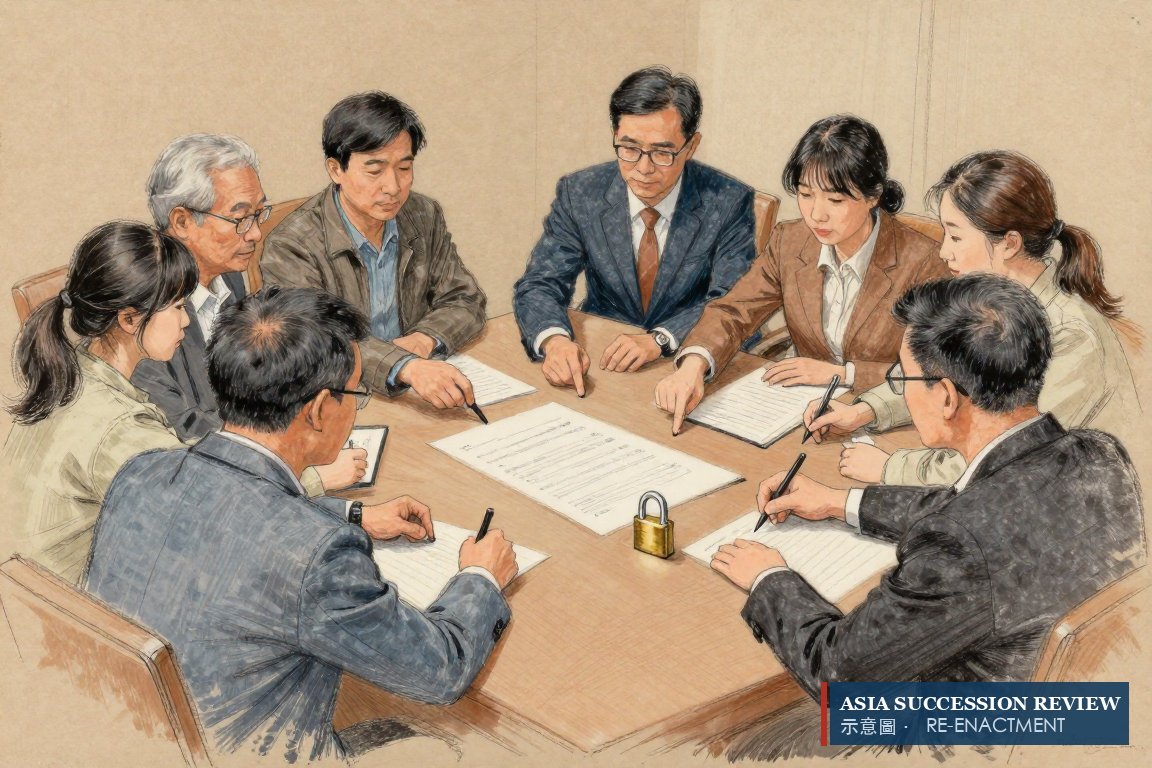
In Singapore the roll is the share register, so a father gives daughters the vote with shares, and no head can add or strike a voter by decree
Then the roll. In Liechtenstein the head and a two-thirds majority changed who votes. In Singapore the roll is the register of members, and it changes only by transfer or issue of shares under the constitution's own rules. A family that wants daughters to vote gives them shares, or settles the shares on a trust whose deed says who instructs the trustee. What the head cannot do is add or remove voters by decree, and a member who finds himself diluted has section 216, under which the court may cancel or vary any resolution that 'unfairly discriminates against or is otherwise prejudicial to' a member.
Singapore separates the three-in-one office by design, and a deed that gives the eldest line a seat for life also says how it is taken away
The three-in-one office is the next thing to separate. Article 12(4) makes the Prince, by birth order, head of state, head of the family and chairman of the foundations that own everything, and says the three 'cannot be separated'. Singapore's instruments separate them by design: the chairman of the board is named by the constitution, the trustee and any protector by the deed, the head of the family council by the charter. A deed may give the eldest of the eldest line the protector's seat for life, and Singapore law will honour that, but the same deed will say how a protector is removed and by whom.

A Singapore charter may suspend or expel, but section 216 lets any member ask a judge to cancel the resolution that did it
Discipline is where the two systems part most sharply. Article 8 lets the head strip a member of name, title, arms and vote for up to twenty years, and since 4 September the first three sanctions run before the appeal is heard. A Singapore constitution or shareholders' agreement may contain leaver clauses, compulsory transfers and suspensions of rights, and courts enforce them; but section 216 sits above them all. A member treated in a manner 'oppressive' or 'in disregard of his interests' may apply, and the court may 'cancel or vary any transaction or resolution'. The ladder always has a rung outside the family room.
An arbitration clause keeps the family fight private and the court will stay a lawsuit, but the award binds because the state stands behind it
That does not mean the family must litigate in public. Liechtenstein keeps disputes inside by making the family the court; Singapore keeps them private by naming a referee outside it. Section 4 of the Arbitration Act 2001 asks only that an arbitration agreement be in writing, as 'an arbitration clause in a contract' or 'a separate agreement'. Section 6 lets a party stay court proceedings brought in breach of it, if there is no sufficient reason the matter should not go to arbitration and the applicant is ready to arbitrate. Confidential, enforceable, and not sovereign: the award binds because the state stands behind it, not because the family says so.
A Singapore trust moves the head's discretion to a trustee bound by a deed, and a beneficiary can only be excluded by the power the deed itself contains
The money follows the same logic. Article 12(7) leaves support for members in need to the head's discretion and the foundations' income. A Singapore family trust makes that discretion the trustee's, exercised under a deed and a letter of wishes, with the trustee accountable to the beneficiaries and, if it comes to it, to the court. A beneficiary cannot be 'disciplined' out of the deed by having his name withdrawn; he can only be excluded by a power the deed itself contains, exercised by the person the deed names, on the terms the deed states. That is a narrower power than the Prince's, and a more predictable one.

Singapore has no throne and no house laws, LGT is untouched with its CHF 412.6 billion, and the lawsuit is a threat, not a filing
Now the honest limits, which are large. The Hausgesetz is a constitutional-level instrument of a sovereign house; Singapore has no monarchy, no house laws, and no throne to succeed to. LGT is untouched by any of this: it is owned by the Princely Foundations, whose chairman is whoever the house law makes Prince, and CHF 412.6 billion will be managed on Monday as it was on Friday. The Financial Times' account of which changes drew the objections is behind its paywall; the lawsuit is a threat, not a filing; and no Singapore instrument has anything to say to a court in Vaduz, if one is ever asked.
Every charter drafted this year has an amendment clause, a roll and a head, and each must answer whether silence counts as no
What travels is the diagnosis, because every family constitution drafted this year in Singapore, Jakarta, Bangkok or Taipei has the same three parts: an amendment clause, a voting roll and a head. Liechtenstein shows the question to ask of each. Is the amendment majority counted against all members or those who vote, and does silence count as no? Can the head veto, and can he change the roll? Does the charter name a referee outside the family, in a clause a court will enforce? A charter that answers 'two-thirds of all, yes, and no' is Liechtenstein's, which took thirty-three years to reach its first contested amendment.
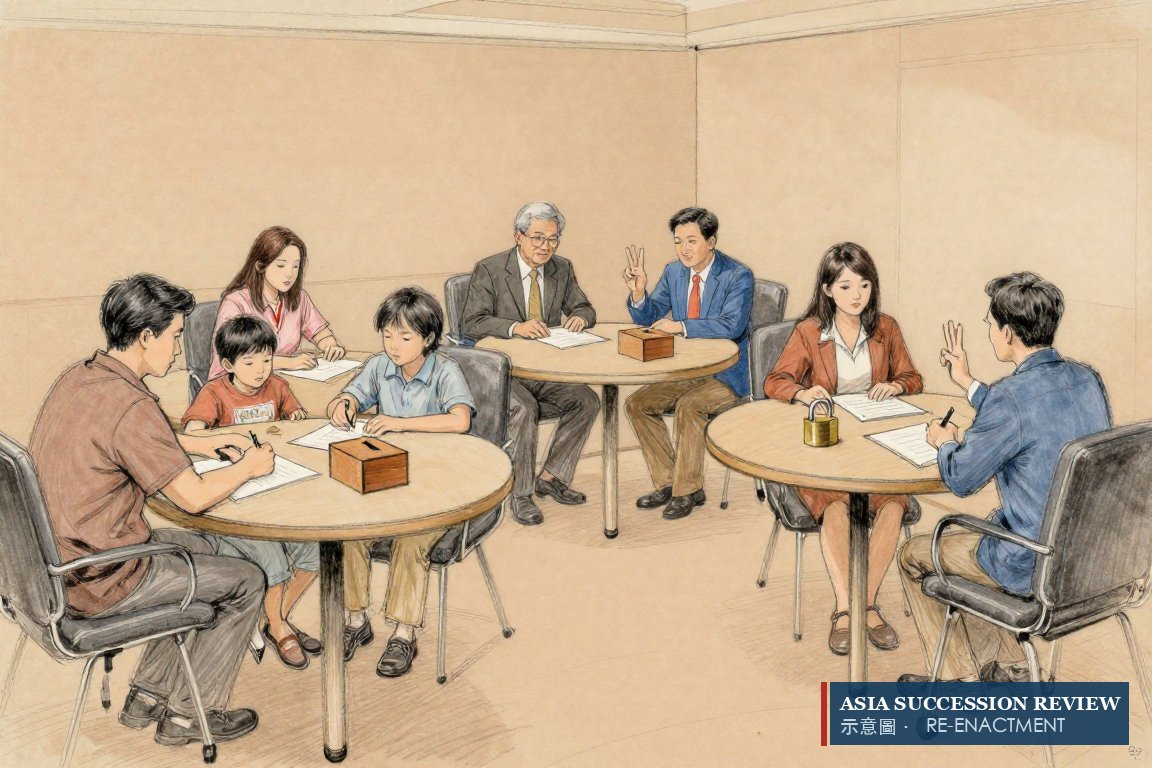
The heir outside the room asks where the charter sits, who counts, who can strike a voter and where the referee is, before the day it is used against her
For the person outside the room, the list is short and can be asked in front of the family. Is our charter inside the company's constitution or the trust deed, or is it a standalone document? Does its amendment clause count all of us or only those who turn up? Can one person add or remove a voter? Is there an arbitration clause, and where does it sit? Wanting to know the answers is stewardship, not rebellion. The princes who went to the Financial Times found out what their charter was on the day it was used against them; the point of asking now is not to be them.
Hereditary Prince Alois, who proposed the reform — a house law rewritten by two-thirds of all voting members, a veto over any amendment he did not propose, sanctions that run before appeal, and the chairmanship of the foundations that own LGT still tied by birth order to the throne; under a Singapore constitution, the same chairmanship named in a document a court can read
The two princes who spoke to the Financial Times — a threat of a lawsuit against a charter that says no state instrument can alter it and whose appeal ladder ends in a body the head chairs; under Singapore's section 216 and an arbitration clause, a referee outside the room and an award the state enforces
The daughters of the house — for the first time a vote in house-law matters, and, for those not yet born to Alois's children, a place in the succession; under a Singapore register, the same vote by holding shares or by a deed that names them
Princess Marie Caroline, born 1996 — nothing: the transitional provision keeps princesses born before 4 September 2026 out of the new rule; under a Singapore deed, whatever the deed says, and the deed would have to say it
LGT and its clients — no change at all: the bank is owned by foundations whose chairman the house law names, and CHF 412.6 billion is managed on Monday as on Friday
The reader drafting a family charter — three questions: whether the amending majority counts all members or those who vote; whether the head can change the roll or veto; and whether the referee is named outside the family and written where a court will enforce him
A counterfactual, not advice. The verified machinery is on the Singapore page; where your family stands is the briefing.
From the case files: Sun Hung Kai: the trust held the company; it could not hold the brothers