Ray-Ban's €40bn estate is still open four years on, over a 1% gift
Leonardo Del Vecchio put almost everything into one holding company in eight equal parts, and left a few gifts outside it. On 12 October 2026 his son Leonardo Maria said the €40 billion inheritance is held up by about €300 million: a bequest of EssilorLuxottica shares to the chief executive that the personal estate has not delivered. What Singapore's statutory order of payment, the absence of estate duty and a lifetime transfer would have changed.
Read this in: EN · 简体 · 繁體 · ไทย · ID
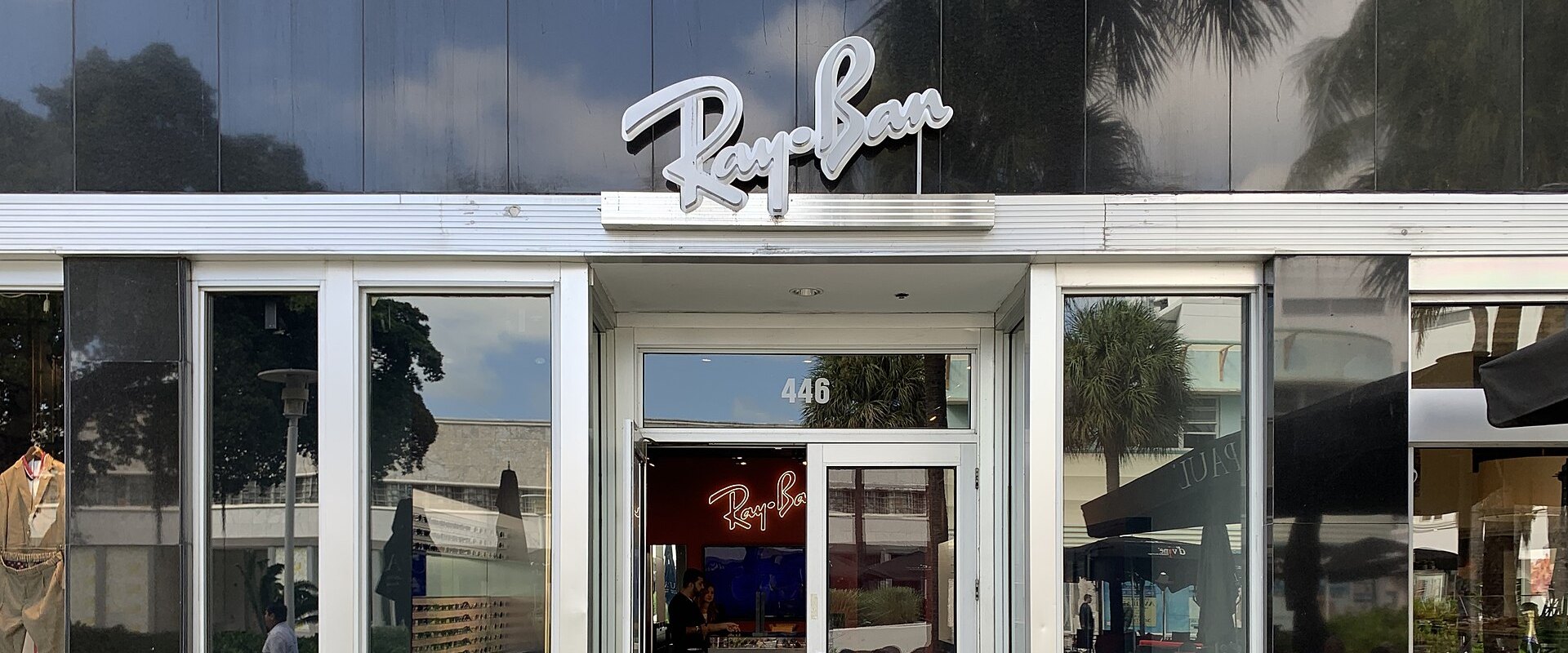
A Ray-Ban heir says on a podcast that one €300 million gift is holding up a €40 billion inheritance
On 12 October 2026 Leonardo Maria Del Vecchio, 31, one of the eight heirs of Leonardo Del Vecchio, the Luxottica founder whose group owns Ray-Ban, told the Pulp Podcast that his father's estate is not blocked so much as fought over: "It is a €40 billion inheritance, blocked for 1%. The inheritance is not blocked; there is a war over €300 million." MF-Milano Finanza reported the episode the same day. The New York Post and Bloomberg covered it as an escalation of his feud with Francesco Milleri, chief executive of EssilorLuxottica, the company that owns Ray-Ban.
The founder dies in June 2022 and splits his holding company into eight equal shares for his family
The €300 million is a bequest. The founder died on 27 June 2022. His wills were opened before a notary on 1 July 2022: a public will of 10 October 2017 and three short handwritten ones, il Fatto Quotidiano reported that August. They left Delfin, the Luxembourg holding company that owns about a third of EssilorLuxottica, in eight equal parts of 12.5%: to his six children, his widow Nicoletta Zampillo and her son Rocco Basilico.
He also leaves his chief executive 2.15 million shares worth €340 million, and his widow two villas a company owns
Outside Delfin he left 2.15 million EssilorLuxottica shares, almost 0.5% of the company and about €340 million at the time, to Milleri, and 22,000 shares to Delfin's chief executive Romolo Bardin. His widow received four homes. Two of them, in Rome and at Beaulieu-sur-Mer, belonged to Partimmo, a company wholly owned by Delfin, and the will gave her the right to obtain them with the costs charged to the estate.
Three children accept only with benefit of inventory, and the chief executive's gift drops to the back of the queue
Three of the children, Luca, Clemente and Paola, accepted the inheritance with benefit of inventory, an Italian election that limits an heir's exposure to the estate's own assets and sets an order in which creditors and legatees are paid. The order Luca drew up put creditors first, then the widow's bequest, then Milleri's, Affaritaliani reported in September 2023, citing Repubblica. Milleri challenged it in Milan, arguing that all bequests rank equally and must be paid in proportion.
Four years on, the chief executive has 400,000 of his 2.15 million shares and sues three heirs in Milan
A second dispute concerned about €56 million of Italian inheritance tax on Milleri's bequest, which the will said the heirs, not he, should bear (Calcio e Finanza, 29 September 2023). By May 2026, il Nordest reported, Milleri had received only about 400,000 of his 2.15 million shares, mostly from the founder's personal accounts and partly from heirs who settled with him separately, Leonardo Maria among them, and had started a new civil action in Milan against Luca, Clemente and Paola.
The heirs meet in Luxembourg courts in November, fighting over who owns which eighth of the holding
Leonardo Maria now calls the bequest "the will of my father" and says his own attempt to buy out two siblings presupposed closing the estate. The rest of the file stays open. MF-Milano Finanza reported on 2 and 10 October 2026 hearings in Luxembourg on 16 November, on his request to seize or suspend Basilico's Delfin shares, and on 23 November, on Basilico's request to suspend the 27 April resolutions that restructured Delfin and raised its payout to 80% of profits.
The heir who borrowed €950 million against his eighth finds a judge has frozen its transfer for six months
A Milan hearing on the widow's renunciation of her life interest in Basilico's 12.5%, which she sought in June to reverse, was moved to 27 March 2027. A Luxembourg judge has postponed by six months the transfer of Leonardo Maria's stake into his own company, at the request of two siblings who cited his finances. His personal debts exceed €950 million, MF says, raised on a Delfin stake that is now blocked.
While they argue, each heir's eighth falls from €6.8 billion to about €4.7 billion in a single year
The pot shrinks while they argue. EssilorLuxottica's shares have fallen about 46% this year, to a market value near €68 billion (Bloomberg, via the New York Post, 12 October). MF puts Delfin's assets at about €38.1 billion, against more than €55 billion a year earlier, and each heir's eighth at close to €4.7 billion, down from €6.8 billion. Delfin still acts as one shareholder: on 5 October it committed its 17.6% of Monte dei Paschi, 534,676,825 shares, to Intesa Sanpaolo's exchange offer (Teleborsa).
- 1MF-Milano Finanza, 12 Oct 2026: Leonardo Maria Del Vecchio attacca i fratelli, l'eredità da 40 miliardi bloccata per 300 milioni, meno dell'1% (Pulp Podcast; bequests in EssilorLuxottica shares to Milleri and properties for Nicoletta Zampillo; benefit of inventory; buyout presupposed closing the estate)
- 2New York Post, 12 Oct 2026: Ray-Ban heir reveals drug addiction ... in wild interview blasting company leadership (age 31; shares down about 46% this year; market value about €68.1 billion, citing Bloomberg)
- 3Bloomberg, 12 Oct 2026: Ray-Ban heir details drug abuse, escalates EssilorLuxottica spat
- 4MF-Milano Finanza, 10 Oct 2026: S'è ristretta la Delfin (Luxembourg hearings 16 and 23 Nov; Milan hearing 27 Mar 2027; debts over €950 million; Delfin about €38.1 billion; per-heir value €6.8 billion to about €4.7 billion)
- 5MF-Milano Finanza, 2 Oct 2026: Lmdv-Basilico, parola ai giudici (Luxembourg judge postpones by six months the transfer of the 12.5% stake to LmdvFin)
- 6il Fatto Quotidiano, 1 Aug 2022: the Del Vecchio will (death 27 Jun 2022; public will of 10 Oct 2017 and three holographic wills; 2.15 million shares to Milleri, about €340 million; 22,000 to Bardin; four homes to Nicoletta Zampillo, two owned by Partimmo, wholly owned by Delfin)
- 7Affaritaliani, 21 Sep 2023, citing Repubblica: the order of payment drawn up after acceptance with benefit of inventory (creditors, then the Zampillo bequest, then the Milleri bequest) and Milleri's challenge in Milan
- 8Calcio e Finanza, 29 Sep 2023: the €56 million of inheritance tax on Milleri's bequest and the will's direction that the heirs pay it
- 9il Nordest, 16 May 2026: Milleri's new civil action in Milan against Luca, Clemente and Paola Del Vecchio; about 400,000 of 2.15 million shares received
- 10Teleborsa, 5 Oct 2026: Delfin commits its 17.6% of Monte dei Paschi (534,676,825 shares) to Intesa Sanpaolo's exchange offer
- 11Probate and Administration Act 1934 s57 and First and Second Schedules (order of application of assets where the estate is solvent; specific bequests rateably; order may be varied by the will), read on Singapore Statutes Online 13 Oct 2026 (current version as at 13 Oct 2026)
- 12IRAS, Estate Duty: removed for deaths on and after 15 February 2008
The founder spends decades designing one holding company, and it passes to eight heirs in a single stroke
Del Vecchio planned the 99% and left the 1% to chance. Delfin was his structure: one company, eight equal shares, a board of managers rather than family members. It passed on his death in a single stroke, because a share in a holding company is one asset however much it owns.
His gifts outside the company promise shares and villas the estate does not own, and each gap becomes a lawsuit
The gifts outside Delfin were drafted as if his personal estate could deliver them. It could not, or not cleanly. The shares promised to his chief executive were not all held in his own name, on the reporting. Two of the widow's homes belonged to a company inside the holding the heirs now co-own, so the estate had to obtain them from a company its own heirs control. When three heirs accepted with benefit of inventory, each of those gaps became a question of who is paid first, and then a question for a court.
A gift worth under 1% keeps the whole estate open, stalling dividends, a buyout and a pledged stake
The size of the fight is the lesson, not the size of the money. €300 million is under 1% of the estate, but an estate does not close at 99%. While it is open, dividends are argued over, a buyout that assumed a closed estate stalls, and a stake pledged to banks sits frozen. A founder who spends decades designing the company and an afternoon on the side gifts has left his heirs the afternoon to litigate.
Singapore would not move an Italian estate or a Luxembourg holding, but its default rules answer the two questions this family has litigated for four years, who pays the tax on a bequest (no one: there is no estate duty) and which bequests bear the estate's debts (specific gifts last and rateably, unless the will says otherwise), and a founder who moves the side gifts out during his lifetime leaves nothing outside the structure to fight over.
An Italian founder's estate stays in Italian and Luxembourg courts, whatever a Singapore will might say
Start with what Singapore could not change. The founder lived and died in Italy, his wills were opened by an Italian notary, Delfin is a Luxembourg company, and courts in both countries already hold the file. Italian law also reserves fixed shares of an estate for a spouse and children, which shapes every bequest. A Singapore will would have moved none of it. The useful question is narrower: what the same plan, one holding company in equal parts plus a few gifts outside it, does when the estate is administered in Singapore.
A Singapore family pays no estate duty, so a €56 million fight over who bears the tax never starts
First, the tax question would not exist. Singapore has charged no estate duty on deaths on or after 15 February 2008, IRAS states, and has no inheritance or gift tax. The argument over about €56 million of tax on Milleri's bequest, whether the heirs pay it as the will directed or he does, has no Singapore equivalent. A will drafted here needs no tax clause for its gifts to arrive whole.
Singapore's 1934 probate law sets the order in which an estate's assets meet its debts, so no heir writes it
Second, the order in which an estate's assets meet its debts is written into statute. Section 57(4) of the Probate and Administration Act 1934, read on Singapore Statutes Online on 13 October 2026, applies a solvent estate to its funeral, testamentary and administration expenses, debts and liabilities in the order of the Second Schedule.
Specific gifts come sixth in that order and share the burden rateably, unless the founder's own will changes the queue
Property the will does not dispose of goes first, then the residue, then property set aside for debts; property specifically bequeathed comes sixth, "rateably according to value". Paragraph 8(a) adds that the order may be varied by the will. An insolvent estate follows the First Schedule instead, with expenses first and bankruptcy priorities after.
The question a chief executive took to a Milan court in 2023 is answered by one sentence in a will
That does two things for a family like this one. Specific gifts are reached only after everything else, and when they must contribute they do so in proportion to value, not in a ranking one heir draws up. And the founder can set a different order in the will itself. The question Milleri took to a Milan court in 2023, whether all bequests stand equal, is one a Singapore will can answer in a sentence, and the statute answers it, for the estate's debts, if the will is silent.
A will that promises villas and shares the estate does not own sends someone to court, in any country
Third, the gap no statute fills. A specific bequest of shares or of a house works only if the estate owns them on the day of death. On the reporting, two of the widow's homes belonged to a company inside Delfin, and the shares promised to Milleri were not all in the founder's personal accounts. No order of payment can deliver a gift of something the estate does not hold. Whether such a gift fails or turns into a duty to buy depends on the wording and the governing law; either way someone ends up in court. That is a drafting point, and it applies in every country.
The founder who hands over the side gifts while alive leaves his executor only the residue to share
Fourth, move the side gifts out of the will while the founder can still sign. A completed lifetime transfer of shares to a chief executive, or into a trust for him with dates on which they vest, never enters the estate. A home meant for a widow can be moved out of the holding company and into her name, or into a trust giving her the right to live there, before it becomes a question for seven other shareholders. What is left for the will is the residue, which is the part an executor can actually distribute.
Life insurance written for the estate can fund cash gifts, so heirs need not raid dividends they already dispute
Fifth, liquidity. Where a bequest must be paid in money or a tax met, the cash should exist on the day of death rather than be extracted from a company the heirs co-own. Life insurance written for the estate, or a reserve held outside the structure, keeps the side gifts from becoming a claim on dividends the heirs already dispute. An estate short of liquid assets can make a founder's distribution wishes meaningless; here that risk is €300 million against an estate of about €38 billion.
One named executor closes a Singapore estate, instead of eight heirs each choosing how to accept it
Sixth, one administrator. Singapore has no election to accept an inheritance with benefit of inventory. The executor named in the will gathers the estate, settles its debts in the statutory order and distributes the rest, with a contingent executor if the first cannot act. In Italy each heir's choice of how to accept shaped the process; under a Singapore will the executor's administration does, and the closing of the estate sits in one pair of hands rather than eight.
The reader who asks four questions now finds the gifts outside the structure before a court has to
For the reader whose parent has built the structure but not finished the edges, the questions are short. Is everything you are meant to inherit inside the structure, or are some gifts still only in the will? Does the estate own today what the will promises? Who pays any tax on those gifts, and in which country? Is there cash outside the company to meet them? A holding company can pass in a day; the gifts around it are what keep an estate open.
Francesco Milleri, EssilorLuxottica's chief executive — 2.15 million EssilorLuxottica shares by bequest, about €340 million in August 2022; about 400,000 received by May 2026, on il Nordest's report; a civil action in Milan against three heirs
Each of the eight Delfin shareholders — 12.5% of Delfin: close to €4.7 billion each on MF-Milano Finanza's estimate of 10 October 2026, down from €6.8 billion a year earlier
Nicoletta Zampillo, the widow — four homes by bequest, two of them owned by Partimmo inside Delfin; in June 2026 she sued her son to recover the life interest in his 12.5% that she had renounced (hearing 27 March 2027)
Luca, Clemente and Paola Del Vecchio — accepted with benefit of inventory; defendants in Milleri's 2026 Milan action
Leonardo Maria Del Vecchio, 31 — a 12.5% stake whose transfer to his own company is postponed six months; personal debts over €950 million raised on it, MF reports; his request against Basilico's shares heard in Luxembourg on 16 November
Rocco Basilico — 12.5% of Delfin, his title disputed by Leonardo Maria in Milan; his challenge to Delfin's 27 April resolutions heard in Luxembourg on 23 November
The same family in Singapore — no estate duty on any of it; specific gifts meeting debts last and rateably unless the will varies the order; side gifts moved out during life, leaving the executor only the residue
The reader whose parent left gifts outside the structure — four questions: what sits outside, does the estate own it today, who pays the tax and where, and is there cash to deliver it
A counterfactual, not advice. The verified machinery is on the Singapore page; where your family stands is the briefing.
From the case files: Henry Fok: a will and a trust, and still a writ and fourteen months to see inside