A flat in your son's name is his, whatever you meant. Ask San Min Book
San Min Book's founder put a Taipei flat in his eldest son's name in 1998, kept letting it and paying its taxes, then left it to that son in a notarised will. His other children said the son had only lent his name. On 30 September 2026 a Taipei court found, for the second time, that they had not proved it. Why a Singapore court would start from the same answer, and the one signed page that changes it.
Read this in: EN · 简体 · 繁體 · ไทย · ID
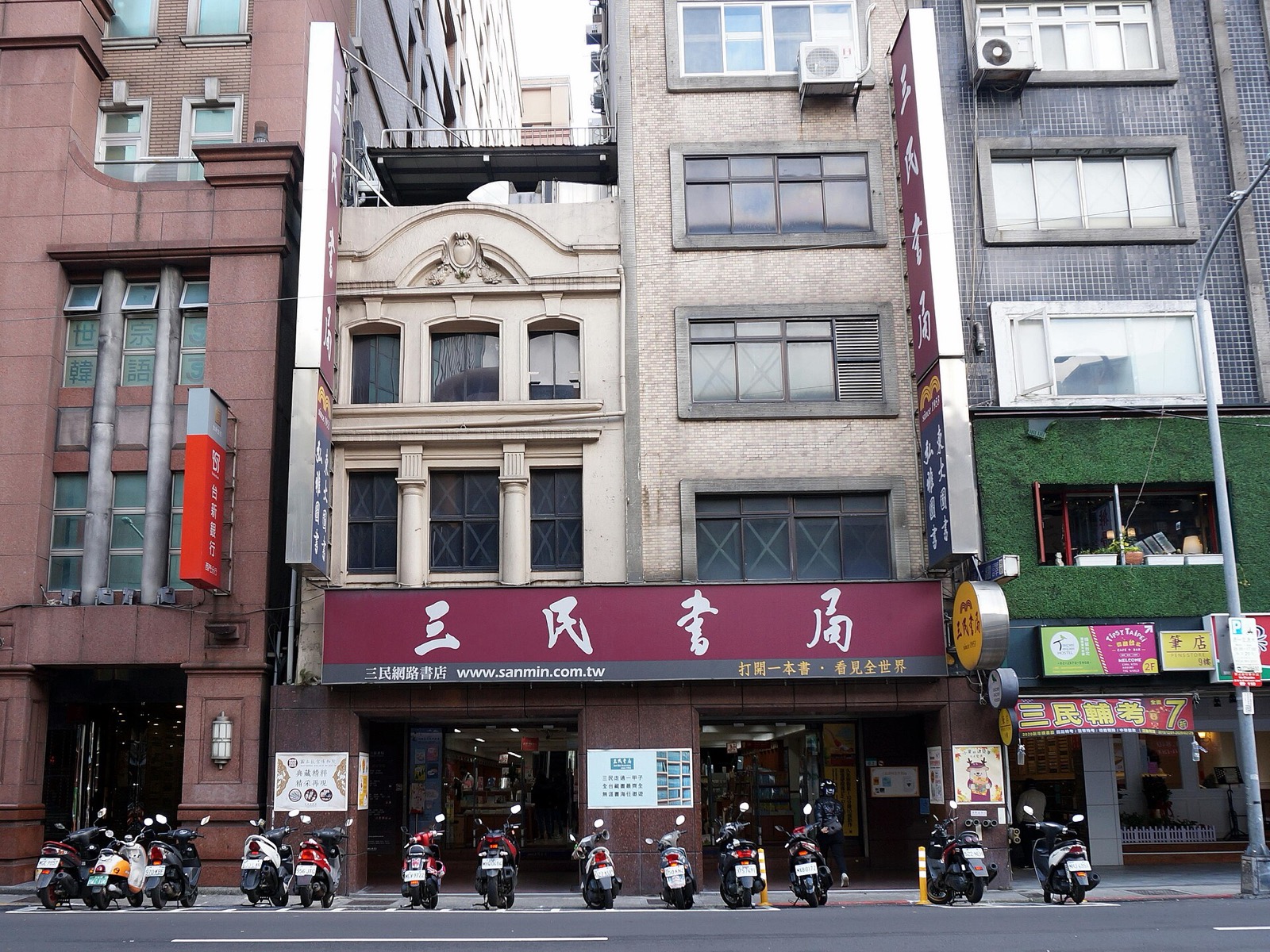
The son who runs Taiwan's best-known publisher sues for a flat in his late brother's name, and loses a second time
On 13 October 2026 the Liberty Times, the United Daily News and the China Times reported that the son who runs San Min Book (三民書局), the Taipei publisher founded in 1953, had lost again in his claim to a flat registered to his late elder brother. The ruling, Taipei District Court 115年度重訴更一字第12號, was given on 30 September 2026 and dismissed the claim with costs. It can be appealed within 20 days of service. We read it, and the two rulings before it, on the Judicial Yuan's database on 14 October 2026.
A publisher who built his firm from 1953 dies in 2017, leaving four children what his paperwork never sorted
The founder, Liu Chen-chiang (劉振強), died on 23 January 2017. His heirs were his wife Chuang Mei (莊梅), who died on 25 June 2022, his sons Liu Chung-wen (劉仲文) and Liu Chung-chieh (劉仲傑), and his daughters Liu Nien-hua (劉念華) and Liu Nien-yun (劉念芸). Liu Chung-chieh is the company's legal representative and, on the press reports, runs the business.
The father puts a Da'an flat in his eldest son's name in 1998, then wills it to him again
The flat is one of four units on Jinshan South Road in Da'an District. It was registered in the elder son's name on 16 July 1998, by sale; the other three were registered to him in September 2016. The founder's notarised will says that after his death the four units, with the whole of their land shares, are to be inherited by his eldest son Liu Chung-wen alone.
The younger son and two sisters say the flat was only borrowed, and sue to make it all four children's property
The younger son and his two sisters sued in 2023. Their case: the father was the real owner and had only borrowed his son's name, a nominee registration (借名登記); the arrangement ended with the father's death, so the flat belongs to all the heirs jointly until the estate is divided. Their evidence: the will listed the flat among the father's property; a long-serving San Min employee testified that from 2003 the father told her the flat was his and had her let it, repair it and pay its taxes; and in 2018 the High Prosecutors Office, in a criminal file, had called it a nominee arrangement.
The elder son says the rent and the flat were always his, and points to his brother's own estate-tax return
The elder son denied any such arrangement. He said the will restated that the flat was already his, that the rent was his and declared as his income, and that his father had managed it because he lived abroad for years. He pointed out that his brother, as the will's executor, had not declared the flat, or any claim to it, in the estate-tax return, and had told prosecutors in 2018 that he did not dispute it was the elder son's.
A Taipei judge reads the will as confirming a gift already made, and dismisses the siblings' claim in February 2025
On 27 February 2025 the district court dismissed the claim. Parents often move property into a child's name during their lives, for tax among other reasons, and then restate the division in a will, the court said; the will could be read as confirming a gift already made. Another unit in the same clause had left the elder son's name in November 2016, by gift to the younger son and then by sale to Wei Chiang Investment (偉強投資), with the money paid to the elder son, on the younger son's own account to prosecutors. The will did not describe what the father owned.
The elder son dies, a judge sitting alone forces a retrial, and his widow wins it again
The elder son died of cancer on 11 August 2025, and his widow and three sons took over the defence. On 15 June 2026 the High Court set the first ruling aside on procedure alone: a trainee judge had sat alone in a case already assigned to a three-judge bench. The retrial reached the same result. Parents managing a child's property is common, the judge wrote; paying its taxes and collecting its rent do not prove it was lent; and the widow's reported offer to hand back the title deeds spoke for her, not for her late husband.
The company loses its NT$31.7 million insurance claim too, and the state collects the NT$59.95 million tax by force
It is not the family's only file. San Min Book sued the elder son for NT$31,730,248, the surrender values of eleven life policies in his name that he cashed after the father's death, saying they too were held for the company. The High Court dismissed the claim on 26 March 2024, and the Supreme Court dismissed the appeal in August 2024, the Commercial Times reported. The estate tax of NT$59.95 million went unpaid while the heirs disagreed, until the enforcement agency attached a land-expropriation payment owed to the founder and collected it in full.
- 1Liberty Times 自由時報, 13 Oct 2026: 三民書局遺產戰!二代掌門人狀告已故大哥 討北市大安區房產吞敗 (Jinshan South Road flat; founded 1953; Liu Chung-wen died of cancer in August 2025; retrial dismissed, appealable)
- 2United Daily News 聯合報, 13 Oct 2026: 三民書局二代病逝...家族房產之爭延燒三代 劉振強遺囑浮檯面 (the will's four units to the eldest son; the two sides)
- 3China Times 中時新聞網, 13 Oct 2026: 三民書局遺產戰延燒三代 創辦人長子討房產又輸了
- 4Taipei District Court 臺灣臺北地方法院 115年度重訴更一字第12號 civil judgment, 30 Sep 2026 (retrial: claim dismissed, costs jointly on the plaintiffs; registration 16 Jul 1998 by sale; the will's clause; parents managing a child's property common), read on the Judicial Yuan database 14 Oct 2026
- 5Taiwan High Court 臺灣高等法院 115年度重上字第150號 civil judgment, 15 Jun 2026 (first ruling set aside and remitted: trainee judge sat alone in a case assigned to a three-judge bench; Liu Chung-wen died 11 Aug 2025; widow and three sons substituted), read 14 Oct 2026
- 6Taipei District Court 112年度重訴字第619號 civil judgment, 27 Feb 2025 (first instance: claim dismissed; heirs and dates of death; the accountant's evidence; the 41號4樓 unit's 2016 gift and 2017 sale; the 2018 prosecutor statements), read 14 Oct 2026
- 7Taiwan High Court 111年度重上字第68號 civil judgment, 26 Mar 2024 (San Min Book v Liu Chung-wen: NT$31,730,248 surrender values of eleven policies; appeal and added claim dismissed), read 14 Oct 2026
- 8Commercial Times 工商時報, 11 Jun 2026: the widow's claim under Civil Code art 1030-1; NT$59.95 million estate tax unpaid, collected by attaching a land-expropriation payment; Supreme Court dismissal of the insurance appeal in August 2024
- 9Taiwan Civil Code arts 1148 (heirs take all the deceased's rights and duties) and 1151 (estate held jointly by all heirs until division), read on law.moj.gov.tw 14 Oct 2026
- 10Lau Siew Kim v Yeo Guan Chye Terence [2007] SGCA 54 (Court of Appeal, 30 Nov 2007): the presumption of resulting trust, and the presumption of advancement between father and child and between husband and wife; read on eLitigation 14 Oct 2026
- 11Civil Law Act 1909 s7(1) (a declaration of trust respecting immovable property must be manifested and proved by signed writing or by will) and s7(3) (resulting, implied and constructive trusts unaffected), current version as at 14 Oct 2026, read on Singapore Statutes Online 14 Oct 2026
- 12IRAS, Estate Duty: removed for deaths on and after 15 February 2008
The father gives the flat away on paper and keeps running it in practice, and that gap becomes the 2023 lawsuit
The father did two things that each made sense and together made a lawsuit. He put the flat in his son's name in 1998, and then he kept behaving as its owner: his accountant let it, his instructions paid its taxes, its rent went to an account he chose. Years later he signed a will that gave his son what the land register said his son already owned.
One will clause reads as a gift to one son and a claim for the rest; only the father knew
To the son, that clause confirmed a gift. To his brother and sisters, it proved the flat had been the father's all along: why else list it in a will? Both readings are plausible. The only person who knew which one he meant had been dead six years when the first judge had to choose.
Courts make the challenger prove the register wrong, and years of receipts cannot outweigh one signed will
Taiwan's courts settled it the way most courts do: whoever says the register is wrong must prove it. Management, tax receipts and an employee's memory of what the boss said are things a father does for a child as readily as for himself. Nothing written in 1998 said 'mine, in your name'. The one document he did sign said 'his'. Nine years after his death, two judges have read it the same way, and the flat stays with the elder son's widow and sons.
Singapore would not touch a Taipei flat, but a Singapore court asked the same question would start where Taipei ended: a father's transfer to his child is presumed a gift, the siblings must prove otherwise, and the evidence that reliably does is a declaration of trust signed on the day, which section 7 of the Civil Law Act requires in writing anyway.
Start with what Singapore could not change. The flat is in Taipei, the land register is Taiwan's, the will was notarised there and the courts hearing the case are Taiwan's. A Singapore trust or a Singapore will would move none of it. The question for a Singapore family is narrower: what happens if a father registers a property here in a child's name, keeps running it himself, and dies with the reason unwritten.
First, the starting point favours the child. Where one person pays for property put in another's name, Singapore law presumes a resulting trust: no gift was meant. Between a father and his child, the presumption of advancement arises instead and presumes a gift. The Court of Appeal set out both in Lau Siew Kim v Yeo Guan Chye Terence [2007] SGCA 54, decided on 30 November 2007 and read on eLitigation on 14 October 2026. There, two adult sons argued that their late father's widow held two properties on trust for his estate; the presumption of advancement between husband and wife defeated them.
So siblings in Singapore would carry the burden the San Min plaintiffs carried in Taipei, and if anything a heavier one, because the law begins by presuming the gift. They would have to show that the father, when he put the flat in his son's name, meant to keep it. The rent, the repairs and the tax receipts show what he did afterwards. A father who manages his son's flat is behaving exactly as the presumption expects.
Second, the page that would have settled it. Section 7(1) of the Civil Law Act 1909, current version as at 14 October 2026 and read on Singapore Statutes Online that day, says a declaration of trust respecting immovable property must be manifested and proved by writing signed by the person able to declare it, or by his will. Section 7(3) leaves resulting, implied and constructive trusts outside that rule.
A father who meant 'mine, in your name' needed one page signed by his son in 1998, declaring that he held the flat for his father. A father who meant 'yours' needed a deed of gift. Either page would have ended the case before it began. Neither costs more than an afternoon; the absence of both has cost this family three years in court so far.
Third, the will. A will disposes of what the testator owns at death. A clause leaving a child a flat already registered in that child's name gives nothing, and invites exactly the argument the San Min family had: was the father confirming a gift, or claiming an asset? If he meant the first, four words, 'which I gave him', close the question. If he meant the second, the will should say the son holds it for the estate, and a signed declaration should already say so.
Fourth, the executor. Here the executor named in the will was the younger son, who did not list the flat in the estate-tax return and later sued to bring it into the estate. That is not a criticism of him; it is what happens when the person administering an estate is also a party to its disputes. A Singapore will can name an independent or professional executor, with a contingent executor if the first cannot act, so that the person deciding what the estate owns does not gain from the answer.
Fifth, the cost of an open estate. While the heirs disagreed about what the estate contained, nobody paid its NT$59.95 million of tax, and the state collected it from a land payment owed to the founder. Singapore has charged no estate duty on deaths on or after 15 February 2008, so that pressure would not arise. The underlying problem would: an estate whose contents are disputed cannot be distributed, and every year of litigation is paid for out of what the heirs will eventually share.
For the reader whose parent has put a property in a child's name, the questions are short. When the title moved, what was it for: a gift, a tax plan, a loan of a name? Is there one signed page that says so? Does the will describe what the parent owns today, or what the parent once owned? And who will decide, before the funeral decides for everyone, what the estate contains: an heir, or someone with no share in the answer?
Liu Chung-wen's widow and three sons — the Jinshan South Road flat, registered in his name since 16 July 1998; the claim against it dismissed on 27 February 2025 and again on 30 September 2026; an appeal is still possible
Liu Chung-chieh, Liu Nien-hua and Liu Nien-yun — a nominee claim not proved, twice, with the costs of the retrial on them jointly; Liu Chung-chieh still runs San Min Book
San Min Book — its NT$31,730,248 claim to the surrender values of eleven policies in the elder son's name dismissed by the High Court on 26 March 2024, and by the Supreme Court in August 2024 as reported
The founder's estate — NT$59.95 million of estate tax, unpaid while the heirs disagreed, collected by the enforcement agency from a land-expropriation payment owed to him, as reported
The same family in Singapore — a father's transfer to his son presumed a gift; siblings must prove what he intended when the title moved; a declaration of trust signed under section 7(1), or a deed of gift, decides it in one page
The reader whose parent put property in a child's name — four questions: what the transfer was for, which page says so, whether the will matches the register, and who decides what the estate contains
A counterfactual, not advice. The verified machinery is on the Singapore page; where your family stands is the briefing.
From the case files: Ve Wong: shares held in other names, and a decade of suits over who owns them