Abby Choi's flat is in an in-law's name, so her heirs must sue for it
A HK$60 million flat on Kadoorie Hill, bought by Abby Choi in 2019 and registered in her former father-in-law's name to pay a lower stamp duty, is the property at the centre of the murder trial that resumed in Hong Kong's High Court on 12 October 2026. Her mother sued for it in March 2023 as the estate's intended administrator. What the same arrangement costs in Singapore: a 50% surcharge on the duty avoided, and a resulting-trust claim the heirs must win with bank records.
Read this in: EN · 简体 · 繁體 · ไทย · ID
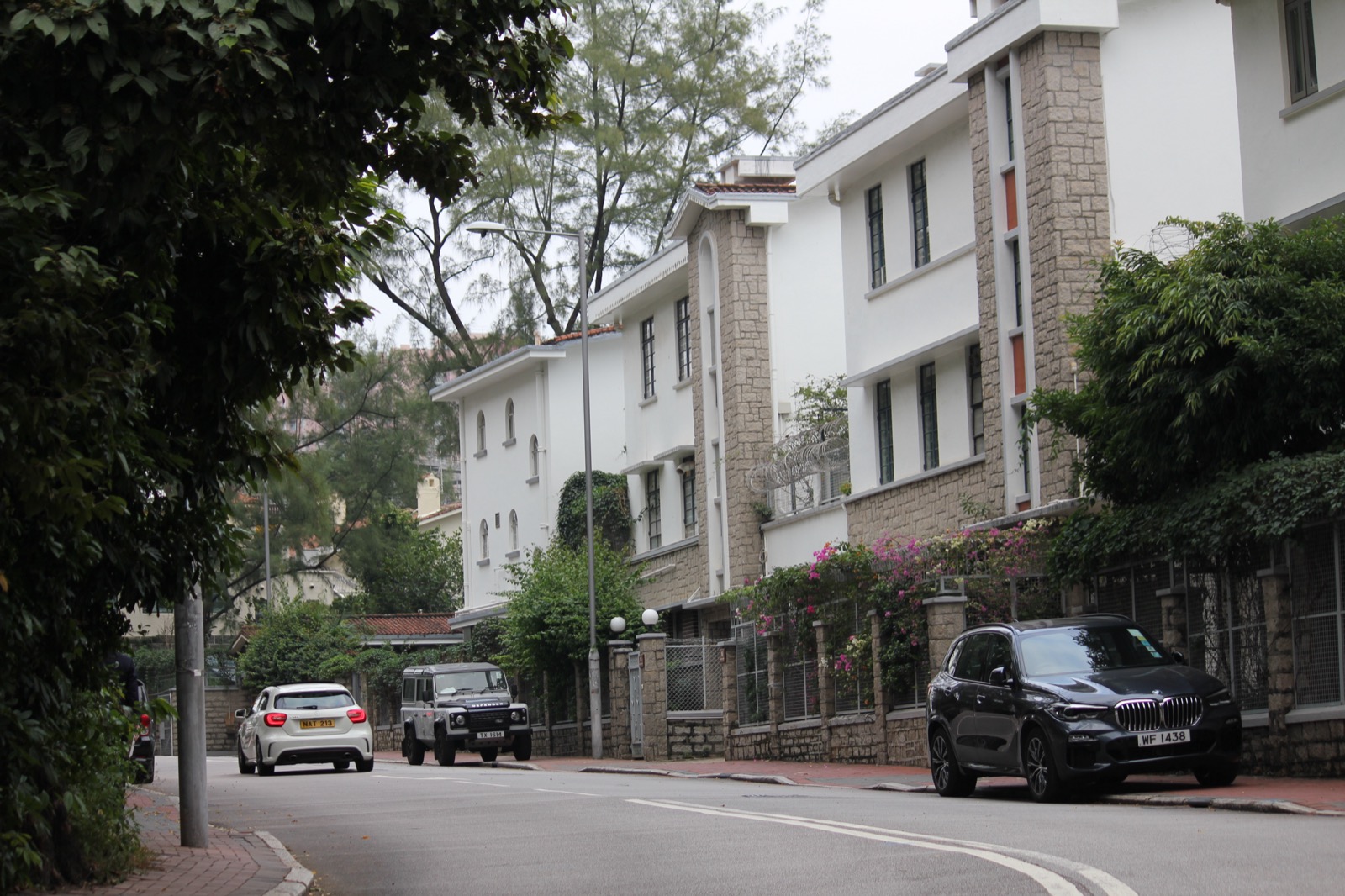
A murder trial over a flat resumes in Hong Kong's High Court, with three men in the dock and a jury of nine
On 12 October 2026 the trial of three men accused of murdering Abby Choi Tin-fung resumed before Deputy High Court Judge Brian Keith and a jury of eight men and one woman, after a pause for legal argument on 9 October. The defendants are her former husband Alex Kwong Kong-chi, his elder brother Anthony Kwong Kong-kit, 35, and their father Kwong Kau, 68, a retired police sergeant. All three deny murder; the two sons admit preventing her lawful burial, the father denies it. Choi, a model and influencer, was 28 when she was killed on 21 February 2023. The trial opened on 21 September and is expected to run into December.
A young model buys a HK$60 million flat on Kadoorie Hill in 2019, and the name on the title is her father-in-law's
At the centre of the prosecution's case is a flat. In 2019 Choi bought a 1,820 sq ft unit at Kadooria, on Kadoorie Hill in Ho Man Tin. The Standard reported in March 2023 a price of HK$72.8 million; prosecutors told the jury on 30 September that she paid about HK$60 million for a unit listed at HK$72 million. The registered owner was not Choi. It was Kwong Kau.
She already owns one home, so a second in her name costs 15% in duty, and in a relative's name it costs 4.25%
Choi already owned a unit at Manhattan Hill, a gift from her partner's father, and a second home in her own name would have carried Hong Kong's flat 15% stamp duty. In the name of a permanent resident with no other home, it carried the lower Scale 2 rate.
The defence says the title dodged HK$9 million in duty, and the mother replies that it was agreed together, for investment
The defence put the duty avoided at more than HK$9 million and called the arrangement unlawful. Choi's mother, Cheung Yin-fa, answered on 8 October: it had always been like that, they had agreed it together, for investment. She said the flat was bought entirely with her daughter's money and was never a gift, and that the Kwong family lived on Choi's support: HK$20,000 a month to Kwong Kau, household costs of about HK$260,000 a month, more than HK$200,000 of his medical bills on her credit card. The defence said Kwong Kau, who had done business in mainland China after retiring, paid half. She rejected that.
She asks her former father-in-law to sign the sale authorisation, who refuses for months and signs in November 2022 after her mother threatens to sue
The sale is the alleged motive. From the second half of 2022 Choi wanted to sell so her children could move to Tuen Mun for school. The prosecution says Kwong Kau refused to sign a sale authorisation and in July 2022 tried to hit her; he signed on 7 November 2022, about a week after her mother threatened legal action.
She cuts the price from HK$75 million to HK$67 million and raises the agent's fee, and is still showing the flat the day she dies
The flat was listed that day at HK$75 million, cut to HK$67 million on 4 December with the agent's commission raised from 1% to 1.5%, and listed again at HK$67 million on 16 February 2023. She was showing it to buyers on the day she died. Prosecutors say Kwong Kau believed that if she died, the flat stayed in his name.
Two weeks after the death, the mother sues the father-in-law in the High Court to declare the flat her daughter's and freeze any sale
Two weeks after her death, on 6 March 2023, Cheung Yin-fa filed a writ in the High Court as the estate's intended administrator. It seeks a declaration that Choi was the beneficial owner, that Kwong Kau holds the title on trust for her and is estopped from denying it, and an injunction against any dealing with the flat. The outcome of that civil action is not in anything we have read.
Four children from two fathers stand to inherit about HK$300 million, and a 2023 report tells them to expect a five-year wait
The South China Morning Post reported in May 2023 that Choi's estate was about HK$300 million and that settling it could take up to five years. She left four children: two with Alex Kwong and two with Chris Tam, whom she married in a 2016 ceremony that was never registered.
- 1The Standard (Hong Kong), 7 Mar 2023: Abby Choi's mother sues ex-father-in-law to stop him handling or selling the Kadoorie Hill property (writ of 6 Mar 2023; 1/F, 117 Kadoorie Avenue, 1,820 sq ft, bought 16 Jul 2019 for HK$72.8 million; declaration of beneficial ownership, trust, estoppel, injunction)
- 2The Standard, 30 Sep 2026: Murder trial of socialite Abby Choi begins as prosecution details financial disputes (Kwong Kau as nominee owner to save stamp duty; over HK$60 million; Deputy High Court Judge Brian Keith; eight-man, one-woman jury)
- 3HK01, 30 Sep 2026 (updated 3 Oct): 蔡天鳳案.開案 (HCCC 198/2025; about HK$60 million in 2019; Manhattan Hill unit already held; registration in Kwong Kau's name to save stamp duty; authorisation signed after the mother's legal threat; the prosecution's 'if she died the flat stayed in his name')
- 4HK01, 2 Oct 2026: 蔡減價加經紀佣金求售加多利山單位 (authorisation letter 7 Nov 2022; listed at HK$75 million; cut to HK$67 million on 4 Dec 2022 with commission 1% to 1.5%; relisted 16 Feb 2023; bought in 2019 for about HK$60 million against a HK$72 million asking price)
- 5The Star (AFP), 6 Oct 2026: Abby Choi called ex-father-in-law 'old crook' amid HK$72mil flat row (HK$60 million paid by Choi; 'never intended as a gift'; trial expected to last at least until December)
- 6The Star (South China Morning Post), 8 Oct 2026: Abby Choi's ex-father-in-law 'cunning old fox' who clung to her wealth, court told (HK$9 million double stamp duty; HK$20,000 a month; over HK$200,000 of medical bills; Kwong Kau 68, retired police sergeant)
- 7Sing Tao Headline 頭條日報, 8 Oct 2026: 辯方指鄺球出資一半購加多利山豪宅 (defence: Kwong Kau funded half and the registration avoided over HK$9 million of stamp duty unlawfully; the mother: 'always like that, agreed together, for investment')
- 8The Standard, 8 Oct 2026: Abby Choi's mother refutes wealth claims (about HK$260,000 a month of the Kwong household's costs; properties placed under Kwong's name 'purely as a matter of trust'; day 12 of the trial)
- 9The Star (South China Morning Post), 9 Oct 2026: Legal arguments delay trial over murder of Hong Kong socialite Abby Choi again (hearing to resume on Monday; nine-member jury)
- 10South China Morning Post, 21 May 2023: children of slain socialite face 5-year wait to inherit HK$300 million fortune
- 11GovHK, Stamp Duty Rates (last revised May 2026): Part 1 of Scale 1 a flat 15% for residential instruments executed 5 Nov 2016 to 24 Oct 2023; Scale 2 top band 4.25%; from 28 Feb 2024 Part 1 rates equal Scale 2
- 12Inland Revenue Department (Hong Kong), press release of 4 Nov 2016: proposed flat 15% ad valorem stamp duty from 5 Nov 2016; a Hong Kong permanent resident acquiring on his own behalf who owns no other residential property stays at Scale 2
- 13Stamp Duties Act 1929 s33A (Commissioner to disregard arrangements whose purpose or effect is to reduce or avoid duty), s33B (50% surcharge) and s65 (false statements: fine up to $10,000 or 2 years), read on Singapore Statutes Online 12 Oct 2026
- 14IRAS, Additional Buyer's Stamp Duty (last updated 27 Aug 2026): rates from 27 Apr 2023 (Singapore citizen's second residential property 20%; entities and trustees 65%); ABSD (Trust) from 9 May 2022 with remission where the trust is for identifiable individual beneficiaries
- 15Chan Yuen Lan v See Fong Mun [2014] SGCA 36 (Court of Appeal, 24 Jun 2014): presumption of resulting trust where one party pays and another holds the title; 84.17% held for the paying husband; read on eLitigation 12 Oct 2026
- 16Civil Law Act 1909 s7(1) (a declaration of trust over immovable property must be manifested and proved by signed writing) and s7(3) (resulting trusts unaffected), read on Singapore Statutes Online 12 Oct 2026
- 17Intestate Succession Act 1967 s7, Rule 3 (no surviving spouse: the estate passes to the children in equal portions per stirpes), read on Singapore Statutes Online 12 Oct 2026
One person pays for the flat and another signs the register, and the gap between them stays invisible until someone dies
The arrangement saved money on the day the flat was bought and cost the family the title on the day she died. A nominee purchase has two layers: the legal owner on the register, and the person whose money paid and who everyone understood would own it. While both are alive and agree, the gap between the layers is invisible. The moment they disagree, or one of them dies, the gap is the whole case.
Nothing was written down in July 2019, so the court must rebuild what two people meant from bank records and hostile memories
Nothing in the public record says the understanding was ever written down. The mother's evidence is that it was agreed together; the defence's position is that Kwong Kau paid half. The court is being asked to reconstruct, from bank records and the memories of people on opposite sides of a murder trial, what two people meant in July 2019. Against that stands the land register, which says one thing and has said it for seven years.
Whoever borrows a name to save tax must later prove the name was never real, for a Ho Man Tin flat or Taipei shares alike
The tax motive makes the position worse, not better. An owner who used another person's name to pay a lower rate cannot easily tell a civil court that the name was never meant to carry anything. The relative, meanwhile, holds a document the state issued. That is the shape of every borrowed-name arrangement, whether a flat in Ho Man Tin or shares in Taipei: the person who saved the money is the person who must later prove that the name on the paper was never real.
Singapore would not touch a Hong Kong flat or a Hong Kong trial, but the same arrangement at home meets a 50% surcharge on the duty avoided and leaves the heirs to win a resulting-trust claim with bank records; the version that holds up pays the duty and writes the trust down on the day of purchase.
Singapore law cannot reach a Hong Kong flat or a Hong Kong trial, so the question becomes what the same arrangement does to a family here
Start with what Singapore could not change. The flat is in Hong Kong, the land register is Hong Kong's, and both the murder trial and the mother's 2023 writ are in the High Court there. A Singapore trust or a Singapore will would move none of it. The question for a Singapore family is narrower: what happens when the same thing is done here, when a parent buys a second home, puts a relative's name on the title to pay a lower rate, and then dies with the understanding unwritten.
A Singaporean buying a second home pays 20% extra duty, and a relative's name on the title is the arrangement the Commissioner must disregard
First, the saving is smaller and the exposure larger. A Singapore citizen buying a second residential property pays Additional Buyer's Stamp Duty of 20% on top of the ordinary duty, on IRAS's table for purchases on or after 27 April 2023, read on 12 October 2026.
The Commissioner reopens the duty, adds a 50% surcharge, and a false answer to his questions carries up to two years in prison
Putting the property in a relative's name to avoid that is an arrangement under section 33A of the Stamp Duties Act 1929, read on Singapore Statutes Online the same day: where the purpose or effect is to reduce or avoid duty, the Commissioner must disregard or vary it and counteract the saving. Section 33B adds a surcharge of 50% of the extra duty. Under section 65, a false statement to the Commissioner carries a fine of up to $10,000, two years in prison, or both.
A parent who declares the trust pays the children's rate on the day of purchase, and the title is theirs on paper from that day
Second, the honest version of the same arrangement has had its own rate since 9 May 2022. A transfer of residential property into a living trust pays ABSD (Trust) at 65%, remitted down to the rate of the beneficial owner where the trust is for identifiable individuals, on an application made within six months. A parent who wants a relative to hold a home for the children can do exactly that; the price is the children's rate, declared up front. What the Choi arrangement bought was the undeclared version, which is cheaper on the day and worthless as a document.
When one person pays and another holds the title, the law presumes the holder keeps it for the payer, until a gift is proved
Third, the heirs' claim. When one person pays for property and another holds the title, Singapore law presumes the holder holds it on resulting trust for the payer, in proportion to the money.
A husband who paid $1.54 million of a $1.83 million house wins 84.17% of it from his wife's name in 2014, no gift believed
The Court of Appeal applied that presumption in Chan Yuen Lan v See Fong Mun [2014] SGCA 36, decided on 24 June 2014 and read on eLitigation on 12 October 2026: a husband who had paid about $1.54 million of a $1.83 million price was held to own 84.17% of a house registered in his wife's name, because her account of a gift was not believed. The presumption can be rebutted. The person on the title says it was a gift; the estate must then prove it was not.
The estate proves who paid with bank records, and still has nothing in writing that says what the name on the title was for
That makes the case a contest of paper. The estate needs the bank records of the purchase, any mortgage, who paid the outgoings, and anything written on the day of purchase saying what the name was for. The mother's answer, that it is all documented and the money came from her daughter, is the right instinct and also a confession of the gap: the documents prove payment, not intention.
A declaration of trust over property must be in signed writing, and one page on completion day ends the argument before it starts
Section 7(1) of the Civil Law Act 1909, read on 12 October 2026, requires a declaration of trust over immovable property to be manifested and proved by signed writing; section 7(3) leaves resulting trusts outside that rule. One signed page on completion day would have ended the argument before it began.
The heirs sue for the flat and must explain the tax dodge to the same court, while the Commissioner waits to collect from whoever wins
Fourth, the tax motive follows the claim into the civil court. An estate that must explain why the title was in a relative's name has to explain the stamp duty too. A court asked to enforce an arrangement whose stated purpose was to pay less duty than the law required may be slow to lend its hand, and the Commissioner can reopen the duty, with the surcharge, whether or not the family wins. The heirs would be litigating in the shadow of their parent's own scheme. That is not a reason to lose. It is the reason the case costs more and takes longer than a declared trust ever would.
With no will and no registered spouse, the estate goes to the four children equally, and the unregistered partner takes nothing as a spouse
Fifth, who inherits. If Choi left no will, and her mother's application to administer the estate suggests she did not, which is our inference and not a reported fact, the Hong Kong estate passes to her children. Singapore's rule is the same in outline: under section 7 of the Intestate Succession Act 1967, read on 12 October 2026, where there is no surviving spouse the estate goes to the children in equal portions, and a partner married in a ceremony that was never registered takes nothing as a spouse.
A grandmother administers the estate for four children while the title sits with a man on trial, so its first act is a lawsuit
Four children, two fathers, a grandmother as administrator and a title in the name of a man on trial: the estate's first task is a lawsuit, and the children wait for it.
A son asks his father four questions tonight, whose money, which page, what rate, whose keys, and saves the family a lawsuit
For the reader whose parent has put a home in someone else's name, the questions are short. Whose money paid, and can the bank show it? Is there one signed page that says the name holds for the family? What rate was paid, and would the tax office accept the reason? And if the person on the title died tomorrow, or your parent did, who would hold the keys the next morning? A declaration of trust, a will and the right duty paid cost less than the first month of the alternative.
Kwong Kau, 68 — registered owner of the Kadooria flat since 2019; on trial for murder, which he denies; HK$20,000 a month from Choi and about HK$260,000 a month of household costs, on her mother's evidence
Abby Choi's estate — about HK$300 million, as reported in May 2023; a High Court writ of 6 March 2023 seeks a declaration that she was the flat's beneficial owner and that Kwong Kau holds it on trust; outcome not in anything we have read
Her four children — the heirs if she left no will, which her mother's application as administrator suggests (our inference); two with Alex Kwong, two with Chris Tam; a wait of up to five years was reported in 2023
Chris Tam — her partner, married in a 2016 ceremony that was never registered; no share as a spouse on intestacy, in Hong Kong or in Singapore (inference from the reported facts)
Cheung Yin-fa — Choi's mother and the estate's intended administrator; plaintiff in the 2023 writ; a prosecution witness from day 10 of the trial
The Hong Kong Stamp Office — the duty not paid in 2019: more than HK$9 million on the defence's figure; about HK$6.5 million on our arithmetic of 15% against 4.25% of HK$60 million
The same family in Singapore — 20% ABSD on a second home in the parent's own name, or 65% ABSD (Trust) remitted to the children's rate on a declared trust; an undeclared nominee meets section 33A, a 50% surcharge and a resulting-trust claim the heirs must prove
The reader whose parent used a relative's name — four questions: whose money, which signed page, what rate was paid, and who holds the keys the morning after
A counterfactual, not advice. The verified machinery is on the Singapore page; where your family stands is the briefing.
From the case files: Ve Wong: put shares in other names, and your heirs must sue for them