Adopt the CEO and he inherits like a son. Ceragem's founder just did
Ceragem's founder Lee Hwan-sung, 65, adopted his chief executive Lee Kyung-soo, 48, as an adult son in 2025 and gave him 10% of the company in the first half of 2026, Ceragem said on 20 October. In Korea that makes the CEO an heir equal to the founder's only daughter, and it pulls every gift he receives into her reserved-share claim. Singapore does not allow adult adoption, and would not need it.
Read this in: EN · 简体 · 繁體 · ไทย · ID
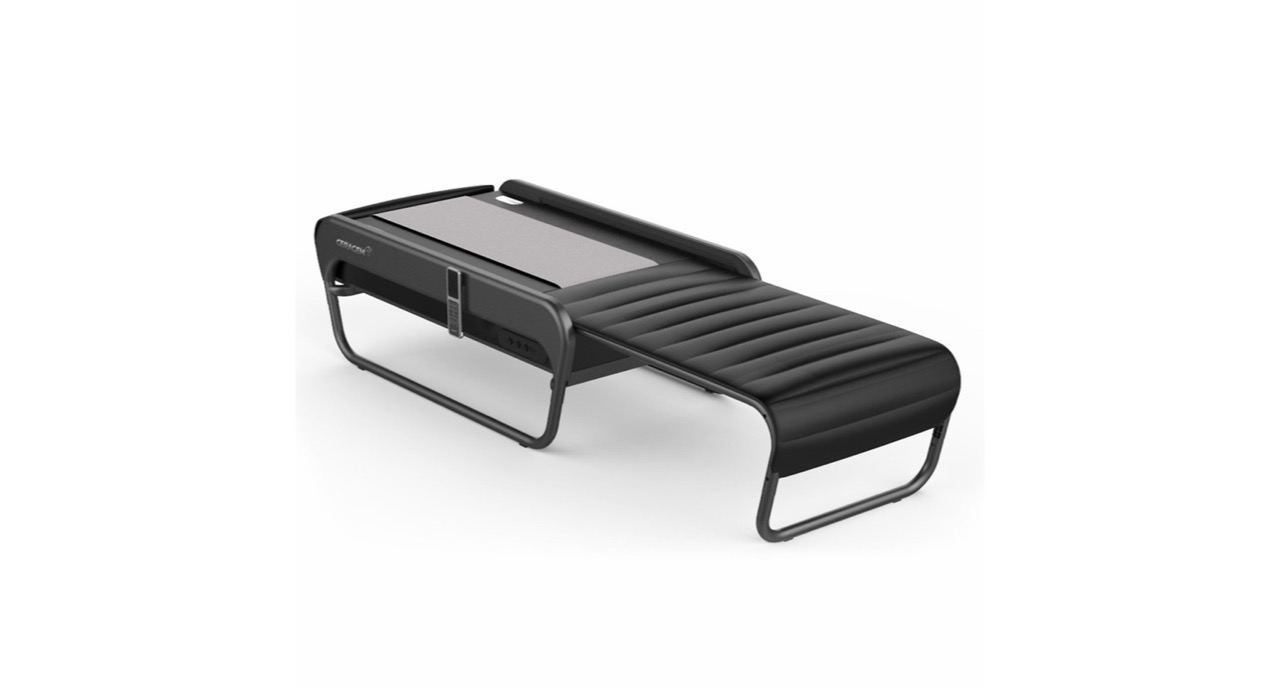
A founder adopts the CEO he hired as a graduate in 2003, then hands him 10% of the company
On 20 October 2026 Ceragem, the Korean maker of spinal-care massage beds and home healthcare appliances, said that its founder and chairman, Lee Hwan-sung, 65, had adopted its chief executive, Lee Kyung-soo, 48, as his son in an adult adoption completed in 2025. In the first half of 2026 the chairman gave him 10% of the company's total issued shares, which Ceragem called the first phase of a share succession. The gift tax return has been filed. Further transfers are planned until Lee Kyung-soo becomes the largest shareholder; their size and timing are undecided.
A new graduate starts at the bottom in 2003 and climbs to chief executive by the end of 2021
Lee Kyung-soo joined Ceragem as a new graduate hire in 2003 and worked in strategy, marketing and sales. He ran a dealership in Sichuan in 2017, took over the domestic business at the chairman's request in 2018 and became chief executive at the end of 2021. A company source said the chairman weighed the succession for two to three years, raised adoption early in 2025, and consulted the families on both sides, including his only daughter, who is reported to take no part in management.
The founder holds 60.5% of a ₩549.8 billion company and qualifies for no succession tax relief
At the end of 2025 the chairman held 60.5% of Ceragem's shares and the company held 31.8% as treasury stock, according to the Chosun Ilbo. Ceragem's consolidated revenue for 2025 was ₩549.8 billion. The company said it does not qualify for Korea's family-business succession tax relief, which Money Today notes is limited to firms averaging under ₩500 billion of revenue over three years, and that the adoption was decided regardless of tax. SR Times reports the gift was made in April 2026 and the tax will be paid over five years. Ceragem is unlisted; a US listing is under review.
- 1Seoul Economic Daily (Kim Ye-sol), 20 Oct 2026: Ceragem says chairman Lee Hwan-sung adopted CEO Lee Kyung-soo as an adult son last year and gave him 10% of total shares outstanding this year, the first phase of the stake succession; gift tax filed; CEO joined as an entry-level hire in 2003
- 2Chosun Ilbo, 20 Oct 2026: chairman 65, CEO 48; one biological daughter, not interested in management; 10% gifted in the first half of 2026; chairman 60.5% and treasury shares 31.8% at end-2025; adoption raised early 2025 after two to three years' deliberation; no family-business tax relief; 2025 sales about ₩550 billion
- 3Money Today (Jung Jinwoo, Cha HyunA), 20 Oct 2026: CEO born 1978; 2025 consolidated revenue ₩549.8 billion; succession tax relief limited to firms averaging under ₩500 billion over three years; LG's Koo Bon-moo adopted his nephew Koo Kwang-mo in 2004
- 4SR Times (Lim Hyun-beom), 21 Oct 2026: first gift in April 2026; tax to be paid over five years; the founder's only daughter not in management; further transfers to make the CEO largest shareholder, size and timing undecided; US listing under review
- 5Korean Civil Act (민법), Act No. 21454, in force 17 Mar 2026, read on law.go.kr 21 Oct 2026: arts 866 and 871 (adult adoption, parents' consent), 882-2 (adoptee has the status of a child by birth), 1000 and 1009 (descendants inherit first, in equal shares), 1008 (gifts rewarding special contribution not an advance, from 17 Mar 2026), 1112 (descendant's reserved share is half the statutory share), 1114 (gifts counted: the year before death or knowingly harmful), 1115 (claim paid in value)
- 6Supreme Court of Korea, 9 Feb 1996, 95다17885: art 1114 does not apply to a co-heir's lifetime gifts, which count in the reserved-share base whatever their date and are valued at the date of death; and 24 Jul 1998, 98다9021: a promise to renounce made before death has no effect (both read on law.go.kr 21 Oct 2026)
- 7Korean Inheritance and Gift Tax Act (상속세 및 증여세법), Act No. 21065, read on law.go.kr 21 Oct 2026: arts 26 and 56 (10% to 50%, the top rate above ₩3 billion), 53 (₩50 million allowance per ten years for a gift from a parent), 71(2) (gift tax payable over up to five years, against security)
- 8Korean Private International Law Act (국제사법), Act No. 18670, art 77: succession follows the deceased's national law, but a will may choose the law of his habitual residence, effective only if he keeps it until death (read on law.go.kr 21 Oct 2026)
- 9Adoption of Children Act 2022 (Singapore) s2 (a child, where age matters, is an individual below 21) and s6 (an adoption order may only be made in respect of a child resident in Singapore who has never married), current version as at 21 Oct 2026, read on SSO 21 Oct 2026
- 10Inheritance (Family Provision) Act 1966 (Singapore) s2 (net estate: property the deceased could dispose of by will) and s3 (dependants: spouse, a daughter who has not married or is disabled, an infant son, a disabled son; reasonable maintenance by periodical payments), current version as at 21 Oct 2026, read on SSO 21 Oct 2026
One adoption makes the CEO an heir of the first rank, equal with the founder's only daughter
Lee Hwan-sung chose a status, not only a transfer. A gift of shares to an employee is a gift; an adoption makes him a son. Under Korea's Civil Act an adopted child has the standing of a child by birth from the day of adoption (article 882-2), and children inherit first and in equal shares (articles 1000 and 1009). The chief executive now stands beside the founder's daughter as an heir of the first rank. If the two children are the only heirs, each takes half of whatever the founder still owns at death; a surviving spouse, if there is one, would take a larger share alongside them.
Every gift to the adopted son counts against the daughter's reserved share at its value when her father dies
The less visible consequence runs the other way. Korea gives each child a reserved share of half the statutory share (article 1112). Gifts to a stranger count against it only if made in the year before death, or knowingly to harm the reserved heir (article 1114). Gifts to a co-heir count whatever their date: the Supreme Court held in 1996 (95다17885) that article 1114 does not apply to a co-heir's lifetime gifts, and that they are valued at the date of death. The 10% given in 2026, and every later tranche, now sits inside the daughter's reserved-share arithmetic at whatever Ceragem is worth when the founder dies.
The daughter agrees today, but Korea voids any renunciation signed before a parent's death
Her agreement today does not settle it. The Supreme Court held in 1998 (98다9021) that a promise to renounce an inheritance made before death has no effect; renunciation happens only after death, in the family court. Two amendments in force since 17 March 2026 soften this. A gift made as a reward for a special contribution to the parent's property is no longer counted as an advance, to the extent of the contribution (article 1008), and a reserved-share claim is now paid in money rather than by handing back the shares (article 1115). Whether two decades running the company count as that contribution is untested: our inference, not a ruling.
Singapore would not let Lee Hwan-sung adopt his chief executive, because an adoption order is available only for a child under 21, and it would not need to: a founder domiciled here can give or leave his shares to anyone, with no gift tax, no estate duty and no reserved share for an adult child to claim.
We read one company statement and Korean press reports, and Singapore paperwork cannot lift Korean tax
Two limits first. Everything here comes from Ceragem's statement of 20 October and Korean press reports; no court record, valuation or share register is public, and we do not know the founder's will, whether he has a spouse, or what his daughter has already been given. And moving paperwork to Singapore would not move a Korean family out of Korea: Korea's gift and inheritance taxes reach Korean residents and Korean shares, and its courts apply Korean succession law to a Korean national unless his will validly chooses otherwise. The question is what Singapore law would do with the same plan, made by a founder domiciled and resident here.
A Singapore founder asks to adopt his 48-year-old CEO, and the court cannot: adoption stops at 21
First, the step itself. Singapore's Adoption of Children Act 2022, read on 21 October 2026, lets the court make an adoption order only in respect of a child resident in Singapore who has never married (section 6), and defines a child, where age matters, as a person below 21 (section 2). A 48-year-old chief executive cannot be adopted. There is no Singapore equivalent of the adult adoption Korea's Civil Act allows to anyone of full age (article 866), with the consent of the adoptee's own parents (article 871).
A Singapore will leaves the shares to the manager, and the adult daughter has no reserved share to reclaim
Second, Singapore would not need the step. A non-Muslim domiciled here can leave shares to anyone by will, a long-serving manager included, and no child holds a reserved share against it. The one check is the Inheritance (Family Provision) Act 1966, re-read on 21 October 2026. A daughter may apply only if she has never married or cannot support herself through disability, and the court may order reasonable maintenance out of the net estate, usually by periodical payments. The net estate is what the founder could still leave by will, so shares he gave away during his life are outside it.
Korea taxes each tranche at up to 50%, paid over five years; Singapore charges no gift tax or estate duty
Third, tax. Korea's gift tax runs from 10% to 50%, the top rate on amounts above ₩3 billion (Inheritance and Gift Tax Act, articles 26 and 56), and may be paid over up to five years against security (article 71). Adoption bought only a ₩50 million allowance every ten years for a gift from a parent (article 53), which a stranger would not get. Singapore has no gift tax and no inheritance tax, and has had no estate duty for deaths on or after 15 February 2008. A Singapore founder could move the shares on the timetable the business needs, not one set by a tax bill.
A will, a trust and a shareholders' agreement name the successor and move the shares without changing anyone's family
What does the work adoption does in Korea? Lee Hwan-sung wanted three things: a successor named in law, shares that move over years, and stability if he dies halfway. In Singapore a will names the successor and leaves him whatever has not yet moved. A trust can hold the block and release it in stages on conditions the founder writes, so a death halfway through changes nothing. A shareholders' agreement can fix the votes in the meantime. None of these changes anyone's civil status, and none makes the chief executive a sibling of the founder's daughter.
A Korean founder truly living in Singapore may choose Singapore law by will, if he stays until death
One Korean rule points the same way. Korea's Private International Law Act, article 77, applies the law of the deceased's nationality to succession, but lets him choose by will the law of the country where he habitually lives, effective only if he still lives there at death; immovable property follows its location. A Korean founder genuinely living in Singapore could, on that rule, choose Singapore law for his movable estate. Whether a Korean court would then refuse a daughter's reserved share, and how that sits with Korean tax, is a question for Korean counsel; we state the rule, not the outcome.
The child outside the business asks three calm questions at dinner, and the founder's daughter was at least consulted first
For the reader whose parent is planning a succession beyond the family, the questions can be asked without accusing anyone. Is the successor named in a signed document, or only in conversation? Where the family is domiciled, do gifts already made count against anyone's share at death? Has the child who stays out of the business been told, in writing, what that child receives and why? Wanting to know your position is stewardship, not greed. Ceragem's daughter, at least, was consulted before the shares moved.
Lee Kyung-soo, chief executive and adopted son — 10% of Ceragem's shares in 2026, later tranches planned until he is the largest shareholder, and the legal standing of the founder's child
The founder's daughter — an heir of the first rank, equal with the adopted son, with a reserved share of half her statutory share in which every gift to him counts at its value at death
Lee Hwan-sung, the founder — 60.5% at the end of 2025, before the 10% gift; about 50.5% afterwards on simple arithmetic (our calculation)
Korea's tax authority — gift tax of up to 50% above ₩3 billion on each tranche, filed and payable over up to five years
The same plan in Singapore — no adoption, available or needed; a will, a trust and a shareholders' agreement, with no gift tax, no estate duty and no reserved share
The reader whose parent is looking beyond the family — three questions: is the successor named in writing, do lifetime gifts count against anyone's share, and has the child outside the business been told why
A counterfactual, not advice. The verified machinery is on the Singapore page; where your family stands is the briefing.
From the case files: The other Korean adoption on this site: LG's chairman, adopted in 2004, and the ₩2.3 trillion his adoptive mother and sisters took to court