A will names one heir; Taiwan's deeds name them all. Ask Evergreen
Chang Yung-fa's sealed will left everything to one son, and Taiwan's Supreme Court upheld it in 2024. On 22 October his own foundation told the Taipei District Court the will is void, added all seven heirs as defendants, and heard that the estate's land is registered in the joint names of all seven. Judgment on its NT$1 billion claim is set for 30 November. In Singapore the land would sit in one name: the executor's.
Read this in: EN · 简体 · 繁體 · ไทย · ID
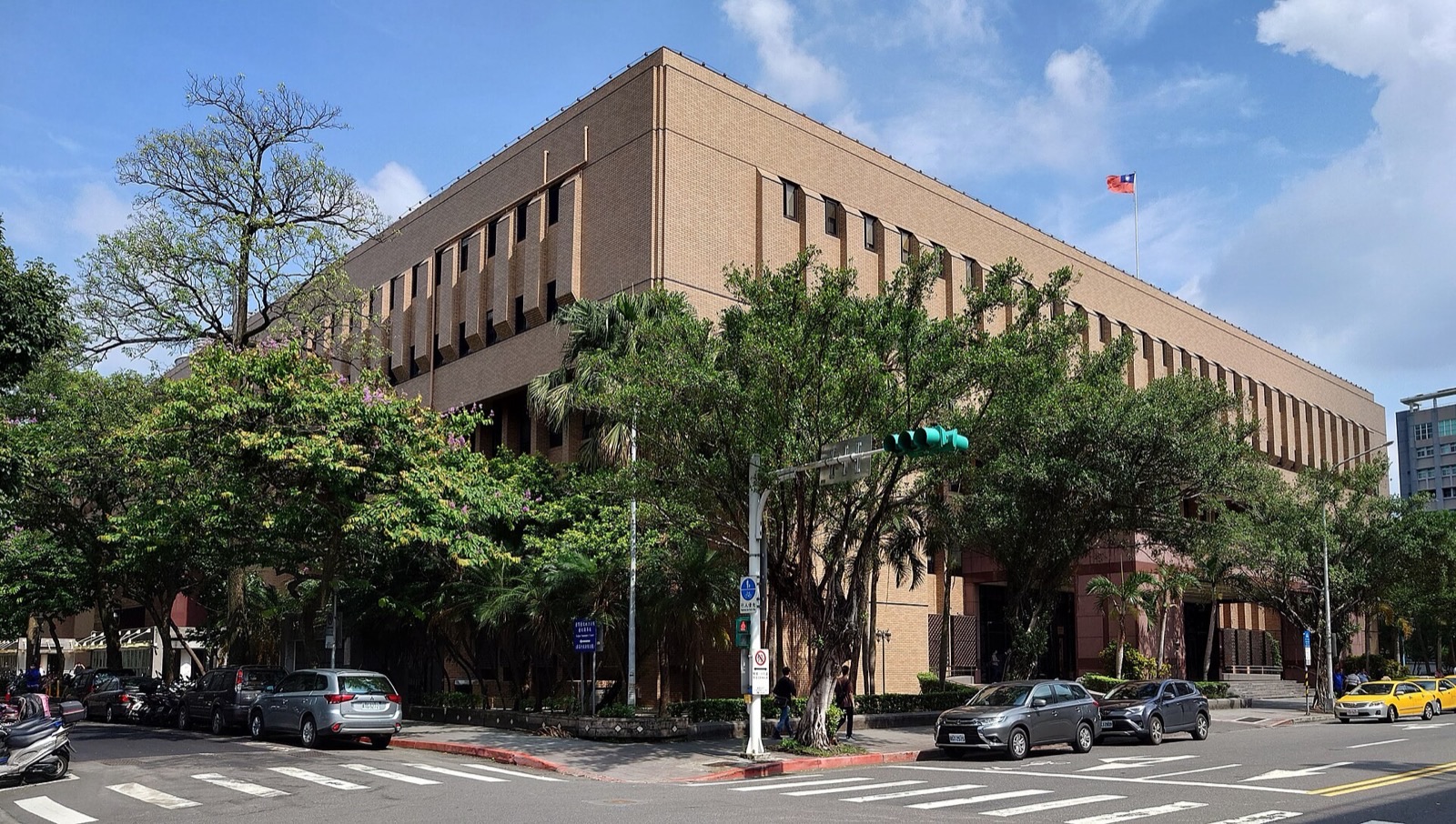
A founder's foundation claims NT$1 billion from his executors, and the Taipei court sets judgment for 30 November
On 22 October 2026 the Taipei District Court closed argument in the Chang Yung-fa Foundation's suit over the estate of Evergreen's founder and set judgment for 11 a.m. on 30 November. The foundation sued in March 2026, claiming NT$1 billion from the four executors, Ko Li-ching, Tai Chin-chuan, Liu Meng-fen and Wu Chieh-yuan. It says Chang's public statements in 2011 and 2012, through press conferences, his memoir and recordings, promised his estate to the foundation as a gift upon death.
The foundation sues all seven heirs and calls the will void, two years after the Supreme Court upheld it
At the hearing the foundation amended its claim. It added all seven heirs as defendants: the sons Chang Kuo-hua, Chang Kuo-ming and Chang Kuo-cheng; Cheng Ming-yi and Cheng Ming-wei, children of the late eldest daughter; and the second wife Lee Yu-mei and her son Chang Kuo-wei. It also argued that the will is invalid. The executors' counsel opposed the amendment, because the will has been finally held valid. Counsel for Lee Yu-mei and Chang Kuo-wei said the will, which leaves everything to Chang Kuo-wei, is the founder's last wish and revoked any earlier promise.
Executors hold NT$16.15 billion they cannot share out, while about NT$80 billion overseas has never arrived
The foundation's counsel told the court that Chang had already given his children more than NT$70 billion in his lifetime; the reports differ on whether that is each or in total. The executors' counsel said the estate's real property has been registered in the joint names of the seven heirs, while the deposits and shares await the estate-division suit. Knews reports that NT$16.15 billion of domestic estate money sits in the executors' joint account, and that about NT$80 billion of overseas assets, including dividends on shares in Evergreen International (Panama) and Evergreen Marine (Hong Kong), has never been remitted to it. Chang died on 20 January 2016.
- 1Mirror Media 鏡週刊 (Liu Chih-yuan), 22 Oct 2026: argument closed, judgment 30 Nov 2026 at 11 a.m.; claim amended to all heirs and the will said to be void; executors oppose; real property registered in joint names, deposits and shares in the division suit
- 2Knews 知新聞 (Ting Mu-chun), 22 Oct 2026: the seven heirs named; foundation's suit filed March 2026 against four executors for NT$1 billion; statements of 2011 and 2012; NT$16.15 billion in the executors' joint account; about NT$80 billion overseas not remitted
- 3United Daily News 聯合報 (Lin Meng-chieh), 22 Oct 2026: the foundation adds Chang Kuo-wei and six other heirs as defendants; lifetime gifts of NT$70 billion asserted
- 4Taiwan Civil Code arts 1151 (before division the heirs jointly own the whole estate), 1164 (any heir may demand division at any time), 1215 and 1216 (the executor manages the estate; heirs may not dispose of it meanwhile), 1225 (reduction for the reserved share), read on law.moj.gov.tw 22 Oct 2026
- 5Taiwan Land Act art 73 (any heir may register an inheritance for all heirs; six months from death) and art 73-1 (unregistered after one year: listed for management for fifteen years, then sold by the National Property Administration), read on law.moj.gov.tw 22 Oct 2026
- 6Taiwan Land Registration Rules art 120 (one or more heirs may register the land in joint ownership for all heirs; shares need all heirs' consent), read on law.moj.gov.tw 22 Oct 2026
- 7Taiwan Code of Civil Procedure art 401 (a final judgment binds the parties and their successors), read on law.moj.gov.tw 22 Oct 2026
- 8Land Titles Act 1993 (Singapore) ss107, 108, 109, 113: personal representatives registered by transmission; transfer under a devise on production of the grant; the land vests in the registered personal representative, who holds it in trust for those entitled by law; current version read on SSO 22 Oct 2026
A father's will picks one son, yet the land register in Taipei lists seven names ten years on
The will chose one son. The land registry lists seven names. Both are correct under Taiwanese law, and the gap between them is the story of this estate.
Taiwan makes every heir a joint owner until division, so the children the will left out still hold a claim
A will in Taiwan does not move property out of the heirs' hands. Until the estate is divided, all the heirs jointly own the whole of it (Civil Code article 1151), and any of them may demand division at any time (article 1164). The children the will left out are still heirs, holding a reserved share they can enforce by cutting back the gift to Chang Kuo-wei (article 1225). Until that arithmetic is done, nobody holds a defined share of anything.
One heir can register land for all seven; a year unregistered starts a 15-year clock to auction
The land register follows the same rule. Any one heir may register an inheritance for all of them (Land Act article 73), and one heir may register the land in joint ownership for everyone's benefit; registering defined shares needs every heir's consent (Land Registration Rules article 120). Land left unregistered for a year is listed for management and, fifteen years later, sold by the National Property Administration (article 73-1). Who filed this registration and why is not public; avoiding that clock is our inference.
Four executors hold the money, seven heirs share the deeds, and the foundation enters a suit it never joined
The executors manage the estate and the heirs may not dispose of it meanwhile (articles 1215 and 1216). So ten years after the death, the four executors hold the money, the seven heirs share the deeds, the division suit holds the shares, and the foundation now asks the court to treat the will as void. A final judgment binds the parties and their successors (Code of Civil Procedure article 401); the foundation was not a party to the will suit, which is the opening it is using. Whether the court lets it through is what 30 November decides.
In Singapore the executor, not the heirs, takes the land onto the register by transmission and then transfers it straight to the person the will names, so a child the will leaves out never appears on the title and has no reserved share to hold the transfer up.
Taiwan's own law governs a Taiwanese founder's land, so the Singapore answer covers only a founder domiciled there
One limit first. This is Taiwanese land, owned by a Taiwanese founder, and Singapore law would not touch it: Taiwan applies its own succession law, reserved share included, to a Taiwanese national's estate, and land is registered under the law of the place where it lies. The question is what Singapore law does with the same will, left by a founder domiciled here, over land registered here. The facts come from three newspaper reports of a hearing; no judgment, register extract or court file is public, and we do not know who filed the joint registration.
In Singapore the executor alone goes on the land register, holding the land in trust for those the law entitles
Start with the register. Under Singapore's Land Titles Act 1993, read on 22 October 2026, the personal representative applies to be registered as proprietor by transmission (section 107(1)). Anyone else claiming the land is registered only if a transfer from the personal representative is not reasonably practicable (section 107(2)). Once registered, the land vests in the personal representative, who holds it in trust for the persons entitled by law and is treated as the absolute proprietor for any dealing (section 113). The heirs as a group never appear on the folio.
With the grant in hand, a Singapore executor transfers the building straight to the son the will names, in one step
Then the transfer. On production of the grant of probate, the Registrar may register a transfer by the personal representative made under a devise in the will, without a separate transmission (section 108). If there are several executors, all of those living must sign (section 109). A Singapore will that leaves a building to one son therefore moves it along a straight line: executor, grant, transfer to the son. There is no stage at which the founder's other children co-own it.
Singapore gives left-out children no forced share, only a narrow maintenance claim that never puts a name on the deeds
That line stays straight because no one can stop it on a reserved share. A non-Muslim domiciled in Singapore can leave his estate to one child; the other children hold no forced share to enforce against the gift. The Inheritance (Family Provision) Act 1966 allows a maintenance claim only by a narrow class of dependants, such as an unmarried or disabled daughter or an infant son, out of the net estate. A claim like the foundation's, that a public pledge was a binding gift, would be a claim against the executor, as our commentary of 2 September explained; it would not put a stranger's name on the deeds.
Singapore still allows a probate fight, but a lifetime trust would have moved the overseas shares out first
Singapore does not remove the delay itself. A will can be challenged in a probate action, and a caveat can stop a grant while it runs. What it removes is the middle state Evergreen is stuck in: an estate held by four executors, registered to seven heirs and divisible by a court, all at the same time. And the overseas holdings now outside the executors' account are the assets a lifetime trust would have taken out of the estate altogether, on the day the founder signed it.
A daughter asks three calm questions over tea and learns who the executor is before anyone needs to know
For the reader whose parent has made a will, three questions can be asked without accusing anyone. Who is named as executor, and do they know it? Does any property sit in a country where the law gives children a share the will cannot remove? And is the property your parent most wants to pass on registered in a place where the will can move it in one step? Wanting to know your position is stewardship, not greed.
Chang Kuo-wei, the son the will names — a will upheld in 2024, and land registered to him jointly with six other heirs, with no defined share until division
The six other heirs — joint owners on the register, with reserved-share claims against the gift to Chang Kuo-wei still being worked out in the division suit
The Chang Yung-fa Foundation — a NT$1 billion claim, now pleaded against all seven heirs and against the will itself; judgment on 30 November 2026
The four executors — NT$16.15 billion in a joint account they manage but cannot distribute, and about NT$80 billion of overseas assets reported never to have reached it
The same will in Singapore — the executor registered by transmission, then a single transfer to the named son on the grant; no other child on the title and no reserved share to enforce
The reader whose parent has made a will — three questions: who is executor, where the property sits, and whether the will can move it in one step
A counterfactual, not advice. The verified machinery is on the Singapore page; where your family stands is the briefing.
From the case files: The full Evergreen file: ten years of rulings, from the sealed will to the executors' account