Your oldest will still counts: a 1973 note decides HK$2.9 billion
Lim Por-yen built Crocodile Garments, Lai Sun and ATV. At 90 he signed a new will that cut out one of his four households — four months after scoring 8 out of 30 on a memory test. Hong Kong's High Court voided it and revived the 1973 manuscript instead. The estate has now appealed. What if it had been Singapore?
Read this in: EN · 简体 · 繁體 · ไทย · ID
Lim's estate appeals the ruling it lost, so a HK$2.9 billion fortune stays in court into its 22nd year
The South China Morning Post reported on 30 August 2026 that the fight over the HK$2.9 billion (US$371.8 million) estate of the late Hong Kong tycoon Lim Por-yen is set to continue: his estate has appealed the ruling it lost last year, and Pearl Ling Meng-chu, the daughter of his third household, is reviewing her own options. The ruling under appeal is Cheung Ting Kau, Vincent v Koo Siu Ying [2025] HKCFI 1401, Probate Action No 4 of 2011, handed down by Wilson Chan J on 11 April 2025 after a 26-day trial spread across April, May and June 2024.

A neurologist scores Lim 8 out of 30, and 4 months later he signs a will cutting his third household
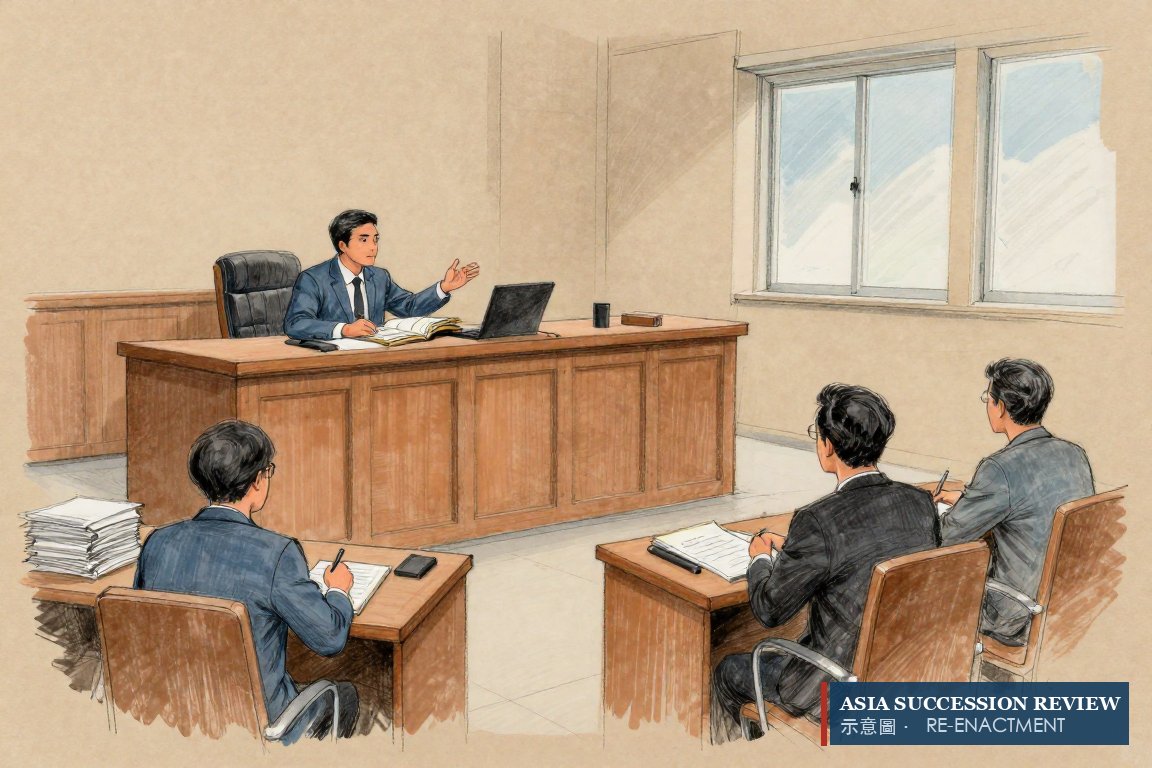
Lim founded Lai Sun Garment in 1947, moved into property with Lai Sun Development in 1987, and died in Hong Kong on 18 February 2005, aged 90; his sons ran Crocodile Garments and Lai Fung Holdings inside the group. The executrices asked the court to pronounce a will dated 3 December 2004 which disinherited his third household entirely. On 2 August 2004, four months before that signing, a neurologist had given Lim a Mini-Mental State Examination score of 8 out of 30 and assessed him as having moderate to severe Alzheimer's disease.

Wilson Chan finds no capacity and restores a 1973 manuscript from Lim's safe deposit box, voiding the 2004 will
The judge dismissed the claim, finding neither testamentary capacity nor knowledge and approval, and pronounced in solemn form instead a Chinese manuscript will dated 2 February 1973, written on Lai Sun Garment letterhead, together with a codicil of 20 January 1974 — documents found after Lim's death in his safe deposit box at the Bank of East Asia.

Lim writes 3 wills over 31 years but settles nothing in life, so every page is attackable after his death
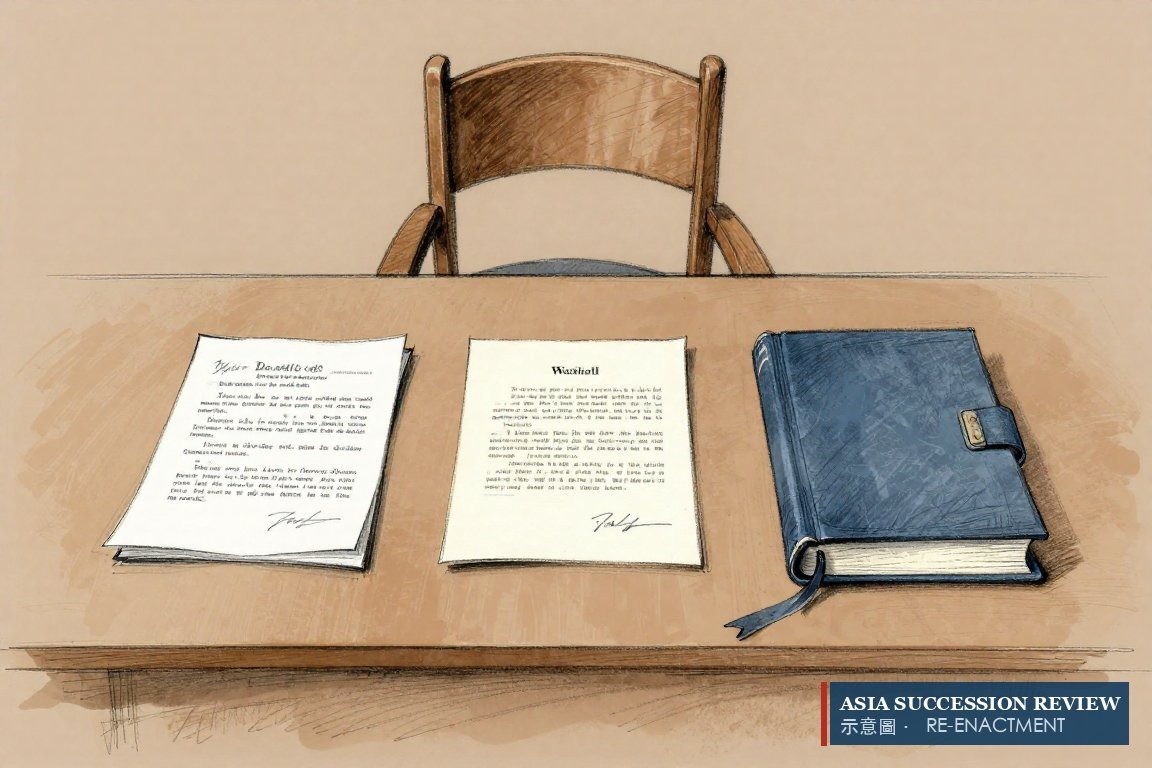
A founder who never settled anything in his lifetime leaves the whole question to a document, and a document can be attacked. Lim Por-yen left three: a 1973 manuscript dividing his estate into twelve shares, a 1993 declaration assuring his chosen successor of his position, and the 2004 will — thirty-one years of intention with nothing structural underneath it. By December 2004 the founder was 90, had been assessed at 8 out of 30 on the standard cognitive screen four months earlier, and was still nominally the man whose signature decided everything.
The beneficiaries agree the split before consulting Lim, then explain the will to a man with dementia in 20 minutes
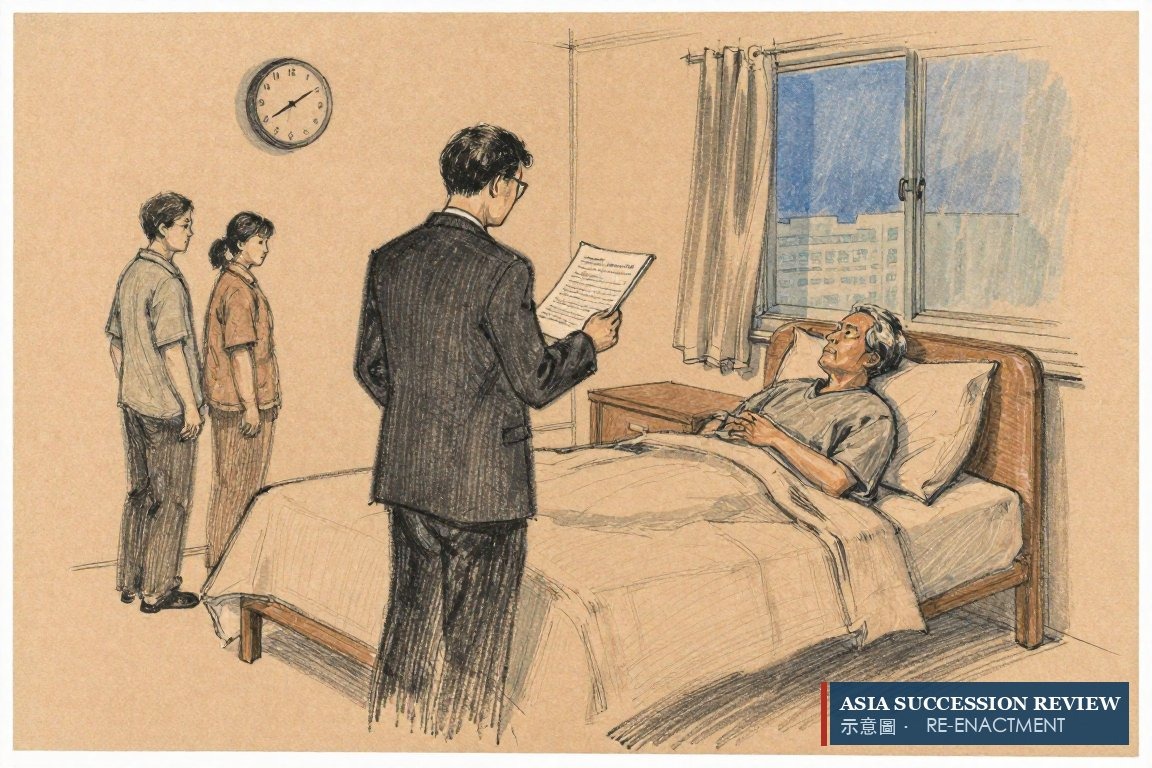
The judge's account of how the 2004 will came to exist is the part every founder should read: it was, he found, the product of negotiations and jockeying between the beneficiaries, with the household that stood to lose everything not in the room, and a rough cut of the distribution agreed among them before there was any consultation with Lim at all. He also found there was no certificate of capacity, and that the will was explained to a man with moderate to severe dementia in fifteen to twenty minutes.
The estate appeals even the restored 1973 will, so year 22 arrives and nothing is distributed
Twenty years later a judge has restored the 1973 sheet of paper — and the estate has appealed that too. The estate is not being distributed. It is being litigated, in its twenty-second year.
The last day a founder can decide anything is the last day he has capacity — after that Singapore takes the pen away from the family and gives it to a judge, and the only real answer was to settle the thing years earlier.
A Singapore court runs the same trial with the same neurologists, so any page promising speed is selling something
Start with what Singapore does not change, because it is the larger half. Testamentary capacity is a common-law test in Singapore exactly as it is in Hong Kong; the Wills Act 1838 governs the form of a will — section 6 requires it to be signed at the foot and witnessed by two people present at the same time, section 4 sets the minimum age at 21 — and says nothing about the mind behind the signature. A Singapore court faced with the same December 2004 signing would have had to run the same trial, hear the same neurologists, and weigh the same medical records. Singapore is not a faster forum for a contested will. Any page that tells a family otherwise is selling something.
In Singapore only a judge may write a will for a man who has lost capacity, never his beneficiaries
What Singapore does change is who is allowed to hold the pen once capacity has gone. Under the Mental Capacity Act 2008, section 23(1)(k), the execution of a will for a person who lacks capacity is a power of the Court — not of a deputy, not of a donee under a lasting power of attorney, and certainly not of the beneficiaries. Section 23(1)(h) puts the settlement of that person's property on trust in the same place, and section 23(2) requires the court, when it does either, to have regard to the Act's best-interests principle.
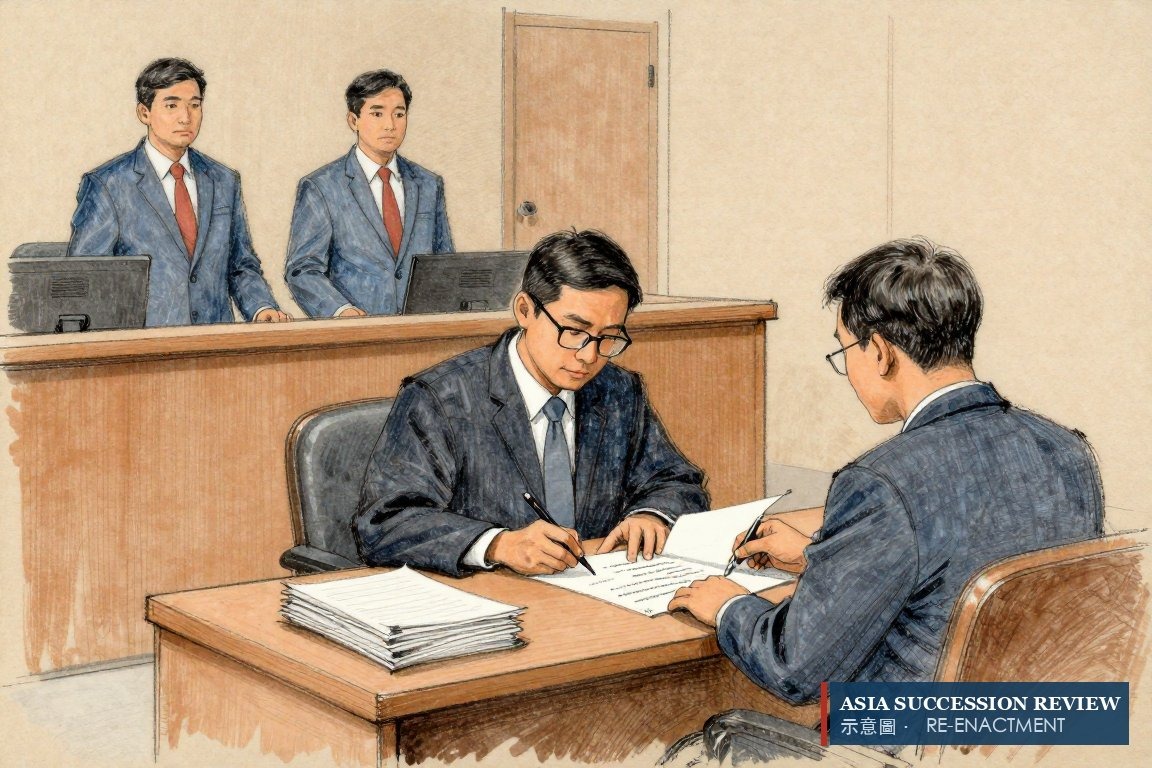
A judge makes that will on the record with every household served, so nobody drafts it at Lim's bedside
The practical effect is blunt: the document produced in Hong Kong in December 2004 has no route to validity in Singapore at all. The only lawful instrument at that point is a statutory will made by a judge on the record, with medical evidence filed and every interested party served — including the household somebody wants excluded. The family cannot draft the answer among themselves and bring it to the bedside, because in Singapore the bedside is no longer where the answer is made. And the instrument a founder signs before that day is the lasting power of attorney, which decides who signs for him — not who inherits from him.
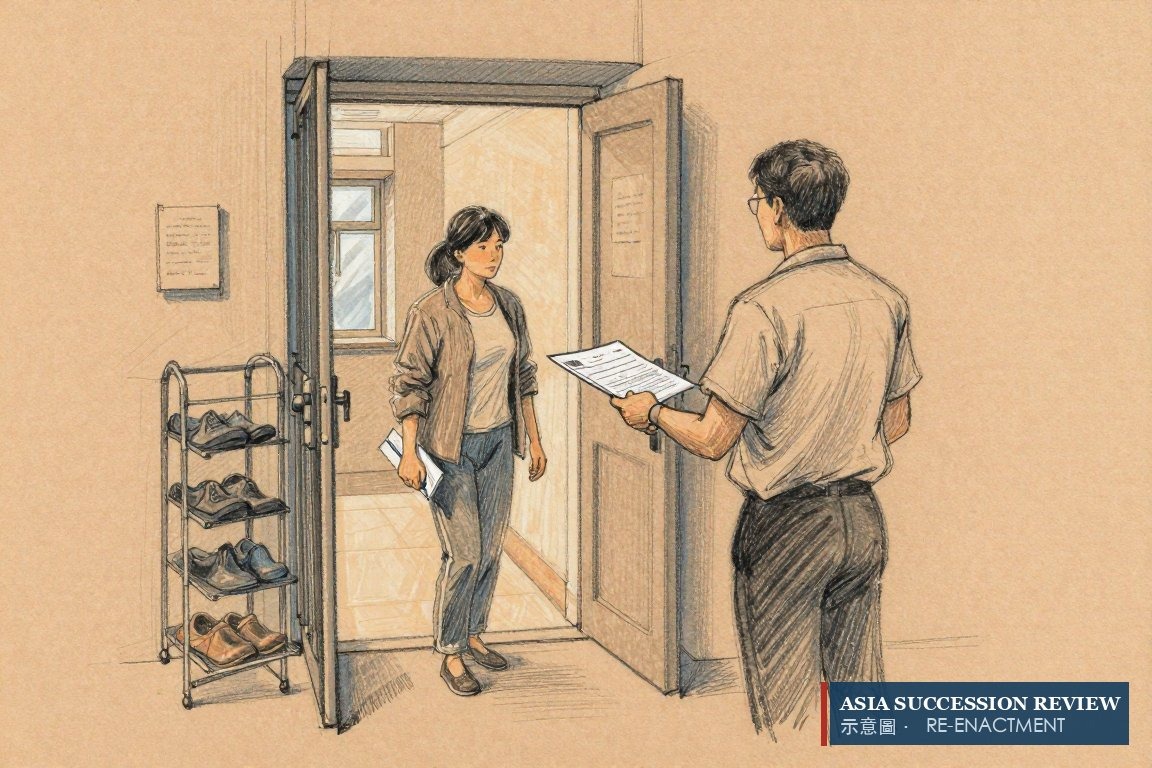
Lim settles his stakes into a trust while nobody doubts his mind, so there is nothing left to fight over
The real answer, though, is upstream of every court in this story. A founder who settles his controlling stakes into a trust while his capacity is beyond argument has removed those assets from the estate: there is no probate action to bring, because there is nothing in the estate to fight over, and the deed — not a will read out twenty years later — fixes each household's share. Singapore supports that architecture directly: a trust term of up to 100 years, no public trust register, and Trustees Act 1967 section 90 shielding a Singapore-law trust from foreign forced-heirship claims.
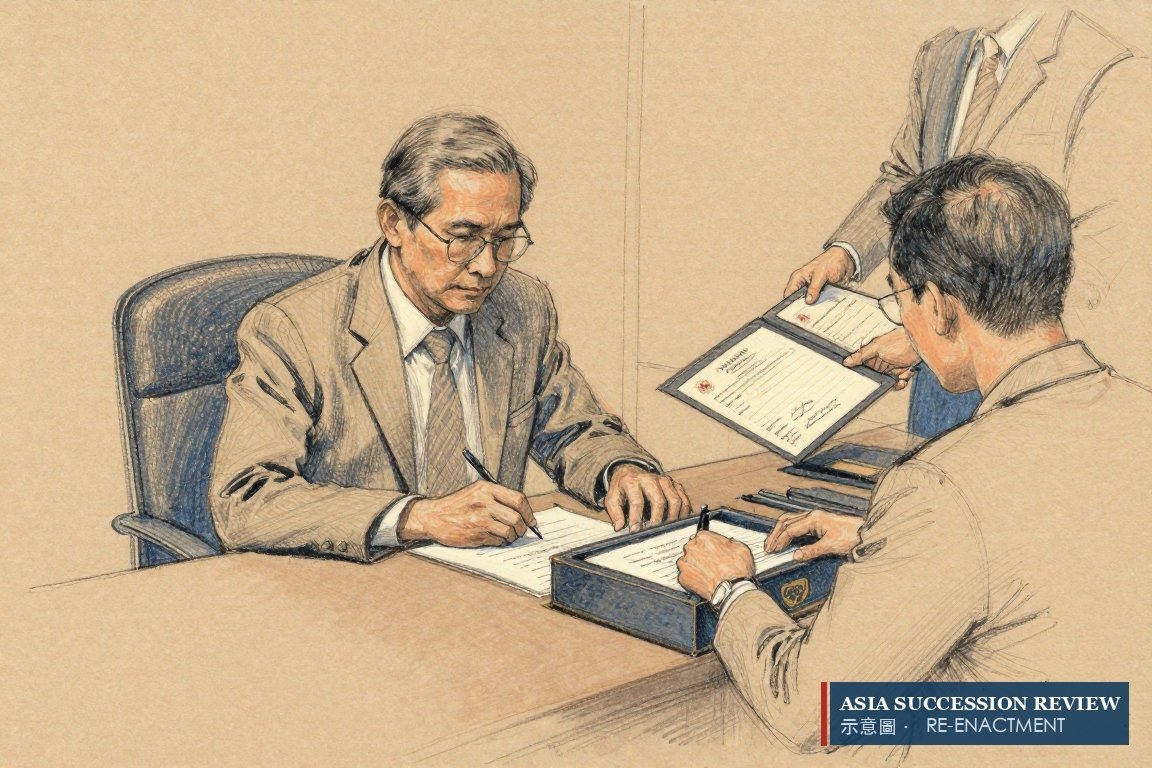
Lim is still signing documents at 89, and those quiet years are the only window a trust survives
Two honest footnotes. First, a trust settled in December 2004 would have been attacked on exactly the same medical evidence and would have failed for the same reason; the window is the years when nobody would think to ask, and the judgment records that Lim was still going into the Cheung Sha Wan office to sign documents at 89. Second, Singapore has no forced heirship for non-Muslims, so a founder here is free to leave a household out — the point is not that he cannot, but that doing it on the last day of his capacity, through other beneficiaries, is what buys the twenty-two years.

The excluded household — their share fixed in the founder's lifetime by the founder — not restored two decades later by a judge reading a 1973 manuscript
The chosen successor — the group, on a deed that says so — instead of a 1993 assurance nobody propounded and a will the court refused
The estate — no probate action, no 26-day trial, no costs order against the executors — the assets sit in a trust that never entered probate
Every household — the founder's reasons in his own words, while there was still someone to ask what he meant
A counterfactual, not advice. The verified machinery is on the Singapore page; where your family stands is the briefing.

From the case files: Four households, no lifetime settlement, and a fight over who administers: Stanley Ho