Fight the heir who runs the group, and the group fights back. Ask LG
LG's widow and daughters are appealing the 2018 split that gave the chairman 8.76 per cent of LG Corp. On 15 October LG Energy Solution confirmed it had reported its own former president to the police, alleging he quietly helped their side as an unlicensed legal adviser. Nothing has been proved. What Singapore's law on unlicensed legal work and on company insiders would say, and the rule written at the division that keeps the companies out of an heirs' fight.
Read this in: EN · 简体 · 繁體 · ไทย · ID
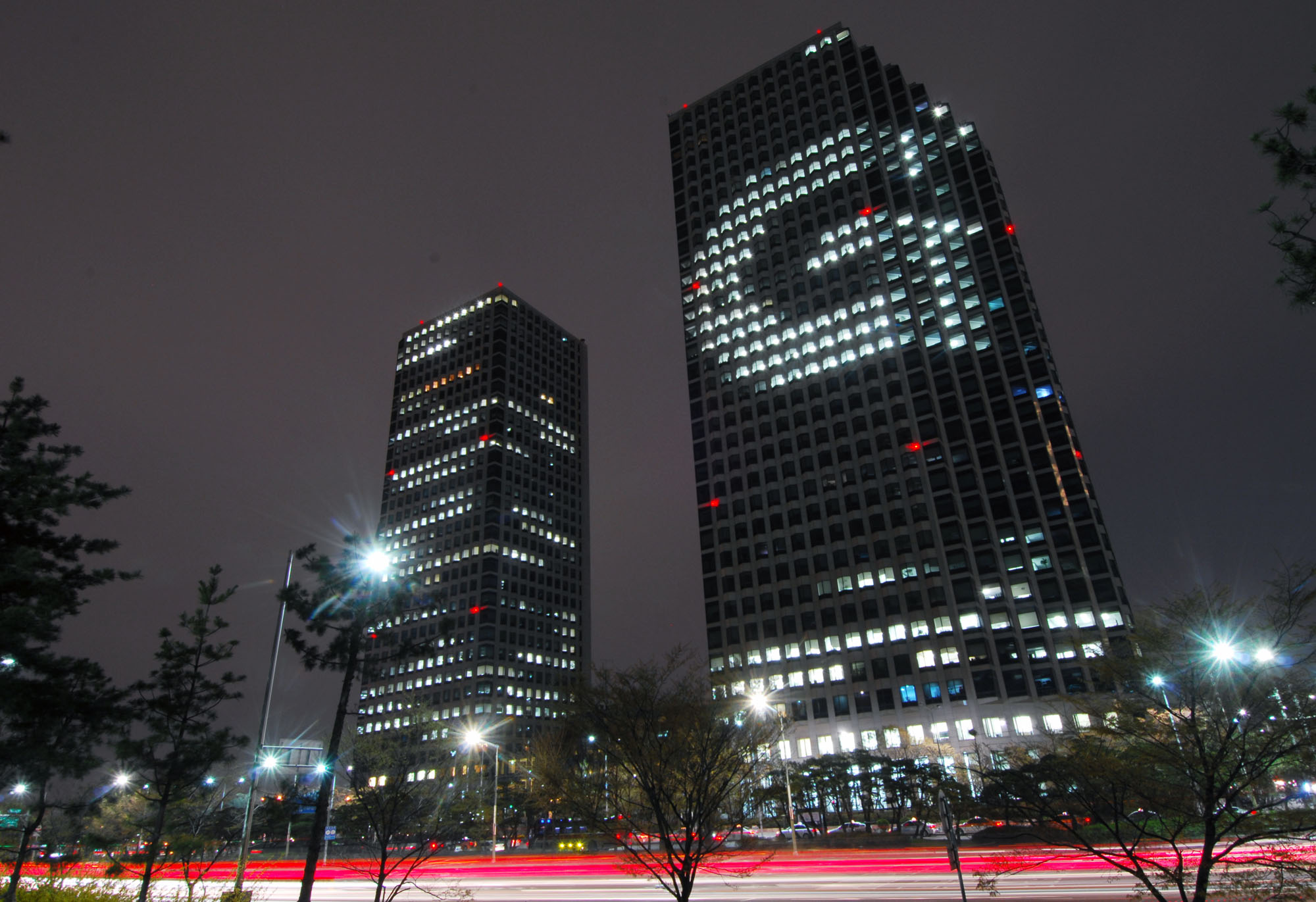
A battery maker reports its own former president to the Seoul police, accusing him of unlicensed legal work in 2026
On 15 October 2026 LG Energy Solution, the battery maker in the LG group, confirmed to the Korean legal daily Law Times that it had filed a criminal complaint with the police against its former president, identified only as Mr Lee, who has since been retained by the company as an adviser. The complaint alleges a breach of Korea's Attorney Act. As Law Times reported on 16 October, the company says he took one side in legal disputes involving the group's controlling family, including the inheritance suit, and handled legal work without being a lawyer.
The widow and daughters allegedly lean on a former president, and LG Energy Solution says that ends his contract
The side he is alleged to have helped is the late chairman Koo Bon-moo's widow, Kim Young-sik, and their daughters Koo Yeon-kyung and Koo Yeon-su, the "three women" of the Korean press. The company suspects he asked for or received money from them on top of an advisory fee reported at tens of millions of won a month, helped plan their lawsuit and their response to investigations, and tried to steer coverage. It says this harmed the group and is grounds to end his contract. "It is true we filed the complaint," it told Law Times, declining to say more while police investigate.
Two LG companies disclose about ₩7.5 billion in alleged losses and say the figure is theirs, not a court's
The complaint sits beside an older one. On 14 October, answering a Korea Exchange query about that day's press reports, LG Energy Solution and LG Display each disclosed that on 10 February 2026 they had filed complaints accusing a former executive, Lee OO, of breach of trust: ₩646,850,000 at LG Energy Solution and ₩6,859,000,000 at LG Display, about ₩7.5 billion together. Each filing says the figure is the complainant's and not fixed by any court. Korean outlets report the money went in advisory fees to a China consultancy linked to his family, and that police have searched his home and office.
The widow and daughters sign LG's 2018 split, sue to reopen it in 2023, and lose in February 2026
The inheritance suit is the one described in our No. 7. Koo Bon-moo died in May 2018 holding 11.28 per cent of LG Corp, the holding company. Under the partition agreement the family signed, his adopted son, the chairman Koo Kwang-mo, took 8.76 per cent, Koo Yeon-kyung 2.01 per cent and Koo Yeon-su 0.51 per cent; the widow took no LG Corp shares. In February 2023 the three women sued to reopen the split at the statutory ratio. On 12 February 2026 the Seoul Western District Court dismissed the claim, finding the agreement valid and no deceit proved.
The chairman's finance chief testifies to a memo, and the losing side complains the ruling rests on his team
Their lawyer said then that the ruling rested on testimony and material from the group's financial management team; the chairman's finance chief had testified that the late chairman left a memo saying all his LG Corp shares should go to his son. The appeal opened before the Seoul High Court's Civil Division 8-3 on 4 September 2026, with about ₩98.7 billion stated as the value in dispute, and the next preparatory hearing is set for 27 November.
The former president stays uncharged and unreachable, and nothing yet proves the complaints filed against him in 2026
Law Times could not reach Mr Lee for comment. He has not been charged, the police have announced no finding, and none of the allegations in either complaint has been tested. As reported, the complaints are against him alone; neither accuses the widow or her daughters of anything.
- 1Law Times 법률신문 (Woo Bin), 16 Oct 2026: LG Energy Solution confirms on 15 Oct a police complaint against former president Lee, now an adviser, under the Attorney Act; alleged legal work for one side in the controlling family's disputes incl. the inheritance suit; suspected payments from the 'three women' side beyond a monthly advisory fee of tens of millions of won; strategy and media steering alleged; grounds to end the advisory contract; company statement; Lee not reached; police search in the breach case
- 2LG Energy Solution, DART disclosure 횡령ㆍ배임혐의발생, 14 Oct 2026: complaint against former executive 이OO for breach of trust, ₩646,850,000 (0.002% of equity), complaint filed 10 Feb 2026, amount not fixed by judicial process; replaces the answer to the Korea Exchange inquiry of the same day
- 3LG Display, DART disclosure 횡령ㆍ배임혐의발생, 14 Oct 2026: complaint against former executive 이OO for breach of trust, ₩6,859,000,000 (0.08% of equity), complaint filed 10 Feb 2026
- 4Maeil Ilbo 매일일보 (Kwon So-yun), 15 Oct 2026: about ₩7.5bn disclosed by the two companies; LG Chem and LG Economic Research Institute also filed; advisory fees of about US$20,000 a month to a China consultancy linked to the former executive's family; police examining whether the work was done
- 5Global Economic 글로벌이코노믹 (Park Sang-hwi), 14 Oct 2026: the former executive served as LG Display vice president and LG Energy Solution president; police recently searched his home and office
- 6SBS Biz (Kim Jong-yoon), 4 Sep 2026: the appeal opens before the Seoul High Court Civil Division 8-3; about ₩98.7bn stated as the value in dispute; next preparatory hearing 27 Nov; suit filed Feb 2023, dismissed Feb 2026; 11.28% split 8.76/2.01/0.51 with no LG Corp shares to the widow
- 7The Korea Times, 12 Feb 2026: Seoul Western District Court dismisses the widow's and daughters' suit; agreement valid, no fraud; CFO's testimony of the late chairman's memo; plaintiffs' lawyer on the financial management team's evidence
- 8Attorney Act 변호사법 (Republic of Korea), art 109(1): non-lawyers handling legal affairs, incl. legal consultation and document drafting, in lawsuits, family cases and investigations, for money or other benefit; up to 7 years or ₩50m, combinable; version in force 2 Oct 2026, read on the National Law Information Center 16 Oct 2026
- 9Legal Profession Act 1966 s33 (unauthorised person acting as advocate or solicitor: s33(1) up to $25,000 or 6 months; s33(2)(a), (b), (d) documents for proceedings, papers to found or oppose a grant of probate, letters threatening proceedings, unless done for no fee; s33(3); s33(5) up to $10,000; s33(10) wills excluded), current version as at 16 Oct 2026, read on Singapore Statutes Online 16 Oct 2026
- 10Companies Act 1967 s157(2), (3), (5) (improper use of position or information by an officer or agent; former officers included; liability to the company; fine up to $20,000 or 12 months, as amended by Act 24 of 2025 wef 6 May 2026), read on SSO 16 Oct 2026
- 11Companies Act 1967 s216(1)-(2) (personal remedies in cases of oppression or injustice: any member may apply; orders to regulate conduct or for a share purchase), read on SSO 16 Oct 2026
One heir takes the group in 2018, and with it the lawyers, auditors and finance team his sisters must fight
The 2018 agreement did more than divide shares. It decided who would run the group, and with the group come its lawyers, its auditors, its compliance officers, its finance team and its standing to take complaints to the police. The chairman's mother and sisters kept shares and money. They did not keep a seat inside the machinery. When they sued him, they had to build their case from outside, and the people best placed to help were executives who knew the family and the business: people the group employs, pays or retains.
An insider helping the outside branch serves two masters, and the company run by the other branch judges him
That is the trap the complaint exposes, whatever its outcome. An insider who helps the branch outside control answers to two people at once: the company that pays him and the family member he sides with. The company, run by the other branch, decides when that becomes a breach. It may be entirely right; the law forbids unlicensed legal work and misuse of a company's position. To the branch outside, it can still look like the group taking the chairman's side in a family case. In Korea, courts will decide which it is.
A family that gives one heir the companies hands him their resources too, unless it writes a neutrality rule first
Nothing here says who is right about the 2018 split or about Mr Lee. The point for other families is earlier and structural. A succession that hands one heir the companies also hands him their resources in any later family dispute, from the finance team's evidence to the compliance department's complaints, unless the family wrote down, before anyone disagreed, that the companies stay out of it.
Singapore would also forbid an unlicensed helper from preparing court papers, or papers to oppose a grant of probate, for reward, and would hold a present or former officer liable for improper use of the company's position or information to help anyone; what no statute supplies is the rule this family lacked, written at the division, that the companies stay neutral and each signatory has a lawyer of their own.
Start with what Singapore could not change. The estate is Korean, the 2018 agreement is governed by Korean law, the appeal sits in the Seoul High Court and the complaint is with the Seoul police under Korea's Attorney Act. No Singapore court reaches any of it. The useful question is narrower: if a Singapore family's operating company accused a former executive of quietly advising the heirs suing the chairman, what would Singapore law say, and what should the family have written down first?
Korea's rule is wide. Article 109(1) of the Attorney Act, in the version in force from 2 October 2026 and read on the national law database on 16 October, punishes anyone who is not a lawyer and who, for money or another benefit received or promised, handles legal affairs in a lawsuit, a family case or a matter under investigation, including legal consultation and drafting documents, or who brokers such work. The penalty is up to seven years' imprisonment or a fine of up to ₩50 million, and the two may be combined. Paid legal advice alone is inside its words.
Singapore's equivalent is narrower in its words. Section 33(1) of the Legal Profession Act 1966, current version as at 16 October 2026 and read on Singapore Statutes Online that day, makes it an offence for an unauthorised person to act as an advocate, a solicitor or an agent for a party to proceedings, with a fine of up to $25,000 or six months' imprisonment. Section 33(2) adds three acts that matter in a family case: preparing any document relating to a legal proceeding; taking instructions for, or preparing, papers to found or oppose a grant of probate or letters of administration; and sending letters threatening proceedings on a claimant's behalf.
Section 33(2) reverses the burden: the helper is guilty unless he proves he acted for no fee, gain or reward, and a first offence carries a fine of up to $10,000. Section 33(3) separately forbids placing a lawyer's services at someone's disposal for reward. What the section does not list, in terms, is paid advice on strategy or on the press. Whether that alone would be caught here is for a court; the words are about acting in proceedings and preparing papers. The safe course for an heir in Singapore is that strategy comes from a licensed lawyer.
The second Singapore rule binds insiders. Section 157(2) of the Companies Act 1967, read on SSO on 16 October 2026, says an officer or agent of a company must not make improper use of the position, or of information acquired through it, to gain an advantage for himself or anyone else or to cause the company detriment. Section 157(5) says an officer includes anyone who has at any time been one. Under section 157(3), as amended with effect from 6 May 2026, a breach makes him liable to the company for any profit or damage, and is an offence punishable by a fine of up to $20,000 or 12 months.
So in Singapore a former president who carried the group's information to one branch of the family would be exposed whatever his motive, and the company could enforce it. That is the company acting on its own rights. On the other side is section 216: any member may ask the court for relief if the company's affairs are conducted oppressively to members or in disregard of their interests as members. The widow and daughters hold LG Corp shares. But section 216 protects members as members, not as litigants in an estate; we have read no case applying it to a company's stance in a family inheritance suit.
The planning lesson sits at the moment of division, not in the courtroom. A family that hands one heir the operating group can say, in the same signed document, that the group's companies take no part in any dispute among family members about the estate: no company money, staff, advisers or information for either side, and any complaint about an insider's conduct in such a dispute goes first to a named independent director or mediator. It is the family's own version of what a sound succession plan aims for: the business passed on properly, and the family treated fairly, by separate routes.
The second document is the advice each signatory takes. The Koo agreement was signed in the weeks after a funeral, and a court has now found it valid. A division that each person signs only after advice from a lawyer of their own, paid by the estate, answers any later claim that someone was misled, and removes the need for anyone to look for a helper inside the group. Insiders can then stay insiders. Where an executive is close to one branch, a written conflict rule lets him declare it and step aside before anyone asks him for help.
For the reader whose family's companies are run by one heir, the questions can be asked at the table while everyone still agrees. If the family disagreed about the estate tomorrow, whose side would the companies' lawyers and finance team be on? Did each person who signed the division have an adviser of their own? Is there a written rule that the companies stay out of family disputes, and who enforces it? Wanting the answers is stewardship, not suspicion. The Koo family's appeal returns to the Seoul High Court on 27 November.
Koo Kwang-mo, LG's chairman — 8.76 per cent of LG Corp from the 2018 split; a first-instance win on 12 February 2026; an appeal pending, next hearing 27 November; group companies pursuing complaints against the former president
Kim Young-sik, Koo Yeon-kyung and Koo Yeon-su — an appeal over about ₩98.7 billion in stated value; a dismissed adoption petition (3 September 2026); an adviser they are alleged to have relied on now under a police complaint; no allegation against them in the complaints as reported
Mr Lee, the former president — two criminal complaints, breach of trust (about ₩7.5 billion as disclosed) and the Attorney Act; a police search; an advisory contract the company says it may end; no charge, and every allegation untested
LG Energy Solution and LG Display — complaints filed on 10 February 2026 and disclosed on 14 October; the Attorney Act complaint confirmed on 15 October; amounts that are the complainants' figures, not a court's
The same family in Singapore — Legal Profession Act s33 forbidding unlicensed preparation of court or probate papers for reward; Companies Act s157 reaching former officers who misuse position or information; s216 for members as members; and no rule keeping the companies neutral unless the family writes one
The reader whose family's companies are run by one heir — three questions: whose side the companies' lawyers would be on; whether each signatory had an adviser of their own; whether a written rule keeps the companies out of family disputes
A counterfactual, not advice. The verified machinery is on the Singapore page; where your family stands is the briefing.

From the case files: No. 7: adopting the heir got LG's chairman the company, and the partition agreement the widow has tried to undo