Michael Jackson's trust waits 17 years on: a will fills it last
Michael Jackson's will sends everything to a family trust, so the trust is paid only when his executor lets go. Seventeen years on, his daughter Paris has asked a Los Angeles court to order $600 million across, and the estate says the IRS case stands in the way. Why a Singapore will would wait just the same, and what a family can write down so that it does not.
Read this in: EN · 简体 · 繁體 · ไทย · ID
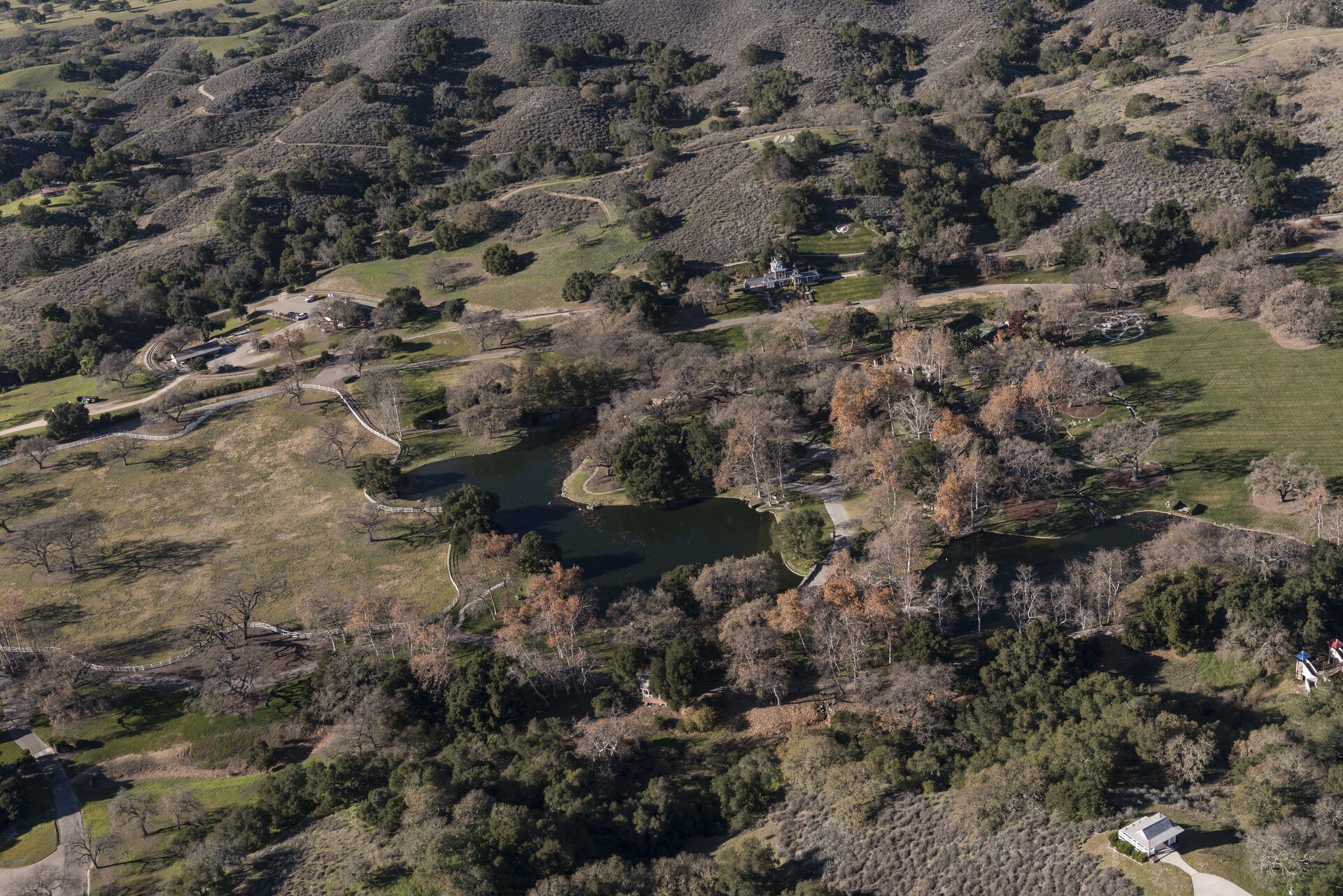
A daughter asks a court to move $600 million into the family trust, and the judge sets 4 December
In a petition filed in Los Angeles Superior Court on 29 October 2026 and reported from 2 November, Paris Jackson asked the court supervising her father's estate to order its executor, John Branca, to move $600 million, or whatever sum it finds reasonable, into the Michael Jackson Family Trust. 'More than seventeen years after his passing, Michael Jackson's family trust remains unfunded,' the petition says. The trust is meant for her and her brothers, Prince, 29, and Bigi, 24. On 4 November the retired judge hearing the estate, Mitchell Beckloff, put the matter over to 4 December.
The estate sells a ranch, a music stake and half its remaining rights, raising over $1 billion
Her case is arithmetic. The petition lists the estate's sale of its EMI Music Publishing stake for $287.5 million in 2018, Neverland Ranch for $22 million in 2020, and a 2023 deal in which Sony agreed to pay $750 million upfront for half of the remaining intellectual property: more than $1 billion before tax and expenses.
Her lawyers count $850 million in cash and say $600 million can move, while 2011's promise goes unfiled
The estate's accounts showed about $850 million in cash and equivalents at December 2024. After potential liabilities, her lawyers put about $600 million as free to move. They say the executors told the court in 2011 they would seek a distribution, and never filed. A separate objection asks why more than $440 million sat in low-yield bank accounts; the estate calls those 'the same hollow complaints'.
Three children are promised income at 21, and say they get what one executor chooses instead
As the petition describes the trust, each child was to receive income from 21, a third of the capital at 30, half of the rest at 35 and the balance at 40. Prince turns 30 in February 2027. Instead, it says, they receive 'lesser amounts dictated by the remaining Executor, who uses this power to deter them from checking his abuses', and payments fell by millions after she began challenging him last year.
The estate says $200 million has gone out, and blames a $700 million IRS claim for the wait
The estate calls that 'a complete fabrication'. It says more than $200 million has gone to or for the beneficiaries, and that it is 'prevented from fully funding the charitable foundation and the individual trusts' until legal hurdles clear, above all the IRS case, in which the agency sought $700 million in taxes and penalties. A ruling cut that sharply, it says, but 'the matter has not been settled and could still change'.
The estate says no child is due capital before 30, and her side says part funding was overdue
The estate adds: 'Michael Jackson's will is clear. None of his children receive a distribution until they are in their 30s.' Her spokesperson replies that partial funding was something Branca 'had the ability and obligation to do long ago'. None of this has been decided.
- 1Los Angeles Times, 3 Nov 2026: petition reviewed by the paper; 'iron grip'; 2011 statement; children's ages; the estate's reply on the IRS and 'None of his children receive a distribution until they are in their 30s'; a spokesperson's reply for Paris Jackson
- 2People, 3 Nov 2026: filing of 29 Oct; income at 21, capital at 30, 35 and 40; EMI $287.5m (2018), Neverland $22m (2020), the 2023 Sony deal; about $850m cash at Dec 2024; the estate's $700m IRS statement; more than $200m distributed; hearing 4 Dec
- 3Page Six, 2 Nov 2026: petition obtained by the paper; one-third at 30, half the remainder at 35, balance at 40; Sony $750m upfront for 50%; the estate's full statement on the charitable foundation and the trusts; Branca also named as trustee
- 4MyNewsLA, 4 Nov 2026: Judge Mitchell Beckloff (retired) puts the petition over to 4 Dec; petition filed 29 Oct
- 5TMZ, 4 Nov 2026: separate objection to the executor's accounting; more than $440m in low-yield bank accounts; the estate's reply
- 6Last Will of Michael Joseph Jackson (2002), as published by CNN on 1 Jul 2009: entire estate to the trustees of the Michael Jackson Family Trust; no date or formula for funding; read in full 30 Oct 2026
- 7California Probate Code s11620: petition for preliminary distribution of all or a portion of a beneficiary's share once two months have elapsed after letters are first issued; read on leginfo.legislature.ca.gov 5 Nov 2026
- 8Seah Teong Kang v Seah Yong Chwan [2015] SGCA 48 (Court of Appeal, 10 Sep 2015): whole ownership of the deceased's assets passes to the executor by virtue of his office, citing Livingston; read on eLitigation 5 Nov 2026
- 9Wong Moy v Soo Ah Choy [1996] SGCA 52 (Court of Appeal): beneficiaries have no beneficial interest in any particular asset of an unadministered estate, but are not without a remedy; read on eLitigation 5 Nov 2026
- 10YFF v YFG [2026] SGHCF 20 (Chan Seng Onn SJ, 26 Jun 2026): order of 1 Dec 2025 for an account in three days and proceeds into the estate account in seven; S$3,017,278.05 to be paid in; read in full on eLitigation 5 Nov 2026
- 11Probate and Administration Act 1934 (Singapore) s28, oath to administer faithfully and to account; whole Act as at 5 Nov 2026, read on Singapore Statutes Online 5 Nov 2026
- 12Trustees Act 1967 (Singapore) s29 (notice, at least two months, distribution of the property or any part, applies despite the instrument) and s90(5) (reserved powers); as at 5 Nov 2026, read on Singapore Statutes Online 5 Nov 2026
- 13IRAS: Estate Duty removed for deaths on and after 15 February 2008
A will sends everything to a trust, so the trust holds nothing until the executor lets go
A will cannot pay a trust until the estate lets go. Jackson's 2002 will gives everything to the trustees of his family trust. That is a common design, and it means the trust holds nothing on the day of death. Everything goes first to the executor, who settles debts and tax, runs what must be run, and passes on what is left. Until that happens, the children's trust is a document.
Income is due at 21 and capital at 30, but an empty trust produces neither on its date
The two sides are reading different lines of the same plan. The estate speaks of distributions, and capital was never due before 30. The petition speaks of income, due from 21. Both can be true. But income needs an asset inside the trust to produce it. With nothing moved across, what the children receive is whatever the executor releases, and a date written in a deed stops working as a date. That is our reading of the terms as reported; we have not seen the trust deed.
An executor keeps back a reserve for the tax, and a judge must now pick the number
Holding money back is not wrongdoing in itself. An executor who pays out and then meets a tax bill has a problem of his own, so a reserve is prudent. The fight is over how much, and for how long. The petition's own figures imply a reserve of about $250 million ($850 million less $600 million, our subtraction). The will sets no formula and no date, so a judge will now pick the number.
One man may sit on both sides of the payment, and only the children can ask him why
And there may be nobody on the other side of the table. Page Six reports that Branca is also named as trustee. If so, the man deciding when the estate pays the trust is also the man who would receive for it. The only people left to ask the question are the children, who depend on him for their money.
A Singapore will would produce the same wait, because an executor owns the estate until it is administered; the cure is a trust funded while the founder is alive, or a will that writes down the first transfer, the reserve and the date.
An American estate stays under California law, so Singapore only shows what a family can write down
Limits first. Jackson was an American living in California. California law governs his will and trust, a Los Angeles court will decide this petition, and the United States taxes a citizen's estate wherever it sits. Nothing in Singapore law would change that. We have read press reports of the petition, not the document, and we have not seen the trust deed. The useful question is what a family in Singapore can write down, and where a Singapore will would leave the children in the same place.
Singapore's Court of Appeal says the executor owns the estate, so the same wait would follow
A Singapore will would leave them in the same place. In Seah Teong Kang v Seah Yong Chwan [2015] SGCA 48, the Court of Appeal said the whole ownership of a deceased's assets passes to the executor by virtue of his office, with no split between legal and equitable interests. In Wong Moy v Soo Ah Choy [1996] SGCA 52, it said beneficiaries have no beneficial interest in any particular asset of an unadministered estate. A trust named as residuary beneficiary owns a right to have the estate properly run. It does not own the cash.
A Singapore judge orders executors to account in three days, and gets the figures moving fast
What the beneficiary has is control through the court, and in Singapore that can move fast on the numbers. Every grantee swears to administer the estate faithfully and to account for it (Probate and Administration Act 1934, s28). In YFF v YFG [2026] SGHCF 20, Chan Seng Onn SJ recorded his order of 1 December 2025 against two executors: a full account of the administration within three days, and any sale proceeds paid into the estate's bank account within seven. That was a widow attacking the wills, on an interim order, not a beneficiary asking to be paid. But it shows how quickly a court can require the figures.
California gives heirs a named petition after two months, and Singapore's two Acts set no date
Forcing the money across is slower. California has a named procedure: a petition for preliminary distribution of all or part of a share, available once two months have passed since letters issued (Probate Code s11620). We found no equivalent section in Singapore's Probate and Administration Act or Trustees Act, read on 5 November 2026, and neither sets a date by which an executor must distribute. A Singapore beneficiary would be asking the Family Justice Courts to supervise the administration, on the facts.
Two months' notice lets a Singapore executor pay out part, and keep back only for known claims
The law does protect a part payment. Under section 29 of the Trustees Act 1967, personal representatives may advertise in the Gazette, allow at least two months, and then distribute 'the property or any part of the property', having regard only to claims they know about. A will cannot exclude the section. Known claims still have to be met. So the logic of a reserve is already there: keep back enough for what is known, and release the rest. That is our reading of how the section works, not a ruling on a case like this.
Singapore ended estate duty in 2008, so the largest reason to hold money back never arises
The largest reserve would not arise. Singapore removed estate duty for deaths on and after 15 February 2008, so a Singapore estate has no counterpart to a federal fight over what a name was worth. Debts, tax already owing and family disputes remain, and each of those can hold money back too.
A founder funds the trust while alive, and the executor never stands between it and the children
Better still, the trust is funded while the founder is alive. Property settled on a lifetime trust belongs to the trustee from the day of transfer. It never passes through an executor, so the date in the deed runs on its own, and the income is the trustee's to pay. A founder need not let go of the steering wheel: section 90(5) of the Trustees Act says a trust is not invalid only because the settlor keeps powers of investment or asset management.
A lifetime trust costs the founder real ownership, and a founder deep in debt cannot use it freely
That route has a price. The founder really does give the property away, and a transfer made to defeat creditors can be attacked. For someone who, like Jackson, owed more than $500 million at death on his estate's own account, it would have been no simple answer.
A will can carry a clock: a first transfer by a date, a reserve formula and yearly accounts
If the trust must be filled by will, write the clock into the will: a first transfer by a fixed date after the grant, a reserve set by formula and reviewed each year, income paid to the beneficiaries from the estate until the trust is funded, and yearly accounts to every adult beneficiary. Name a different person as trustee, or a protector who can ask the executor the hard question. Creditors still come first, and an executor's judgment on a live claim cannot be drafted away. But the argument becomes whether the clause was kept, not what the founder meant.
Executors hand a S$5.5 million house to one of their own, and S$3 million must go back
Paying too fast is also a way to reach a courtroom. In YFF, the executors moved a house sold for S$5.5 million to one of themselves, as the will directed, ten weeks before a widow sued to set the wills aside. The judge later held that the S$3,017,278.05 that executor received must go into the estate's bank account. A clause gives an executor a rule to follow in both directions.
Three questions at the family table find out whether a trust holds anything before it matters
For the reader whose parent's plan names a trust, three questions are worth asking while everyone can still sign. Does the trust hold anything today, or is it only named in the will? If it fills later, by what date, and who sets the reserve? And is the person who pays out also the person who receives? Asking whether a trust has anything in it yet is stewardship, not suspicion.
Paris, Prince and Bigi Jackson — income from 21 and capital at 30, 35 and 40 on paper, as the petition describes it; in practice what the executor releases, which the estate puts above $200 million to or for the beneficiaries
John Branca, the remaining executor — control of an estate holding about $850 million in cash at December 2024, and a petition to move $600 million out of it
The Michael Jackson Family Trust — everything under the 2002 will, but only after the executor lets go; unfunded after 17 years, the petition says
The IRS — a claim that began at $700 million in taxes and penalties, cut by a ruling, and still the estate's main reason for waiting
The same family in Singapore — no estate duty for deaths from 15 Feb 2008; the same wait under a will (Seah Teong Kang [2015] SGCA 48); a part distribution protected by notice (Trustees Act s29); or a lifetime trust that never needs the executor
The reader whose parent's plan names a trust — three questions: is it funded today, by what date does it fill, and is the payer also the payee
A counterfactual, not advice. The verified machinery is on the Singapore page; where your family stands is the briefing.
From the case files: An estate still undivided three years on: Ve Wong's shares in other people's names