Biggie's widow froze his mother's payouts. The court says pay $12.5m
The Notorious B.I.G.'s mother and widow ran the company that owns his music as equal partners. When his mother died in 2025, her share went to a trust she had handed, 15 days earlier, to his former manager. The widow stopped paying it. On 27 October a Delaware judge ruled the trust is owed $12,518,336 plus interest, whatever happens in the grandson's separate challenge. What a Singapore company would have done with the dead partner's dividends, and what it would not.
Read this in: EN · 简体 · 繁體 · ไทย · ID
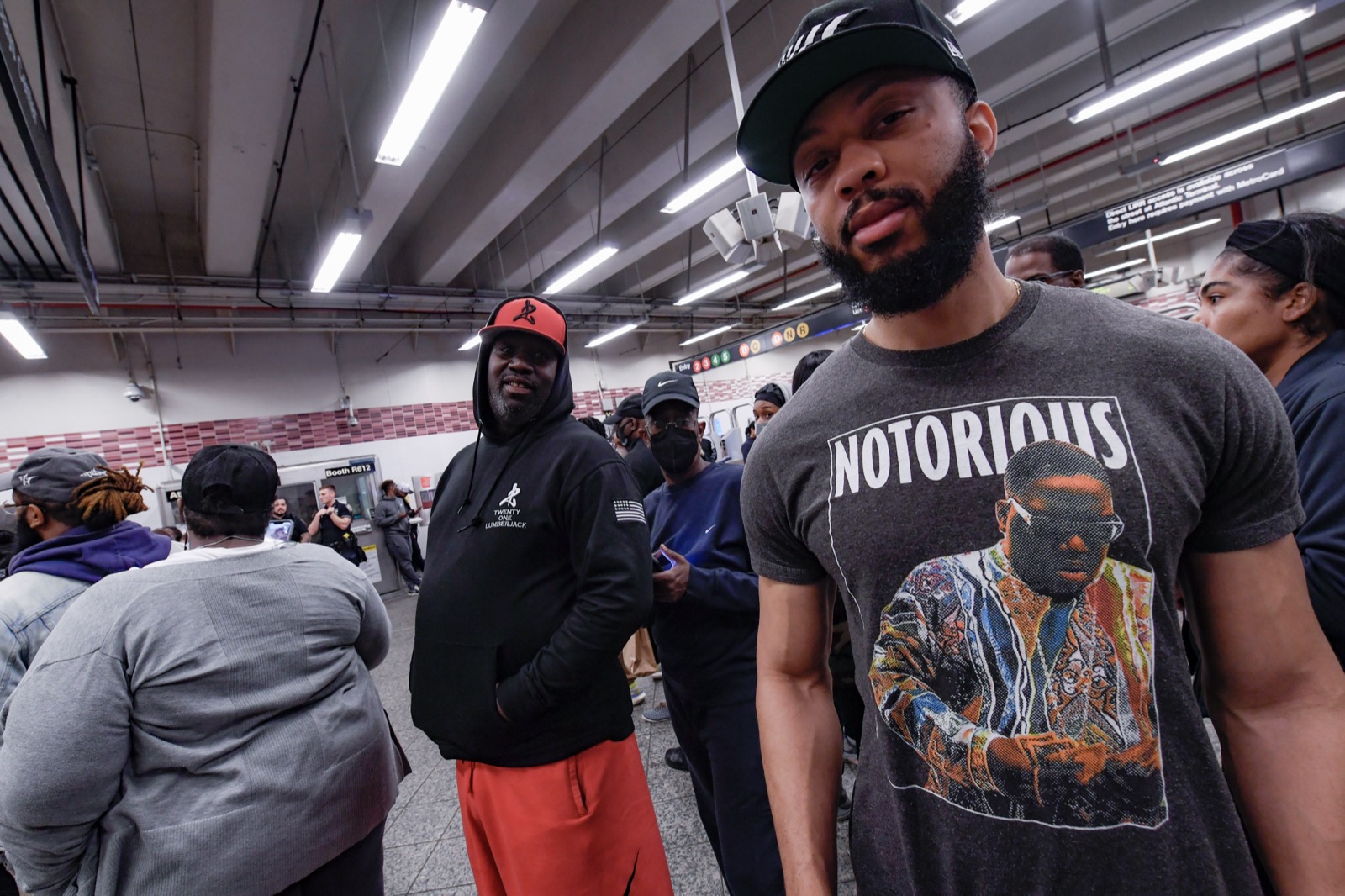
A Delaware judge rules the mother's trust is owed $12.5 million her late son's company held back
On 27 October 2026, Chancellor Kathaleen McCormick of the Delaware Court of Chancery ruled that the trust of Voletta Wallace, mother of the rapper Christopher Wallace, The Notorious B.I.G., is entitled to $12,518,336 in distributions from Notorious B.I.G., LLC, the company that manages his intellectual property, plus prejudgment interest compounded quarterly. Billboard, Rolling Stone and others reported the ruling on 29 October. Wayne Barrow, the trust's sole trustee and the rapper's former manager, says the total with interest will be nearly $14 million.
A mother and a widow each take half of the rapper's music company and split the payouts four ways
The company was formed in 2007 by Voletta Wallace and Faith Evans, the rapper's widow. Under an operating agreement signed on 8 March 2023 they owned half the units each and were its two managers. Each had assigned half of her right to distributions to his children, Ty'anna and Christopher Jordan Wallace, known as CJ, so the four were each entitled to 25% of what the company paid out. The agreement named Voletta's revocable trust, dated 14 December 2020, as a permitted transferee of her units.
Fifteen days before she dies, the mother removes her grandson and hands her trust to the family's former manager
The trust deed and her will of the same date named CJ, a friend and Barrow as successors. On 6 February 2025 she amended the trust and signed a codicil that removed CJ and the friend, leaving Barrow as sole trustee and sole executor, and directed that what the trust held, beyond any specific gift, go to the Christopher Wallace Memorial Foundation. She died on 21 February 2025, 15 days later. Barrow received letters testamentary in Pennsylvania on 21 April 2025.
The widow becomes sole manager, stops the payouts and demands 'verification' before paying the trust a dollar
On her death Evans became the company's sole manager and stopped paying the trust. Asked for distributions on 4 April 2025, she replied that none would be made 'unless verification has been secured'. Barrow sued on 2 July 2025. On 7 August 2026 the court held the trust is a member of the company. In February 2026, CJ had petitioned a Pennsylvania court to revoke the codicil and the trust amendment, alleging undue influence; Barrow denies it, and that case is pending.
Four payouts worth $12.5 million build up in the company during 2025 while the trust gets nothing
The 27 October ruling settled the money. The company had paid out amounts attributable to Voletta's share of $4 million each on 20 March, 30 June and 25 September 2025 and $469,724 on 26 December, plus $48,612 since.
The widow offers the trust $48,612 instead of $12.5 million, and the judge refuses the smaller figure
Evans argued the trust was owed only the $48,612, because it was not formally admitted until it signed the required consent on 12 December 2025. The court disagreed: her economic rights passed to her estate when she died, membership is a separate question, and under Pennsylvania law acts done in good faith by an executor stand even if his appointment is later revoked. The money, it said, is 'due to the Trust'. Evans's lawyer declined to comment.
- 1Barrow v. Evans, C.A. No. 2025-0760-KSJM, Delaware Court of Chancery, letter decision of Chancellor McCormick, 27 Oct 2026: the trust a member from 12 Dec 2025; economic rights passed to the estate on death on 21 Feb 2025; $12,518,336 in distributions ($4m on 20 Mar, 30 Jun and 25 Sep 2025, $469,724 on 26 Dec 2025, $48,612 after admission); prejudgment interest compounded quarterly; 20 Pa. C.S. §3329 and §3543(b); read in full 31 Oct 2026
- 2Barrow v. Evans, Memorandum Opinion, 7 Aug 2026: company formed 2007; operating agreement of 8 Mar 2023 (50/50 units, two managers, 25% distribution shares, trust of 14 Dec 2020 a permitted transferee); trust amendment and codicil of 6 Feb 2025; letters testamentary 21 Apr 2025; distributions stopped; suit filed 2 Jul 2025; written consent 12 Dec 2025; CJ's Pennsylvania petition 20 Feb 2026; summary judgment for the trust; read in full 31 Oct 2026
- 3Billboard, 29 Oct 2026: the money set aside within the company; nearly $14 million with interest (Barrow's lawyer Jay Freiberg); the Christopher Wallace Memorial Foundation as the end recipient; Evans's attorney declined to comment; CJ's Pennsylvania suit ongoing, Barrow denies the allegations
- 4Rolling Stone via Yahoo Entertainment, 29 Oct 2026: Evans sought to limit the judgment to $48,612; the dispute includes proceeds of the Primary Wave partnership announced in March 2025
- 5Companies (Model Constitutions) Regulations 2015 (Singapore), First Schedule regs 26 and 28–31 (directors may decline a transfer if they do not approve of the transferee; transmission of shares: the personal representative alone recognised; election to be registered or to transfer; directors keep the same right to decline a transfer; the personal representative entitled to the same dividends on production of the evidence the directors properly require), as at 31 Oct 2026, read on SSO 31 Oct 2026
- 6Probate and Administration Act 1934 (Singapore) s20 (administration pending a probate action, without power to distribute), s32 (revocation of a grant for sufficient cause), s33 (caveat before grant), as at 31 Oct 2026, read on SSO 31 Oct 2026
- 7Companies Act 1967 (Singapore) s216 (a member may apply where the company's affairs are conducted, or the directors' powers exercised, oppressively or in disregard of members' interests), as at 31 Oct 2026, read on SSO 31 Oct 2026
The partners decide who may inherit each seat, and never decide who holds the money during a fight
The partners wrote down who could step into each seat, and nothing about what happens to the money while an heir fights over who is in it. Voletta's operating agreement named her trust as a permitted transferee. That clause is why the trust won. What no document said was where a dead partner's payouts go while her grandson contests the late change to her trust.
The widow holds the dead partner's share for months, and now owes it back with quarterly interest
So Evans decided for herself. As the only manager left, she held the dead partner's share back and asked for 'verification'. A court has now said the share was never hers to hold. The estate owned it from the day of death, and the trust is owed it with interest from the date each payment was made.
The grandson sues to undo his grandmother's late change, but the payouts go to the trust anyway
The second knot is the 15 days. A mother removes her grandson as trustee and executor two weeks before she dies and hands control to the family's former manager. That change is now being tested in a separate court on a charge of undue influence. It may stand or fall. Either way, under Pennsylvania law, what the executor did in good faith in the meantime stays done.
In a Singapore private company on the model constitution, a dead shareholder's dividends belong to her executor once the grant is produced, and the surviving director cannot hold them back; the lawful way to freeze an estate while an heir disputes the will is to ask the probate court, which can appoint an administrator who may not distribute.
Nothing in Singapore law would change a Delaware ruling, so the question is a Singapore family's own company
Limits first. Everyone here is American. Delaware law governs the company, Pennsylvania law governs the mother's estate, and nothing in Singapore law would change this ruling. The useful question is the one a Singapore family faces when two branches own a private company half each and one partner dies.
The executor shows the grant of probate and collects the dead shareholder's dividends, with no favour needed
The shares go to the executor, and so do the dividends. Under the model constitution most Singapore private companies adopt, read on Singapore Statutes Online on 31 October 2026, the company recognises only the dead holder's personal representative as having any title to her shares (regulation 28). Once the executor produces the evidence the directors properly require, normally the grant of probate, she is entitled to the same dividends and the same rights the holder had (regulation 31).
The surviving director can refuse a stranger onto the share register, but cannot keep the dead partner's dividends
The directors keep one power and lose another. Regulations 26 and 29 let them decline to register the executor's transfer to someone new, such as a trust, if they do not approve of the transferee, on the same terms as they could have declined a transfer by the shareholder herself. So a surviving partner can keep a stranger off the register. What the constitution does not give her is the dead partner's dividends.
Delaware and Singapore draw the same line: the seat at the table and the money are separate things
Delaware drew the same line between membership and money. The trust did not become a member until December 2025, but the money had belonged to the estate since February.
A grandson who doubts a codicil signed 15 days before death files a caveat and freezes the grant
Singapore does have a neutral holder for a disputed estate, and it is the court. A grandson who doubts a codicil signed 15 days before death can enter a caveat at any time after the death and before a grant, and no grant can then issue without his having had a chance to contest it (Probate and Administration Act 1934, s33). While the contest runs, the court may appoint an administrator who cannot distribute the estate (s20). A grant already issued can still be revoked for sufficient cause (s32).
In Singapore the judge, not the surviving partner, decides who holds a disputed estate's money
That is the protection Evans asked for in Delaware, a deposit with the court until the family dispute ends, but in Singapore it is the probate court's to give, early, before any payout is due. A surviving partner who simply holds the money back is taking the decision herself.
A director who pays every shareholder except the estate risks an oppression claim under section 216
If a surviving director pays the other shareholders and skips the estate, a member can apply under section 216 of the Companies Act 1967, which covers a company run oppressively or in disregard of a member's interests. The section speaks of members, so an executor kept off the register may have to win that point first, which is one more reason the partners should write the rule down in advance.
Two partners sign who takes each seat, where disputed dividends wait, and the buy-out price while both are alive
What a shareholders' agreement signed while both partners are alive can settle: who may step into each seat (the Wallace agreement did this, and it worked); where payouts go if an heir's title is disputed, for example an escrow account with interest until a court rules; a price formula so either side can buy out a partner it did not choose; and a named referee for deadlock.
A will changed two weeks before death holds only if the signer understood it and signed freely
What Singapore would not change. A will or trust changed two weeks before death will still be challenged, and in Singapore, as in Pennsylvania, the evidence that decides is who was in the room and whether the person signing understood it. See the page on whether it is too late to make a will after a stroke.
Asking who takes each seat and who holds the dividends in a dispute is stewardship, not suspicion
For the reader whose family co-owns a company with an in-law, three questions are worth asking while everyone can still sign. Who takes each seat if a partner dies? Who holds the dividends if that is disputed, and at what interest? And can either side buy the other out at a price set in advance? Asking is stewardship, not suspicion.
Voletta Wallace's trust (Wayne Barrow, sole trustee and executor) — $12,518,336 in withheld distributions plus prejudgment interest compounded quarterly, nearly $14 million in total by his lawyer's count; a member of the company since 12 December 2025
Faith Evans, the widow and sole manager — an order to pay out what she held back since February 2025; her offer to deposit it with the court refused
CJ Wallace, the grandson — his 25% distribution share unchanged; a pending Pennsylvania petition to undo the 6 February 2025 changes, which the Delaware court says cannot undo the executor's good-faith acts
The Christopher Wallace Memorial Foundation — the end recipient of what the trust collects, under the amended trust
The same family in Singapore — dividends to the executor once the grant is produced (model constitution reg 31); a caveat before grant and an administrator barred from distributing while a will is contested (PAA ss33, 20); s216 if the director runs the company against them
The reader whose family co-owns a company with an in-law — three questions: who takes each seat, who holds the dividends during a dispute, and whether there is a buy-out price set in advance
A counterfactual, not advice. The verified machinery is on the Singapore page; where your family stands is the briefing.
From the case files: Two branches, one company, half each: Yung Kee, wound up by court order