No will at 32, and your mother, 77, inherits the company. Ask Ondo
Nathan Allman built Ondo Finance into a US$3.5 billion tokenisation platform and died in May with no will, as its sole director and controlling shareholder. A Hawaii probate court made his parents his heirs. His mother sacked the acting chief executive; he says her removal was invalid; and on 16 September her own estranged daughter asked a court to take the shares out of her hands. What if the founder had been in Singapore?
Read this in: EN · 简体 · 繁體 · ไทย · ID

A half-sister and an investor ask a Honolulu court to take the founder's estate out of his 77-year-old mother's hands
On 17 September 2026 CoinDesk reported the newest filing in the fight over Ondo Finance, the tokenised-asset platform whose founder, Nathan Allman, died suddenly in May at the age of 32. Dr Lani Clinton, his half-sister and a professor of medicine at Duke University, together with an early Ondo investor named David Chen, has petitioned a Hawaii court for a limited conservatorship over the share of his estate that belongs to their mother, Kathleen Allman, who is 77.

The disputed share holds a controlling stake in the company and a token pile that keeps unlocking for three years
That share, the petition says, includes a 'controlling equity interest in Ondo Finance' and a 'very large holding of ONDO tokens', some unlocked and some vesting over the next three years.
A Goldman Sachs alumnus builds a tokenisation platform to US$3.5 billion locked by 32 and dies without saying why
The company Allman founded in 2021, after Brown University and Goldman Sachs' digital-assets desk, issues tokenised versions of United States Treasury funds and equities. CoinDesk put its total value locked at US$3.5 billion when it announced his death on 26 May 2026. The ONDO governance token had a market value of about US$1.9 billion on 18 September, on 4.87 billion tokens in circulation out of 10 billion, according to CoinGecko. The cause of death has been redacted from every public filing.

With no will and no children, the law hands the founder's controlling stake to his parents and the vote to his mother on 26 June
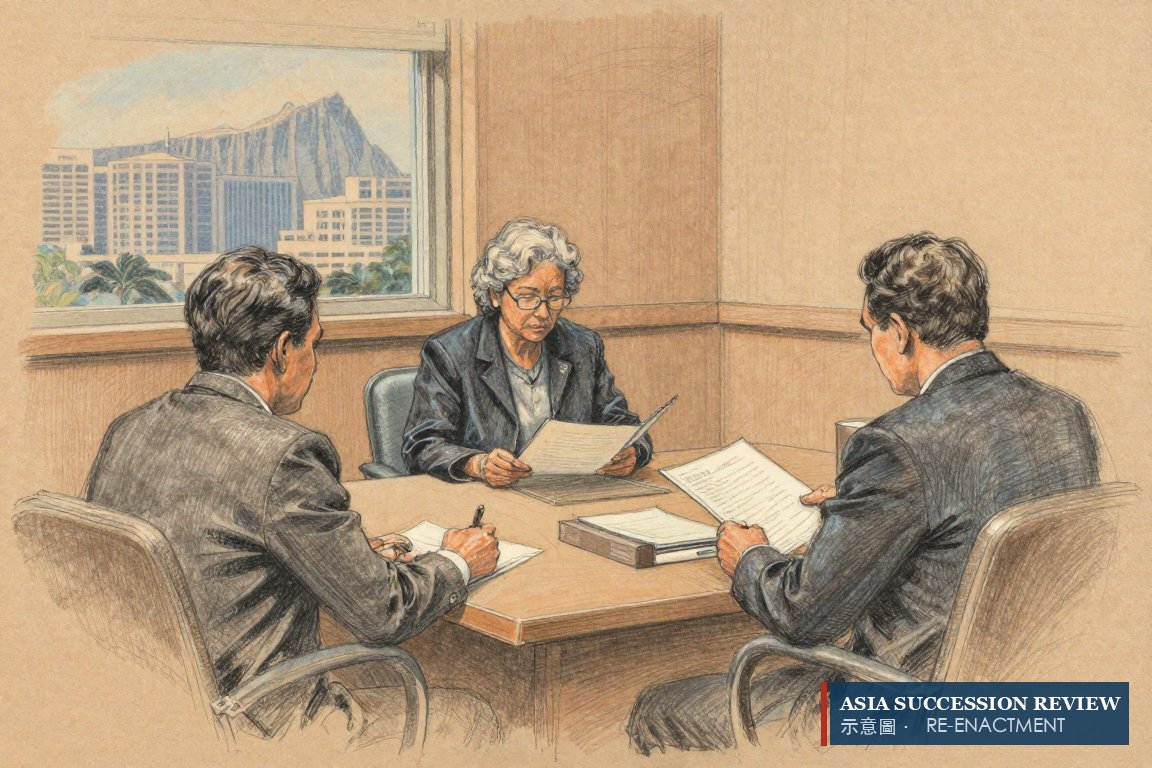
He left no will. Under Hawaii's intestacy rules his parents, Kathleen and Lawrence Allman, became his heirs, and on 26 June 2026 the Hawaii probate court appointed Kathleen personal representative of the estate, which gave her the right to vote his shares. Until that day the shares could be voted by nobody. Allman had been Ondo's chief executive, its sole director and its controlling shareholder; the size of the stake is redacted, but the estate's own complaint calls it controlling.
The president declares himself chief executive on 1 June and elects himself the only director while nobody can vote the founder's shares
Into that month-long gap stepped Ian De Bode, Ondo's president for more than two years. On 1 June, according to the estate's complaint in the Delaware Court of Chancery, he declared himself chief executive, citing the need for operational continuity, and elected himself sole director through a voting agreement. The estate says the company's bylaws required a board vote to fill the vacancy, and that no board existed to hold one. It says he then hired advisers, approved performance grants and tried to add a director, all without authority.

A pay package worth about US$11 million and a 24-fold stake increase is dated to vest the day after the founder dies
The complaint, filed on 24 July 2026, describes a compensation package it says De Bode designed within a week of the founder's death: a US$900,000 annual salary and bonus, a US$1 million signing bonus, 26 million restricted token units worth more than US$9 million, and awards over 846,000 shares that would have lifted his stake from 0.33 per cent to 8 per cent. Vesting was to begin on 25 May, which the complaint says was the day after Allman died. 'The writers of Game of Thrones could not have scripted Ian's usurpation of power any better,' the estate wrote.

The mother expands the board to four, seats her daughter and votes the president out of every job on 24 July
Kathleen Allman's first moves, the filings say, were conciliatory: she appointed herself to the board, adopted an interim policy letting ordinary business continue, confirmed De Bode as president and asked for the shareholder list. When the company's outside counsel declined to recognise her, she expanded the board to four seats, appointed her daughter Tahnee Towill as a director, and on 24 July voted De Bode out of every position, naming herself chair and interim chief executive.
The ousted president calls the suit meritless, and a Delaware order on 3 September keeps him running the company while the case runs
De Bode called the suit 'regretful' and the claims 'meritless', and said the company retained the support of its lead investors and the Ondo Foundation. By a court order of 3 September he remains acting chief executive and a director while the Delaware case proceeds.
The daughter, a Duke professor of medicine, tells the court her mother cannot manage affairs of this size and asks for a dementia evaluation
The 16 September petition turns the fight inward. Dr Clinton told the Hawaii court that her mother 'suffers from a long-standing alcohol use disorder and from a progressive impairment of executive function, judgment, insight and social cognition', and asked for a medical evaluation for dementia.

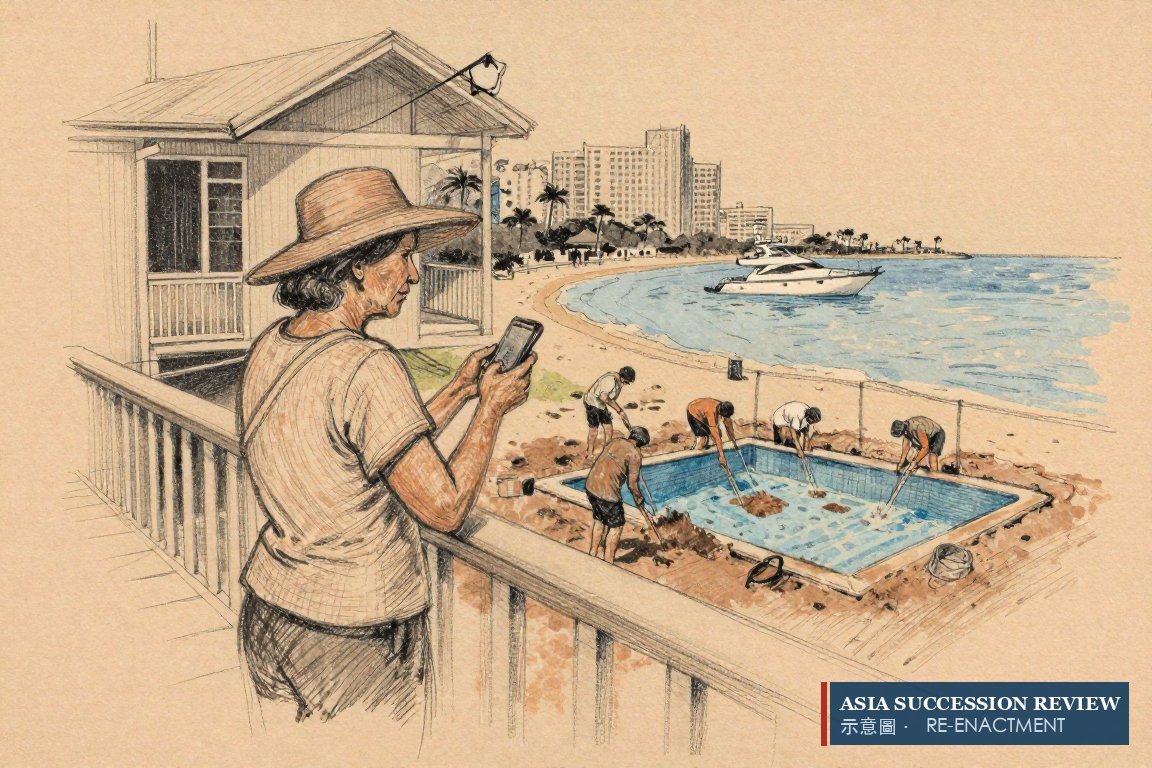
The petition lists an US$18.5 million beach house, a US$4 million yacht attempt and a text about a US$200,000 pool bill nine days after the death
The petition records that in June 2025 Nathan bought his parents a beachfront house in Honolulu for US$18.5 million, that his mother had tried to buy a yacht in Florida priced around US$4 million, had asked the company to bear a six-figure private-flight cost and had lodged at about US$4,000 a night. Nine days after his death, it says, she texted Chen: 'my #1 concern is cash flow, liquidity! Soon! Like I have a 200K invoice from people building pool in Newport.'
The mother calls the petition baseless, says the investor funding it shares the president's lawyers, and notes Delaware already found her fit to serve
Kathleen Allman, through her lawyers, called the allegations baseless and said the petition had been 'filed by an associate of Mr De Bode as a desperate next step' after the Delaware court declared his attempts to take control invalid. In her own filing of 16 September she said Chen is funding the Hawaii petition, shares De Bode's counsel and relied on sealed material from the Delaware case, and that the Delaware court had already rejected the argument that she and Ms Towill were unfit to serve as directors. Dr Clinton says she has been estranged from her mother since 2022. Ondo Finance declined to comment.
On the day the family goes to court over her mind, the company announces a clearing milestone under the other claimant's name
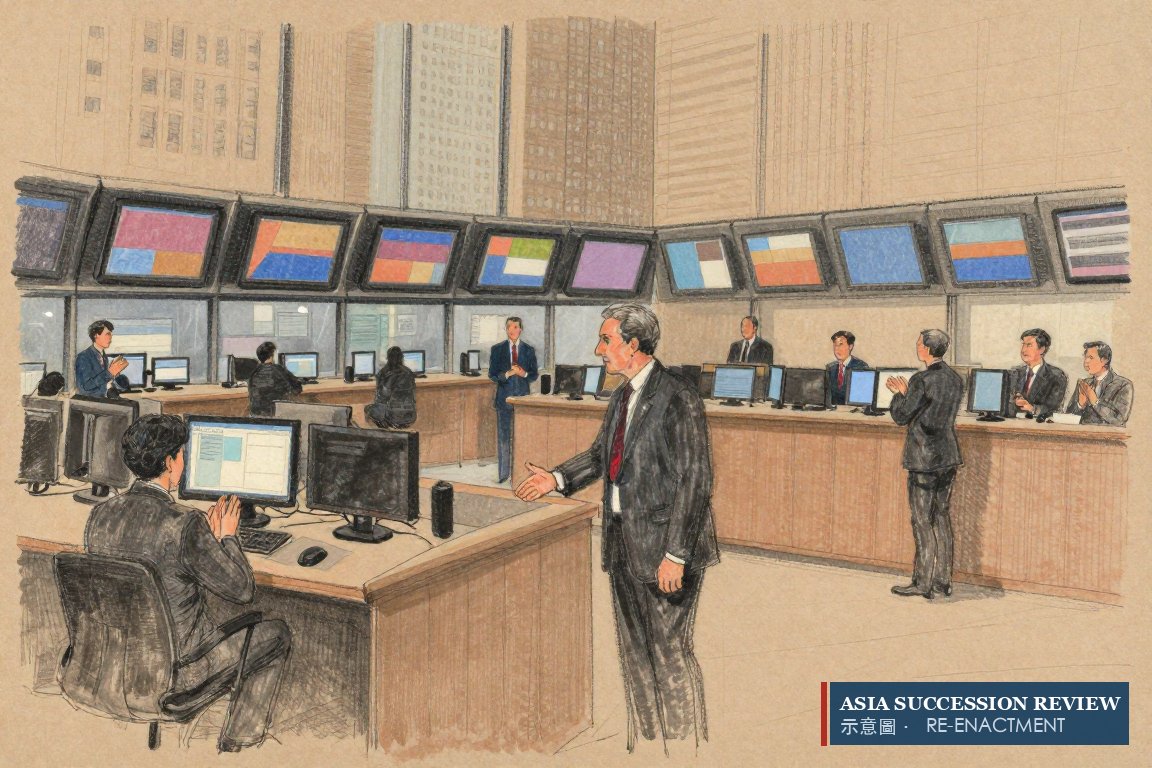
The business, meanwhile, has kept moving. On 16 September Ondo's broker-dealer, Oasis Pro Markets, joined the DTCC's Fund/SERV settlement network, the first tokenisation platform to do so, with De Bode quoted as acting chief executive. A company with two people claiming to run it announced a milestone under one of their names on the day the other's family went to court over her mind.
- 1CoinDesk, 17 Sep 2026 — the Hawaii conservatorship petition, the estate's 16 Sep filing, the compensation figures, Kathleen Allman's statement
- 2CoinDesk, 6 Aug 2026 — the three Delaware Chancery filings; sole director and controlling shareholder; personal representative appointed 26 Jun 2026; De Bode's statement
- 3The Block, 6 Aug 2026 — complaint filed 24 Jul 2026; two director seats, one vacant; board expanded to four; ONDO market value about US$2bn
- 4CoinDesk, 26 May 2026 — Ondo announces the founder's death; De Bode assumes the CEO role; TVL US$3.5bn
- 5Crypto Briefing, 17 Sep 2026 — timeline: 1 Jun self-appointment, 26 Jun probate authority, 24 Jul board reconstitution
- 6Unchained, 16 Sep 2026 — Oasis Pro Markets joins DTCC Fund/SERV; De Bode quoted as acting CEO
- 7CoinGecko — ONDO market capitalisation and circulating supply, 18 Sep 2026 04:04 UTC
- 8Intestate Succession Act 1967 s7, rules 4 and 5 (parents) — Singapore Statutes Online
- 9Probate and Administration Act 1934 s18 (grant of letters of administration to next of kin) — Singapore Statutes Online
- 10Probate and Administration Act 1934 s37 (intestate's estate vests in the Public Trustee until the grant) — Singapore Statutes Online
- 11Companies Act 1967 s145 (at least one director ordinarily resident in Singapore; a sole director may be the sole member; a director must have full legal capacity) — Singapore Statutes Online
- 12Companies Act 1967 s157A (business managed by or under the direction of the directors) — Singapore Statutes Online
- 13Companies Act 1967 s216 (remedy for oppression or disregard of a member's interests) — Singapore Statutes Online
- 14Wills Act 1838 s6 (mode of execution) — Singapore Statutes Online
- 15Mental Capacity Act 2008 s20 (court may decide, or appoint a deputy) and s24 (who may be a deputy; successor deputies) — Singapore Statutes Online
- 16Mental Capacity Act 2008 s11 (lasting powers of attorney) — Singapore Statutes Online
- 17ByBit Fintech Ltd v Ho Kai Xin [2023] SGHC 199 (Philip Jeyaretnam J, 25 Jul 2023): crypto assets are things in action capable of being held on trust — Singapore Courts
- 18IRAS — Estate Duty removed for deaths on and after 15 February 2008
A 32-year-old runs the company as sole director and sole controlling owner with one board seat empty, and that shape has no answer for the morning after
A founder in his early thirties has no will because he does not expect to need one. Nathan Allman was Ondo's chief executive, its only director and its controlling shareholder, and the company's constitution had two director seats with one empty. That is not carelessness; it is the standard shape of a young private company anywhere, including Singapore, where the Companies Act expressly allows a sole director to be the sole member. The shape works for as long as the one person is alive and capable. It has no answer for the morning after.
For a month nobody on earth can vote the controlling stake, and into that vacuum the president promotes himself
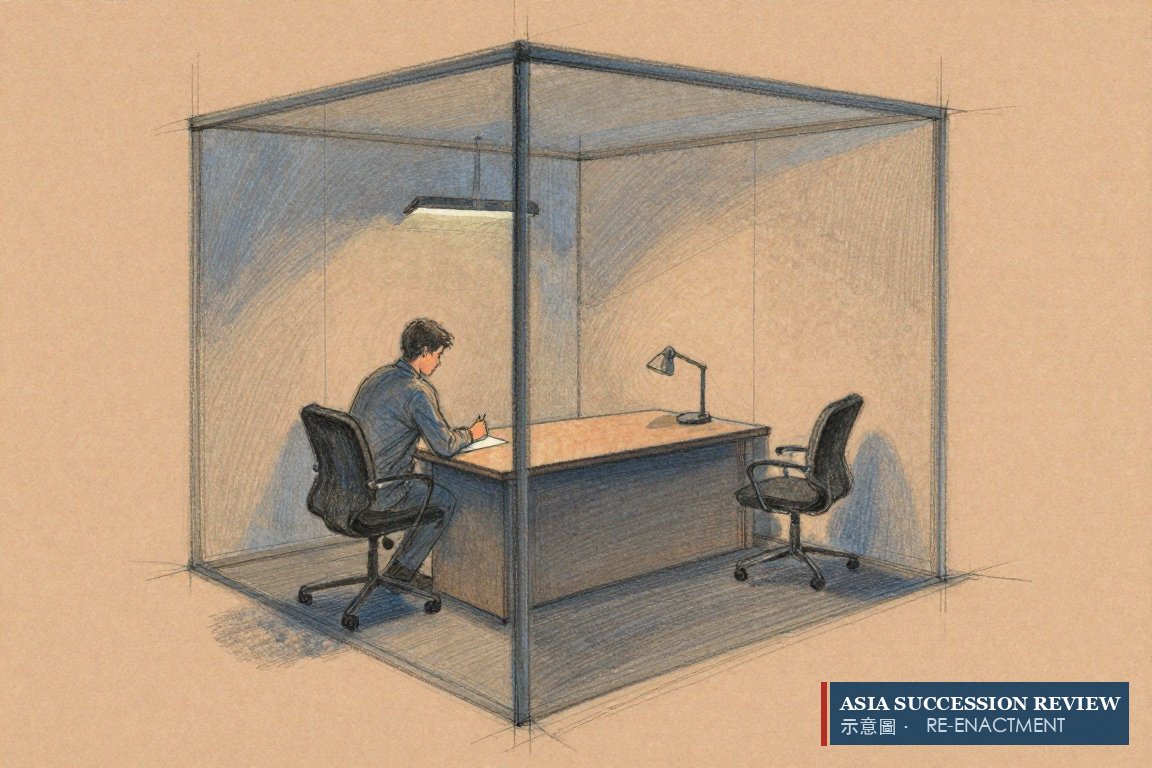
The first knot is time. Between 26 May and 26 June nobody on earth could vote the controlling stake, because the vote belonged to an estate that had no representative yet. Into that vacuum a president promoted himself, elected himself the only director and, the estate says, wrote his own pay. Whether he was entitled to is now Delaware's question. That the vacuum existed is not in dispute, and it existed because the founder's authority died with him and nothing had been written to carry it across the gap.
Intestacy picks the nearest relative, not the fittest, and makes a 77-year-old the controlling owner of a US$1.9 billion token company
The second knot is who the gap delivered the company to. Intestacy does not choose the most suitable heir; it chooses the nearest. With no wife and no children, Hawaii gave the estate to his parents, and his mother, 77, became by operation of law the controlling shareholder of a company with a US$1.9 billion token and a New York broker-dealer. She is now defending her own capacity against her daughter, in a petition funded by an investor who wants a different fiduciary. Nothing in that sentence is about Ondo; all of it is about a stake that landed, undirected, in the hands the statute reached first.
A token holding worth a fortune sits in a contested estate while nobody says who holds the keys, and tokens do not wait for judges
The third knot is the asset itself. A 'very large holding of ONDO tokens', some vesting over three years, sits in an estate administered by a 77-year-old whose fitness is contested, while the company that issues the tokens is run by the man she tried to remove. Tokens move by private key, not by court order. Nobody has said in public who holds the keys. A founder who understood custody better than almost anyone alive left his own holding to the slowest process the law has.

Singapore would have delivered the same company to the same mother — intestacy hands a childless founder's estate to his parents here too — and what changes the ending is a will that names an executor whose authority starts on the day of death, a constitution that fills the empty seat without a court, and a trust that holds the shares and the tokens so that neither ever enters the estate.
Singapore's intestacy rules send a childless founder's estate to the same parents, so the law here delivers the same company to the same mother
Start with the heirs, because Singapore gives no comfort there. Section 7 of the Intestate Succession Act 1967, read on Singapore Statutes Online on 18 September 2026, sends a childless intestate's estate to a surviving spouse and parents in halves (rule 4), or, with no spouse, to the parents in equal portions (rule 5). Kathleen and Lawrence Allman would have inherited in Singapore exactly as they did in Hawaii.
The practice standard warns the Act can burden elderly parents with an estate they were never meant to carry, and here the burden is a company
The Act ranks parents below a spouse and children, so it can deliver an estate to elderly parents the deceased never meant to burden; here it delivered a company.

In Singapore the intestate's shares vest in the Public Trustee from the moment of death and cannot be voted until a court grants administration
Now the gap. In Singapore the shares of a person who dies without a will vest in the Public Trustee from the moment of death, under section 37 of the Probate and Administration Act 1934, and stay there until the court grants letters of administration under section 18, usually to the next of kin. The Public Trustee holds but does not vote. The month in which nobody could exercise Ondo's controlling stake would have happened here too, and probably for longer. A Singapore court applying the same shape would have found the same vacuum, and a president with the same ambition would have found the same opening.
A will needs only a signature and two witnesses, and its executor's authority runs from the day of death, so the testate estate never waits
The first document that closes it is the cheapest. A will under section 6 of the Wills Act 1838 needs writing, the testator's signature and two witnesses present together. Its executor's authority derives from the will and runs from the date of death; an administrator's derives from the grant, which is why the intestate estate waits and the testate one does not.

A named executor votes the founder's shares the next morning, fills the empty seat and tells the president what his title is
A named executor, ideally one who understood the company, could have voted the founder's shares on 27 May, appointed a director to the empty seat and told the president what his title was. The same page could have named the person the founder wanted to run Ondo, which is the question his mother says she is still trying to answer.
Singapore lets a founder be the only director and the only shareholder, and the same lawful shape kills the company the day he cannot sit
The second document is the company's constitution. Section 145(1) of the Companies Act 1967 requires at least one director ordinarily resident in Singapore and allows a sole director to be the sole member; section 157A puts the management of the company in the directors. A one-director company is lawful, and lethal.

The cure is a filled second seat and a clause that names who appoints a director when the founder dies, written before anyone needs it
The cure is drafting: a second seat that is filled, not empty; a clause allowing the personal representative, or a named person, to appoint a director on the sole director's death; a chief-executive vacancy that the constitution says how to fill. A president who 'automatically became CEO under the bylaws' is a president reading a document that did not think about death. Singapore's Act also says, in section 145(2), that a director must have full legal capacity, which is the question the Hawaii petition is really asking about the mother.

A founder who settles the controlling shares into a licensed trust while alive leaves nothing for a will and nothing for the Public Trustee to hold
The third document is the one that keeps the stake out of the estate altogether. A founder who settles his controlling shares, during life, into a Singapore-law trust with a licensed trust company as trustee has nothing to leave by will and nothing for the Public Trustee to hold.
The trustee votes by the deed on the day of death and the mother is provided for as a beneficiary without ever becoming the controlling owner
The trustee votes the shares on the day of death by the deed's instruction; a letter of wishes says who should run the company and who should not; a private trust company can carry a named succession of directors. The mother is provided for as a beneficiary without ever becoming the controlling shareholder of a company she did not build. That is the Formosa Plastics lesson at the other end of life: it is the date of the settlement, not the wealth, that decides whether the estate is a fight.
Singapore's High Court rules in July 2023 that a crypto asset is a thing in action that can be held on trust, settling the question
The tokens can go into the same deed, and in Singapore that is now a settled point rather than a hope. In ByBit Fintech Ltd v Ho Kai Xin [2023] SGHC 199, decided on 25 July 2023, Justice Philip Jeyaretnam held that USDT, a crypto asset, is a thing in action and, 'like any other thing in action, is capable of being held on trust'.

Tokens held by a trustee under a written custody arrangement pass by the deed, and never wait on a grant or a hearing about the heir's mind
A founder's vesting token allocation, held by a trustee under a written custody arrangement with the keys in a named custodian's hands, passes by the deed and never sits in an estate whose representative is 77 and contested. Left in the estate, it waits for a grant, an inventory and, as here, a hearing on the heir's mind.
A Singapore court can appoint a professional deputy over a person who lacks capacity, limits the deputy's powers and prefers to decide itself
Now the mother, because Singapore's answer to the 16 September petition is different in kind. The Mental Capacity Act 2008 lets the court appoint a deputy for a person who lacks capacity (section 20), prefers to make the decision itself rather than appoint one (section 20(4)(a)), limits a deputy's powers as far as practicable (section 20(4)(b)), and allows a professional deputy unrelated by blood or marriage (section 24(1)(a)(ii)).
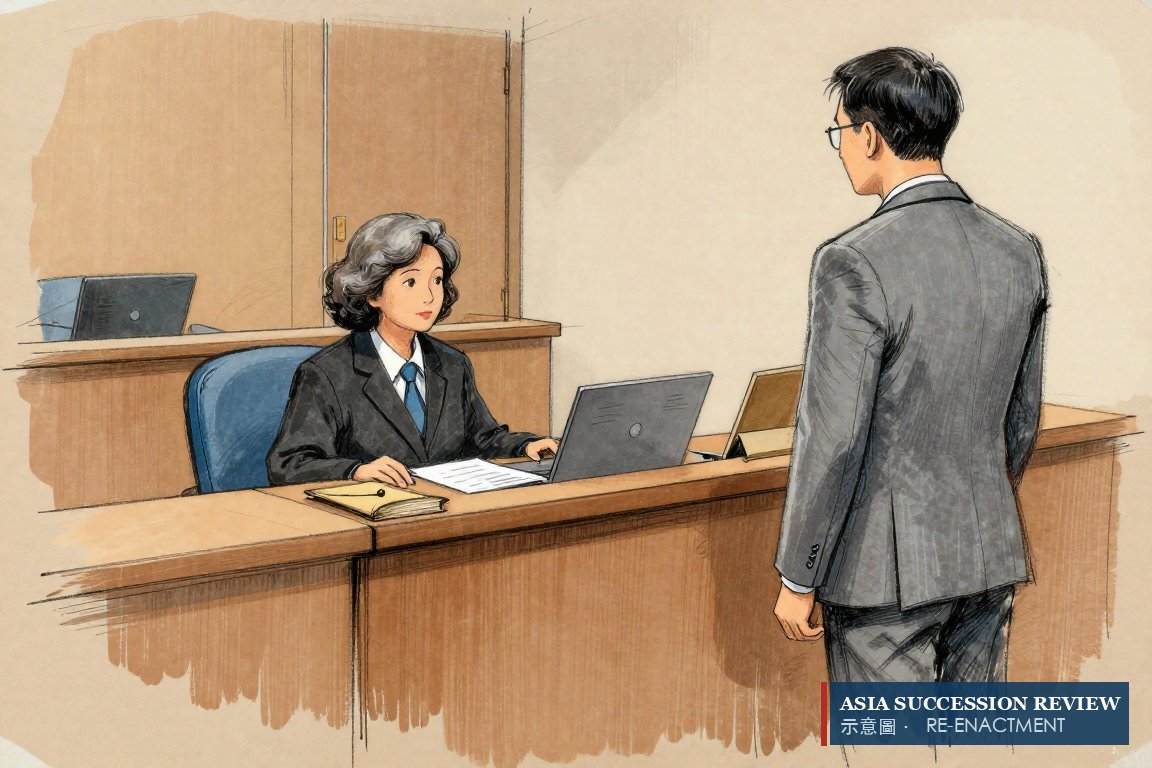
A deputy can vote the shares for her but cannot un-inherit them, so the fight continues with a different hand on the proxy
So a Singapore court could do what the Hawaii petition asks. What it could not do is un-inherit the shares. The deputy would vote them for her, and the fight would continue in her name with a different hand on the proxy. The petition treats a person as the problem; the structure was.

A Lasting Power of Attorney lets the 77-year-old choose her own donee and write how the stake is voted, before anyone files against her
The person who can still change that is Kathleen Allman herself, and her tool is the one nobody in this story has mentioned. A Lasting Power of Attorney under section 11 of the Mental Capacity Act 2008 lets a person choose, while capable, who decides for her property and affairs if capacity is lost, and on what terms. A 77-year-old controlling shareholder who signs one names her own donee, with instructions on how the stake is voted and who is excluded. Without one, the choice is made for her, in court, by whoever files first, which is the position she is in this week.
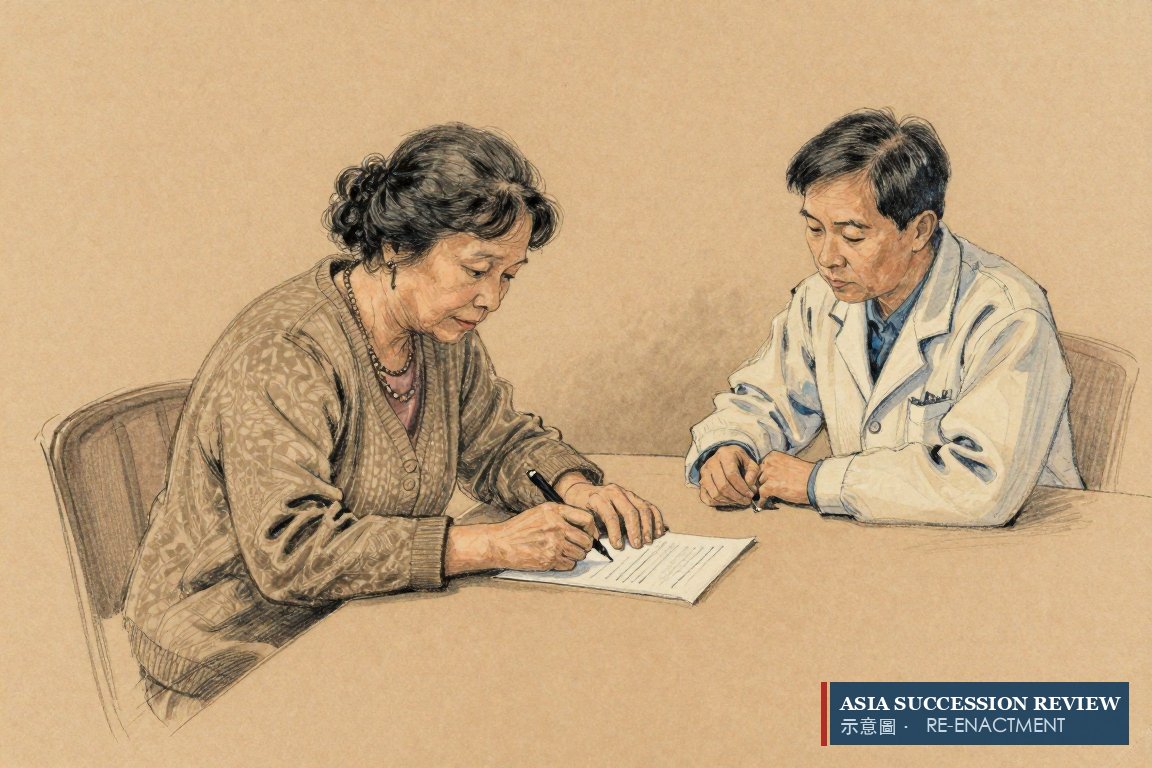
Delaware decides who runs Ondo and Hawaii decides the mother's capacity, and the sealed numbers mean no arithmetic here can be checked
The honest limits. Ondo is a Delaware corporation and its governance is Delaware's to decide; no Singapore court would hear the De Bode question, and the Hawaii court will apply Hawaii's conservatorship law to a Hawaii resident. The stake, the cause of death and the token count are sealed, so no arithmetic here is checkable beyond the figures the complaint itself discloses.
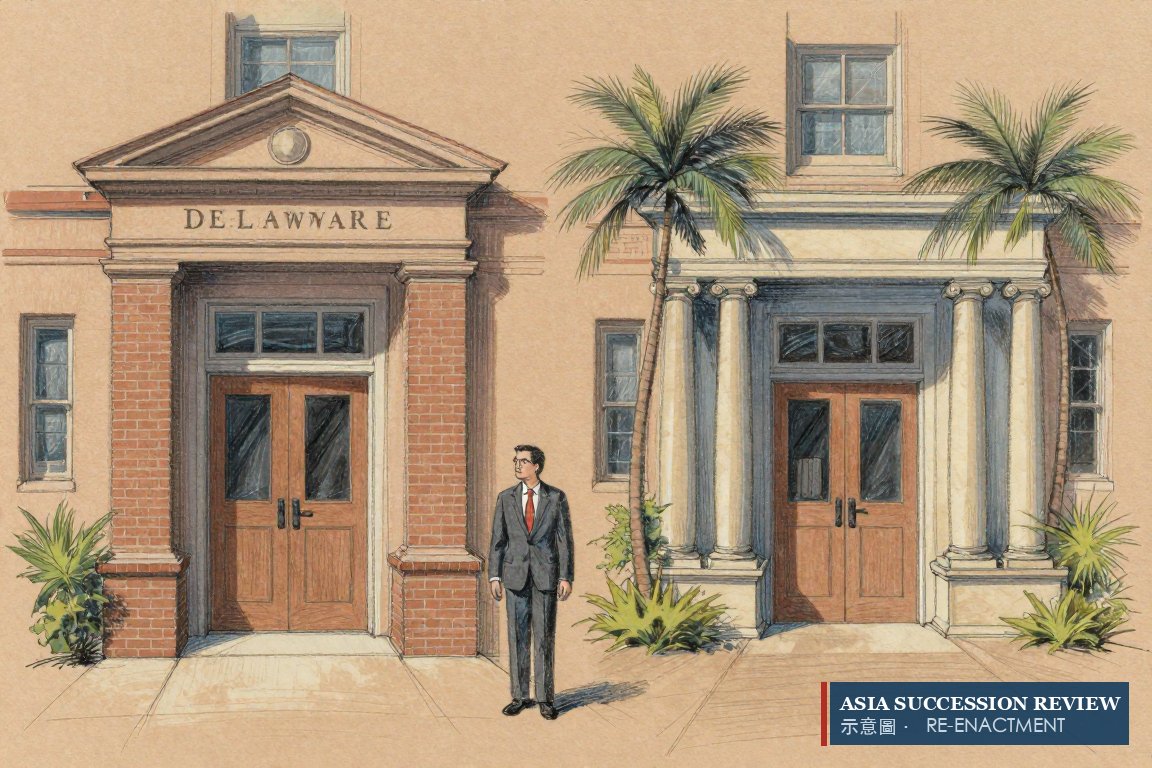
The reader outside the room takes a five-question list, from whether there is a will to who holds the keys, and none of them asks for a share
And Singapore's structural advantage is drafting, not law: the Companies Act would have allowed Nathan Allman to build exactly the one-director, no-will company he built. What the reader outside the room takes from this is a list, not a lesson: is there a will, who is executor, what happens to the sole director's seat on the day he cannot sit in it, who holds the keys, and whether the person who inherits control has signed anything about her own.
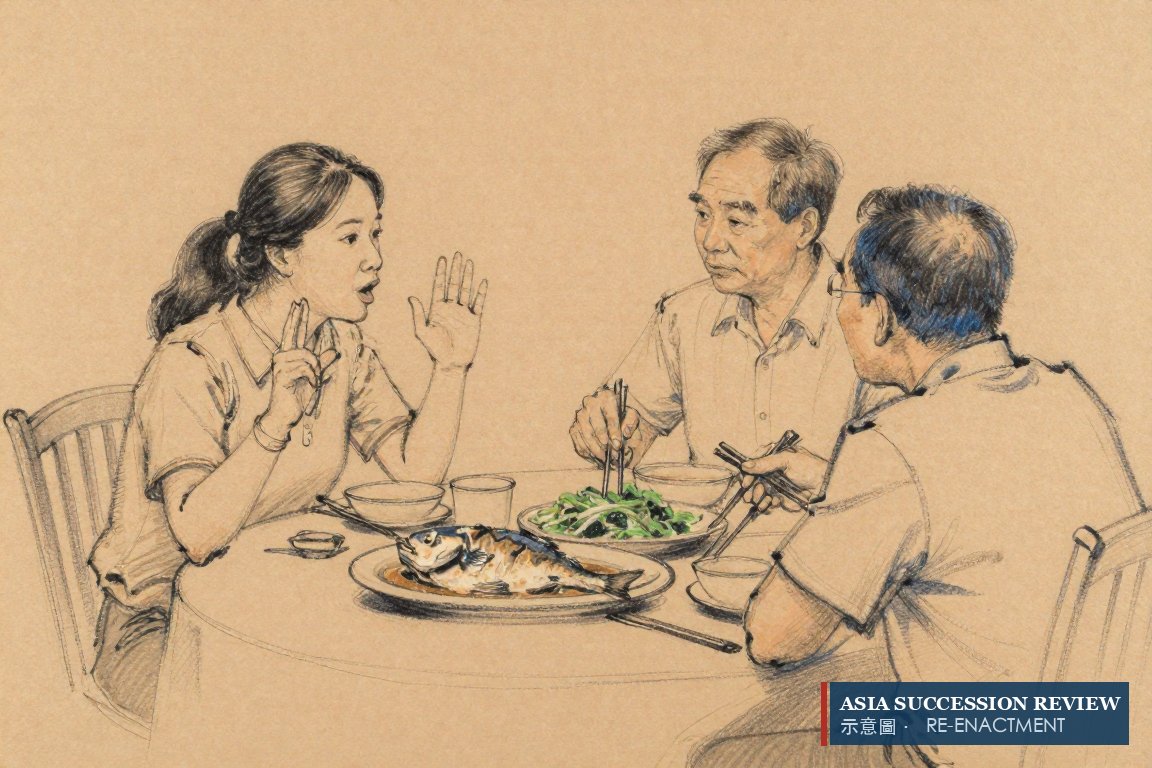
Kathleen and Lawrence Allman, the parents — the estate, including the controlling stake and the tokens, in both systems — Singapore's rule 5 reaches the same people; under a lifetime trust, an income and capital entitlement without the shareholder's seat
Ian De Bode, the acting chief executive — a title he says the bylaws gave him and the estate says required a board; a Delaware ruling; under a Singapore constitution with a filled second seat and a named executor, a president reporting to a director on 27 May
Tahnee Towill, the daughter on the board — a director's seat from her mother's vote; in Singapore the same seat, subject to section 145(2) capacity and the deed's succession if one existed
Dr Lani Clinton and David Chen, the petitioners — a hearing on the mother's capacity in Hawaii; in Singapore an application for a deputy under section 20, with the court free to appoint a professional rather than either of them
Ondo's investors and token holders — a company run under a 3 September status-quo order while two families litigate; under a trust and a filled board, the same management on 27 May with no gap for anyone to step into
The estate's tokens — an inventory line waiting on a grant and a contested representative; in Singapore, property capable of trust since ByBit, and passing by deed if the founder had settled them
A counterfactual, not advice. The verified machinery is on the Singapore page; where your family stands is the briefing.
From the case files: The lesson from the other end of life: Wang Yung-ching's trusts, settled early, survived every challenge but one