A will can give sons double. Paddy Power's €861m will just did
Sabena Power, widow of the Paddy Power co-founder David Power, left an estate valued at more than €861 million. Her will, in papers Ireland's Probate Office published this week, gives each of her two sons a third and each of her two daughters a sixth. Ireland gives any child six months to ask a court whether that was fair, and taxes inheritances at 33%. Singapore would allow a far narrower challenge and charge no inheritance tax.
Read this in: EN · 简体 · 繁體 · ไทย · ID
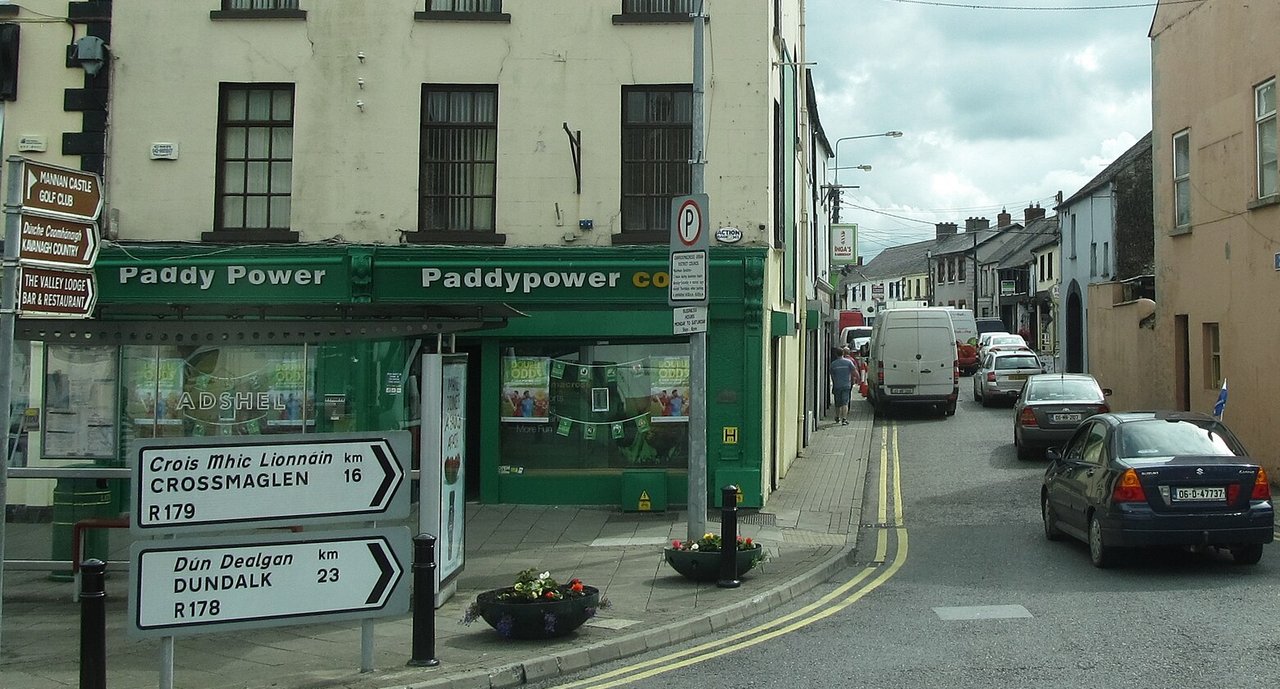
A bookmaking matriarch dies leaving €861 million, and Ireland's Probate Office publishes the whole estate for anyone to read
On 17 October 2026 The Irish Times reported that Sabena Power, matriarch of the Paddy Power bookmaker family, left an estate valued at more than €861 million when she died in September 2025, according to papers published by the Probate Office that week. The paper called it one of the largest estates the Probate Office has recorded; the fees for the grant of probate alone came to more than €678,000.
A mother leaves her sons a third each and her daughters a sixth, with no reason anyone can read
Under her will, as reported, her assets were to be divided among her four children: one third to each of her two sons, William and Patrick, and one sixth to each of her two daughters, Shani and Tessa. She also left €50,000 to each of her 10 grandchildren. The report gives no reason for the difference, and nothing published suggests any of the children has questioned it.
Her husband dies 14 months earlier, reportedly worth over €400 million, and what passes to his wife is tax-free
She was the widow of David Power, who died in July 2024 leaving an estate valued at more than €400 million according to media reports, a figure said to move with the share price of Flutter Entertainment plc, the parent of Paddy Power, FanDuel, Sky Betting & Gaming and Sportsbet.
A family bookmaker from an 1895 racecourse builds Paddy Power in 1988 and merges it into a global betting giant
The family's bookmaking goes back to Tramore racecourse in 1895. In 1988 David Power joined fellow bookmakers Stewart Kenny and John Corcoran to create Paddy Power, which merged with Betfair in 2016. Sabena Power was also a leading racehorse owner and breeder, whose colours were carried by the sprint champions Sole Power and Slade Power.
- 1The Irish Times (Tim O'Brien), 17 Oct 2026: Sabena Power left an estate valued at more than €861m on her death in September 2025, per Probate Office papers published that week; grant of probate fees more than €678,000; one third each to sons William and Patrick, one sixth each to daughters Shani and Tessa, €50,000 to each of 10 grandchildren; David Power died July 2024, estate reported at more than €400m; Paddy Power formed 1988, merged with Betfair 2016
- 2Succession Act 1965 (Ireland) s117: a child may apply where the testator failed in the moral duty to make proper provision in accordance with his means; the court decides as a prudent and just parent, taking into account the position of each of the children; application within 6 months of the first taking out of representation (substituted by the Family Law (Divorce) Act 1996 s46 from 27 Feb 1997), revised Act read on the Law Reform Commission site 18 Oct 2026
- 3Revenue (Ireland), Capital Acquisitions Tax group thresholds and rates, read 18 Oct 2026: 33% on gifts and inheritances on or after 6 Dec 2012; Group A (child) €400,000 for 2 Oct 2024 to 6 Oct 2026 and €420,000 from 7 Oct 2026; Group B (grandchild) €40,000 / €44,000; the date of an inheritance is usually the date of death; spouses exempt
- 4Inheritance (Family Provision) Act 1966 s3(1), (2), (6), (7) and s4(1) (Singapore): applies where the deceased dies domiciled in Singapore; dependants are a spouse, a daughter who has not married or cannot maintain herself through disability, an infant son, and a son who cannot maintain himself through disability; reasonable provision for maintenance, by periodical payments; the court weighs the deceased's reasons, including a signed and dated statement; 6 months from the grant, current version as at 18 Oct 2026, read on SSO 18 Oct 2026
- 5Intestate Succession Act 1967 s7 rule 3 (children take in equal portions where there is no will) and Administration of Muslim Law Act 1966 s111(1) (a Muslim domiciled in Singapore may dispose by will only in accordance with Muslim law), current versions as at 18 Oct 2026, read on SSO 18 Oct 2026
A mother writes unequal shares without a reason, and all of Ireland can now read that her daughters got half
Two decisions sit in this will, and the published record shows only one of them. The fractions are public: each son takes twice what each daughter takes. The reason is not. It may be lifetime gifts, roles in the family's businesses, or something said at the kitchen table years ago. Whatever it was, the record shows the fractions, which anyone in Ireland can now read, and not the reason.
Ireland gives each child six months to ask a judge if a parent failed them, and that clock is running
In Ireland that gap has a legal edge. Any child of a testator, of any age, may ask the court within six months of the grant whether the parent failed in a moral duty to provide properly, and the court looks at every child's position. Nothing reported suggests Shani or Tessa will apply, and a sixth of €861 million is not hardship. The point is that the law gives the question a forum and a deadline.
Two deaths 14 months apart let the spouse exemption delay the tax, and the children's shares now pay it
The second cost is tax. Fourteen months separate the two deaths. Whatever passed from David to Sabena in 2024 passed free of Irish inheritance tax, because gifts and inheritances between spouses are exempt. What passes from Sabena to the children does not. The exemption delayed the bill to the second death; it did not cancel it.
In Singapore the same will would carry no inheritance tax and face a far narrower challenge: an adult married daughter could not ask the court for more, and the few dependants who can are limited to reasonable maintenance; so the work that remains is to write the reason for unequal shares down, signed and dated.
Two honest limits first. We know this will only through one newspaper's account of a public record; we do not know the lifetime gifts, the family's arrangements or what the four children were told. And moving the paperwork to Singapore would not move an Irish family out of Irish tax. Ireland's Capital Acquisitions Tax reaches inheritances from an Irish-resident parent, wherever the assets sit. The question is what Singapore law would do with the same will, made by a parent domiciled and resident in Singapore.
Start with tax, because the numbers are large. Revenue charges 33% on what each child inherits above a lifetime threshold from both parents; for a death in September 2025 that threshold was €400,000. On a straight reading, a son's third of roughly €287 million would carry about €94.5 million of tax and a daughter's sixth of roughly €143 million about €47.2 million: about €283 million in all, before any relief the public record does not show. Each grandchild's €50,000 sits above the €40,000 threshold for grandchildren. Singapore has had no estate duty for deaths on or after 15 February 2008, and no inheritance or gift tax.
Now the fractions. In Singapore a will can give sons more than daughters, and the law does not ask why. The equal split many families assume is the rule only where there is no will: the Intestate Succession Act 1967, section 7, rule 3, divides an estate among the children in equal portions. A will replaces that rule. Sabena Power's will, made in Singapore by a non-Muslim parent, would pass a third to each son and a sixth to each daughter exactly as written.
The Irish check on that freedom is section 117 of the Succession Act 1965, read on 18 October 2026. Any child may apply within six months of the first grant. The court asks whether the parent failed in the moral duty to make proper provision in accordance with her means, judged as a prudent and just parent and taking into account the position of each of the children. It reaches adult children, married or not, and it measures provision against the parent's means, not against the child's needs alone.
Singapore's check is much narrower. The Inheritance (Family Provision) Act 1966, read on 18 October 2026, applies only where the deceased dies domiciled in Singapore. Under section 3, the people who may apply are a spouse, a daughter who has not married or cannot support herself through disability, an infant son, and a son who cannot support himself through disability. What the court may order is reasonable provision for maintenance, by periodical payments, not a larger share. An adult married daughter cannot apply at all, and no daughter left €143 million lacks maintenance.
One group of Singapore families has no choice to make. Under section 111 of the Administration of Muslim Law Act 1966, a Muslim domiciled in Singapore may dispose of property by will only in accordance with Muslim law, and under faraid as generally applied a son takes twice a daughter's share. For those families the two-to-one split this will chose is the default, and an equal split is what takes planning, through lifetime gifts or other instruments. The page on faraid and company shares sets out how that works.
That leaves the one thing the Power family's record cannot show: the reason. Singapore's Act tells the court to weigh the deceased's reasons, including a signed and dated written statement, and Ireland's court weighs each child's position, which is where lifetime gifts and roles count. A parent who chooses unequal shares can write down why, list what each child already received, and tell the children while the conversation is still possible. The fractions will be read either way; written reasons decide how they are read. And an estate this size needs cash ready for the tax, wherever it falls.
For the reader whose parents are planning now, the questions can be asked at the table without accusing anyone. Are the shares equal, and if not, is the reason written down, signed and dated? Does the record of what each child received during life exist, so an unequal will is not read as a verdict on anyone? Where is the family domiciled, and so whose law and whose tax applies? Wanting to know your position is stewardship, not greed. The Power children's position, at least, is now on the public record.
William and Patrick Power, the sons — one third each of an estate valued at more than €861 million, roughly €287 million before tax and expenses
Shani and Tessa Power, the daughters — one sixth each, roughly €143 million before tax and expenses, and six months from the grant in which Irish law would hear a claim; none reported
The 10 grandchildren — €50,000 each
Ireland's Revenue — 33% of what each child takes above €400,000, about €283 million on a straight reading before reliefs; nothing on the 2024 transfer from David to Sabena, which was exempt between spouses
The same family in Singapore — no estate duty, no inheritance tax, and a will that stands as written; only an unmarried or disabled daughter could ask for maintenance
The reader with unequal plans at home — three questions: are the shares equal, is the reason written and signed, and whose law and tax apply where the family is domiciled
A counterfactual, not advice. The verified machinery is on the Singapore page; where your family stands is the briefing.

From the case files: When a will gives the group to one son: Evergreen and Chang Yung-fa