A veto for every heir means a judge picks the board. Ask Ray-Ban
Leonardo Del Vecchio wrote an 88% majority into the articles of Delfin, the holding that owns about a third of Ray-Ban's parent, then left it in eight shares of 12.5%. Seven votes make 87.5%. Three heirs have now asked a Luxembourg court to strike the clause so that the board can be changed. What Singapore company law would do with the same clause, and the few lines that would have kept the family out of court.
Read this in: EN · 简体 · 繁體 · ไทย · ID
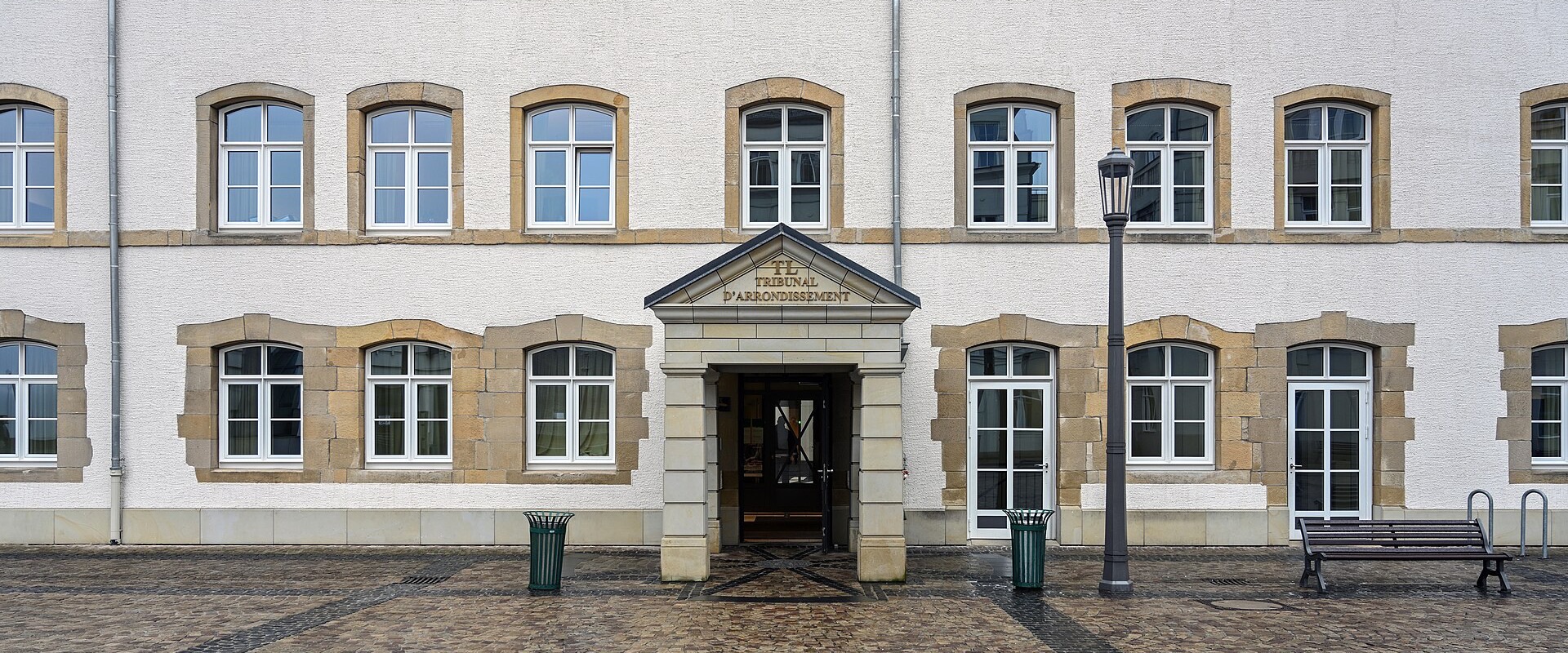
Three Ray-Ban heirs ask a Luxembourg judge in 2026 to strike the clause that lets any one of eight block the board
On 23 October 2026 Il Sole 24 Ore, citing the Radiocor news agency, reported that three of the eight shareholders of Delfin, the Luxembourg holding company of the late Leonardo Del Vecchio, had asked a Luxembourg court to invalidate the clause in its articles that sets an 88% majority. La Repubblica named them the next day: Luca and Paola Del Vecchio, two of the founder's six children, and Rocco Basilico, the son of his widow Nicoletta Zampillo. The suit was filed at the start of the summer. Leonardo Maria Del Vecchio is not among the claimants, and Delfin declined to comment.
Eight heirs at 12.5% each means seven votes reach only 87.5%, so one heir can stop any 88% decision
The arithmetic is the whole case. The founder died on 27 June 2022 and left Delfin in eight equal parts of 12.5%, to his six children, his widow and her son. Seven shareholders together hold 87.5%, just short of 88%, so any decision that needs the 88% needs all eight. Il Sole reports that this suit targets one use of the threshold only: the vote to replace Delfin's directors. It does not challenge the majority needed to change the cap on dividends or to move shares among the heirs.
The founder writes the 88% rule himself in 2021, while he still holds control and can name his own successor
The clause is the founder's own. In April 2021, MF-Milano Finanza reported, Delfin adopted new articles that let Del Vecchio name his successor in writing; failing that, the shareholders would choose by an 88% majority, "substantially unanimity", the paper wrote. Forbes Italia, the day after his death, summed up the rule as "any financial decision must be agreed by 88% of the shareholders".
A five-member board split over the holding's reorganisation keeps running a €38.1 billion fortune nobody can rearrange
The board the three want to change has five members: chairman Francesco Milleri, who is also chief executive of EssilorLuxottica, the Ray-Ban owner; chief executive Romolo Bardin; notary Mario Notari; banker Giovanni Giallombardo; and lawyer Aloyse May. Il Sole reports that Milleri and Bardin have taken opposite sides on the reorganisation of the holding, which owns about a third of EssilorLuxottica and stakes in Monte dei Paschi, UniCredit and Generali. MF put Delfin's assets at about €38.1 billion on 10 October 2026.
Two heirs sell 25% to their brother in April 2026, a deal that would lift him to 37.5% of the holding
The same clause has already been used the other way. On 27 April 2026 a Delfin meeting approved the sale of Luca's and Paola's stakes, 25% together, to Leonardo Maria, which would take him to 37.5%, and a payout of at least 80% of net profit for 2025 to 2027.
The widow's son uses the 88% to fight that sale in May, then asks a court to remove it for the board
Basilico voted against and asked the Luxembourg court to annul the resolutions, Calcio e Finanza reported on 8 May: the meeting had applied 75%, he argued, where the articles require more than 88% for transfers. MF reported on 10 October that his challenge is due to be heard on 23 November. In May he relied on the 88% to stop a sale; now he asks the court to remove it for the board.
- 1Il Sole 24 Ore (Radiocor), 23 Oct 2026: Delfin, tre eredi al giudice: via l'unanimità (three shareholders, not Leonardo Maria, sued in Luxembourg at the start of summer to invalidate the 88% clause for replacing directors; 12.5% each, seven of eight short of 88%; dividend cap and transfers not challenged; five-member board; Delfin no comment)
- 2La Repubblica, 24 Oct 2026: Del Vecchio, eredi in causa sullo statuto di Delfin (Luca, Paola and Rocco Basilico asked to invalidate the clause that imposes unanimity on the shareholders)
- 3MF-Milano Finanza, 10 Apr 2021 (print, p.16): Aspettando il delfino (new Delfin articles: the founder may name his successor in writing; failing that, the meeting chooses by an 88% majority, 'substantially unanimity')
- 4Forbes Italia, 28 Jun 2022: Del Vecchio, a chi andrà l'eredità (Delfin's articles: 'any financial decision must be agreed by 88% of the shareholders')
- 5Calcio e Finanza, 8 May 2026: Basilico takes the 27 April Delfin resolutions to the Luxembourg court (25% from Luca and Paola to Leonardo Maria, to 37.5%; at least 80% payout 2025-2027; 75% applied where the articles require more than 88%)
- 6MF-Milano Finanza, 10 Oct 2026: S'è ristretta la Delfin (Basilico's challenge to the 27 April resolutions heard in Luxembourg on 23 November; Delfin assets about €38.1 billion)
- 7Companies Act 1967 (Singapore) ss26, 26A and 216 (alteration by special resolution; entrenching provisions removable only if all members agree; oppression remedies incl. alteration of the constitution), current version as at 25 Oct 2026, read on Singapore Statutes Online 25 Oct 2026
- 8Insolvency, Restructuring and Dissolution Act 2018 (Singapore) s125(1)(i) (winding up where just and equitable), current version as at 25 Oct 2026, read on SSO 25 Oct 2026
A safeguard meant to protect the founder's managers becomes, on a register of eight equal heirs, a veto for each one
Del Vecchio wrote the 88% while he held control and could name a successor himself. It was a safeguard for the day he was gone: no one would replace his managers without near-unanimous consent. Then his will divided the company into eight parts of 12.5%. A majority that sounds like "almost everyone" became, on the share register he left, "everyone". Each heir received an eighth of the value and a full veto over who runs it.
Every heir can stop the board changing and none can make it change, so the family ends up asking a judge
A veto protects a family only while the family agrees. Once it does not, every heir can stop the board from changing and none can make it change. The board stays because nobody can move it, and the only route left is to ask a judge to rewrite the articles. Three heirs have now asked. Luxembourg's courts are not fast, Il Sole notes, and alliances in this family shift with each dispute.
Put an 88% threshold in front of eight equal holders and the founder has written unanimity, whatever the clause says
The lesson is not that 88% is too high. A threshold means nothing until it is set against the holdings it will meet. Set 88% against eight equal holders and you have written unanimity, whatever the clause calls it.
Singapore would let a family write the same veto and would hold it just as tight, because a clause entrenched in a company's constitution can be removed only if every member agrees; what changes the outcome is drafting it against the register the heirs will actually hold, with a set way to change the board and a tie-break that does not need a judge.
A Singapore lawyer starts with limits: Luxembourg's court decides this suit, and Singapore law cannot reach it
Limits first. Delfin is a Luxembourg company and the founder's estate is Italian; Luxembourg's court will decide this suit under Luxembourg law and Delfin's own articles, and nothing in Singapore law reaches it. We have not seen the articles, and their wording here comes from the press. The useful question is narrower: what the same clause would do in a Singapore company, and what a founder setting up a holding here could write instead.
In Singapore seven of eight heirs pass a 75% resolution easily, but an entrenched 88% still needs all eight
Singapore law would not loosen the clause. Section 26(1) of the Companies Act 1967, read on Singapore Statutes Online on 25 October 2026, lets a company alter its constitution by special resolution, which needs 75%. Seven heirs out of eight would clear that easily. But section 26A lets a constitution entrench a provision so that it cannot be changed except by a larger majority or on other conditions, and under section 26A(2) an entrenching provision can be removed or altered only if all the members agree. Written that way, the 88% would bind a Singapore family exactly as it binds this one.
A Singapore court can rewrite a constitution only if the heir proves oppression, and a veto used by the rules rarely is
A Singapore court can step in, but only on proof of unfairness: section 216 lets a member apply where the company's affairs are conducted oppressively or in disregard of his interests. If it agrees, the court can regulate how the company is run, order a buyout or wind the company up, and under section 216(4) a change it makes to the constitution takes effect as if the members had passed it. A veto used as the articles allow is hard to call oppression. The fallback, a just-and-equitable winding up under section 125(1)(i) of the Insolvency, Restructuring and Dissolution Act 2018, ends the company, not the deadlock.
A founder tests each threshold against his heirs' future register: 85% means seven of eight, 75% means six
So the remedy is in the drafting, while the founder can still sign. First, test every threshold against the register the heirs will hold, not the one the founder holds. With eight equal holders, 88% means all eight, 85% means seven and 75% means six. If the aim is no change without broad consent, 85% says it; if the aim is everyone, the clause should say unanimity, so nobody is surprised. Second, set different thresholds for different decisions. Selling the core holding is not the same decision as replacing one director.
A deadlock gets a clock and a referee in Singapore, and the heir who wants out sells at a preset price
Third, write a way to renew the board that does not depend on everyone: directors on fixed terms that lapse unless renewed, a nominating committee with an independent chair, or one director per branch with an independent majority. Fourth, give a deadlock a clock and an exit. If the shareholders cannot agree within a set period, the question goes to a named referee, such as arbitration seated in Singapore, and an heir who wants out can sell at a price fixed by formula, with the money arranged in advance, life insurance included.
A trust lets one trustee vote the shares while eight heirs share the value equally, so no single heir holds a veto
Fifth, a founder can keep the vote in one place and share the value. If the holding's shares sit in a trust, the trustee votes them under the deed and the eight heirs share the income and capital, which is how equal value and a single hand on the board can coexist. Italy's reserved shares for a spouse and children would complicate that for an Italian founder; most Asian founders face no such limit. The trust deed then carries the tie-break, the protector and the exit, and the company's articles stay simple.
An heir asks three questions while everyone can still sign, and the family settles the tie-break before it needs one
For the reader whose family company has a supermajority clause, three questions are worth asking while everyone can still sign. Who will hold the shares after the transition, and does the threshold then mean most of the family or all of it? How is a director replaced if the family cannot agree? And who breaks a tie, and how quickly, without a court? Asking how a company will be run after the transition is stewardship, not distrust.
Luca and Paola Del Vecchio and Rocco Basilico — 12.5% of Delfin each; a suit filed in Luxembourg at the start of summer 2026 to invalidate the 88% majority for replacing Delfin's directors
Leonardo Maria Del Vecchio — 12.5%; not a claimant; his purchase of Luca's and Paola's 25%, approved on 27 April 2026, challenged by Basilico, with a hearing on 23 November
The other four shareholders, the widow among them — 12.5% each, and each a vote without which the board cannot be changed while the clause stands
Delfin's board — five directors chaired by Francesco Milleri, in place until all eight shareholders agree or a judge rewrites the clause
The same holding in Singapore — an entrenched clause just as hard to remove (s26A(2)); court relief only on proof of oppression (s216); the cure is thresholds set against the heirs' register, a way to renew the board and a deadlock clock
The reader whose family company has a supermajority clause — three questions: most or all after the transition, how a director is replaced, and who breaks a tie without a court
A counterfactual, not advice. The verified machinery is on the Singapore page; where your family stands is the briefing.
From the case files: Two sons at 50% each and no tie-break on record: Henderson Land