Red Baron's ¥1.6bn lesson: the taxman re-prices your family's shares
Hitoshi Sugiura grew one Okazaki bike shop into a chain of more than 300. After his death, Nagoya's tax bureau reportedly rejected dealings between his reorganised companies, re-priced the family's shares and found about ¥2.8bn undeclared. The family has paid about ¥1.6bn and calls it a difference of view. Singapore has no such bill, but the valuation fight does not vanish.
Read this in: EN · 简体 · 繁體 · ไทย · ID
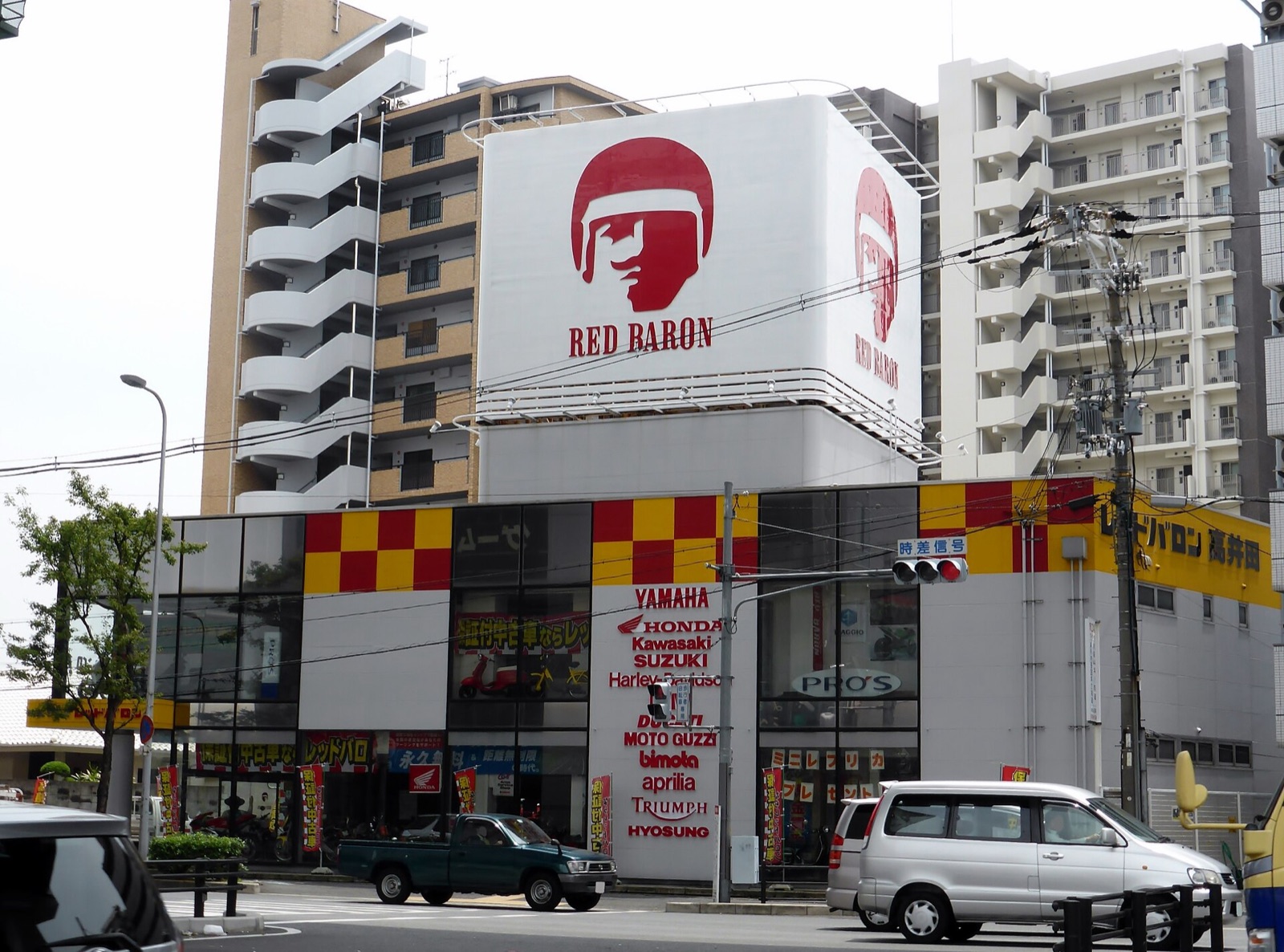
A tax office finds ¥2.8 billion undeclared in the Red Baron founder's estate, and his family pays about ¥1.6 billion
On 5 November 2026 Kyodo News and the Sankei Shimbun reported, citing people familiar with the matter, that the Nagoya Regional Taxation Bureau had told the family of Hitoshi Sugiura, founder of the motorcycle retailer Red Baron, that about ¥2.8 billion of inherited property went undeclared. The additional tax, surcharges included, is about ¥1.6 billion. The family has already filed an amended return.
A founder reorganises his companies before 2023, and auditors later reject their loans and re-price the shares
Sugiura died on 1 August 2023, aged 82. During his life he reorganised the group's companies, and lending and borrowing between them followed. According to the reports, the bureau found no reasonable ground for those dealings and appears to have revised the value of the group company shares the family inherited. Neither the bureau nor the family has said which company, which transaction or how much of the figure each accounts for.
The family says it followed its accountant and the circular, pays anyway, and calls it a difference of view
The family's statement calls this 'a difference of view with the tax bureau', says it consulted in good faith, and says the amended return and payment are complete. It says the return followed a tax accountant's advice and the National Tax Agency's valuation circular, that nothing was hidden or disguised, and that no heavy additional tax was imposed. In September 2024 Bain Capital agreed to buy a majority of the parent, Red Baron Properties, with the family keeping a stake. No report links that sale to this assessment.
- 1Kyodo News via NEWSjp, 5 Nov 2026: about ¥2.8bn, about ¥1.6bn with surcharges, amended return, the family's full comment, the reorganisation and the lending between companies, no reasonable ground, the share valuation revised
- 2Sankei Shimbun, 5 Nov 2026: the same figures and the family's comment; Nagoya Regional Taxation Bureau
- 3MediaDogs, 5 Nov 2026 (secondary): death on 1 Aug 2023 aged 82; no breakdown disclosed; the company not reported as the taxpayer
- 4Sankei Sports, 24 Sep 2024: Bain Capital to buy a majority of Red Baron Properties from the founding family and others; price undisclosed; succession named as an issue
- 5Asahi Tsuginojidai, 7 Oct 2024: definitive agreement; the Sugiura family stays on as a shareholder
- 6Red Baron, company page: opened in Okazaki in 1972 as Yamaha Auto Center; more than 300 directly run shops
- 7National Tax Agency (Japan), Tax Answer No. 4638: how unlisted shares are valued, by comparison with listed peers or by net assets
- 8National Tax Agency (Japan), Tax Answer No. 4138: heirs abroad; ten-year test; temporary residents; non-resident decedents
- 9Inheritance Tax Act (Japan, Act No. 73 of 1950) arts 1-3, 2, 10, 16 (55% above ¥600m), 27 (ten months), 64 (acts of family companies), read on e-Gov 6 Nov 2026
- 10IRAS: Estate Duty removed for deaths on and after 15 February 2008
- 11Income Tax Act 1947 (Singapore) s33, as at 6 Nov 2026, read on Singapore Statutes Online 6 Nov 2026
- 12Companies Act 1967 (Singapore) s216(1), (2)(d), as at 6 Nov 2026, read on Singapore Statutes Online 6 Nov 2026
A private share has no market price, so a reorganisation changes the formula and draws the auditor to Okazaki
A listed share has a price every morning. A family company's share has only a formula, and the formula reads the company's own accounts. Japan's National Tax Agency values a controlling family's shares in a large company by comparing dividends, profit and book net assets with listed peers, and in a small company by restating net assets. Change the group's shape or its balance sheets and the answer moves. That is why a reorganisation before death draws the auditor's eye.
Japan's Article 64 lets a tax office look through family companies, and following published guidance did not stop this bill
The office also has the power to look through. Article 64 of the Inheritance Tax Act lets a tax office disregard an act of a family company that would unjustly reduce inheritance tax, and a further paragraph covers mergers, demergers and similar steps. The reports do not say which power was used here, so this describes the tool and not the finding. The family's account shows a harder point: on its telling, it had an accountant's advice and followed the published circular, and it still paid. Our reading is that neither stopped the bureau from taking a different view.
Each extra yen costs about 57% in tax and surcharges, and the man who could explain has died
The size of the bill follows from the rate. Japan taxes the part of each statutory share above ¥600 million at 55%, and ¥1.6 billion on ¥2.8 billion is about 57% by our arithmetic, surcharges included, so nearly every extra yen appears to have been taxed at or near the top. The timing is the other cost. The return is due within ten months of the death, the audit comes later, and by then the one person who could explain why the companies lent to each other is gone.
In Singapore no tax office re-prices a founder's shares at death, because there is no estate duty; the valuation fight then moves to the heirs, and to any country where one of them lives.
A Singapore passport alone cannot rescue a Japanese company's shares, because Japan taxes them wherever the heir lives
Limits first. Sugiura lived in Japan and Red Baron is a Japanese company, so nothing in Singapore law touches this bill. Under the Inheritance Tax Act, shares sit where the issuing company has its head office (article 10), and Japan taxes even a non-resident heir on property in Japan (article 2). A Singapore passport alone would not have moved those shares out of reach. The useful comparison is a founder whose group, home and children are all in Singapore.
A Singapore family escapes this audit, because estate duty ended for deaths from 15 February 2008
That family would never get this visit. Singapore removed estate duty for deaths on and after 15 February 2008, and it has no inheritance or gift tax. No tax depends on what the shares were worth on the day of death, so no officer has a reason to rebuild the figure, and a reorganisation cannot be attacked for shrinking a duty that does not exist. A finding like the ¥2.8 billion has nothing to attach to.
Singapore's Comptroller can still undo a family company's loan, but only to protect income tax under section 33
Singapore tax still reads the group's accounts, for a different tax. Section 33 of the Income Tax Act 1947 says the Comptroller must disregard or vary an arrangement whose purpose or effect is to reduce or avoid income tax, or to alter who bears it, and 'arrangement' includes every step by which it is carried out. Lending between family companies therefore still needs a reason that can be shown. The difference is the target: the section protects income tax, and it has no death-day valuation to protect.
Heirs promised equal value end up fighting over the price, unless the will names a valuer and a method
The valuation fight does not disappear. It moves inside the family. A will that gives the company to one child and 'equal value' to the others needs a number, and with no tax figure to borrow, someone has to produce it. If the heirs cannot agree and a minority holder claims oppression or unfair prejudice under section 216 of the Companies Act 1967, the court can order the shares bought out (section 216(2)(d)), and the price then becomes the argument. A will or shareholders' agreement can settle this early by naming a valuer, a date and a method.
A daughter settles in Tokyo, and a Singapore estate can fall under Japan's tax at up to 55%
The trap for an Asian family is the child who moves. Under article 1-3 of Japan's Act, an heir living in Japan is taxed on everything inherited, wherever it sits, even from a parent who never lived there, unless the heir counts as a temporary resident: a person on a status such as a work visa, with no more than ten of the past fifteen years in Japan. So a daughter who has become a permanent resident in Tokyo can bring a Singapore estate into a system whose top band is 55%. Ask where each heir lives and plans to live, not only where the founder does.
A founder who leaves Japan late stays taxed on everything for ten years, and the shares stay taxed longer
Moving the founder is slower than families assume. An heir living abroad is still taxed on everything if a Japanese parent lived in Japan within ten years of the death, and a Japanese national heir is also caught by the heir's own ten years. Tax Answer No. 4138 sets out the grid. In short, a founder who leaves Japan late has not left, and the Japanese company's shares stay taxable in any case. Other home countries have their own tests.
Family owners who write down each loan's reason today avoid rebuilding it after the funeral at far greater cost
For the reader whose family owns a private company, three questions are worth asking while everyone can still explain the answers. Why does each loan and guarantee between the companies exist, and is the reason written down at the time? Who would value the shares, by what method, and would every heir accept the result? And where will each heir be living when it matters? A written reason costs little today. Reconstructing one after the funeral costs far more.
The Sugiura family — about ¥1.6bn more paid, surcharges included, on about ¥2.8bn found undeclared; no heavy additional tax, they say, and 'a difference of view'
The Nagoya Regional Taxation Bureau — a revised share value, an amended return and the payment, with no court case reported
Bain Capital — a majority of Red Baron Properties under the 2024 agreement; no report links the deal to this assessment, and the company is not reported as the taxpayer
The same family in Singapore — no estate duty for deaths from 15 Feb 2008, so no valuation at death; income tax still reads the group (Income Tax Act s33), and the price fight moves to the heirs (Companies Act s216)
The heir who settles in Japan — possible tax on everything inherited, at up to 55%, unless a temporary resident (Inheritance Tax Act art 1-3)
The reader whose family owns a company — three questions: why does each inter-company loan exist, who values the shares and how, and where will each heir live
A counterfactual, not advice. The verified machinery is on the Singapore page; where your family stands is the briefing.
From the case files: Trusts with a Singapore trustee, taxed in Taiwan as part of the estate: Evergreen