A trust your heir must set up later is a lawsuit. Ask Wahaha
In his last month, Wahaha's founder Zong Qinghou wrote out three trusts of US$700 million for the children of his second family and left his daughter Zong Fuli to make them. She never signed. Hong Kong's courts have frozen the US$1.8 billion account since August 2025, and this week the chairman she installed reportedly quit. Had he made the trusts himself, in Singapore, they would have existed the day he died.
Read this in: EN · 简体 · 繁體 · ไทย · ID
The chairman Wahaha's heiress installed reportedly quits within a year, and the Hangzhou register still lists him
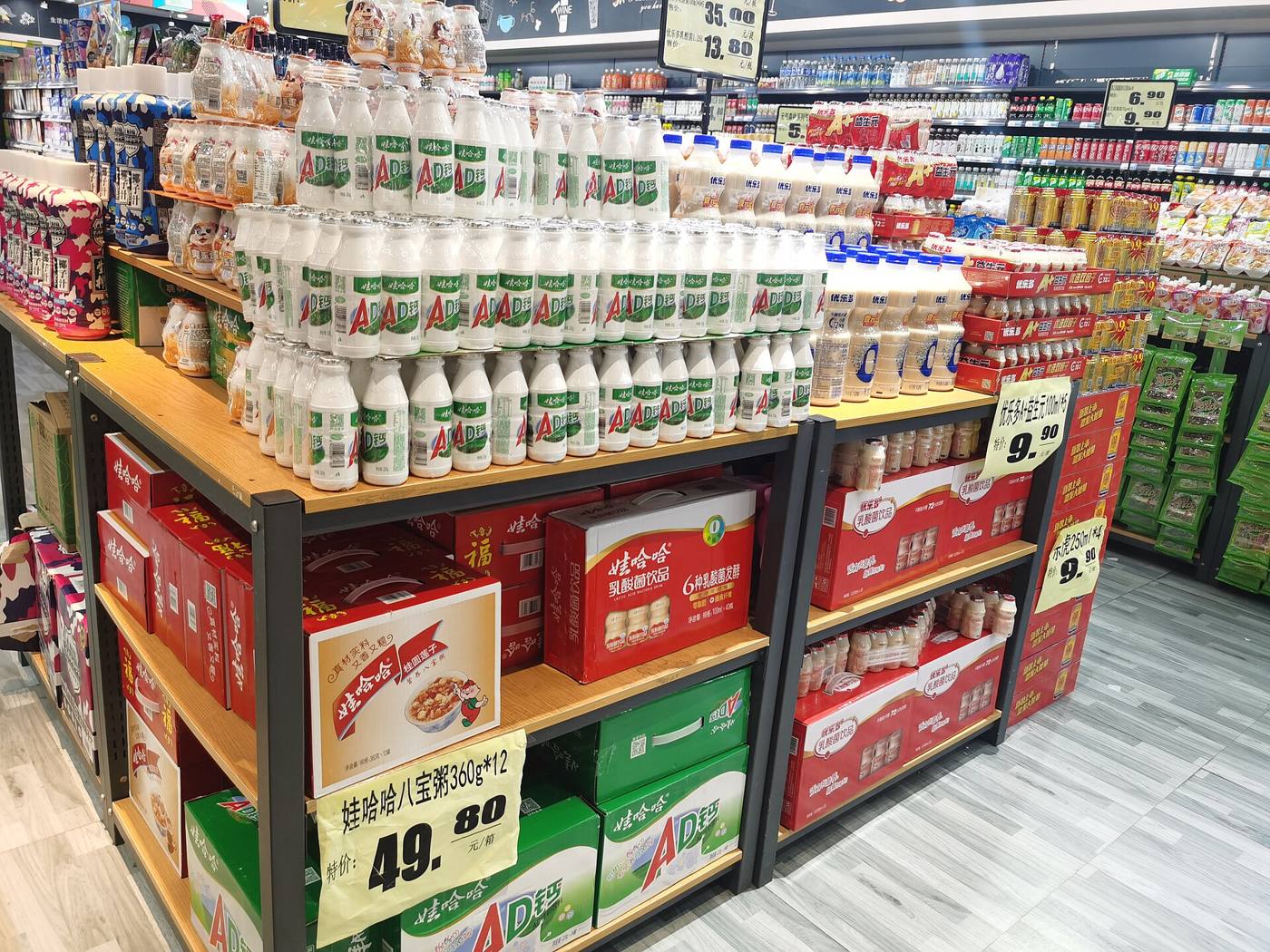
On 22 October 2026 mainland outlets led by The Paper reported, citing people familiar with the matter, that Xu Simin, chairman, general manager and legal representative of Hangzhou Wahaha Group, had resigned less than a year into the job. Lianhe Zaobao in Singapore carried the report the next day. The company has not commented, the business register still lists Xu, and no successor has been named. Xu, born in 1994, came from the legal department of Hongsheng, the beverage group controlled by the founder's daughter Zong Fuli, and took over after she resigned as chairman on 12 September 2025.
The heiress keeps 29.4% of Wahaha while a district government holds 46% and staff contest 24.6%
Zong Fuli still holds 29.4% of Wahaha Group, the register shows. A Hangzhou district state shareholder holds 46%, and an employees' shareholding association holds 24.6%, a stake former staff now dispute (Guancha, 23 October 2026). Her father, Zong Qinghou, Wahaha's founding chairman, died on 25 February 2024. The fight over what he left outside the company is on the public record in Hong Kong.
Twenty-three days before he dies, the founder signs two wills that leave his second family's three children out
On 2 February 2024 he signed two wills, one for offshore and one for mainland assets. Neither names the three children he had with Du Jianying: Jacky, Jessie and Jerry Zong. The same day he signed a letter of entrustment. It recorded that Zong Fuli, the registered owner of the BVI company Jian Hao Ventures, held it for him, and instructed her to settle three offshore trusts, one for each of the three, from its HSBC account. An undated handwritten note, addressed to an assistant, asked for US$700 million each, interest only, at HSBC in Hong Kong.
Four siblings agree on three US$700 million trusts, and the sister who must create them never signs
On 14 March 2024 the four children signed an agreement. The three accepted the wills; Zong Fuli promised to set up the trusts: US$700 million each, irrevocable, invested in fixed income, paying only interest, with disputes to go to the Hangzhou courts. Draft deeds went back and forth with two trust companies through 2024. She did not sign them, proposed herself as protector and her own children as possible beneficiaries, and disputed the note. The account held US$1,799,062,412.25 on 31 May 2024.
Hong Kong's High Court freezes US$1.8 billion in 2025, and the Court of Appeal refuses to lift it in 2026
On 1 August 2025 Deputy High Court Judge Gary Lam found serious issues to be tried, on breach of the agreement and on whether the account is held on trust. He barred Zong Fuli and Jian Hao from withdrawing or encumbering the assets until the Hangzhou case ends and ordered an account of movements since 2 February 2024. On 21 July 2026 the Court of Appeal refused leave to appeal, with HK$250,000 costs. Neither ruling decides who owns the money; that is for the case the Zhejiang Higher People's Court accepted on 4 July 2025.
- 1Lianhe Zaobao 联合早报, 23 Oct 2026: Xu Simin reported to have resigned as chairman, general manager and legal representative (The Paper, citing people familiar with the matter); no successor settled; Zong Fuli still holds 29.40%
- 2Guancha 观察者网, 23 Oct 2026: resignation reported 22 Oct, register unchanged, no company comment; Xu's background at Hongsheng; Zong Fuli resigned Sep 2025; state shareholder 46%, employees' shareholding association 24.6%
- 3Stockstar 证券之星 / 食品内参, 23 Oct 2026: 'sources confirm, register not updated, no official notice'; Zong Fuli resigned 12 Sep 2025; registration change completed 26 Nov 2025
- 4Jacky Zong and others v Kelly Fuli Zong and Jian Hao Ventures Ltd [2025] HKCFI 3355 (HCMP 2772/2024), Deputy High Court Judge Gary CC Lam, 1 Aug 2025: the wills, the handwritten note, the letter of entrustment, the 14 Mar 2024 agreement, US$1,799,062,412.25 at 31 May 2024; preservation and disclosure orders under High Court Ordinance s21M; read in full on HKLII 24 Oct 2026
- 5Jacky Zong and others v Kelly Fuli Zong and another [2026] HKCA 1292 (CAMP 200/2025), G Lam JA and Harris J, 21 Jul 2026: leave to appeal refused on all five grounds; costs HK$250,000; read in full on HKLII 24 Oct 2026
- 6Trustees Act 1967 (Singapore) s90 (validity of trusts created or funded in the settlor's lifetime; shield from inheritance and succession rules; s90(3) conditions; s90(5) reserved investment powers), current version read on SSO 24 Oct 2026
The founder writes out his three trusts twice, then leaves the one child who gains nothing to make them
Zong Qinghou knew exactly what he wanted: three trusts, US$700 million each, capital locked, interest paid, spouses excluded. He wrote it down twice. What he did not do was make the trusts. He left the making to the one child who gained nothing from them, and the money that was to fund them sat in a company registered in her name from 2 February 2024, twenty-three days before he died.
Three children promised trusts must sue their half-sister, because a promise binds only the person who made it
That is the knot. A trust works once the property is in a trustee's hands on settled terms. Until then there is only a promise, and a promise is enforced by suing the person who made it. So the three children are not beneficiaries asking a trustee for an account. They are claimants who needed two Hong Kong courts to stop their half-sister withdrawing the money while a Hangzhou court decides whether a trust exists at all.
Five blanks the founder left in his trust plan become the heir's leverage and a court's question for evidence
Every point now argued was a blank he could have filled himself. Is the capital trust property, or only the interest? What happens if the account never reaches US$2.1 billion, as Zong Fuli says it has not? Who is protector? Whose children may benefit? Which trust company? Each blank became leverage for the person holding the pen. The courts found serious issues to be tried on all of it, which is another way of saying that his own wishes are now a matter for evidence.
Make the trust while you can still sign it: three trusts settled and funded by the founder himself under Singapore law would have existed on the day he died, and section 90 of Singapore's Trustees Act shields from succession rules a trust a foreign settlor creates and funds in his lifetime, not one he asks an heir to create later.
A mainland family's dispute stays in Hangzhou's courts, and no Singapore law rewrites the siblings' agreement or the wills
Limits first. This is a mainland Chinese family, and the agreement sends disputes to the Hangzhou courts; nothing in Singapore law would change that agreement or wills made under mainland law. Moving US$1.8 billion from a BVI company into a trust abroad also raises mainland foreign-exchange and tax questions we do not try to answer. The facts come from two Hong Kong rulings on an interim order. Neither decides who owns the money, and the reports of Xu Simin's resignation rest on unnamed sources.
A founder who signs three Singapore trust deeds in January 2024 hands the trustee the assets before he dies
What a Singapore structure changes is timing. Suppose that in January 2024, while he could still sign, the founder had settled three trusts himself under Singapore law, with a licensed Singapore trust company as trustee, and had Jian Hao transfer the HSBC portfolio to it. The deed would carry the terms he wrote by hand: capital held, fixed-income investments, interest paid to each child and that child's issue, spouses excluded. From the transfer onward, the trustee, not a sibling, would hold the assets and owe the beneficiaries its duties.
Singapore shields a trust a foreign founder creates and funds in his lifetime from every inheritance rule abroad
Section 90 of the Trustees Act 1967, read on SSO on 24 October 2026, then works for him. Where a person creates a trust, or transfers movable property to one, during his lifetime, and had capacity under Singapore law, the law of his domicile or nationality, or the proper law of the transfer, no rule of inheritance or succession affects the trust's validity (s90(1) and (2)). It covers only a settlor who is neither a Singapore citizen nor domiciled here, and only a trust expressed to be governed by Singapore law with trustees resident in Singapore (s90(3)). Note the verbs: creates, transfers, during his lifetime.
The founder keeps his fixed-income mandate until death, because Singapore lets a settlor reserve investment powers
He would not even have had to give up the investment brief. No trust is invalid only because the settlor reserves to himself powers of investment or asset management (s90(5)), so he could have kept the fixed-income mandate until his death and let the trustee take it over afterwards. The step to avoid was leaving the creation itself to the person who, as registered owner of the company, keeps the money if the trusts are never made. That reading of the documents is ours; the courts have called it a serious issue to be tried.
Every term the siblings now fight over fits in one deed the founder signs himself, with a letter explaining why
Then the blanks. Every term now in dispute could have been decided in the deed: that the capital itself is trust property; what happens if the account falls short of US$2.1 billion, pro rata or the first two trusts first, as his note suggested; who the protector is, and that it is not a rival beneficiary; and that only the named child's issue can benefit. A letter of wishes can explain his reasons. A note to an assistant and an agreement among siblings cannot replace a deed signed by the person whose money it is.
Three children get two bank statements in ten months and need a 2025 court order to trace the money
Then information. Once a trust exists, the trustee must keep accounts of the trust property, and a beneficiary can ask the court to make it produce them. Here the three children received two bank statements, for January and May 2024, and needed a court order in August 2025 to learn what had moved since 2 February 2024. Under a constituted trust, that account is where a beneficiary starts, not something won by court order seventeen months after the siblings' agreement.
An heir asks three calm questions about a promised trust and learns whether it exists before anyone has to sue
For the reader whose parent has promised something to a sibling, a half-sibling or to you, three questions can be asked without accusing anyone. Has the trust been made, with a trustee named and the assets transferred, or only promised? If only promised, who has to sign, and does that person gain if it never happens? And are the terms written in a deed, or in a note? Wanting to know your position is stewardship, not greed.
Jacky, Jessie and Jerry Zong — no trust yet; a Hong Kong order freezing the US$1.8 billion account since 1 August 2025, upheld on 21 July 2026, and a claim in Hangzhou to be declared its beneficiaries
Zong Fuli — registered owner of the company that holds the account, barred from withdrawing or encumbering it and ordered to account for it; 29.4% of Wahaha Group
Wahaha Group — its second chairman in just over a year reportedly gone, on unconfirmed reports of 22 October 2026, with no successor named
The same plan in Singapore — three trusts settled and funded by the founder himself before he died, the trustee holding the assets on the day of death, and s90 shielding them from succession rules
The reader whose parent has promised a trust — three questions: made or only promised, who must sign and what they gain, and whether the terms sit in a deed
A counterfactual, not advice. The verified machinery is on the Singapore page; where your family stands is the briefing.
From the case files: Another founder, another family outside the marriage: Sinar Mas, where the founder owned no shares